Summary
AI design agents create and optimize marketing creative using real-time customer data while maintaining brand consistency across channels. Their value comes from integration with customer data and workflows, enabling faster campaign execution and continuous performance improvement.
There is a version of artificial intelligence (AI) creative automation that looks impressive in a product demo and falls apart in production. It generates beautiful assets on demand, supports your brand colors, and can produce fifty banner variants in the time it used to take a designer to make three.
But when a segment of high-intent users abandons a checkout flow at 11pm on a Tuesday, that tool is waiting for someone to write a brief. It cannot perceive what happened, connect it to a creative gap, and act.
That gap, between creative production and live campaign execution, is the real problem an AI design agent is built to close. Not by replacing designers, but by eliminating the handoff latency that sits between what your data knows and what your creative actually reflects.
When the AI operates natively inside your marketing stack rather than as a separate tool you export assets out of, creative becomes a real-time function of customer behavior rather than a scheduled deliverable.
From copilot to agent: What actually changed in AI-driven creative
The word “agent” gets applied loosely to anything that uses a large language model, so it is worth being precise about the distinction.
Copilot versus agent: the core difference
An AI copilot assists: it waits for you to define the task, suggests outputs, and hands control back to you at every step. A rule-based automation system is faster but even more rigid, executing predefined logic without judgment.
A true AI design agent operates differently.It perceives its environment, including behavioral signals, engagement data, and channel performance, identifies where a creative gap exists, and generates a response autonomously within predefined guardrails.
It does not wait for a brief. It monitors the signals that would normally prompt a brief and acts before the delay becomes a missed opportunity.
Why the shift matters operationally
The practical implication is significant for teams running high-volume, multi-channel campaigns. A copilot model still requires a human decision at every fork: identify the need, write the brief, review the output, approve for deployment.
That chain takes hours at minimum and days in most enterprise environments. An agent model compresses that chain by handling the first three steps autonomously, presenting humans with outputs ready for a final approval decision rather than a blank starting point.
This is not about removing humans from creative decisions. It is about where in the process human judgment is most valuable, and right now, too much of it is spent on steps that do not require human judgment at all.
Insider One’s Agent One™ is built around this principle, positioning autonomous agents as collaborators within a governed, human-supervised workflow rather than as unchecked replacements for creative teams.
Core capabilities a real AI design agent should have
A design agent that earns a place in an enterprise marketing stack needs more than generative output. The following five functional layers are what separate a production-ready agent from an impressive prototype.
Brand-aware asset generation
The agent must understand brand rules at a level that goes beyond a static brand kit. Tone by market, format by channel, and messaging hierarchy by audience segment are constraints that change depending on context, and the agent needs to apply them dynamically. A luxury beauty brand running a flash sale in Southeast Asia requires different executional decisions than the same brand running a loyalty re-engagement campaign in Western Europe.
Dynamic format adaptation
Creative assets do not travel cleanly between channels. An email hero image, a mobile push notification, a web banner, and an in-app story format each have different compositional requirements, attention windows, and user contexts. A real design agent adapts the same underlying creative concept to each format’s constraints without a human re-briefing it for each placement.
Performance-informed variant testing
The agent generates variants not randomly but based on what prior engagement data suggests is likely to outperform. It connects to the test-and-learn loop already running in the campaign, reads which elements are driving lift, and surfaces new variants that build on those signals rather than starting from scratch.
Self-optimization from engagement data
Beyond testing, the agent weights its own outputs toward better-performing variants as signals accumulate, adjusting without waiting for a weekly performance review. This is where the distinction between scheduled automation and genuine agentic behavior becomes commercially meaningful.
Human approval checkpoints
The agent’s autonomy must be bounded by clearly defined approval gates, and treating those gates as optional is where brand-critical decisions go wrong.
Final creative sign-off before deployment, escalation triggers when content falls outside normal parameters, and audit trails that let teams understand what the agent decided and why are all required, not optional, in an enterprise context. Autonomy without oversight is not a production-ready product.
Where existing platforms fall short
Arriving at a clear-eyed view of the design agent’s value requires acknowledging where current options break down and why the gap has persisted despite years of investment in both creative tooling and marketing automation.
The standalone creative AI problem
Tools built specifically for creative production, including generative image platforms, AI design assistants, and smart template systems, are improving rapidly. They can produce high-quality assets at volume, support brand guidelines, and reduce designer workload on repetitive execution tasks.
The gap they cannot close is integration: when an asset is generated in one environment and exported into a separate campaign execution platform, the creative decision is immediately disconnected from the behavioral data driving the campaign.
That means the design reflects what the marketer briefed days ago, not what the customer is doing right now. For low-stakes evergreen content, that lag is manageable. For time-sensitive behavioral triggers such as cart abandonment, post-purchase cross-sell, and win-back sequences, it undermines the relevance that makes those moments valuable.
The bolted-on AI design problem
Engagement and messaging platforms face the inverse challenge. They have strong data access and direct channel integration, but AI design features added on rather than architecturally integrated tend to be shallow.
Creative generation that does not connect to the journey orchestration layer, performance data that does not feed back into creative decisions, and approval workflows not designed with design-agent behavior in mind all create friction that limits real-world adoption.
Some teams have reported trust and accuracy concerns when AI design features in messaging-first platforms are not grounded in the same behavioral data the platform already holds. The creative logic, in those cases, operates separately from the signals that should be informing it, and the disconnect shows in output quality and brand consistency.
MadeiraMadeira achieved 52X return on investment (ROI) using Architect, Insider One’s journey orchestration tool, in part because creative and behavioral data operated in the same environment rather than being shuttled between systems. That kind of result depends on native integration, not bolt-on capability.
How to integrate an AI design agent into your marketing stack
Integration architecture matters more than the agent’s generative capabilities in isolation. A well-designed agent running on fragmented data infrastructure will underperform a simpler agent running on clean, unified signals.
The four integration layers
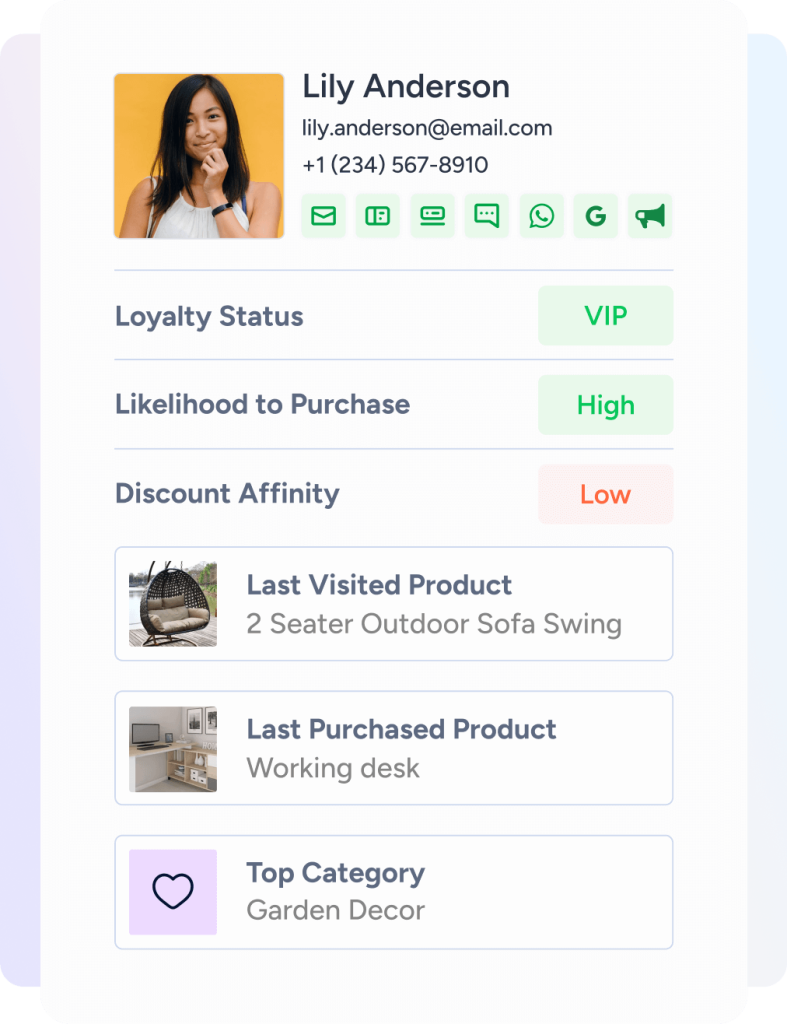
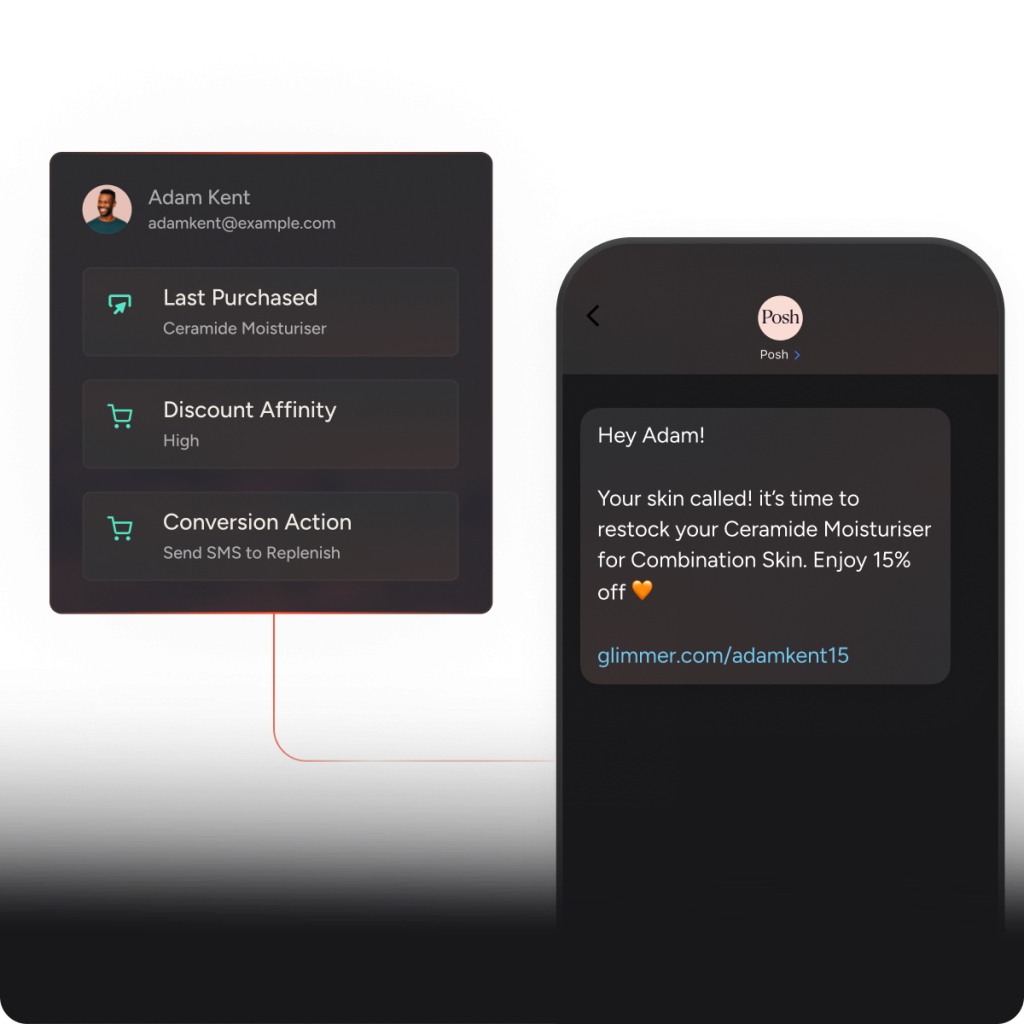
- Customer data platform (CDP)-layer data feeds. The agent needs access to real-time behavioral signals, including browser behavior, purchase history, channel engagement, and predictive scores, to make design decisions grounded in actual customer context. Without this, it generates creativity based on static segments rather than live intent signals. Customer Data Management is the foundation this layer depends on.
- Journey triggers conditions. The agent operates as a native participant in Journey Orchestration, not as a separate asset-production module. When a journey trigger fires, whether an abandonment event, a loyalty threshold crossed, or a re-engagement window opening, the agent’s creative output should be part of the same logic tree, not a manual addition.
- Channel API connections. Format adaptation only works if the agent has confirmed access to each channel’s delivery requirements. Email, SMS, mobile push, web push, in-app, and paid media each have different constraints. The integration layer must expose those constraints to the agent so adaptation decisions are accurate rather than approximate.
- Approval workflow design. Define in advance which decisions the agent can make autonomously, which require a single approver, and which require broader sign-off. This is not bureaucracy; it is what makes enterprise teams comfortable extending the agent’s scope over time.
The adoption sequence that actually works
Do not start with omnichannel creative orchestration. Start with one high-volume, high-frequency channel where creative lag is most costly, typically email, mobile push, or web personalization.
Run the agent in a supervised mode: it generates, humans approve, deployment proceeds. After validating output quality and brand consistency over four to six weeks, begin extending agent scope to adjacent channels and reducing approval overhead on proven creative types.
Adidas increased average order value by 259% and conversion rate by 13% in one month with Insider One’s personalization suite, an outcome that depends on the kind of coordinated creative and data execution that a phased, well-integrated agent rollout enables.
Measuring what the AI design agent actually delivers
Vanity metrics are easy to generate and useless for justifying ongoing investment. The right measurement framework focuses on four indicators.
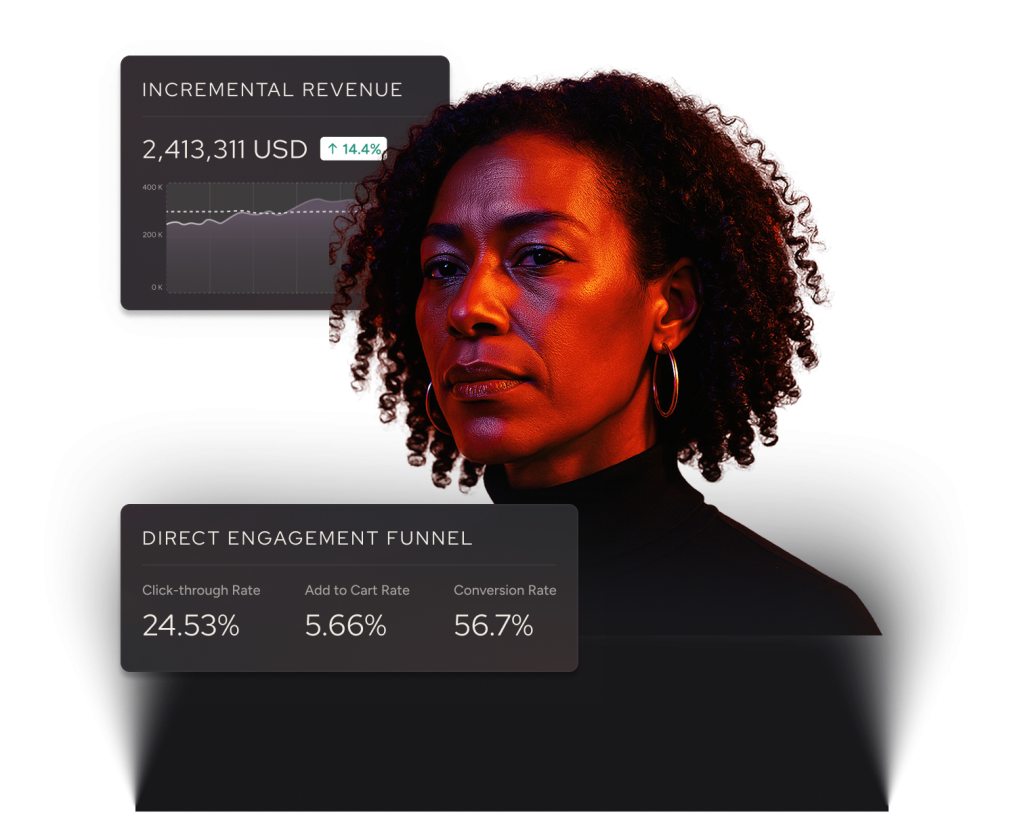
- Creative variant velocity measures how many tested variants your team can produce and deploy per campaign cycle. Before a design agent, this number is constrained by designer capacity and briefing time. After integration, it should increase substantially, and that increase should correlate with faster identification of high-performing creative.
- Brand consistency score is harder to quantify but essential to track. This can be assessed through periodic brand audits, internal review panel scoring, or automated checks against brand guideline parameters. If the agent is producing at volume but drifting from brand standards, the guardrail configuration needs attention before scope expands.
- Time-to-launch reduction captures the operational efficiency gain: the elapsed time from identifying a campaign creative need to deploying approved assets. This metric directly reflects how much of the briefing, production, and review cycle the agent has absorbed.
- Per-variant engagement lift is the revenue-connected metric. It measures whether the variants the agent generates actually outperform control, and by how much. Without this, you are measuring activity, not impact. Connecting design agent output to revenue attribution models is where many teams stall, and the solution is to ensure agent outputs are tagged with enough granularity that downstream analytics can trace engagement and conversion back to specific creative decisions. Reporting and data infrastructure needs to be part of the design agent implementation plan from the start, not retrofitted afterward.
If you want to see how Insider One’s Architect, Customer Data Management, and Insider One AI™ turn live customer data into coordinated, revenue-driving experiences, book a personalized demo to see the exact use cases, decision logic, and growth levers most relevant to your team.
Frequently asked questions
No, and the framing is counterproductive. A design agent handles high-volume, repetitive execution and performance-driven iteration. It frees creative teams to focus on strategy, brand direction, and the complex executional challenges that genuinely require human judgment. The teams that get the most from design agents tend to be the ones that actively involve their creatives in configuring the agent’s guardrails.
Significantly. A design agent making creative decisions without access to reliable behavioral data will default to generic outputs. The quality of the CDP layer, specifically how unified, real-time, and accessible the customer data is, directly determines how contextually relevant the agent’s creative decisions can be.
Start with a single channel where you have high creative volume and measurable performance data already flowing. Mobile push and email are common starting points. Validate output quality, brand consistency, and approval workflow before expanding. Trying to orchestrate omnichannel creative from day one creates complexity that tends to slow adoption rather than accelerate it.
This depends on how guardrails are configured. A well-implemented design agent can apply market-specific tone rules, regulatory constraints, and localization requirements as part of its generation logic, but those rules need to be explicitly defined and maintained. The agent enforces what you have told it to enforce; it does not infer compliance requirements autonomously.