Unilever’s YouTube strategy ”branded Desire at Scale” has put numbers behind something most marketers have always suspected: placing brand messages inside cultural moments people are actually watching drives measurable business outcomes. Their data points to a 50% lift in ROI from trending content placement. Not from reaching more people, but from reaching them while attention was live.
That’s the business case for trend intelligence. It isn’t about chasing culture. It’s about making cultural relevance a repeatable, measurable input into the media plan – and turning the attention that forms around a cultural moment into demand, brand lift, and sales.
Why Trending Content Drives Outcomes
Cultural moments concentrate attention in a way that standard targeting can’t achieve. Think about what happens when:
- Taylor Swift wears a specific dress to an event. Overnight, searches spike, retailers sell out, and creators flood YouTube and TikTok with reaction, styling, and try-on content.
- A Labubu doll goes viral. What starts as a niche collector trend compounds into millions of searches, resale economies, and a category-defining moment for an entire year of toy buying.
- Justin Bieber surprises the crowd at Coachella. The livestreams, recaps, and fan reaction content dominate video feeds for days.
- A World Cup match ends in an upset. Within minutes, the conversion moves from sports platforms to mainstream entertainment across every social surface.
These are attention events. People aren’t being interrupted – they’re actively seeking, sharing, and engaging with related content. For advertisers, showing up inside those moments isn’t contextual decoration. It’s positioning a brand where demand is being formed in real time.
Unilever’s numbers aren’t an anomaly. They’re what happens when a major brand treats trending content as a planned media buy rather than an opportunistic insert.
The Pattern Behind Cultural Moments
Cultural moments concentrate attention for a limited window – and the third-party data is clear on why that window matters commercially.
Kantar’s 2026 BrandZ analysis, examining more than 6,000 brands across 100 categories and 30 countries, found that brands in the top quartile for meaningful difference – the combination of salience, relevance, and distinctive experience – compounded brand value at 2.7x the rate of bottom-quartile brands over the past three years.
GWI’s 2026 Zeitgeist study, drawing on 25,000 internet users across 25 markets, adds the behavioural explanation: 74% of respondents say they engage meaningfully only with content that feels personally relevant to the moment, concern, or desire they’re in right now.
Industry data on cultural messaging shows that placing brand communications inside cultural moments delivers +6% higher action and a 1.3x lift in purchase intent versus non-contextual placements.
Relevance isn’t a soft metric. It’s the input that converts attention into business outcomes — and cultural moments are where relevance is most concentrated.
The moments themselves move through four phases, a lifecycle documented in academic research on trend persistence and decay in social media.
Most moments move through four phases:
- Emergence. Early signals appear. Search volume ticks up. A handful of creators or publications start covering it. The trend is real, but most brands haven’t noticed yet.
- Acceleration. Momentum builds rapidly. Content volume surges. Mainstream audiences engage. This is the phase with the highest advertisers’ RIO – attention is rising, the conversation is still forming, and competitive pressure hasn’t caught up.
- Peak. Maximum saturation. Everyone is talking about it. Attention is at its highest, but so is competition for that attention. Ads placed here still perform, but the cost of relevance is higher.
- Decay. Attention scatters. New moments replace it. Brands still running campaigns against the topic start looking late, not relevant.
Duration varies sharply by category. The same academic research puts the median survival time of a trending topic at roughly 6 hours, with topics driven by external events or media coverage persisting longer than internally generated ones.
Sports moments sit at the fast end of that distribution: Twitter engagement runs +26% above baseline during major sporting events, with tentpoles like the Super Bowl concentrating over 1.8 billion impressions and tens of millions of in-event engagements. Entertainment moments – a Coachella surprise set, a series premiere – typically sustain engagement over several days as recap and reaction content spreads. Slower-build cultural moments, like a viral toy (Labubus being a recent example) or a celebrity fashion moment, can accelerate over weeks before peaking.
The takeaway isn’t the curve itself — it’s where to place your brand on it. Trend intelligence earns its value in the acceleration phase: identifying moments while they’re still building and putting brand presence in front of attention before competitive pressure prices it out.
Why Traditional Targeting Misses the Window
Traditional targeting operates on historical signals – what people searched last week, what sites they visited, what audiences they belong to. These work for steady-state campaigns. They don’t work for moments that form and move in hours.
Consider the World Cup upset scenario. A match ends on a Saturday night. By Monday morning, when most campaign managers log in, the conversation has already shifted. The memes have been made. The reactions have been posted. The cultural moment has passed.
Even programmatic buying, which operates at speed, typically relies on pre-defined audience segments and keyword lists. It can’t dynamically detect that a specific topic is accelerating across video content and reallocate placement accordingly.
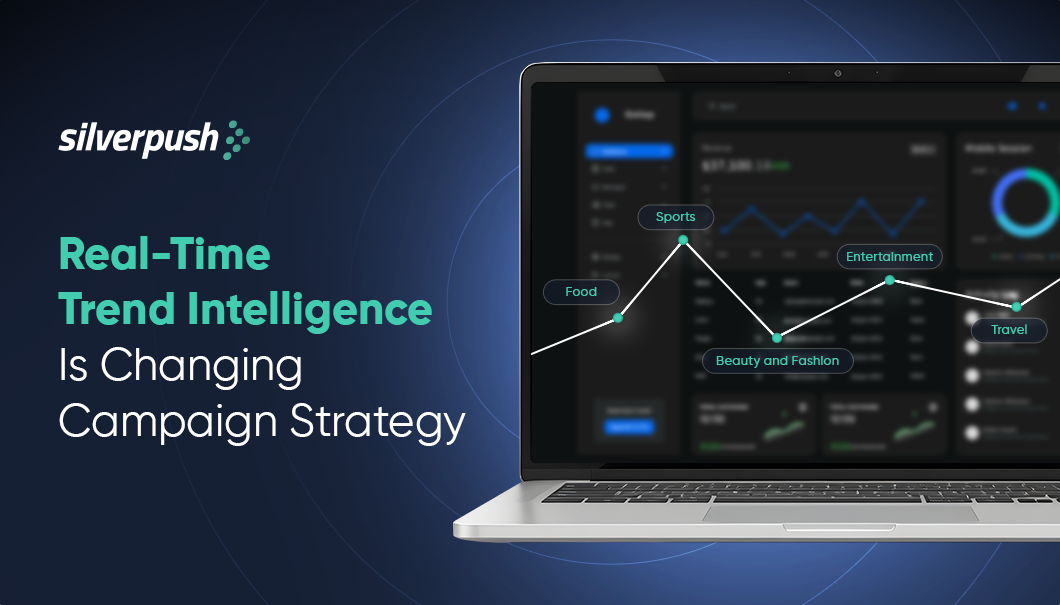
Trend intelligence closes the gap by monitoring content signals – not user signals – in real time. It watches what’s being created, shared, and engaged with across platforms, and identifies when a topic crosses from background noise into active cultural momentum.
From Intelligence to Activation
Detecting a moment matters less than activating against it. In practice, that looks like:
- Real-time trend detection that continuously scans video and social content to identify emerging topics and tracks their phase of development.
- Contextual alignment that places your ad alongside content that’s thematically relevant to the moment – not just in the same category, but in the same conversation.
- Cross-platform reach that activates the same moment wherever the audience is engaging with it, from YouTube to Meta to TikTok to CTV.
The result is advertising that doesn’t just reach the right people. It reaches them at the moment attention is highest and competitive cost is lowest – which is what Unilever and other major advertisers are optimising for.
What This Means for Your Next Campaign
If you’re planning campaigns for the second half of 2026, the question isn’t whether cultural moments matter for performance. Unilever’s 50% ROI lift and similar numbers coming out of major advertisers have settled that. The question is whether your media infrastructure can act on those moments in real time.
Trend intelligence isn’t about chasing every viral spike. It’s about having the ability to recognise when a moment aligns with your brand, understanding where it sits in its life cycle, and activating against it before the window closes.
In a world where third-party cookies are disappearing, and attention is fragmenting across platforms, contextual relevance is becoming the foundation of performance – not just reach. Trend intelligence is how you make that foundation systematic.
Ready to Turn Cultural Attention into Business Outcomes?
Silverpush’s contextual intelligence engine maps trends in real time across YouTube, social, and CTV, so your brand shows up inside the moments that drive demand. If you’re ready to build cultural relevance into your media plan as a repeatable input, let’s talk.