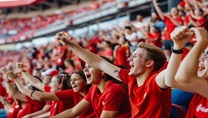
Summer 2026 isn’t just about one tournament. It’s a stacked cleaned or premium sporting moment – the FIFA World Cup (48 teams, 104 matches, projected 6 billion viewers), Wimbledon, the Tour de France, the F1 British Grand Prix, The Open Championship, and the Premier League returning in August. Each event generates its own wave of content on YouTube, and together, they create a sustained window of high attention that runs from late May through September.
For brands running video campaigns, this is an unprecedented opportunity. But it requires planning that starts now – and a strategy that goes beyond sports channels.
YouTube is the engine room of summer sports
YouTube sees over 40 billion hours of sports content watched annually, and 74% of sports fans visit the platform multiple times a week. This summer, the scale will be even larger: FIFA has named YouTube a preferred platform for the 2026 World Cup, with rights holders able to stream the first 10 minutes of every match live on the platform.
But it’s not just football. Tennis content surges around Wimbledon. Cycling and endurance content peaks during the Tour de France. F1 has one of YouTube’s most engaged fan communities, with pre-race analysis, qualifying reactions, and post-race breakdowns generating millions of views around every Grand Prix. Each event brings its own content ecosystem, highlights, creator commentary, tactical analysis, and fan reactions. Each represents a distinct targeting opportunity.
Sports fans are digital-first and multi-screen
The way fans consume sports has fundamentally changed. Research shows that 83% of fans use a second screen during live events, with 82% active on mobile apps. CTV sports viewing grew 30% in 2024, and TikTok sports fans grew 42% year-on-year.
This is consistent across events. A Wimbledon viewer checking their phone during a rain delay, an F1 fan watching qualifying highlights on YouTube while the race streams on CTV, a football fan scrolling through TikTok reactions at half-time. The behaviour pattern is the same. Fans are omnichannel. Your strategy needs to be too.
The real opportunity is beyond the pitch, the court, and the track
Here’s what most media plans miss: major sporting events generate content waves far beyond sports channels. When the World Cup lands, YouTube sees spikes in fashion (kit culture, matchday outfits).
When Wimbledon arrives, fashion and lifestyle content surges (strawberries and cream, all-white outfits, British summer style). The Tour de France drives cycling gear reviews, travel content about the French countryside, and fitness/endurance videos. F1 race weekends drive travel vlogs, tech reviews, and host city food tours.
For advertisers, this means the most efficient way to reach sports fans often isn’t buying sports inventory directly, where CPMs are highest, and competition is fiercest. It’s reaching fans in adjacent content categories where engagement is strong, attention is high, and costs are significantly lower.
Contextual intelligence makes this possible by identifying sports-adjacent content across video platforms and not through keyword matching, but through analysis of metadata, publicly available entertainment transcripts, and metadata signals that connect the dots between a Wimbledon fashion haul and a tennis fan audience.
A full-funnel approach across every screen
The most effective sports campaigns in 2026 will be built around a full-funnel framework that matches content to screen and objective.
At the awareness stage, CTV and long-form YouTube deliver broadcast-quality reach in lean-back environments. Contextual targeting ensures ads run alongside premium sports content, including highlights, previews, and post-match analysis, across every sport, not just football.
At the consideration stage, mobile YouTube and Shorts are where fans actively engage. Creator reactions, trending topics, and real-time moment targeting reach fans at their most emotionally engaged, whether that’s a World Cup goal, a Wimbledon upset, or an F1 overtake.
At the conversion stage, contextual audience signals feed into performance campaigns, turning engaged sports viewers into customers. Research from Nielsen shows that 67% of fans report increased purchase intent for brands they see alongside sports content, with the effect amplified during emotional peaks.
Five things to do before June
For brands planning their summer sports strategy, the time to act is now, not when the first ball is kicked or the first serve is struck.
First, start planning in May. Pre-event content creates premium placement opportunities weeks before each tournament begins. Squad announcements, draw predictions, route previews, and qualifying coverage all generate high-intent audiences.
Second, go beyond sports channels. Fashion, food, travel, and tech content all spike around major sporting moments. Each event creates its own cross-category ripple. Contextual targeting captures these adjacent audiences at lower CPMs.
Third, think omnichannel. Fans move between YouTube, TikTok, CTV, and social platforms throughout the summer. A connected strategy ensures your brand follows the fan, not just the platform.
Fourth, activate trending moments. Breakout players, surprise results, and unexpected storylines can be detected and activated within hours through trend intelligence. This applies to every event, not just the World Cup.
Fifth, protect your brand. Sports content is emotionally charged and unpredictable across every sport. Full-video contextual analysis ensures brand safety without sacrificing scale.
Download the full playbook
We’ve mapped the full summer sports calendar from the World Cup and Wimbledon through to the Premier League return in August. The playbook includes the data behind each opportunity, a full-funnel strategy framework, and five actionable takeaways you can brief your team on today.