Fashion has always been about anticipation, determining what one would prefer to wear before they know it themselves. It’s meant in terms of intuition, presentation, experience, and the “good eye”. Today, it can be conveyed through algorithms, neural networks, and machine learning. Artificial Intelligence is no longer at the dregs, but very much at the centre of this world. It has truly reshaped the design and manufacturing of clothes.
To understand a bit better, algorithms are defined as sets of step-by-step instructions that computers follow to solve specific problems. Neural networks are computational systems modeled after the human brain, designed to recognize patterns and learn from data. Machine learning refers to methods by which computers improve their performance through experience and data, without explicit programming.
From Sketchpad To The Servers
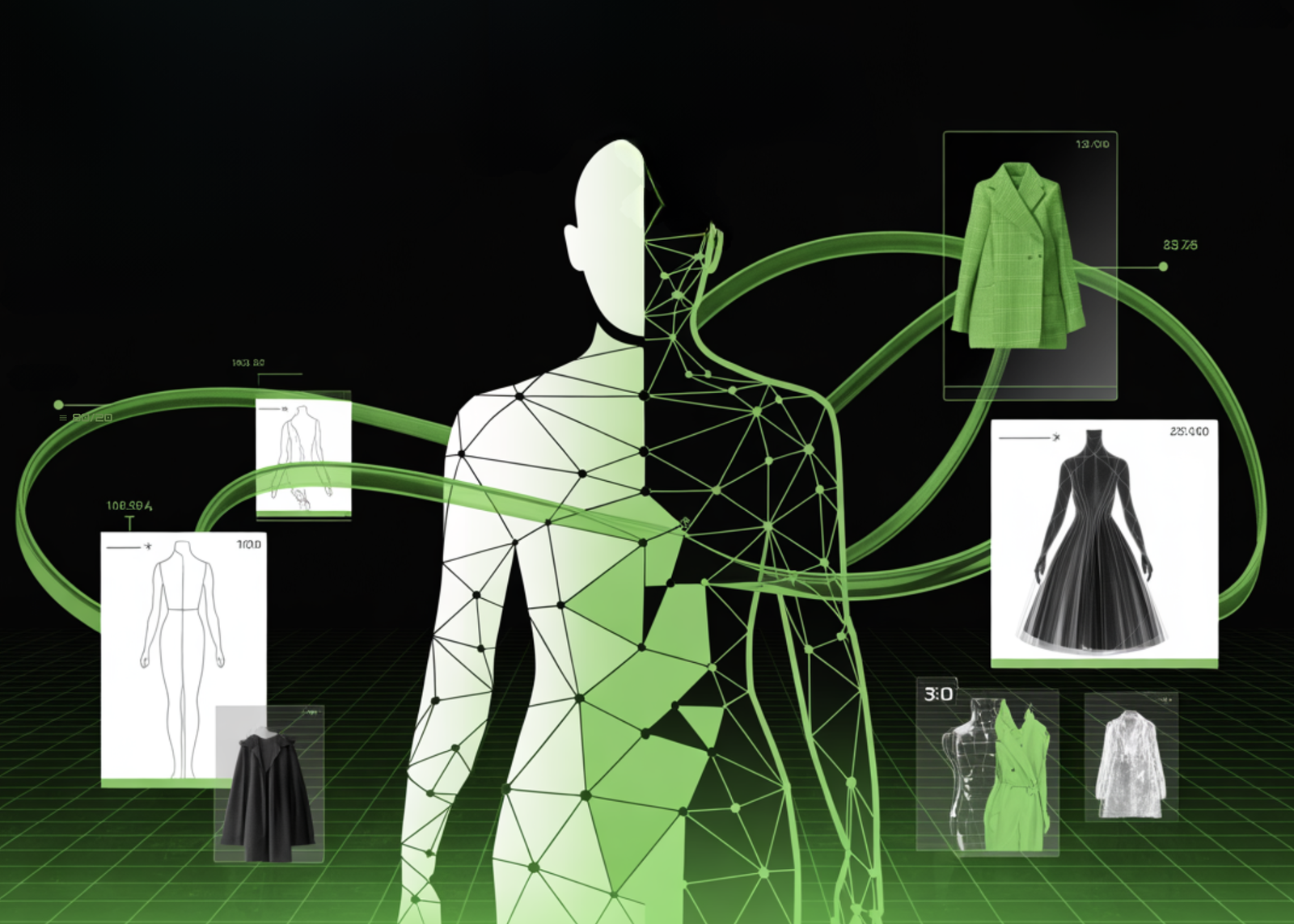
Design, like all good work, begins with vision, a.k.a moodboarding, fabric cut into swatch squares, hand-drawn sketches piled up, techniques revised endlessly. According to McKinsey’s 2026 State of Fashion report, over 45% of global apparel brands have integrated AI-driven design tools to reduce development lead times. Generative AI tools like Adobe Firefly and Midjourney can be easily used to co-create mood boards, sketches, even tech packs, and 3D prototypes from text description. Design process acceleration has become one of the most widely adopted uses of AI in 2026. For students and emerging designers, experimenting with free or student-accessible versions of these AI tools can be invaluable for building portfolios and developing creative ideas. Many platforms offer trial periods or educational access, allowing students to explore new ways of visualising concepts or collaborating in teams. Trying out these resources hands-on can help translate theoretical knowledge into practical skills relevant to the modern fashion landscape. Tools like Fashion Diffusion unify visual tasks into a seamless workflow, automating tedious manual work and speeding up iteration cycles, they are also known of being great help to students
Predicting The Next Big Thing: Trend Forecasting
Earlier, buyers and forecasters would attend fashion shows where they would note down the styles chosen by designers for the upcoming season. They would create reports for the masses, and large retailers would base their collections on this diffused information from the most exclusive runway shows and give them to the public. Trend forecasting in the age of omnipresent technology, however, moves more quickly. It has democratised fashion; every influencer with the internet is a trendsetter; trends, despite being predicted 4-5 seasons in advance by big companies like WGSN, move rapidly.
The simplest definition of fashion trend forecasting today is as follows: it is the act of predicting fashion trends, including colours, fabrics, silhouettes, patterns, styles, and more, for clothing collections in upcoming seasons. This model was sometimes ineffective.
Multimodal AI systems could aid in analysing text, image, and video data while processing information simultaneously. With the help of identifying increments or decrements in search for micro trends or materials, and mapping their lifecycles. Many brands now utilize AI-powered dashboards that display live customer feedback with design trends. For example, Heuritech is a Paris-based fashion technology company specialising in AI-driven trend forecasting.
Sustainability, Factories and Supply Chains
Glamorous as it is, this industry is also notorious for being a major cause of pollution, responsible for 2-8% of global carbon emissions and 20% of global wastewater produced. It is the second biggest industry that consumes water. AI supports sustainability by optimising demand forecasting, reducing overproduction, and minimising waste. Predictive models align production volumes with real consumer demand, while digital sampling lowers fabric waste and carbon emissions.
In supply chain manufacturing, AI improves efficiency through maintenance checks, quality inspection, and production planning. Computer vision and deep learning detect defects earlier, while data models optimise capacity planning. Digital twins allow factories to simulate workflows before execution, which eradicates downtime and errors while improving consistency and worker safety. In 2026, garments include all the data on their lifecycle and provide consumers with full transparency about their environmental impact.
The Personalization Arms Race
On the consumer side, AI has transformed the old passive browser shopping experience into something immersive. The old way of category filters, keyword searches, and customers who also bought carousels has given way to something else. This is based on an algorithm where the individual customer profile is rooted in their predicaments rather than demographic divisions. Natural Language Processing can also be employed to extract key trends from customer feedback, ad campaigns, and product descriptions published in outlets.
A shopper visiting again who likes muted tones must see those first, whereas someone shopping for a specific occasion gets recommendations on both ends: style and intent.
Virtual try-ons are another frontier for shopping. Platforms like DressX Agent let users create personalised and customisable avatars from a selfie, virtually try on outfits, and shop from over
200 brands. It blends AI styling tools with Large-Language-Models powered search to reduce returns and improve product discovery. This, in turn, helps instant outfit creation with styling recommendations based on fit, fabric, silhouette, and checkout help.
For e-commerce fashion returns are one of their main problems, and a ‘try before u buy’ experience that actually works in real time could significantly reduce them.
The Uncomfortable Questions Relating AI
However, none of this is without friction; the rise of AI influencers, which are merely virtually crafted personalities designed to generate content for brand identity and sales, embodies the depth of AI’s penetration into fashion marketing. These creators carry none of the reputational risk associated with human celebrities; they are available around the clock and can be put into any clothes and setting accordingly. This dynamic, however, raises questions about the authenticity of brand connection as well as the importance or lack thereof of human talent.
Lil Miquela is one such virtual influencer created by the tech startup Brud. She has worked with Prada, starred in ad campaigns, and even released music. Her stardom in the metaverse makes one wonder if celebrity culture is truly just a fabricated fiction of someone’s imagination.
An AI model advertisement by GUESS in Vogue 2025 had the public debating the disclosure of explicit consent of digital replicas of human models and their morality. The newly formed New York Fashion Workers Act honours just that. AI-generated imagery is flooding pages and campaigns, and questions of labour displacement, trust of the consumers, and authenticity cannot be sidestepped any longer.
A New Creative Stack
What’s emerging is less a replacement of fashion’s human core and more the construction of a new creative stack where intuition and tandem go hand in hand. Designers drive the vision, and AI just the velocity. The winners at the end realise that human judgment adds most value to machine work.
The global fashion tech market is estimated to surpass 8.2 billion by the end of 2026, driven by demand for virtual try-ons, AI-driven design, and 3D garment simulation tools. This number is only going to grow, and brands alike no longer wonder whether to engage with AI; it is only how deeply, how transparently, and to what end.
REFERENCES

Sanija Jain is a student pursuing B.Des at the National Institute of Fashion Technology, Chennai. With a deep passion for AI and design thinking, Sanija is driven by the belief that thoughtful design has the power to simplify and enhance everyday life. Dedicated to exploring the intersection of emerging technologies and human-centered design, Sanija is keen on investigating how AI can be leveraged to create intuitive, impactful solutions that make life easier for people everywhere.