• About Us
  • Disclaimer
  • Contact Us
  • Privacy Policy
Wednesday, September 16, 2026
mGrowTech
No Result
View All Result
  • Technology And Software
    • Account Based Marketing
    • Channel Marketing
    • Marketing Automation
      • Al, Analytics and Automation
      • Ad Management
  • Digital Marketing
    • Social Media Management
    • Google Marketing
  • Direct Marketing
    • Brand Management
    • Marketing Attribution and Consulting
  • Mobile Marketing
  • Event Management
  • PR Solutions
  • Technology And Software
    • Account Based Marketing
    • Channel Marketing
    • Marketing Automation
      • Al, Analytics and Automation
      • Ad Management
  • Digital Marketing
    • Social Media Management
    • Google Marketing
  • Direct Marketing
    • Brand Management
    • Marketing Attribution and Consulting
  • Mobile Marketing
  • Event Management
  • PR Solutions
No Result
View All Result
mGrowTech
No Result
View All Result
Home Al, Analytics and Automation

AI Method Reveals What Genomic Models Learn From DNA and Exposes Hidden Experimental Bias – Unite.AI

Josh by Josh
August 26, 2026
in Al, Analytics and Automation
0
AI Method Reveals What Genomic Models Learn From DNA and Exposes Hidden Experimental Bias – Unite.AI

[ad_1]

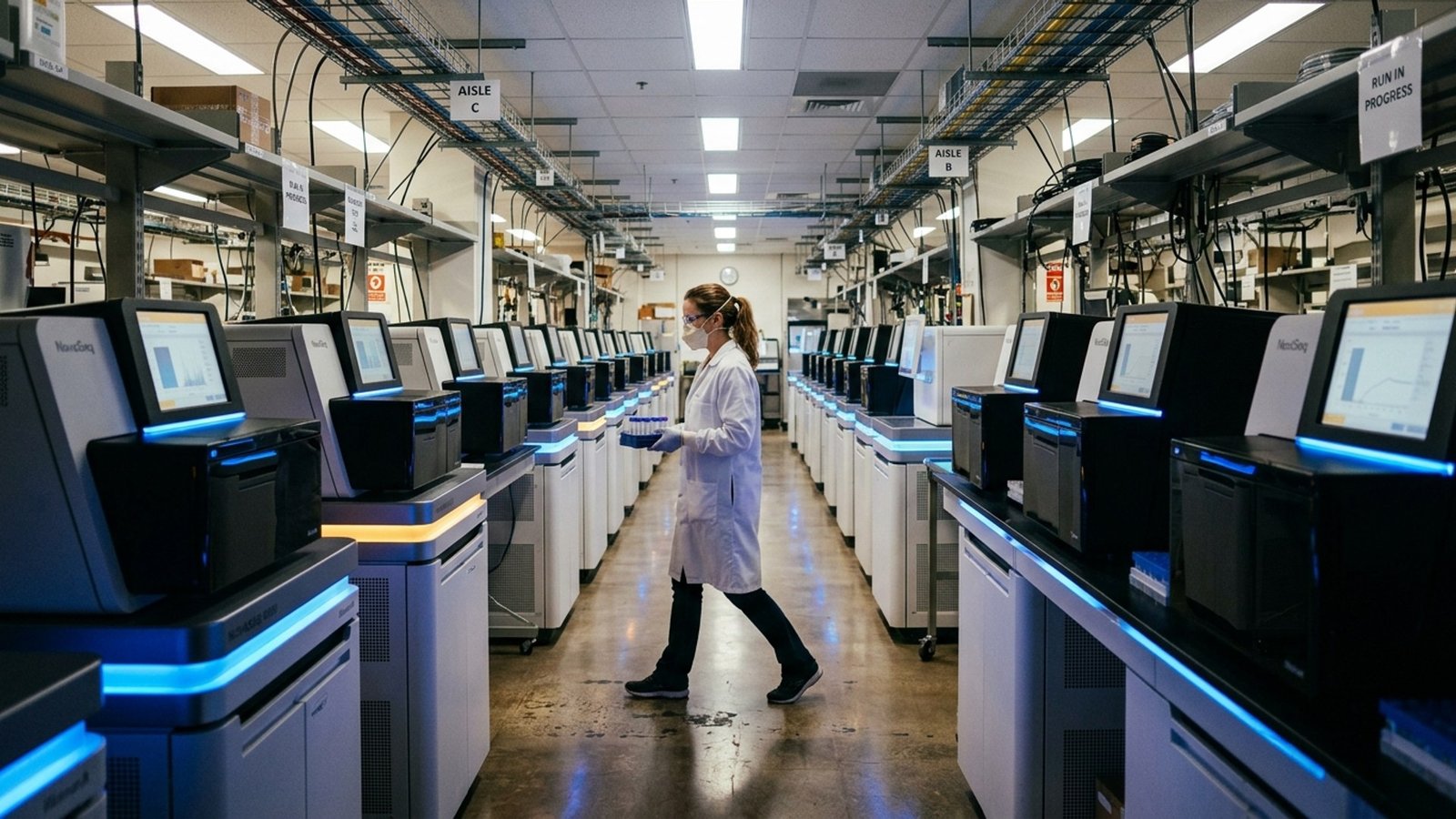
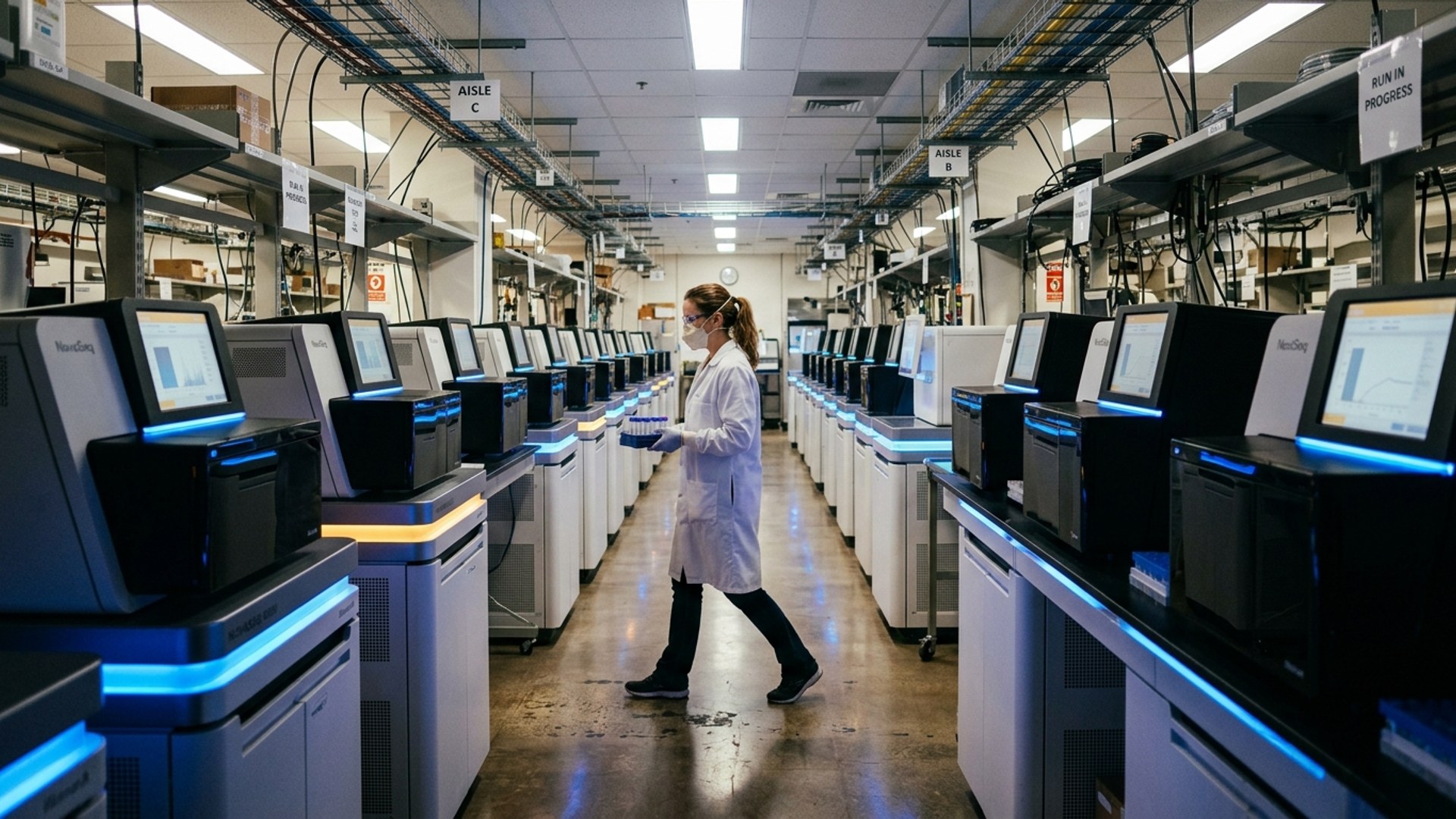
Researchers at the Stowers Institute for Medical Research have built an interpretation method that shows, base by base, what a deep-learning model has learned from DNA, and used it to strip a hidden experimental bias out of genomic data. The method, called PISA, is described in a paper published in Nature Communications in August 2026 and announced by the institute on August 25, 2026.

Sequence-to-function neural networks take raw DNA as input and predict the readout of genomics experiments, from transcription factor binding to nucleosome organization. What they cannot ordinarily tell you is why they make a given prediction. PISA, short for pairwise influence by sequence attribution, traces a model’s prediction at one exact genomic position back to every other base that influenced it, producing a two-dimensional map at single-base resolution of what the model learned rather than just what it predicted.

The study was led by Julia Zeitlinger at Stowers in collaboration with Anshul Kundaje at Stanford University, with Charles McAnany, a Stowers AI Fellow, as first author. PISA runs inside BPReveal, the lab’s latest extension of BPNet, a deep-learning framework the team first developed in 2021.

How PISA Separates Experimental Bias From Biology

The team applied PISA to MNase-seq, a widely used assay that maps nucleosomes, the structures formed when DNA wraps around histone proteins. The assay works by using an enzyme that cuts exposed DNA while leaving nucleosome-protected DNA intact, but the enzyme prefers some sequences over others. The data therefore contain two overlapping signals, and the model learned both.

Because earlier interpretation tools collapse each base’s influence into a single value, positive and negative effects can cancel out and disappear. PISA keeps the information at full resolution, and at that resolution the enzyme’s sequence preference showed up as a distinctive fingerprint on the maps. The team extracted that signature mathematically, trained a separate model on the bias alone, and subtracted it, leaving a second model that had learned only the biology.

“It’s a bit like super-resolution microscopy,” Zeitlinger said in the institute’s announcement. “Even the earlier interpretation methods opened the black box. Then you realize you can see even more. You’re adding pixels and suddenly you’re seeing things you couldn’t see before.”

The Surprise Hiding in Clean Data

Inside the bias-corrected model, PISA revealed DNA sequences that help position nucleosomes, with effects extending hundreds of base pairs in either direction. Many were asymmetric, influencing one side differently from the other. Following that asymmetry led the team to chromatin domain boundaries, the borders that determine which regulatory sequences can reach which genes. Those boundaries are normally mapped with 3D chromatin methods that demand enormous sequencing depth; the model surfaced thousands of them from nucleosome data alone, often more precisely than the 3D data allow, according to the paper.

The team then used the biology-focused models to design synthetic DNA sequences predicted to arrange nucleosomes in specific configurations, and tested a subset of those designs experimentally. The predictions held, evidence that the rules the model learned can generate testable hypotheses rather than merely describe existing data.

The work lands in a field that has been investing heavily in ever-larger sequence models. Google DeepMind’s AlphaGenome, published earlier in 2026 and cited in the PISA paper’s introduction, predicts the effects of regulatory variants across the genome. PISA addresses the complementary problem: once a model makes such predictions, understanding which sequence features it actually used. The method has already spread beyond the Zeitlinger lab, implemented in a separate software package by a collaborator and adopted by Stowers neuroscientist Neşet Özel for a different biological question.

PISA by the Numbers

  • 2021 – the BPNet deep-learning framework, PISA’s foundation, first developed by the team
  • April 8, 2025 – PISA preprint first posted to bioRxiv
  • August 2026 – peer-reviewed publication in Nature Communications
  • Hundreds of base pairs – the reach of individual nucleosome-positioning sequences the models uncovered
  • Thousands – chromatin domain boundaries identified from nucleosome data alone

The Limits the Authors State

This is a methods and genomics paper, and its disease relevance is a direction, not a result. Most disease-associated genetic variation sits in regulatory DNA rather than genes, and Zeitlinger is explicit that placing a variant in a binding site or at a domain boundary proposes a mechanism without producing a drug. The work also required a lab fluent in both deep learning and experimental biology, and Zeitlinger names that dual expertise as the field’s persistent gap rather than computational power.

The designed DNA sequences were validated only for a subset tested experimentally, and the paper’s bias-correction demonstration is specific to MNase-seq, though the authors show PISA applied to several data types. The preprint’s revision history shows the chromatin-domain analysis was added during peer review, after a revised version posted on January 5, 2026.

What the work does establish now is a way to audit what genomic models absorb from their training data, correct the parts that came from the experiment rather than the biology, and extract sequence rules precise enough to design and test against living systems.

[ad_2]

Source_link

READ ALSO

XPENG Commissions Humanoid Robot Lines as IRON Walks Off Production – Unite.AI

Matt Clifford Steps Down as ARIA Chair After Anthropic Move – Unite.AI

Related Posts

XPENG Commissions Humanoid Robot Lines as IRON Walks Off Production – Unite.AI
Al, Analytics and Automation

XPENG Commissions Humanoid Robot Lines as IRON Walks Off Production – Unite.AI

September 8, 2026
Matt Clifford Steps Down as ARIA Chair After Anthropic Move – Unite.AI
Al, Analytics and Automation

Matt Clifford Steps Down as ARIA Chair After Anthropic Move – Unite.AI

September 7, 2026
In “An Alien Mind,” OpenAI’s Jakub Pachocki Urges Shared Safety Bars – Unite.AI
Al, Analytics and Automation

In “An Alien Mind,” OpenAI’s Jakub Pachocki Urges Shared Safety Bars – Unite.AI

September 7, 2026
H Company Releases NeoMME: A Family of 260M and 800M Single-Tower Multimodal Encoders That Drop the Vision Tower and Causal Decoder
Al, Analytics and Automation

H Company Releases NeoMME: A Family of 260M and 800M Single-Tower Multimodal Encoders That Drop the Vision Tower and Causal Decoder

September 7, 2026
The Model, Tools, Memory, and Control Loop – Unite.AI
Al, Analytics and Automation

The Model, Tools, Memory, and Control Loop – Unite.AI

September 6, 2026
UC Berkeley Researchers Release CUA-Lite, an Open Platform Unifying Sandboxes, Data, Evaluation and RL for Computer-Use Agents
Al, Analytics and Automation

UC Berkeley Researchers Release CUA-Lite, an Open Platform Unifying Sandboxes, Data, Evaluation and RL for Computer-Use Agents

September 6, 2026
Next Post
9 Best Cloud File Security Software I Evaluated for 2026

9 Best Cloud File Security Software I Evaluated for 2026

POPULAR NEWS

Trump ends trade talks with Canada over a digital services tax

Trump ends trade talks with Canada over a digital services tax

June 28, 2025
15 Trending Songs on TikTok in 2025 (+ How to Use Them)

15 Trending Songs on TikTok in 2025 (+ How to Use Them)

June 18, 2025
Communication Effectiveness Skills For Business Leaders

Communication Effectiveness Skills For Business Leaders

June 10, 2025
Comparing the Top 7 Large Language Models LLMs/Systems for Coding in 2025

Comparing the Top 7 Large Language Models LLMs/Systems for Coding in 2025

November 4, 2025
App Development Cost in Singapore: Pricing Breakdown & Insights

App Development Cost in Singapore: Pricing Breakdown & Insights

June 22, 2025

EDITOR'S PICK

YouTube is streamlining hiring creators for brands with open call.

YouTube is streamlining hiring creators for brands with open call.

June 20, 2025

Your CEO’s words are now a KPI: Why every leader needs a style guide

November 1, 2025
How to Design a Fully Local Agentic Storytelling Pipeline Using Griptape Workflows, Hugging Face Models, and Modular Creative Task Orchestration

How to Design a Fully Local Agentic Storytelling Pipeline Using Griptape Workflows, Hugging Face Models, and Modular Creative Task Orchestration

December 13, 2025
A Coding Implementation to Parsing, Analyzing, Visualizing, and Fine-Tuning Agent Reasoning Traces Using the lambda/hermes-agent-reasoning-traces Dataset

A Coding Implementation to Parsing, Analyzing, Visualizing, and Fine-Tuning Agent Reasoning Traces Using the lambda/hermes-agent-reasoning-traces Dataset

May 2, 2026

About

We bring you the best Premium WordPress Themes that perfect for news, magazine, personal blog, etc. Check our landing page for details.

Follow us

Categories

  • Account Based Marketing
  • Ad Management
  • Al, Analytics and Automation
  • Brand Management
  • Channel Marketing
  • Digital Marketing
  • Direct Marketing
  • Event Management
  • Google Marketing
  • Marketing Attribution and Consulting
  • Marketing Automation
  • Mobile Marketing
  • PR Solutions
  • Social Media Management
  • Technology And Software
  • Uncategorized

Recent Posts

  • The AI visibility gap: Why great brands disappear from AI answers
  • XPENG Commissions Humanoid Robot Lines as IRON Walks Off Production – Unite.AI
  • Google partners on West Virginia energy storage project
  • Gemini Live and Find Hub
  • About Us
  • Disclaimer
  • Contact Us
  • Privacy Policy
No Result
View All Result
  • Technology And Software
    • Account Based Marketing
    • Channel Marketing
    • Marketing Automation
      • Al, Analytics and Automation
      • Ad Management
  • Digital Marketing
    • Social Media Management
    • Google Marketing
  • Direct Marketing
    • Brand Management
    • Marketing Attribution and Consulting
  • Mobile Marketing
  • Event Management
  • PR Solutions