Running a business today means managing a lot of moving parts. Sales teams using one tool. Customer data is sitting in another. Orders are coming in through your website, but the inventory is being tracked somewhere else entirely. Sound familiar?
This is where ERP integration comes in. And honestly, once you understand how it works, you’ll wonder how businesses ever survived without it.
In this guide, we’ll break down how ERP connects with CRM and e-commerce platforms, what that actually looks like in practice, and why getting it right can change everything for your business.
What Is ERP Integration, Really?
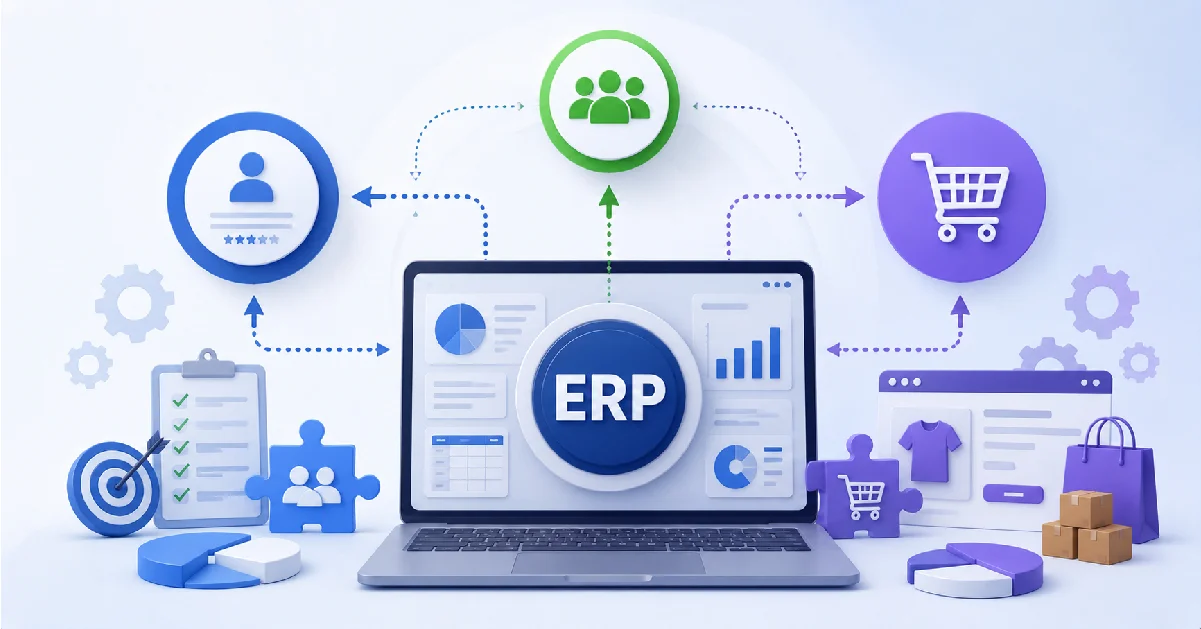
ERP stands for Enterprise Resource Planning. It’s essentially the central nervous system of a business, managing everything from finance and inventory to HR and procurement in one place.
But here’s the thing. An ERP sitting alone is powerful. An ERP connected to your CRM and e-commerce platform? That’s on a completely different level.
ERP integration simply means linking your ERP system with other business tools so that data flows automatically between them. No manual data entry. No copy-pasting between spreadsheets. No outdated information causing costly mistakes.
Why Do Businesses Need ERP and CRM to Work Together?

Let’s be honest. Sales teams love their CRM. They live in it. Meanwhile, the finance and ops team lives inside the ERP. These two worlds barely speak to each other, and that disconnect costs businesses both time and money.
Think about a situation where a sales rep closes a deal. Great news, right? But then the order has to be manually entered into the ERP system. That takes time. And mistakes happen. A wrong quantity here, a missing product code there, and suddenly you’ve got an angry customer on the phone.
When ERP and CRM are integrated, that whole process becomes seamless. The moment a deal is closed in your CRM, the order flows directly into the ERP. Inventory gets updated. The finance team sees it. Fulfilment begins. No phone calls back and forth. No manual work.
Here’s what ERP-CRM integration typically enables:
Real-time customer data visibility.
Sales reps can see a customer’s full order history, outstanding invoices, and payment status, right from within the CRM.
Accurate pricing and product information. No more quoting wrong prices because the product catalogue wasn’t updated.
Faster order processing. Orders move from quote to fulfilment without human intervention at every step.
Better forecasting. When sales data and operational data are in sync, predictions become far more accurate.
How ERP Integration with E-commerce Platforms Actually Works

E-commerce has exploded. Whether you’re selling on Shopify, WooCommerce, Magento, or a custom-built store, the volume of data that flows through an online store every single day is enormous.
Orders, customer details, product updates, shipping statuses, returns — all of it needs to be tracked. And if your e-commerce platform isn’t talking to your ERP, you’re basically running two separate businesses and hoping they stay in sync.
They won’t. Not for long.
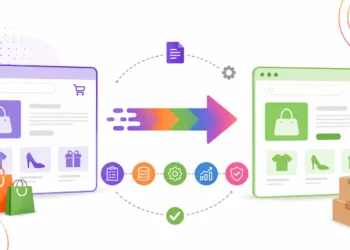
ERP integration with e-commerce platforms creates a live, bidirectional data connection. Here’s what that looks like in practice:
Inventory Synchronisation in Real Time
When someone buys a product from your online store, the ERP immediately updates inventory levels. If stock falls below a certain threshold, it can automatically trigger a reorder. No more overselling products you don’t have in stock. That kind of thing destroys customer trust very quickly.
Order Management Without the Chaos
Every order placed online is automatically pushed to the ERP. From there, it moves through picking, packing, and shipping, all tracked in one system. Customer service teams can see exactly where an order is without digging through multiple tools.
Pricing and Product Catalogue Accuracy
When you update a price or add a new product in your ERP, it reflects on your e-commerce store automatically. No more updating prices in three different places and still missing one.
Financial Data That Actually Adds Up
Every transaction, every return, every discount, all of it flows into the ERP’s financial module. Your accounting team doesn’t have to reconcile data from five different sources at the end of the month. The numbers are already there.
Common Methods Used for ERP Integration: APIs, Middleware, and More

Not all integrations work the same way. Depending on your systems and your budget, there are a few different approaches.
API-based integration is the most modern method. APIs (Application Programming Interfaces) allow two systems to communicate with each other directly and in real time. Most major ERP, CRM, and e-commerce platforms today offer APIs. It’s fast, flexible, and reliable.
Middleware or iPaaS platforms act as a bridge between systems. Tools like MuleSoft, Dell Boomi, or Zapier sit in the middle and handle the translation of data between platforms. This is a good option when you’re connecting systems that don’t naturally speak the same language.
Native integrations and connectors are pre-built connections offered by ERP vendors themselves. SAP, Oracle NetSuite, Microsoft Dynamics — they all offer native connectors for popular platforms like Salesforce, Shopify, or HubSpot. These can be quicker to set up, though they might have limitations.
Custom-built integrations are exactly what they sound like. Built from scratch by developers. Highly flexible, but expensive and time-consuming. Usually only makes sense for large enterprises with very specific needs.
The Challenges of ERP Integration
ERP integration isn’t always smooth sailing. Let’s be real about that.
Data inconsistency is a big one. If your CRM and ERP are storing customer information in different formats, say, different fields for addresses or different naming conventions, the integration can create messy, duplicated, or conflicting records.
Legacy systems are another headache. Older ERP platforms weren’t designed with modern integrations in mind. Connecting them with newer CRM or e-commerce tools can require significant customization.
Change management is often underestimated. Technology is the easy part, believe it or not. Getting teams to actually change how they work, that’s where things get complicated. If your sales team doesn’t trust the data coming from the ERP, they’ll just keep using their own spreadsheets anyway.
But none of these challenges is insurmountable. With proper planning, a clear data strategy, and the right implementation partner, most businesses get through them.
The Real Benefits of ERP Integration
We talk a lot about efficiency, and that’s fair. But ERP integration does something deeper than saving time. It changes how a business makes decisions.
When all your data is connected and flowing freely, you stop making guesses. You stop relying on gut instinct because the numbers are right there, updated in real time, and trustworthy.
Customer experience improves dramatically. When your support team can see a customer’s full history, purchases, returns, open invoices, and preferred products, they can actually help. Not just apologize and escalate.
Scalability becomes real. Growing businesses often hit a wall where the way they’ve always done things just doesn’t work anymore. Integrated systems scale with you. Adding a new sales channel, a new warehouse, or a new region doesn’t require rebuilding everything from scratch.
And for e-commerce businesses specifically, the ability to offer accurate stock information, faster shipping, and seamless returns is a genuine competitive advantage. Customers remember that. And they come back.
How to Choose the Right ERP Integration Approach for Your Business
There’s no single right answer here. But there are some questions worth asking before you start.
What systems are you currently using, and are they integration-friendly? Some platforms play nicer together than others. Check if your ERP vendor has existing connectors for your CRM and e-commerce platform before going custom.
What data actually needs to flow between systems? Not everything needs to be integrated. Focus on the data that, when siloed, causes the most pain. Usually, that’s orders, inventory, customers, and financials.
What’s your timeline and budget? A full custom integration can take months and cost significantly. An iPaaS solution might get you 80% of the way there in a fraction of the time.
And honestly, talk to people who’ve done it. Implementation partners, other businesses in your industry, and your ERP vendor’s support team. Don’t try to figure it all out from scratch.
Conclusion
The truth is, businesses that operate with disconnected systems are working harder than they need to. Every manual data entry, every miscommunication between departments, and every customer complaint stemming from incorrect information all add up.
ERP software development, with CRM Software development and e-commerce platforms, isn’t just a technical upgrade. It’s a fundamental shift in how a business operates. When your systems talk to each other, your people can stop worrying about data and start focusing on actual work.
Whether you’re a growing e-commerce brand trying to keep up with orders or a mid-size company whose sales and ops teams are constantly miscommunicating, integration is probably the single highest-impact investment you can make right now. And for better results, partner up with ERP software development in Bangalore and crm software development in Bangalore
Start with the pain points. Pick the right approach. And build toward a business where data actually works for you, not against you.