


Key Takeaways
- Choose what people will keep using: The strongest telehealth models solve ongoing needs, not one-time problems.
- Integration matters more than features: Platforms that fit into real care workflows tend to scale without friction.
- Recurring care drives stable revenue: Chronic care, employer-led models, and guided programs create consistent usage.
- Partnerships accelerate growth: B2B and hybrid approaches bring users in faster than going direct alone.
- Specialized and convenience-led models win: Focused care and at-home experiences keep engagement high and retention steady.
Sit in on any serious product or strategy discussion today, and the shift is hard to miss. Telehealth is no longer about adding a consultation layer. It’s about rethinking how care is delivered end to end, and more importantly, where the gaps still exist.
The market signals are strong. The global telehealth industry is projected to cross $219 billion in 2026, driven by AI-led workflows, stronger digital infrastructure, and rising demand for accessible care. Yet, despite this growth, many platforms are starting to converge. Similar features, similar experiences, and often, similar limitations once they scale.
The real opportunity sits elsewhere. Follow-ups remain inconsistent. Post-discharge care lacks continuity. Chronic conditions require ongoing engagement, not episodic visits. Providers still deal with fragmented systems that slow them down, while patients move through disconnected care journeys.
For businesses, this changes the focus. It’s no longer about launching another telehealth product. It’s about identifying where your solution fits within the broader care ecosystem and how it creates sustained value over time.
This blog breaks down telehealth business ideas rooted in these gaps, along with the models and systems that actually scale in production..
CTA 1: Turn Your Telehealth Idea Into a Scalable Product
Early decisions shape long-term scalability. Start with a system that’s built to grow, not rebuild.
Top 10+ Telehealth Business Ideas With Scalable Models
Telehealth growth in 2026 is driven by scalable, workflow-integrated models rather than standalone apps. The most successful platforms align with provider operations, enable repeat usage, and integrate with EHRs, diagnostics, and payer systems.
Here are telehealth business ideas that tend to hold up once things move beyond the early stage.
1. Hybrid Care Platforms (Virtual + In-Person Integration)
Most providers aren’t trying to replace clinics anymore. They just want the experience to feel connected. A patient might start online, get tests done offline, and come back for a visit if needed. When that flow feels smooth, people actually use it.
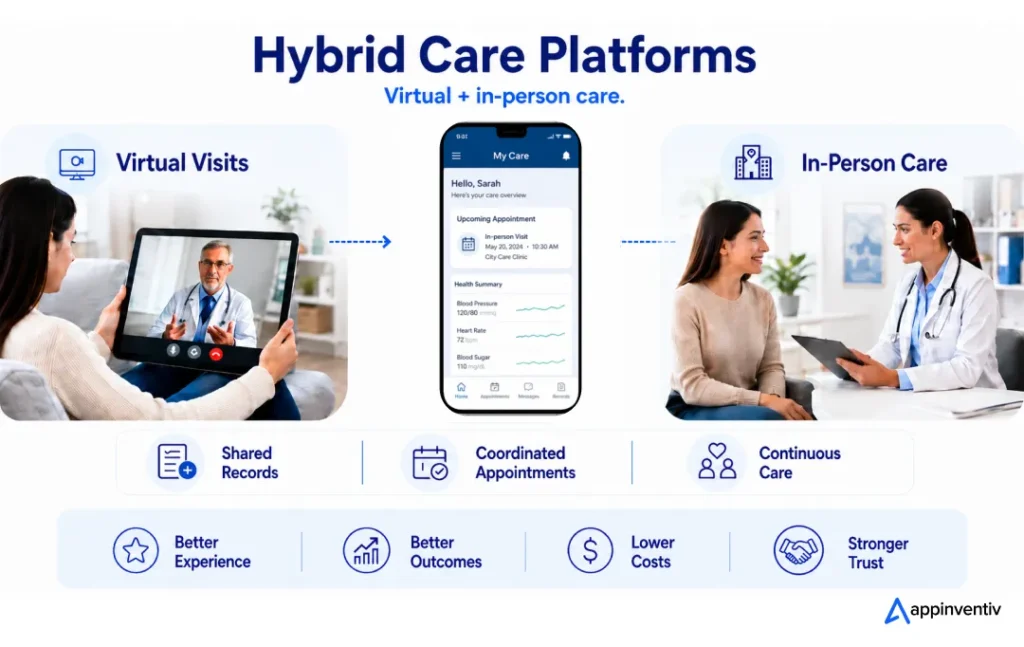
- Best fit: Hospitals, clinics
- Revenue model: Licensing + subscriptions
- Why it works: Once it becomes part of daily operations, it’s not easy to replace
2. Chronic Care Platforms With Remote Monitoring
This is where things become more predictable. With remote patient monitoring, patients with long-term conditions don’t need one consultation; they need ongoing support. That naturally creates repeat usage.
- Best fit: Diabetes, cardiac, long-term care
- Revenue model: Monthly plans + reimbursements
- Why it works: People stay because they need to, not because they’re reminded to
3. Virtual-First Specialty Clinics
Instead of doing everything, these go deep into one problem. Mental health, dermatology, pediatric care, and women’s health (FemTech, covering areas like reproductive care, pregnancy, and hormonal health) are seeing strong demand because the experience feels tailored rather than generic.
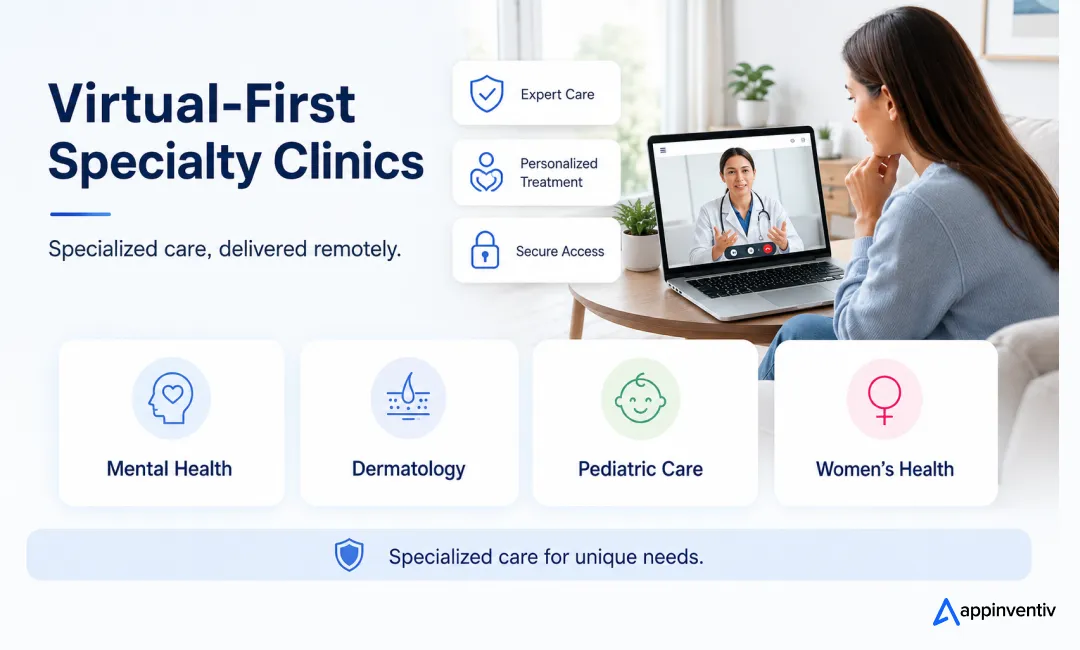
- Best fit: Focused specialties
- Revenue model: Pay-per-consult + subscriptions
- Why it works: Clear positioning makes adoption easier
Also Read: Women Health Tracking App Development
4. Employer-Focused Telehealth Platforms
A lot of growth is coming from companies trying to solve employee health issues. One partnership can bring in hundreds of users at once, which completely changes the economics.
- Best fit: Mid to large enterprises
- Revenue model: Per employee pricing
- Why it works: Distribution becomes easier once you land a contract
5. AI-Powered Symptom Triage and Assistants
You’ve likely used this without thinking about it. Those first few questions before booking? That’s often AI in healthcare deciding where you should go next.
- Best fit: High-volume platforms
- Revenue model: SaaS or API-based
- Why it works: It cuts down unnecessary consultations and saves time
6. Telehealth Infrastructure Platforms (APIs & White-Label Solutions)
Many companies don’t want to build everything themselves. They just need solid, ready-to-use components. This is where infrastructure platforms come in. You provide services such as video consults, an AI scheduling assistant, EHR integrations, and compliance layers that others can plug into their own products.
- Best fit: Healthtech startups, insurers, large platforms
- Revenue model: Usage-based + SaaS
- Why it works: You scale with your customers without managing patient care directly
7. Post-Discharge and Recovery Monitoring Platforms
The gap after a patient leaves the hospital is where things often go wrong. Simple tracking and follow-ups can prevent bigger issues later. This also extends into telerehabilitation, where patients follow guided recovery programs remotely through apps, wearables, or even VR-based therapy.
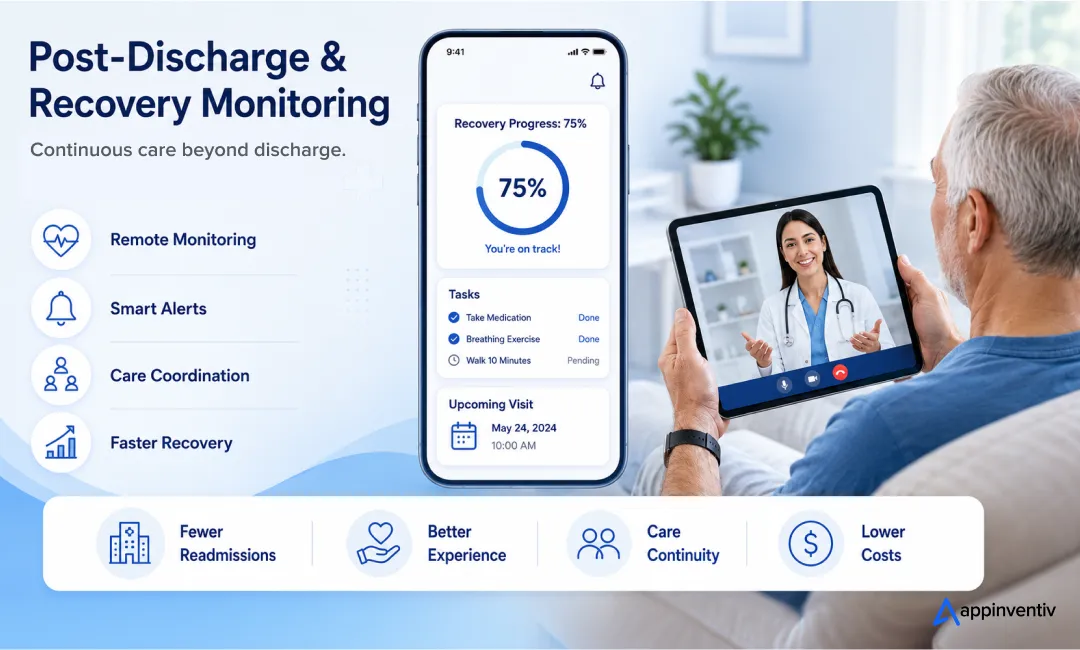
- Best fit: Hospitals, surgical care
- Revenue model: B2B + outcome-based
- Why it works: It directly reduces readmission costs
8. Digital Therapeutics and Guided Care Platforms
This is less about visits, more about outcomes over time. Patients follow structured programs instead of booking one-off consultations.
- Best fit: Mental health, lifestyle care
- Revenue model: Subscriptions
- Why it works: Engagement stays steady because the journey continues
9. Telehealth Marketplaces (Provider Aggregation Platforms)
Here, you’re connecting patients and providers rather than delivering care yourself. It’s a familiar model, which makes adoption easier.
- Best fit: Urban, fragmented markets
- Revenue model: Commission per booking
- Why it works: Supply grows faster than if you built it yourself
10. Home-Based Diagnostics + Telehealth Integration
Care is gradually shifting closer to home. Patients order test kits, get results digitally, and consult a doctor without visiting a clinic. It works well for routine checks and preventive care.
- Best fit: Diagnostics, preventive health
- Revenue model: Product + service bundles
- Why it works: Convenience keeps users coming back
Many platforms also extend into e-prescriptions and pharmacy integrations, enabling medication counseling and doorstep delivery as part of the care journey.
11. Clinical Decision Support & Predictive Care Platforms
This sits more in the background, but it’s where much of the value is being built. Instead of just enabling consultations, these platforms help doctors make better decisions using patient data and AI. For example, flagging early signs of risk or suggesting next steps during treatment.
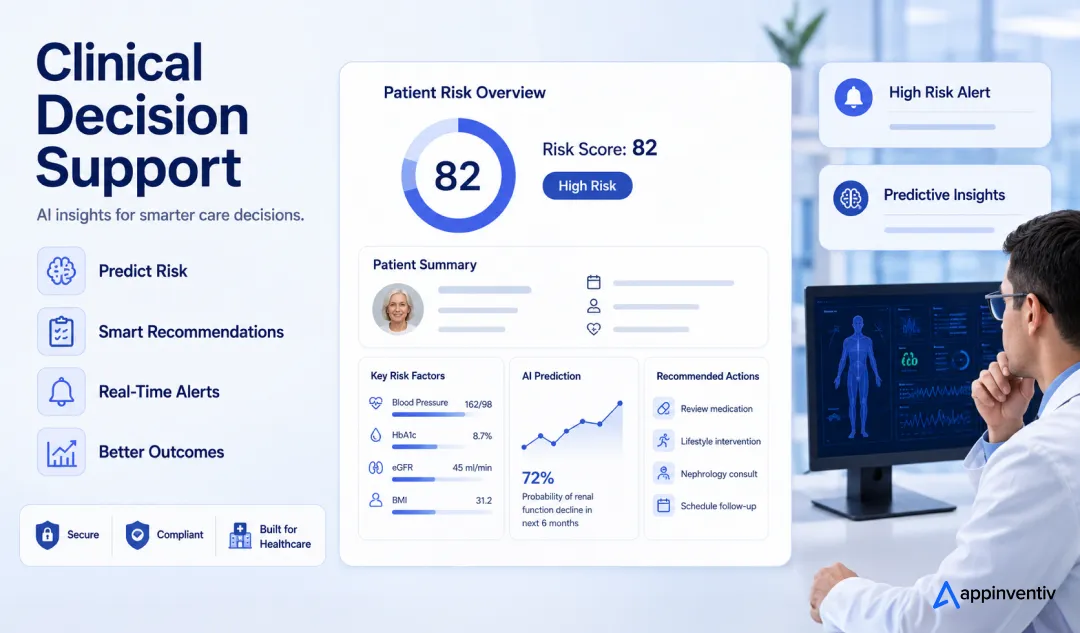
- Best fit: Hospitals, large clinics, high-volume platforms
- Revenue model: SaaS + enterprise contracts
- Why it works: It improves care quality while reducing workload, which matters at scale
12. Service-Based Opportunities in Telehealth
Not every telehealth business needs to face patients directly. A lot of value sits behind the scenes, helping providers run more smoothly as they scale.
- Medical Billing & Coding Services: Reduce admin load and keep revenue cycles consistent
- Telehealth Consulting: Help providers move to digital workflows with the right compliance and setup
- Infrastructure & Integration Services: Build the backend, from EHR integrations to APIs, so systems connect without friction
These telehealth business ideas aren’t just about adding features; they’re about where you fit in the larger system. The ones that last usually blend into existing workflows, make things easier for users, and keep people coming back.
How to Start a Telehealth Business in 2026
Building a telehealth business in 2026 requires a system-first approach. Success depends on designing connected care workflows, validating demand early, and aligning the architecture with compliance and interoperability standards such as HL7 and FHIR. Teams that prioritize integration readiness scale faster and avoid costly rebuilds.
It’s not just about how to start a telehealth business; it’s about setting it up so it still works when users grow, integrations stack up, and compliance kicks in.
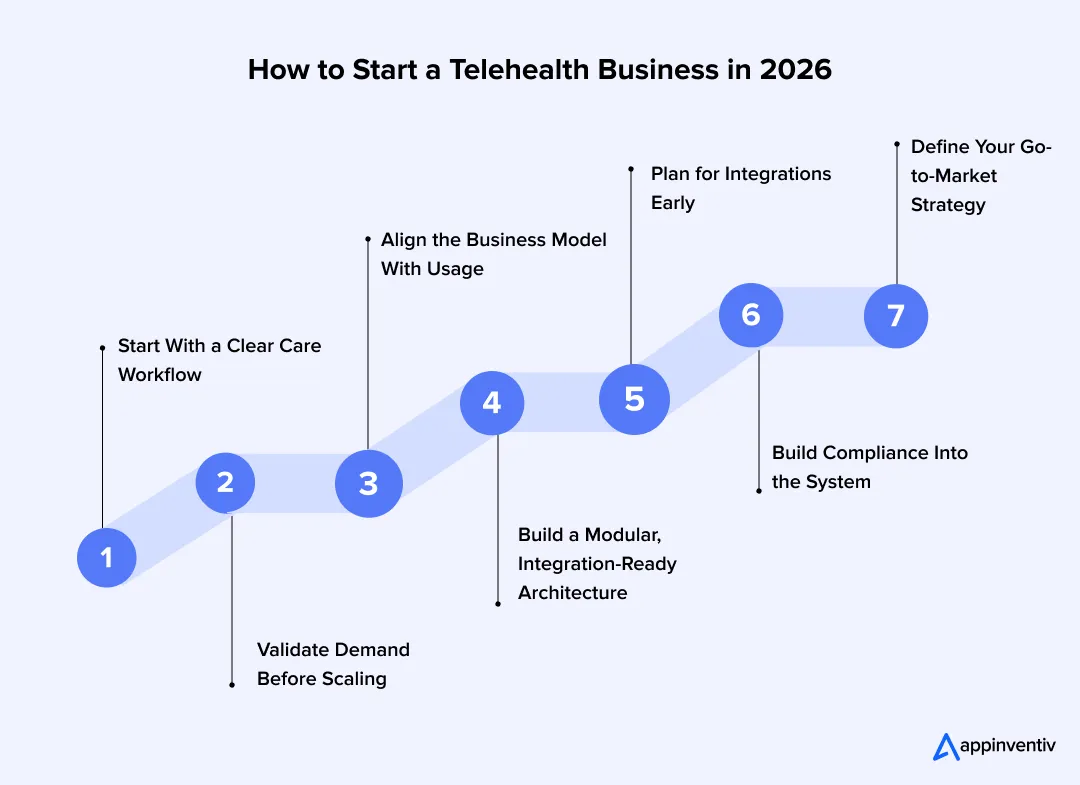
1. Start With a Clear Care Workflow, Not a Feature List
Many projects slow down because they begin with “we need a telehealth platform.” Instead, map one complete care journey:
- how users enter (symptom check, booking, referral)
- how consultations happen (video, chat, async)
- how diagnostics are handled (labs, monitoring)
- What follow-ups look like
This gives you a much clearer picture of what to build and what to integrate. It also makes your telehealth business plan more grounded in how care actually works.
2. Validate Demand Before Scaling Development
Before going deep into development, test the flow in a real environment.
- Run a pilot with a clinic or provider group
- Launch a basic version with only core features
- Track repeat usage, not just initial signups
If users don’t come back, the issue is usually in the workflow. This step matters more than most teams expect when figuring out how to start a telemedicine business.
3. Align the Business Model with Real Usage
Your telehealth business model should reflect how people actually use the service.
- B2C: pay-per-consult or subscription
- B2B: provider licensing or white-label
- B2B2C: employer or payer-driven access
The key is alignment. If your revenue depends on frequent use but your service is occasional, it won’t hold. This is where many telemedicine business models struggle later.
4. Build a Modular, Integration-Ready Architecture
When you move into how to build a telemedicine platform, avoid putting everything into one system. A more practical setup looks like:
- Frontend apps for patients and providers
- Backend services for scheduling, users and workflows
- Communication layer for video and messaging
- Data layer structured around healthcare standards
- API layer for EHRs, labs and payments
This kind of setup gives you flexibility. You can scale or change parts without reworking everything.
5. Plan for Integrations Early
Telehealth doesn’t exist in isolation. Even if you don’t build integrations right away, design for:
- FHIR-based EHR connections
- Lab and diagnostic data exchange
- Medical billing and Insurance workflows
Your telehealth technology stack should be ready to connect from the start. Fixing this later usually slows teams down.
6. Build Compliance into the System
In healthcare, compliance isn’t something you add later. At a basic level:
- Encrypt data in transit and at rest
- Set up role-based access controls
- Maintain audit logs for data access
Getting this right early helps you stay aligned with the broader Telehealth regulatory compliance & legal framework as you scale.
7. Think About Distribution Before Launch
A good product without users doesn’t go far. Before launch, be clear on:
- how you’ll acquire users (providers, employers, direct)
- How onboarding works
- What brings users back
This becomes the foundation of your telehealth go-to-market strategy.
If you’re starting a telehealth business, think in layers. Prove the workflow, build a clean foundation, then scale once usage is real. The goal isn’t to launch a feature-heavy product. It’s to build something that connects well, handles complexity, and grows without forcing you to rebuild later.
Move From Plan to Launch Without Delays
You’ve mapped the workflow. Now build it with the right stack, integrations, and compliance from day one.

Choosing the Right Telehealth Business Model for Your Stage
This is where teams usually pause. The idea looks solid, but the real question is whether it will scale into a sustainable business. The right telehealth business model isn’t about complexity; it’s about fit.
| Stage | Focus | What Works | What to Avoid |
|---|---|---|---|
| Early Stage (MVP) | Validate demand without overbuilding | Direct-to-consumer consults, pay-per-visit or basic subscriptions, focused use cases | Heavy integrations (EHR, insurance), complex platforms, too many user types |
| Growth Stage | Build consistency and predictable revenue | Subscriptions, care plans, hybrid B2C + B2B, employer partnerships, chronic care models | Over-reliance on one-time visits, weak retention strategy |
| Scale Stage | Handle complexity and expand efficiently | Platform-based models, B2B, B2C partnerships, API-driven expansion, multi-service offerings | Rigid systems, delayed compliance and poor integration planning |
Across all stages, one thing stays constant. Your revenue must align with real usage. If users don’t come back, the model won’t hold. Start simple, prove value, then scale.
Telehealth Technology Stack and Platform Architecture
A modern telehealth platform is no longer a frontend-backend setup. It’s a layered system built around interoperability, real-time intelligence, and security. Enterprise-grade platforms in 2026 rely on FHIR-based data exchange, AI-driven decision layers, and zero-trust security to handle scale, compliance, and performance.
Here’s a practical way to look at a telehealth technology stack without overcomplicating it:
| Layer | Common Tech Choices | What It Does |
|---|---|---|
| Frontend (User Apps) | React, Flutter, Swift, Kotlin | Where patients and doctors interact, booking, consults follow-ups |
| Backend (Core Logic) | Node.js, Python, Java (microservices) | Runs scheduling, user data, consultations, workflows |
| Communication Layer | WebRTC, Twilio, Agora | Handles video calls, chat and notifications |
| Data Layer | PostgreSQL, MongoDB, cloud storage | Stores patient info and medical records |
| Integration Layer (APIs) | FHIR, HL7, REST APIs | Connects with EHRs, labs and payments |
| AI Layer (Optional Early) | NLP, ML models, AI APIs | Helps with triage, automation and insights |
| Security & Compliance | HIPAA-ready cloud, encryption, IAM | Protects patient data and controls access, Zero Trust Identity (IAM) |
| Infrastructure (Cloud & DevOps) | AWS, Azure, GCP, Docker, Kubernetes | Runs and scales the platform |
| Interoperability Layer (FHIR 5.0–Driven) | FHIR 5.0 API Gateway | Real-time data exchange, decoupled from legacy EHRs |
| Intelligence Layer (AI + Edge Processing) | On-device SLMs (Small Language Models) | Local triage without exposing PII to the cloud |
| Networking | WebRTC + 5G Slicing | Priority bandwidth for critical consultations |
| Data Standards | HL7 v2/v3, DICOM | Structured clinical + imaging data exchange |
A strong telehealth technology stack isn’t about having more tools. It’s about how well everything fits together.
If you’re planning this out, keep it simple, keep it connected, and make sure it can grow without forcing you to rebuild things later. That’s what usually makes the difference.
Telehealth Regulatory Compliance and Legal Framework
Compliance in telehealth is now architecture-driven rather than policy-driven. Platforms must embed standards such as HIPAA, GDPR, and NIST 2.0 directly into their system designs. As AI adoption grows, frameworks like the EU AI Act define how high-risk healthcare systems are built, validated, and monitored at scale.
This is the part teams often try to “handle later.” In telehealth, that usually doesn’t work. Healthcare compliance isn’t a layer you add at the end; it shows up in how you store data, who can access it, and how your system behaves every day.
Here’s a straightforward way to look at the Telehealth regulatory compliance & legal framework without overcomplicating it:
| Area | What It Covers | Key Standards | What It Looks Like in Practice |
|---|---|---|---|
| Patient Data Privacy | How patient data is collected and shared | HIPAA, GDPR | Clear consent screens, limited data access and no unnecessary data collection |
| Data Security | Protecting data from breaches | TLS/SSL, AES-256 | Data is encrypted while moving, and when stored, no open gaps |
| Access Control | Who can view or edit data | RBAC, IAM | Doctors, admins, and patients only see what they need, nothing extra |
| Interoperability | Data exchange with other systems | FHIR, HL7 | Your platform can connect with EHRs, labs, and third-party tools without friction |
| Audit & Logging | Tracking system activity | Audit logs | Every action on patient data is recorded and traceable |
| Provider Licensing | Where doctors can legally practice | Regional laws | Basic checks to ensure providers are verified and operating in the right regions |
| ePrescriptions | Handling prescriptions digitally | eRx standards | Prescriptions are stored securely and can be tracked when needed |
| Payments & Billing | Handling transactions securely | PCI-DSS | Payment flows are protected and aligned with healthcare billing systems |
| Data Residency | Where patient data is stored | Regional laws | Data is stored in the regions required by local regulations |
| AI Governance | Use of AI in care decisions | Emerging AI guidelines | AI supports decisions but doesn’t replace clinical judgment |
This isn’t about ticking compliance boxes. It’s about making sure your system handles patient data the right way from day one.
If you’re building this out, keep it simple. Secure the data, properly control access, and ensure everything is traceable. That’s what keeps you out of trouble later, especially when the platform starts growing.
Build a Secure and Compliant Telehealth Platform
Get compliance, data security, and integrations right from day one to avoid costly rework later.

Future Trends Shaping Telehealth Business Ideas Beyond 2026
You can already feel the shift if you look closely. Telehealth isn’t growing in spikes anymore; it’s settling into everyday care. The focus now is less on access and more on how smoothly everything works together.
- Telehealth is becoming routine, not optional
The market is expected to reach $191.8 billion by 2026, indicating this isn’t a short-term spike anymore. It’s part of everyday care now. - Digital health is getting bigger than teleconsultation
The broader digital healthcare market is projected to hit $323.8 billion in 2026. That growth is coming from connected systems, not just video visits. - Remote monitoring is already in motion
Over half of U.S. adults have used telehealth, and with wearables in the mix, care is starting to happen between visits, not just during them. - Data is piling up faster than systems can keep up
Healthcare data is expanding quickly, which is why platforms that can handle real-time signals are getting more attention. - Security is no longer a backend concern
The average healthcare data breach cost has reached $7.42 million, so this is now something leadership teams watch closely. - The U.S. market alone shows how fast this is scaling
It’s expected to reach $63.87 billion by 2026, which gives a good sense of how quickly adoption is moving at an enterprise level.
When you step back, the pattern is fairly simple. Telehealth isn’t just growing as a feature. It’s becoming part of a larger system where continuity, data, and integration decide what actually works.
Telehealth is moving toward connected care, not isolated tools. The real value now comes from systems that work across the journey, from first interaction to ongoing care, without breaking along the way.
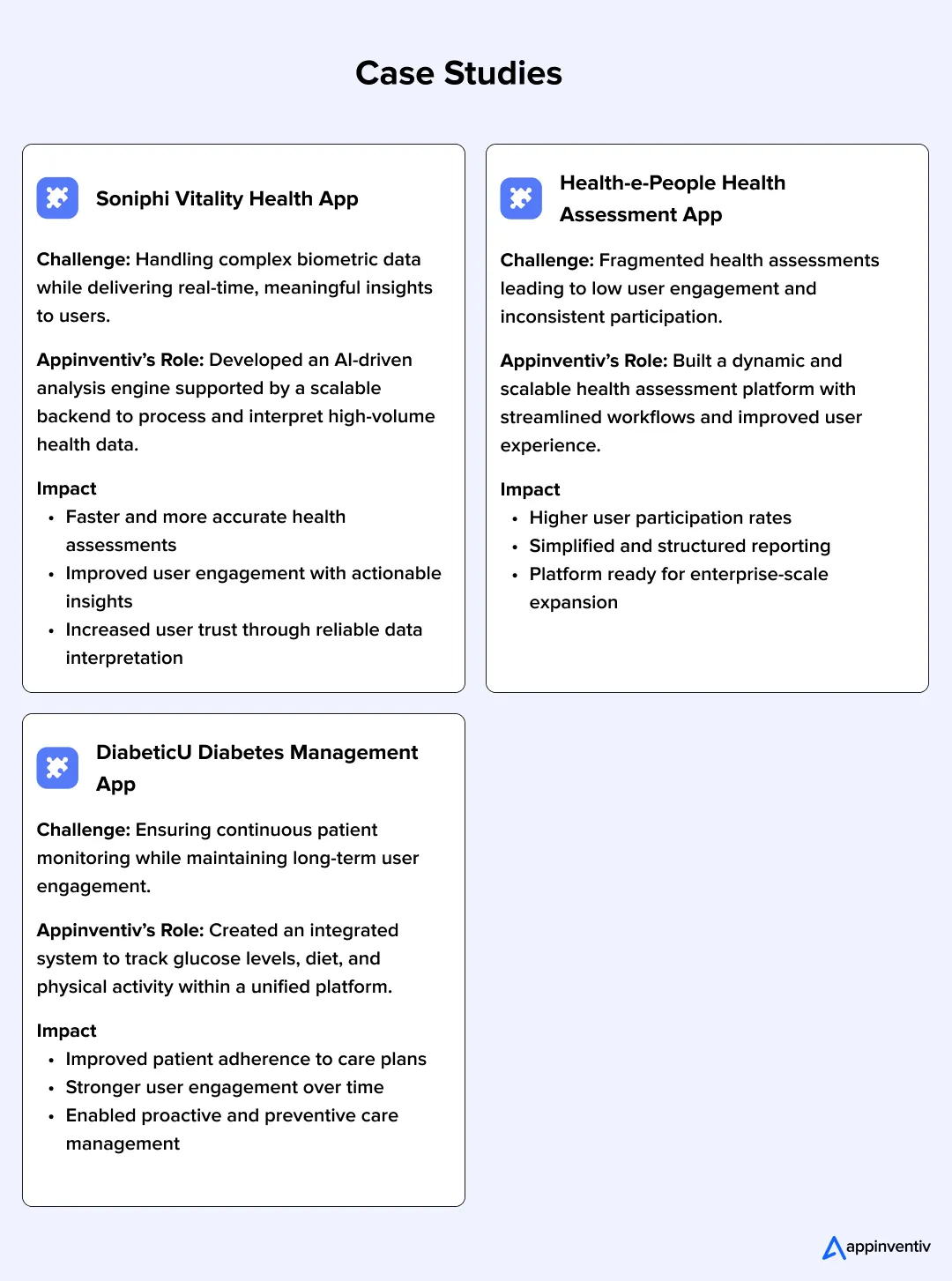
How Appinventiv Helps You Build Scalable Telehealth Solutions
Once you get into execution, things tend to get real very quickly. What looked simple on paper now involves integrations, compliance, and workflows that actually need to work day-to-day. That’s where working with a dependable telemedicine app development company helps. At Appinventiv, the focus is on building systems that stand up to real-world use, from secure consultations to EHR integration to handling growing user loads.
The approach stays grounded. Instead of trying to build everything up front, the idea is to start with a clean, workable foundation. Something you can launch, test with real users, and then expand without having to redo the core system. That usually means modular architecture, well-planned integrations, and keeping things simple where it matters.
With 500+ digital health platforms delivered, 450+ healthcare clients served, and 10+ years of HealthTech experience, the work is grounded in solving real scaling challenges.
Here’s how that plays out in practice:
FAQs
Q. How to start your own telehealth business in 2026?
A. Most people overcomplicate this at the start. You don’t need a full platform on day one. Pick one clear use case, test it with real users, and build only what’s needed to get it running. When you’re figuring out how to start a telehealth business, the goal is to validate first, then expand. That approach usually saves both time and budget.
Q. What legal entity should I use for a telehealth startup?
A. In most cases, founders go with an LLC setup because it keeps things flexible and protects you legally. The exact choice depends on where you’re based and how you plan to grow. Since healthcare involves patient data and regulations, it’s a good idea to get legal advice early so you’re aligned with the Telehealth Regulatory Compliance & Legal Framework from the start.
Q. How to start a telehealth nursing business?
A. This is more focused on care delivery than tech. You start by choosing a specific area, like elderly care, chronic condition support, or post-surgery follow-ups. Then build simple workflows around virtual check-ins and monitoring. If you’re starting a telehealth business in nursing, licensing and data handling become just as important as the platform itself.
Q. How much does it cost to start a telehealth business?
A. It really depends on how much you try to build upfront. A simple version can cost around $40,000 to $400,000, while more advanced platforms with integrations can go higher. Most of the cost comes from development, integrations, and compliance. If you’re thinking about building a telemedicine platform, starting small usually keeps things under control.
Q. How long does it take to build a telehealth business?
A. A basic version can be ready in about 3 to 6 months if you keep the scope tight. More complex setups with integrations and compliance layers can take closer to 6 to 12 months. When working through how to start a telemedicine business, teams that focus on one workflow first usually move faster and avoid delays later.













![13 best social listening tools for brands [free + paid]](https://mgrowtech.com/wp-content/uploads/2026/01/social-listening-tools-1-120x86.png)
