[ad_1]

Jessica Abbadia
07 August 2026
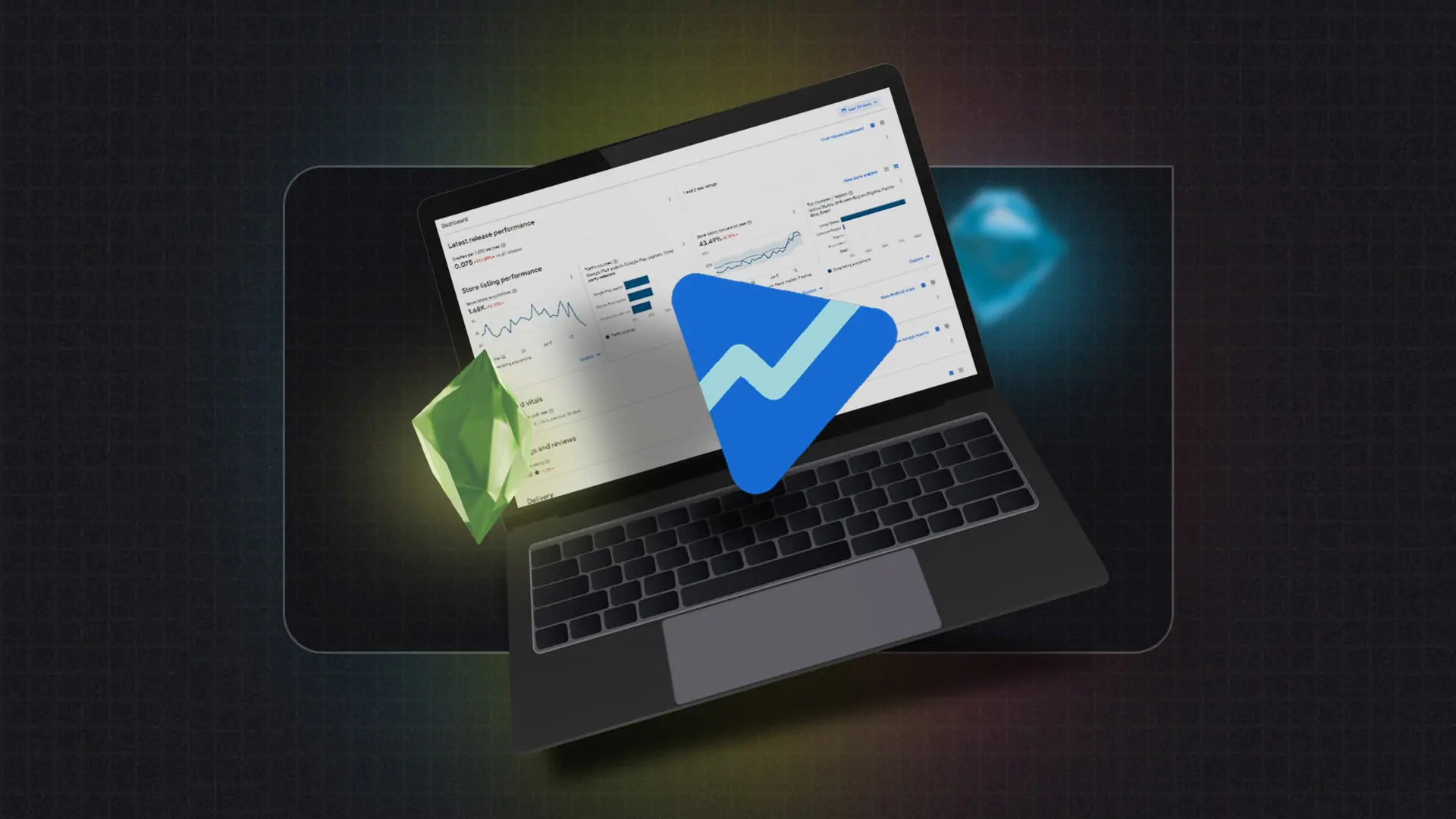
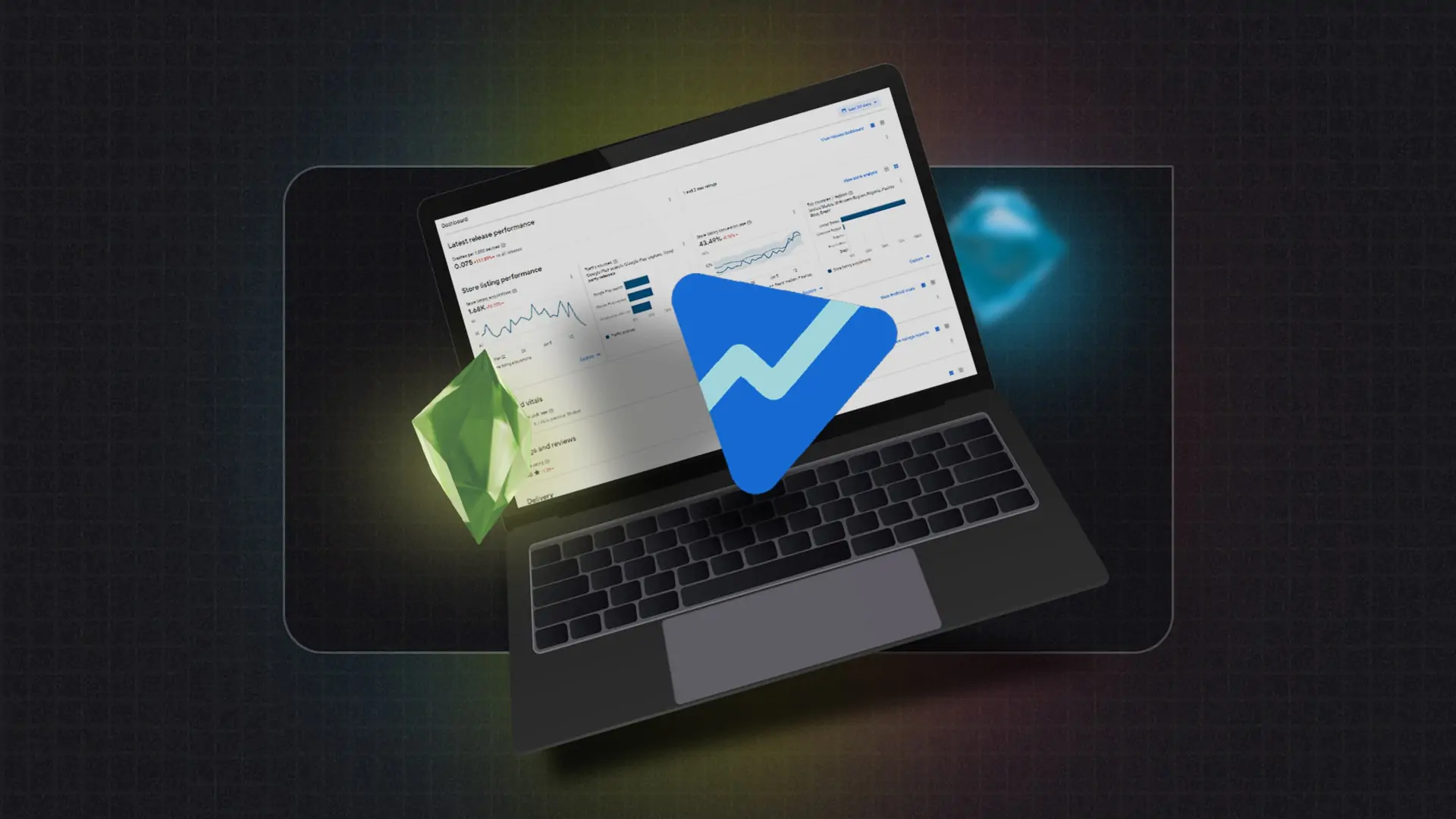
Google Play Console just rolled out its most significant analytics overhaul in years, and the changes affect every app marketer who relies on store listing data for ASO decisions. If you’ve logged into Play Console recently and noticed your metrics look different, you’re not imagining things.
From click-based metrics replacing acquisitions, to a new AI-powered search experience called Ask Play, to Gemini integration across both the Play Store and Play Console’s reporting tools, this update reshapes how users discover apps and how ASO teams measure performance. Here’s a full breakdown of what changed, what it means for your workflow, and how to adapt.
Clicks Replace Acquisitions as the Primary Store Listing Metric
The biggest shift in this update is a fundamental change in what Play Console measures on the Store Analysis and Conversion Analysis pages.
Previously, store listing performance was measured by acquisitions: users who visited your listing and completed an install. As of June, the primary metrics for store listing performance are now based on unique clicks. Play Console counts unique users who click the Install, Open, or Pre-register buttons on your listing, rather than tracking whether those installs actually completed.
Why does this matter? Because click-based measurement captures user intent at the exact moment your listing influences a decision. A user who taps “Install” has already been converted by your screenshots, description, and creative assets, even if the download is interrupted by a network issue, storage limits, or device compatibility. Under the old system, those lost completions made your listing look worse than it actually performed.
Where Acquisition Data Still Lives
Acquisitions haven’t disappeared. Completed install data is still available on the Grow Users overview page, in Statistics, and in downloadable reports. The change is about which metric sits at the center of your store listing optimization workflow: clicks now hold that position, while acquisitions move to a supporting role.
This also means your Conversion Analysis page now shows visitors, clicks, and click-through rate (CTR) instead of visitors, acquisitions, and conversion rate. If you’ve built dashboards or reporting templates around the old acquisition-based conversion rate, you’ll need to update those references.
One thing we’ve noticed in our own use of the updated console:
Deeper breakdowns can be harder to analyze in a single view. If you want to view performance by traffic source while also filtering by country, for instance, you can’t currently apply both dimensions simultaneously. That makes it trickier to understand how acquisition or click performance varies across sources within specific markets. Whether this is a temporary limitation or something Google plans to address remains to be seen, but it’s worth flagging for teams that rely on multi-dimensional reporting.
The New Reach Metric: Measuring Visibility Beyond Installs
Alongside the click-based shift, Google introduced a new reach metric that gives developers and ASO teams visibility into impressions and overall exposure on Google Play.
Before this update, Play Console’s reporting started at the store listing visit. You could see how many users arrived at your page and what percentage converted, but you had limited insight into how many users saw your app across Google Play’s various surfaces (search results, explore pages, editorial content, top charts) without clicking through.
The new reach metric fills that gap. As described in the I/O announcements from Google, developers can now see their app’s total visibility on Play, including indirect value that wasn’t previously reported.
For ASO teams, this changes how you measure the full impact of metadata optimizations, keyword targeting, and creative updates. If your keyword strategy is putting your app in front of more users but your CTR is flat, the reach metric helps you diagnose whether the problem is visibility or creative appeal.
Ask Play and Gemini Discovery: How AI Is Changing App Search
Beyond the analytics overhaul, Google also introduced fundamental changes to how users find apps in the first place, and these changes have direct implications for how ASO teams write metadata.
What Is Ask Play?
Ask Play is a natural-language, AI-powered search interface built directly into the Play Store. Instead of typing short keyword queries like “running app free,” users can now ask complex, problem-oriented questions like “What’s the best running app that doesn’t require a subscription?” Ask Play processes the full context of the question, returns AI-curated app recommendations, and adapts to follow-up questions in a conversational flow.
The search results page also now surfaces Ask Play highlights: bulleted summary cards that give users a high-level answer to complex queries before they even tap into individual listings.
Apps Are Now Discoverable Inside the Gemini App
Google also enabled app discovery directly within the standalone Gemini app on Android and web. This means users who ask Gemini for help with a task (e.g., “I need an app to track my hiking routes”) can receive app recommendations and get directed straight to Play Store listings for installation.
What This Means for ASO Metadata Strategy
This is where the practical ASO impact gets serious. Because Ask Play and Gemini parse the entire long description to match user intent (rather than scanning for isolated keyword matches), the traditional approach of keyword density and repetition is losing effectiveness.
What works now is structuring your metadata using natural language that directly answers user problem statements. Think clear headers within your description, benefit-driven bullet points, and full sentences that describe what your app does and who it’s for. The goal is to write descriptions that read like helpful answers, because that’s exactly how the AI interprets them.
Gemini-Powered AI Insights Across Reporting Pages
The Gemini integration extends into Play Console’s reporting tools as well. Previously, chart descriptions were only available on the Statistics page. Now, AI-generated chart descriptions and an interactive Q&A feature are available across three core pages: Statistics, Reach and Devices, and Store Performance.
How Interactive Q&A Works
The interactive Q&A feature lets you ask natural language questions about your data directly within Play Console. You can select “Explore this chart with AI” on any time-series chart and ask things like “Why did my conversion rate drop last Tuesday?” or “Which countries are driving the most growth this month?” Gemini processes your app’s data and returns contextual answers with recommendations.
This shifts the reporting experience from passive data visualization into active, conversational analysis. Instead of exporting CSVs and building pivot tables to find anomalies, you can surface insights in seconds.
For ASO practitioners managing multiple apps or large keyword portfolios, this kind of rapid analysis can cut hours from weekly reporting cycles. According to the Q2 update from Google Play, the goal is to move developers from seeing data to getting actionable guidance, all within Play Console itself.
New Traffic Source Breakdowns and Downstream Metrics
Google also expanded how traffic sources are reported, adding new breakdowns that connect acquisition channels to downstream business outcomes.
You can now analyze traffic sources alongside engagement, retention, and monetization data. This means you can answer questions like “Are users from Google Play Search retaining better than users from Explore?” or “Which traffic source drives the highest revenue per user?”
Cart Conversion Rates
For apps with in-app purchases or subscriptions, Play Console now includes cart conversion rates as a core performance metric. This tracks the percentage of users who begin a purchase flow and complete it, helping teams identify friction points in their checkout experience.
Subscriber Churn and Tenure Data
New data on subscriber tenure and churn reasons is also available. You can now see how long subscribers stay active and the specific reasons they leave, whether that’s payment failure, voluntary cancellation, or downgrade. This kind of granularity helps subscription-based apps build targeted retention strategies rather than guessing.
AI-Powered Store Listing Tools for ASO Teams
Beyond analytics, the update includes new AI-driven tools that streamline store listing management, two of which are especially relevant for ASO teams.
Bulk Localization via Structured File Upload
Developers can now upload a structured file (CSV or Google Sheet) to pre-populate store listings across different languages. Gemini handles the initial translations, and you review and refine from there. For apps targeting multiple markets, this eliminates the tedious copy-paste workflow that slowed down localization efforts.
One-Click Keyword-to-Custom-Store-Listing Generation
On the Grow overview page, Play Console now surfaces keyword recommendations. When you click on a recommended keyword, Gemini automatically generates a new custom store listing tailored to that search term, ready to deploy. As noted on the Play Console Help Center, this connects search trend data directly to listing optimization in a single step.
This is particularly useful for ASO teams running custom store listing experiments, since it reduces the setup time from hours to minutes.
What This Means for Your ASO Strategy
These changes add up to a meaningful shift in how ASO teams should approach Google Play optimization. The metrics are different. The way users search is different. And the tools available inside Play Console have taken a major step forward. Here are the key takeaways:
Update your reporting baselines. If you’ve been tracking acquisition-based conversion rates as your north star, switch to click-based CTR. Flag the July 10th cutover date in your reports so stakeholders understand why historical numbers aren’t directly comparable.
Use the reach metric to measure the full funnel. Keyword ranking improvements should now be validated against both reach (impressions) and clicks, giving you a two-stage view: “Are we being seen?” and “Are we converting interest?”
Rewrite your metadata for AI-driven discovery. With Ask Play and Gemini now parsing long descriptions for intent matching, shift your descriptions away from keyword repetition and toward natural-language answers to user problems. Structure them with clear benefit statements and headers so the AI can match your app to conversational queries.
Take advantage of Gemini Q&A for faster diagnostics. Instead of spending time manually slicing data, use the AI-powered Q&A to quickly identify what’s driving metric changes. This frees up time for the strategic work: testing new creatives, refining metadata, and expanding into new markets.
Connect acquisition data to retention and revenue. The new traffic source breakdowns let you close the loop between ASO efforts and business outcomes. Use this to prove the ROI of organic optimization in ways that weren’t previously possible within Play Console alone.
For a deeper look at all the changes announced during Q2, check out the Play Console’s What’s New page.
FAQs
Starting June, Play Console measures store listing performance by unique users who click Install, Open, or Pre-register. This replaces acquisitions (completed installs) as the primary listing metric.
Yes. Acquisition data remains available on the Grow Users overview page, in Statistics, and in downloadable CSV reports. It has moved to a supporting role rather than the primary metric for store listing analysis.
The reach metric measures your app’s total visibility across Google Play surfaces, including impressions in search results, explore pages, and editorial features. It captures exposure that previously went unreported.
Ask Play uses AI to match apps to natural-language user queries. This means metadata should focus on answering user problems in full sentences rather than repeating keywords. Structure descriptions with clear headers and benefit-driven language.
Gemini generates chart descriptions and powers an interactive Q&A feature on the Statistics, Reach and Devices, and Store Performance pages. You can ask natural language questions about your data and receive contextual answers with optimization recommendations.
Jessica Abbadia
Jessica is Moburst’s VP of Organic. She specializes in enhancing organic performance for apps and games all over the world, while actively developing innovative methods for increasing app visibility and conversion, as well as offering her vast knowledge for the benefit of the mobile community.
She graduated from law school and now serves as an animal rights activist who also loves reading books while sipping a strong coffee and holding one – or more – of her three cats.

[ad_2]
Source_link