[ad_1]
Grocery loyalty programs aren’t the industry’s weak link. According to Antavo’s Global Customer Loyalty Report 2026, grocery program owners report satisfaction, perceived value, and return on investment that match or beat the market average. Grocery loyalty program trends for 2026 point to a category confident in what it already has, and considerably more cautious about the one thing everyone keeps telling it to adopt next.
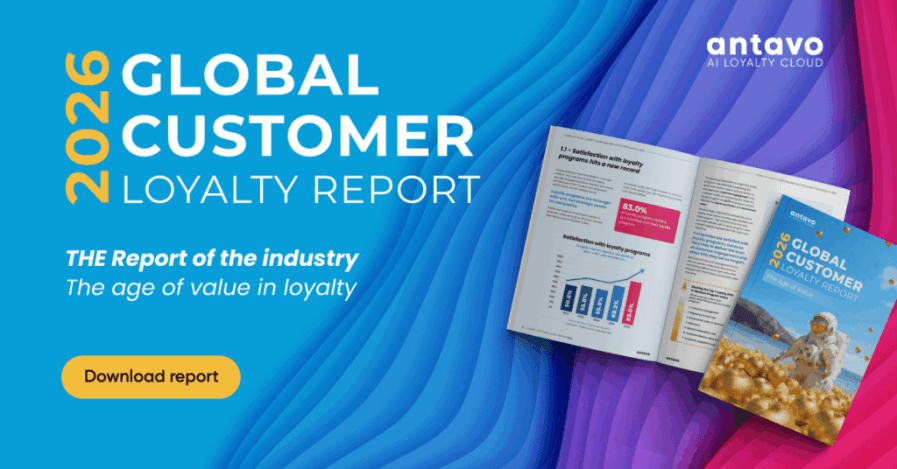
This report breaks down where grocery outperforms, where it’s genuinely behind, and, using data from brands actively planning a launch, what’s really holding the category back from closing the gap. For more loyalty statistics (both about the grocery vertical and the industry at large), be sure to download our full report.
Grocery Loyalty Programs Already Work: The Data Backs It Up
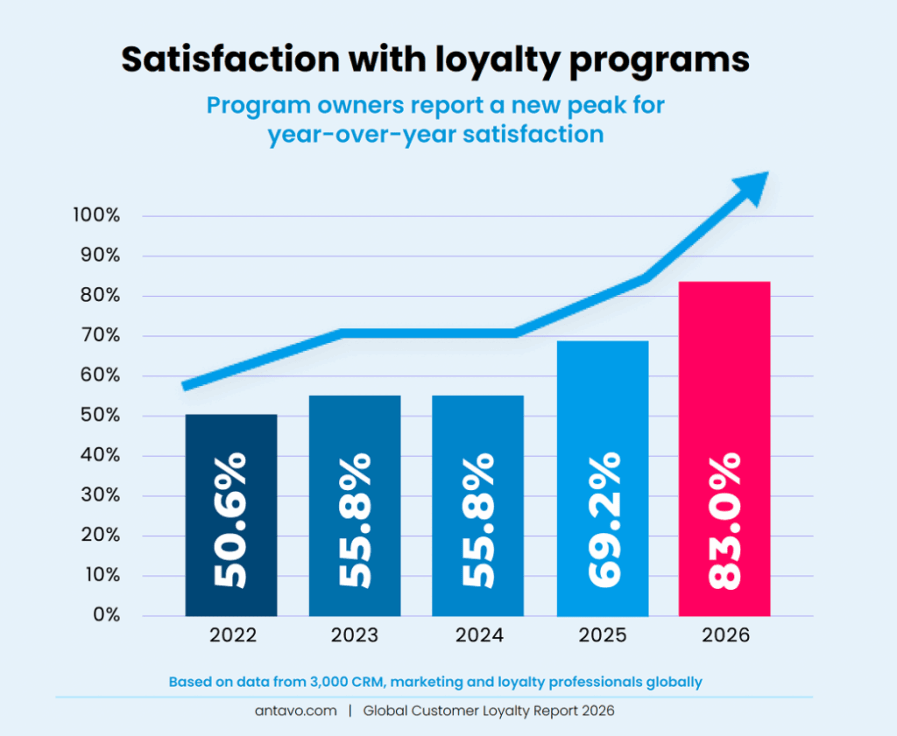
Owners of existing grocery loyalty programs (OLP) are, by most measures, in line with or slightly ahead of the global average. 84% of grocery loyalty owners are satisfied with their program, against 83% globally, which reads as a wash rather than a differentiator; a 1-point gap isn’t a trend. More telling is that 88% of grocery members feel valued through their program, versus 83% globally, and 91% of grocery owners are confident their program delivers value the business wouldn’t otherwise get, against 89% globally. Grocery isn’t leading on emotional resonance, but it’s matching the market’s high confidence, not trailing it.
Where grocery does pull ahead is ROI. 52% of grocery owners report ROI of at least 6x spend, compared to 46% globally, the strongest OLP stat in the dataset. Sustainability-focused rewards are also more common in grocery (67% vs. 53% globally), which tracks with how directly food purchasing already ties to sourcing and provenance decisions, the same logic behind Yeo Valley Organic’s farm-to-fridge loyalty rewards.
The one real gap here isn’t favorable: only 81% of grocery owners measure ROI on their program at all, against 87% globally. Nearly one in five grocery programs are running on confidence rather than proof, worth sitting with before the next section, which is where that confidence gets tested.
Where the Grocery Vertical Is Behind, and Where It’s Catching Up
The AI gap is where grocery loyalty program trends diverge most sharply from the rest of retail. 44% of grocery programs currently offer AI-driven personalization, against 51% globally, a real deficit, not a rounding error. But 51% of grocery programs plan to add AI personalization within the next two years, compared to 40% globally. Grocery is behind today and moving faster than the market to close that gap tomorrow.
The preparedness numbers explain the hesitation: 25% of grocery owners rate their AI preparedness as low (0 to 3 out of 10), roughly double the 13% global rate. That’s not a small caveat. It’s the number that justifies calling grocery “behind” rather than just “different.”
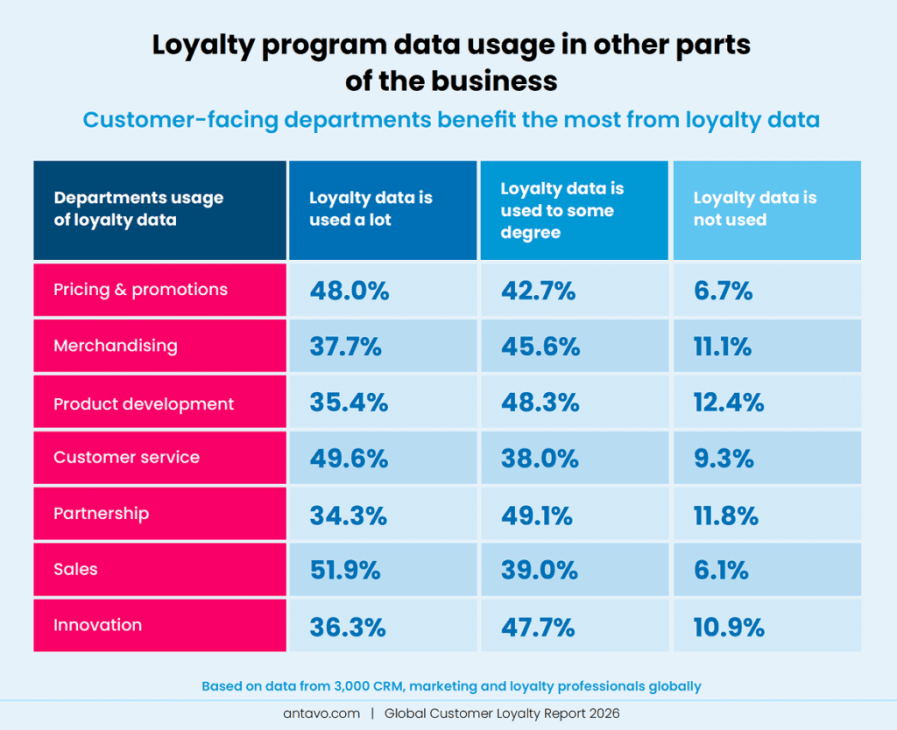
The root cause surfaces in the data on system integration: 44% of grocery owners cite limited integration between loyalty data and other marketing systems as a top analytics challenge, against 34% globally. That’s consistent with Antavo’s broader finding that AI readiness in loyalty tracks directly with how connected a program’s data actually is, grocery isn’t behind because it doesn’t want AI. It’s behind because the integration layer underneath it isn’t there yet.
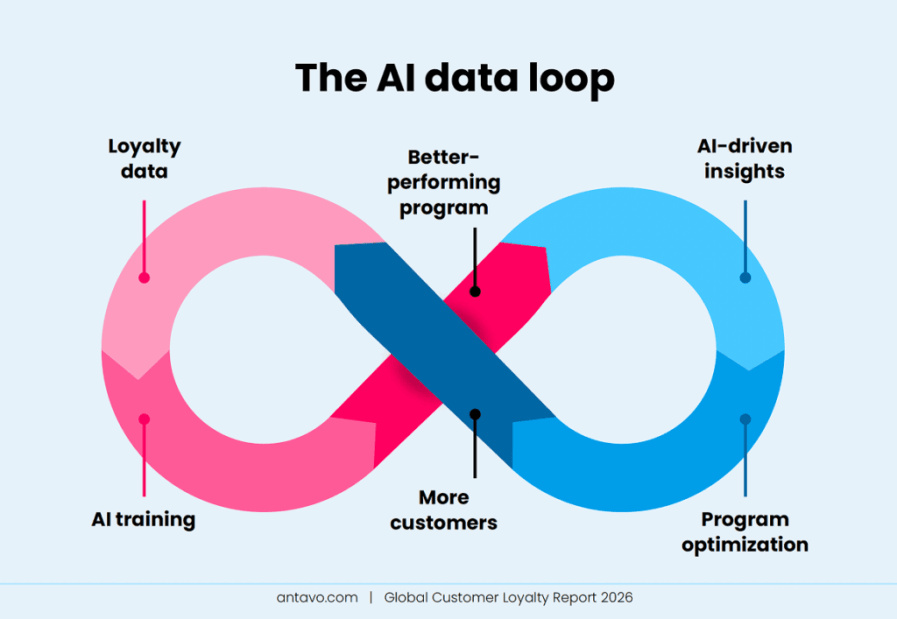
With a loyalty program, companies have the data necessary to train and launch AI initiatives. With well-trained AI tools, managing the loyalty program is easier and yields better results. A better loyalty program attracts more customers and more data. And that’s the full AI data loop.
Brands Planning to Launch Are Ready for AI, Blocked by Leadership
Brands planning to launch a grocery loyalty program see more urgency in the category than the market at large. 60% agree that customers only shop with brands that have a loyalty program, against 33% globally, nearly double, and the strongest urgency stat in the entire dataset.
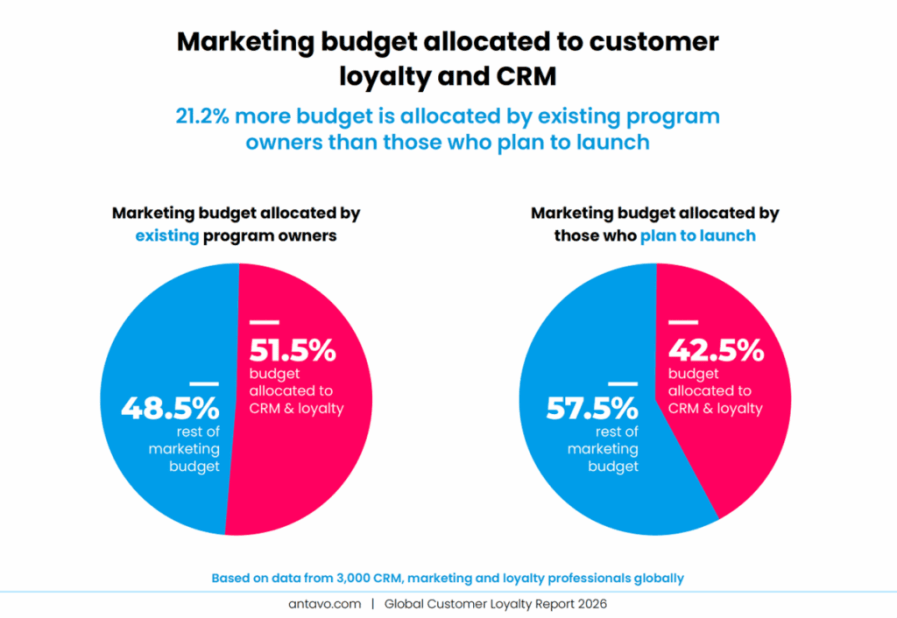
That urgency exists alongside heavy promotional dependency: 87% of these brands are already running promotional deals, versus 69% globally, and 54% say they’d definitely shift promotional budget toward loyalty (48% globally). On average, PL grocery brands allocate 47% of marketing budget to loyalty and CRM, against 43% globally, money that’s currently propping up a discount habit these same brands say they want to move away from.
They’re also more open to AI than the market: 75% are open to or planning to use AI tools to manage the program, against 71% globally. So the appetite is there. What’s stopping them isn’t budget or belief. It’s internal buy-in: 47% cite leadership hesitancy toward new technology as a top barrier to AI adoption, more than double the 21% global rate. That’s the actual blocker, and it deserves the last word in this section rather than the budget stats above it.

Key Takeaways – TL; DR
- Grocery loyalty programs outperform the global average on ROI and perceived value, this isn’t a category that needs convincing loyalty works.
- The AI adoption gap is real (44% vs. 51% globally), but grocery is closing it faster than the market plans to (51% vs. 40% planning adoption within two years).
- Nearly 1 in 5 grocery programs don’t measure ROI at all, undercutting the confidence numbers elsewhere in the data. This mirrors a broader industry pattern: plenty of data, not enough usable insight.
- Brands planning to launch are more promo-dependent than the market and see loyalty as closer to a customer-retention requirement than the average industry does, but leadership buy-in, not budget, is what’s blocking them.
Frequently Asked Questions for Grocery Loyalty Program Trends
Are grocery loyalty programs profitable?
Yes. 52% of grocery loyalty owners report ROI of at least 6x their program spend, ahead of the 46% global average. Profitability isn’t the open question in grocery loyalty; measurement is, since only 81% of owners actually track ROI.
Do grocery brands use AI in their loyalty programs?
Currently, 44% of grocery programs offer AI-driven personalization, below the 51% global average. That’s expected to shift: 51% plan to add AI personalization within two years, ahead of the 40% global rate, suggesting grocery closes this gap faster than it opened it.
What’s the biggest barrier to launching a grocery loyalty program?
Among brands planning to launch, leadership hesitancy toward new technology is the top-cited barrier (47%, more than double the global rate). This is based on a small sample of planning-stage brands, so treat it as directional, but the size of the gap is hard to dismiss as noise.
How does grocery loyalty compare to other industries?
Grocery matches or slightly exceeds the market on satisfaction, perceived value, and ROI, while trailing on AI personalization and measurement discipline. That pattern differs from what North America shows overall, where AI integration is already a strength rather than a gap, grocery is strong on fundamentals and cautious on the newer, harder-to-integrate capabilities other verticals are adopting faster.
Closing Thoughts
The open question for grocery isn’t whether loyalty works, the ROI numbers already answer that. It’s whether grocery brands close the AI and integration gap themselves, on their own timeline, or hand that work to a vendor before their competitors get there first. For the fundamentals of building or evolving one of these programs, see our comprehensive guide to grocery and supermarket loyalty.
Antavo is the AI loyalty and incentives platform that brings together loyalty, promotions, and agentic AI to turn customers into regulars: the customers who come back on their own, buy more often, and bring others with them. For more than a decade, Antavo has powered identity-led loyalty strategies for brands including SKIMS, Paul Smith, KFC, Flying Tiger Copenhagen, and Hyatt’s Inclusive Collection. Marketers build, change, and launch programs and promotions themselves, without waiting on engineering.
If you’re tired of paying to win the same customers twice, book a call with our experts and see how Antavo turns them into regulars.
Tamas is the Head of Content at Antavo and a Certified Loyalty Marketing Professional – CLMP. Tamas is known for having a keen eye for loyalty and customer retention strategies and trends. Tamas is also a true gamer at heart and has an impressive collection of cyberpunk books.
[ad_2]
Source_link