Key takeaways
- Social media archiving is the process of capturing, preserving, and storing all social media content, including posts, comments, edits, deletions, and metadata, to meet regulatory and legal requirements.
- Government agencies must archive social media under FOIA and open records laws, while financial institutions follow SEC/FINRA rules and healthcare providers must comply with HIPAA.
- A compliant archiving workflow requires automated capture, metadata preservation, searchable storage, and regular audits of your process.
- Enterprise social media management platforms like Hootsuite integrate with archiving solutions to automate compliance across teams and accounts.
Social media archiving is the process of capturing, preserving, and storing all social media content in a secure, legally defensible format. That includes posts, comments, direct messages, multimedia, edits, deletions, and the metadata behind all of it.
For government agencies, social media is a public forum and must be archived as part of open records laws. Financial institutions, healthcare providers, and educational institutions face their own archiving mandates under regulations like SEC/FINRA rules, HIPAA, and FERPA.
A proper archive of your social media content and communication allows you to respond to eDiscovery, public records, and Freedom of Information Act (FOIA) requests. You also need archived social comments if you are faced with a First Amendment challenge.
You might wonder why you need a special archive when your content is publicly available on your social accounts. The reason is straightforward: social media platforms are private-sector companies. They are not subject to open records laws, and there’s no guarantee they will preserve your content indefinitely. Platform API changes can also restrict access to historical data without warning. A purpose-built archiving solution is the only way to maintain a complete, tamper-proof record.
Social media archiving is a foundational risk management strategy that protects regulated organizations from legal exposure while building public trust. Without a systematic archiving process, agencies and institutions risk being unable to respond to records requests, audits, or litigation.
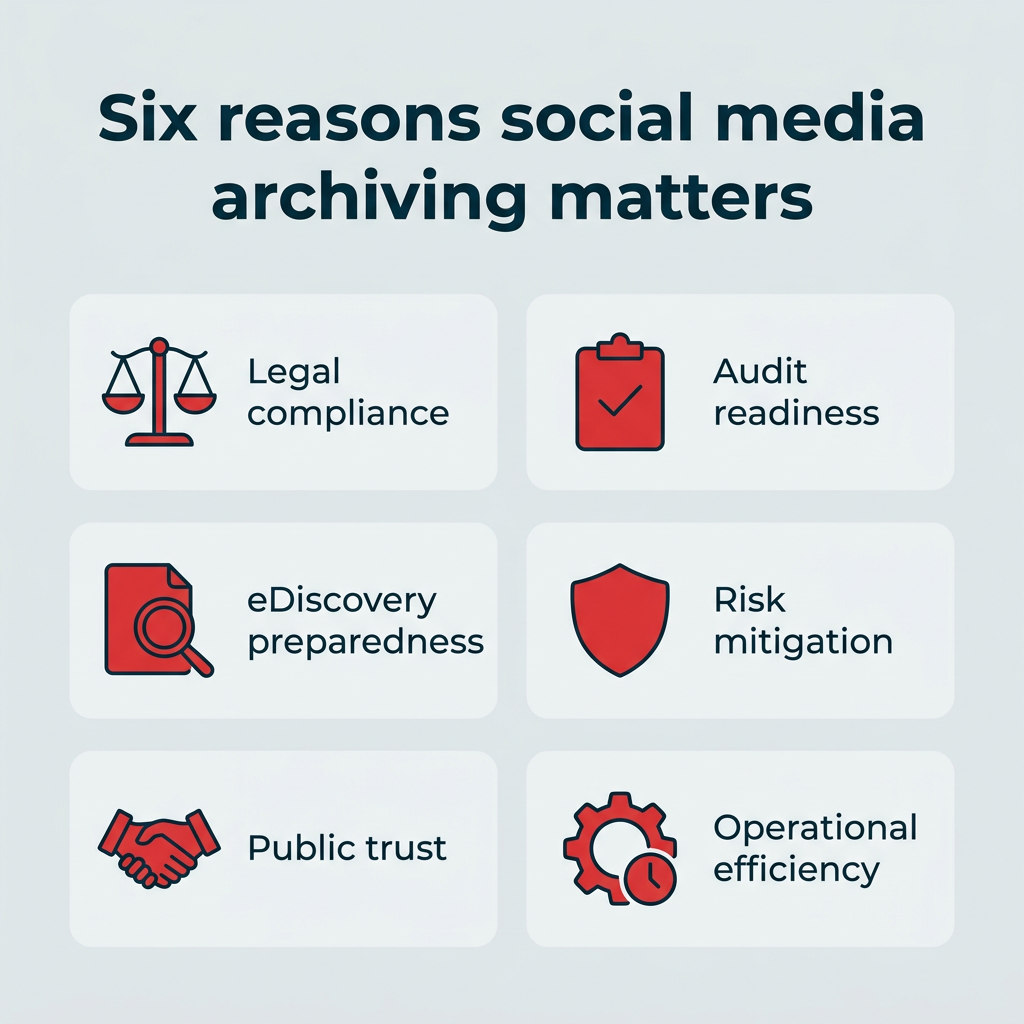
Here are the key reasons archiving matters:
- Legal compliance: Federal, state, and industry-specific regulations require organizations to retain social media records for defined periods. Archiving ensures you meet those obligations.
- Audit readiness: Regulators can request records at any time. A searchable, well-organized archive means your team can respond quickly and completely.
- eDiscovery preparedness: In legal proceedings, social media content is increasingly subject to discovery requests. Archived records with metadata provide the documentation courts require.
- Risk mitigation: Archiving protects your organization from penalties, fines, and lawsuits that result from incomplete or missing records.
- Transparency and public trust: For government agencies especially, accessible archives demonstrate accountability to constituents and the media.
- Operational efficiency: Centralized, searchable archives reduce the time and effort required to locate specific content across multiple accounts and platforms.
In short, social media compliance starts with having the records to prove it.
Social media archiving regulations vary by state, country, and industry. However, one common thread is that social media content is generally considered part of the public record, subject to specific retention and privacy requirements.
Regulated organizations need to maintain an archive of social media content, including posts, comments, direct messages, and conversations. These records must be accessible for audits, public information requests, and legal discovery.
While the specific requirements differ by sector, most regulations require the following:
- Metadata collection: Capturing timestamps, user information, and device details for every post and comment.
- Original format retention: Preserving content exactly as it appeared when published, including edits and deletions.
- Retention period: Storing records for a legally defined period, which varies by jurisdiction and industry.
- Comment archiving: Retaining comments, even if they are edited, deleted, or hidden.
- Contextual recordkeeping: Maintaining entire conversation threads, not just isolated comments.
- Data location: Storing data in specific geographic regions to comply with privacy laws.
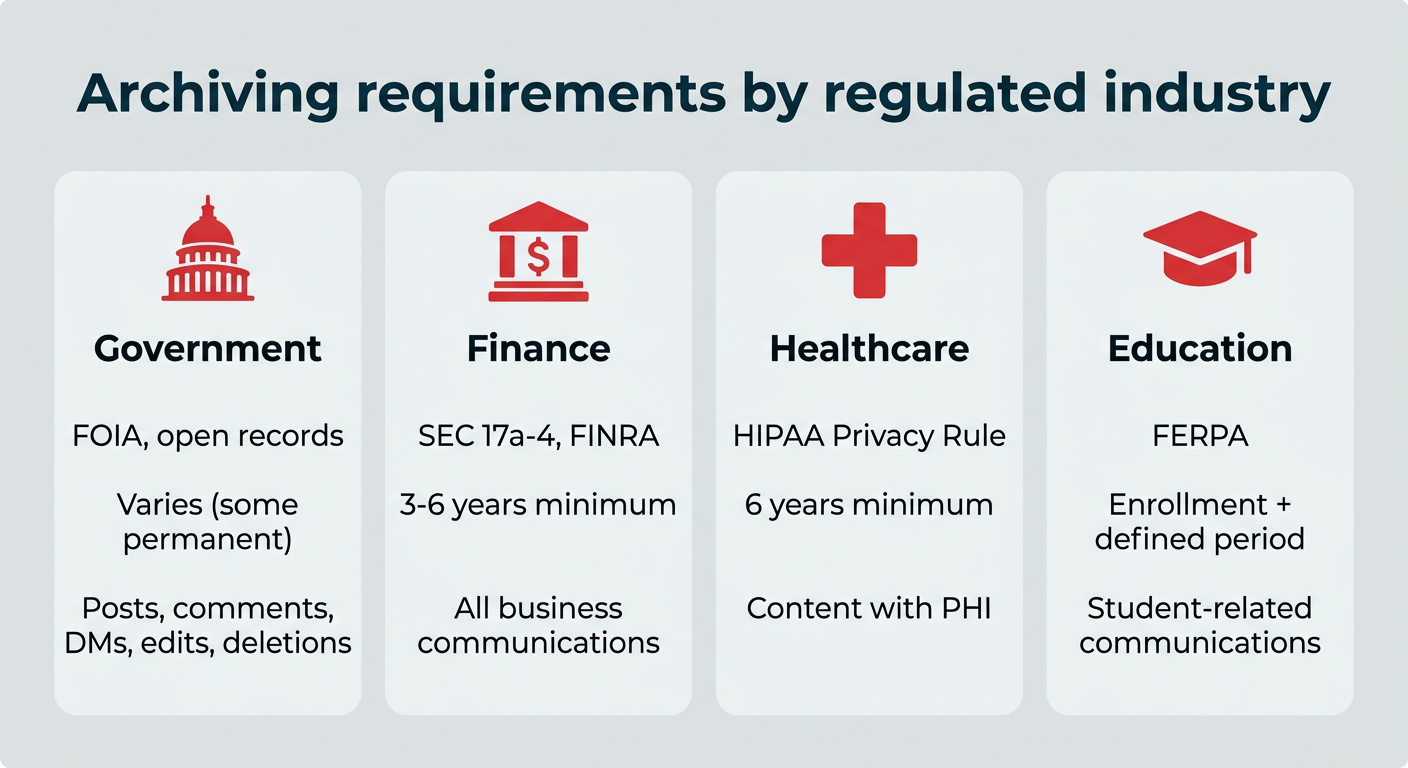
The table below summarizes how these requirements break down across key sectors:
|
Industry |
Key regulation |
Governing body |
What must be archived |
Typical retention period |
|---|---|---|---|---|
|
Government |
FOIA, state open records laws |
NARA, state archives |
Posts, comments, DMs, edits, deletions, metadata |
Varies by jurisdiction (some permanent) |
|
Finance |
SEC Rule 17a-4, FINRA Rules 3110/2210 |
SEC, FINRA |
All business communications including social posts, DMs, promotional content |
Minimum 3-6 years |
|
Healthcare |
HIPAA Privacy Rule |
HHS Office for Civil Rights |
Any content containing or referencing PHI |
Minimum 6 years |
|
Education |
FERPA |
U.S. Department of Education |
Social communications about students that form part of educational records |
Duration of enrollment + defined period |
Government agencies and FOIA compliance
In the United States, the Freedom of Information Act (FOIA) treats social media content as part of the public record. Federal, state, and municipal agencies must archive social posts and comments to comply with open records laws.
Social channels are a forum for communicating with constituents and the general public. They are subject to open records and First Amendment laws, just like any other public communication. That means agencies cannot block people from following official social accounts, and all comments, including those that are deleted or hidden, must be preserved.
First Amendment protections generally apply to comments posted on official government agency social accounts. Your social media policy should include an acceptable use policy that indicates what types of comments may be deleted and why. Your archive then allows you to prove there was cause for removal.
For more on the role of social media in public communication, see this overview of social media and politics. For a complete compliance guide, check out our post on compliance for government agencies using social media.
Financial institutions and SEC/FINRA requirements
Financial institutions must archive all business-related social media communications under SEC Rule 17a-4 and FINRA Rules 3110 and 2210. This includes promotional content, client communications, and any social media activity that could be considered a business record.
FINRA’s social media guidelines classify social media content into static content, which is posted for the longer term, and interactive communications, which involve real-time dialogue with third parties. Each category has different supervision and retention requirements. Firms must have written supervisory procedures that address how social media is reviewed, approved, and archived.
The scope can extend beyond official company accounts. If employees use personal social media accounts for business purposes, those communications may also fall under archiving requirements. Regulators have increased scrutiny of off-channel communications on platforms like WhatsApp and Signal, resulting in significant fines for firms that failed to capture and retain those records.
Healthcare providers and HIPAA
Under HIPAA, healthcare providers must archive social content that involves patient information while maintaining strict privacy and security standards. Sharing protected health information (PHI) on social media without proper authorization is not just risky; it can be illegal and result in fines up to $2,190,294 per violation.
Archiving becomes especially important when patients initiate contact or share personal health details in comments or direct messages on an organization’s social accounts. Even if a provider deletes that content to protect the patient’s privacy, the original interaction must be preserved in the archive.
Healthcare organizations should also train staff to recognize PHI in social media interactions and have clear protocols for escalation and documentation.
Education and FERPA
Schools and universities must comply with FERPA, which treats social media communications about students as part of their educational record. This means any social media content that identifies a student or references their academic performance, disciplinary actions, or enrollment status must be archived and protected.
For example, if a university’s athletics department posts about a student athlete’s academic eligibility on social media, that content becomes part of the student’s educational record under FERPA and must be retained accordingly.
Regional privacy regulations and data residency
Archiving requirements don’t just dictate what you store; they also determine where you store it. Each jurisdiction enforces privacy regulations that shape how organizations archive and share social media content.
For example, the Government of British Columbia has Guidelines for Government Use of Social Media. These specify that the following topics are off-limits:
- Matters before the courts
- Confidential information like policy advice and draft legislation
- Information about identifiable third parties without statutory authorization
Australia’s privacy and public data policies require social content to be archived in Australian data centers. That means Australian government agencies can only work with archiving solutions that have data storage options within Australia.
Organizations operating in the EU must also consider GDPR requirements, which impose strict rules on how personal data is collected, stored, and processed, including social media content that contains personally identifiable information.
Citizen engagement can encourage people to share personal information on social media. This is especially true when people share photos. This is a particularly important area to consider when thinking about data collection and archiving across jurisdictions.
Most major social media platforms can be archived, though the specific content types and depth of capture vary depending on the archiving tool and each platform’s API.
Here’s a general overview of what can typically be captured:
- Facebook: Posts, comments, reactions, direct messages, Stories, and page-level interactions.
- Instagram: Posts, comments, Stories, Reels, and direct messages (DM capture depends on the archiving tool).
- X (formerly Twitter): Tweets, replies, direct messages, retweets, and quote tweets.
- LinkedIn: Company page posts, comments, and direct messages. Employee advocacy content may also be in scope for financial firms.
- YouTube: Videos, comments, and community posts.
- TikTok: Videos, comments, and direct messages (archiving support is still maturing across most tools).
- Threads: Posts and replies (archiving support varies by vendor).
- Bluesky: Posts and replies (limited archiving tool support as of 2026).
One important consideration: platform API changes can affect archiving capabilities at any time. A platform may restrict third-party access to certain content types, which can create gaps in your archive. This is why it’s critical to work with archiving solutions that actively maintain their platform integrations and communicate any changes.
Archiving solutions vary in platform coverage, so verify that your tool supports every network your organization uses before committing.
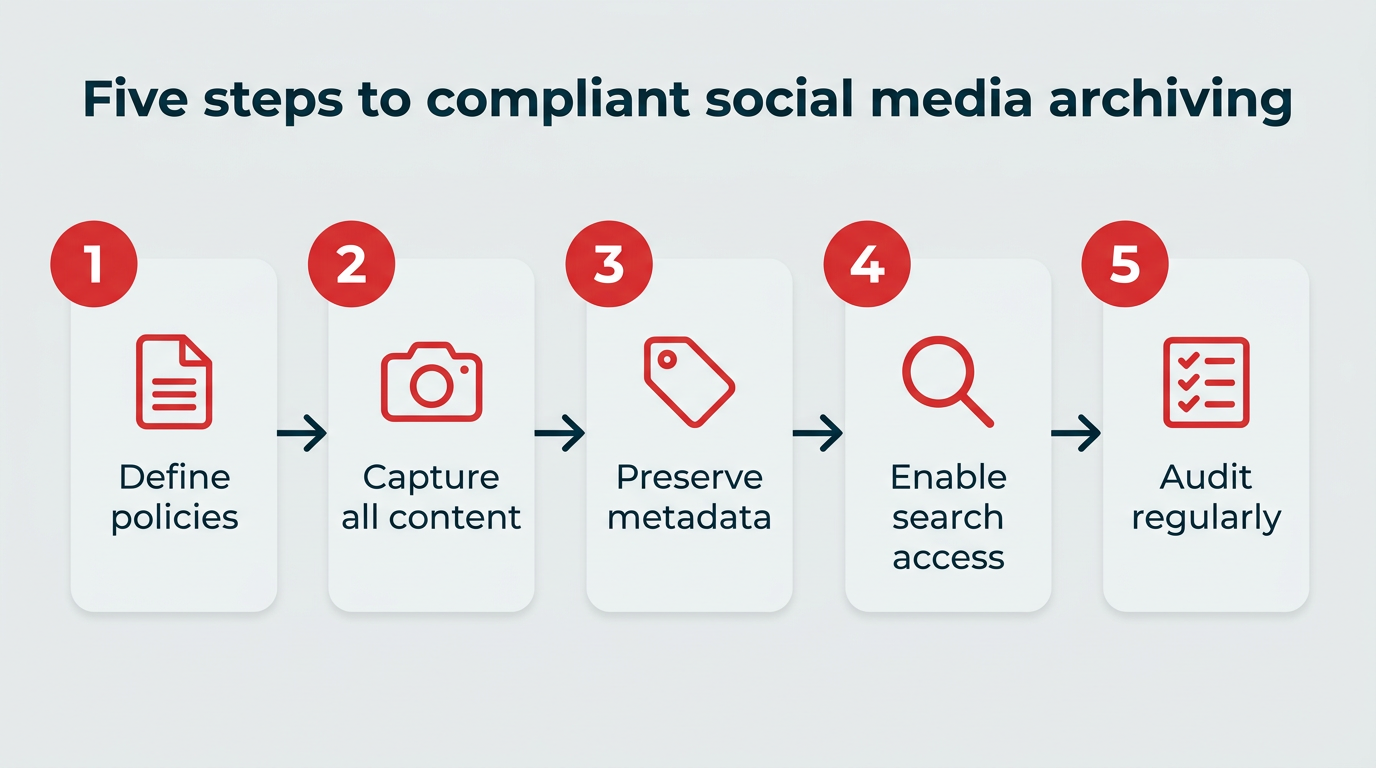
Setting up a compliant archiving process requires a systematic approach. Here are the five core steps:
- Define your archiving policies and procedures
- Capture and preserve all social media content
- Include metadata and contextual information
- Make archived content accessible and searchable
- Audit your archiving process regularly
1. Define your archiving policies and procedures
Start by building your archiving system on a solid policy foundation. Your archiving policies and procedures are the supports upon which all of your recordkeeping is built.
As you build your policies, do a thorough review of the legislation applicable in your jurisdiction to make sure you comply with every detail. Build your archiving policies and procedures into your overall social media guidelines. That way, all staff who deal with social media have easy access to your most current policies at all times.
Be sure to include a clear process for approving new social media accounts. The more accounts your agency uses, the more you need to archive. Does every department need its own social media channels? Perhaps they do, but there should be a strategic purpose for each new account. Before any new account goes live, make sure to add it to your archiving process.
Also consider data residency requirements. As noted above, some jurisdictions require archived content to be stored in specific geographic regions, which limits your choice of archiving vendors.
Your archiving policies should be documented as part of a broader governance plan, accessible to all relevant staff, and reviewed on a regular schedule.
2. Capture and preserve all social media content
All social media communication on or with your official channels must be captured and preserved. This is the core of any archiving program.
Social media platforms themselves are private-sector companies. They are not subject to open records laws. That means there’s no guarantee that social platforms will preserve your content forever.
Plus, if you ever delete or edit content, you need to keep a record of those changes. Open records laws require you to archive every version of every post presented to the public.
You also need a record of all comments made on your social accounts. That applies even if you have to delete or hide those comments for reasons like:
- Identifying information
- Threats of violence
- Profanity
- Other policy violations
You also have to consider that people might delete or edit their own comments. You still need them in your archive. Without an archiving solution, you have no way to retrieve a constituent comment that they delete from your page.
In addition to record retention laws, you need to protect your organization in case of a First Amendment challenge. That means you need an archive of all deleted or hidden comments.
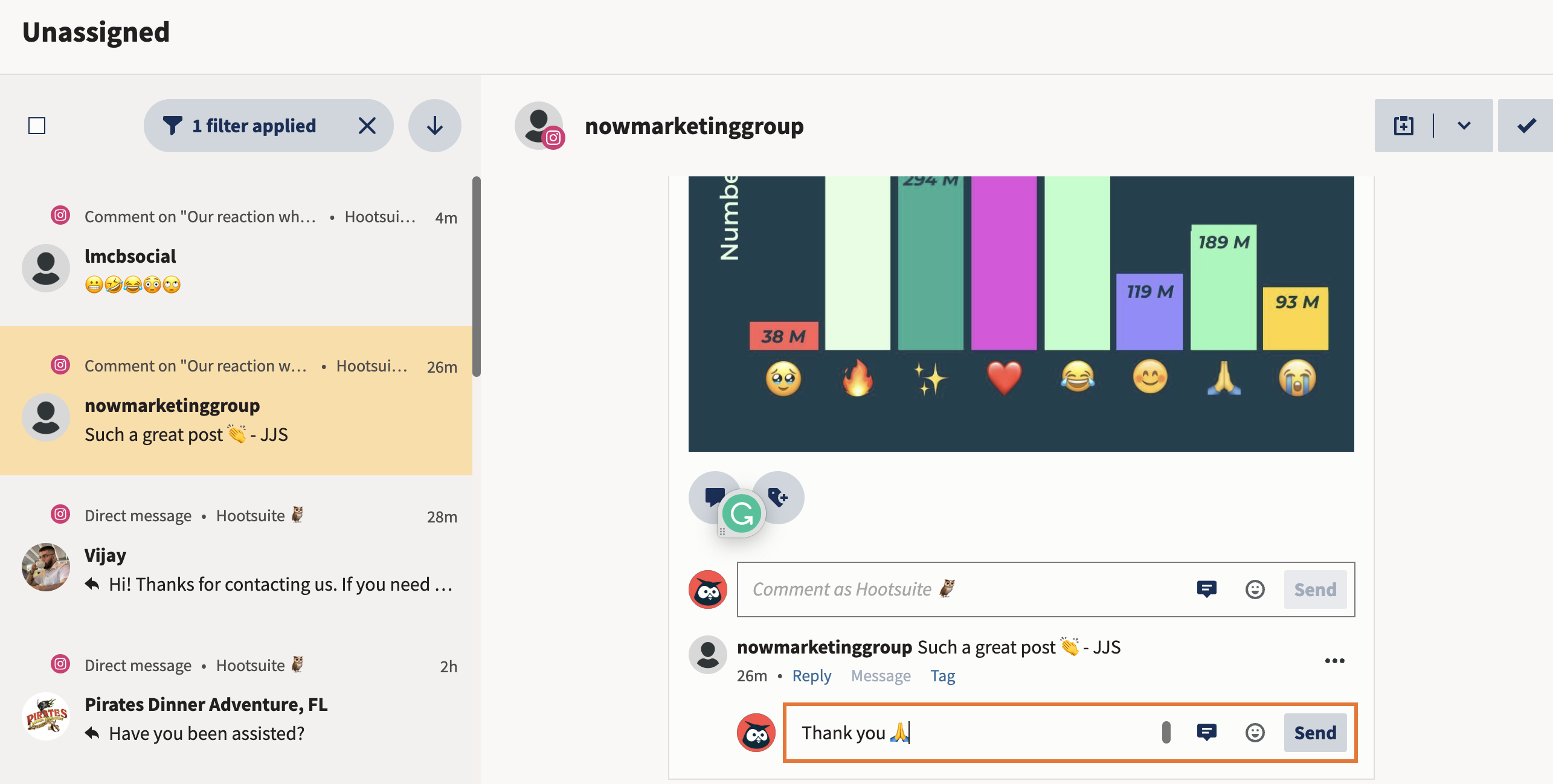
You should even keep a record of all content in which you are tagged or mentioned since this can count as communication. Social media monitoring, or keeping an eye on content in which you’re tagged or mentioned, is a best practice for all social media users. It’s an important way to understand the conversation about you online. For government agencies, it’s critical.
In short, you need purpose-built social media archiving tools. This is the only way to fully archive the conversation with constituents and comply with the law.
3. Include metadata and contextual information
Metadata and contextual information are what make your archive legally defensible. Screenshots alone are generally not considered a sufficient record of a comments thread because images can be edited.
Metadata is not visible on a social media page, but it lives in the background of all online content. A complete archive should capture:
- Author identification: Who posted the content
- Timestamp: Exactly when it was posted
- Device information: What device was used
- Edit history: Any changes made after the original post
- Geolocation data: Where the content was posted from (when available)
That means you can see, for example, if one person uses multiple accounts to post multiple responses from the same device. More importantly, all of this metadata together allows your agency to prove that the records in your archive are authentic, complete, and unmodified. Without metadata, a social media archive file is unlikely to be accepted in court.
Contextual information captures the context in which a comment is made. Context is important because it helps capture the full intent of what was posted. It can also provide insight into why a comment had to be deleted or hidden.
For example, a standalone comment might appear to have no reason for deletion. But within a comments thread, that comment might be seen to provide identifiable information about a third party that violates privacy regulations or to indicate a threat to another commenter.
An archive with complete metadata and contextual information allows you to reconstruct an entire social media conversation, with details that would otherwise be lost.
4. Make archived content accessible and searchable
The whole point of archiving open records information is that you can access it and provide it to citizens or journalists who submit a Freedom of Information Act request. For that to work, your archive needs to be secure but easily accessible by the appropriate members of your team.
It also needs to be searchable so that you can find all relevant content when it’s requested. Social media archiving tools should include advanced search capabilities. You should be able to find content from a specific date range, using specific keywords or user data. The ability to tag content and add notes within the archive also comes in handy when you need to retrieve social content.
Again, it’s important that you can access hidden or deleted content and comments. This is especially true in case of a First Amendment challenge. The full context is important to validate any decisions about removing public commentary from your page.
Failure to comply with a FOIA request or legal challenge can have serious legal and financial consequences. A complete and easy-to-use archive helps protect your agency from lawsuits and other punitive actions.
Your archive should also support export capabilities so legal teams can pull records for eDiscovery or submit them to external records management systems.
The bonus? A detailed, searchable archive helps you understand comment and question trends, which may reveal that you need to create more resources around a specific program or policy.
5. Audit your archiving process regularly
Social media changes fast. Social media legislation doesn’t move quite as quickly, but you can’t assume it will stay the same forever. The tools available to archive social media content and improve compliance continue to evolve, and platform API changes can affect what content your tools can capture.
That means you need to review your archiving process regularly. You can choose what “regularly” means to your organization, but plan for a thorough social media audit at least quarterly.
For government agencies, that social media audit should include an audit of your archiving process and procedures.
Make sure any new social media accounts have been added to your archiving system. Review the archiving policies and procedures with staff both old and new. Assign someone on your team to monitor any changes in legislation. Be sure to raise these at the regular reviews if they have not yet been addressed.
A quarterly audit cadence ensures your archiving process keeps pace with regulatory changes, new platforms, and organizational growth.
Failing to archive social media content can expose regulated organizations to serious consequences. The specific risks vary by industry and jurisdiction, but the most common include:
- Legal penalties and fines: Regulators can impose substantial fines for non-compliance with records retention requirements. In the financial sector, SEC enforcement actions for failure to preserve electronic communications have resulted in penalties exceeding $63 million across multiple firms in recent years.
- Failed FOIA and records requests: Government agencies that cannot produce requested records face legal challenges and erosion of public trust. With federal agencies receiving over 1.7 million FOIA requests in FY 2025, incomplete responses can result in court orders and additional scrutiny.
- Litigation exposure: In legal proceedings, the inability to produce archived social media content can result in adverse inference rulings, where a court assumes the missing records would have been unfavorable.
- Reputational damage: Public disclosure of compliance failures can damage an organization’s credibility with constituents, clients, patients, or students.
- Operational disruption: Responding to records requests, audits, or legal discovery without a proper archive is time-consuming and resource-intensive, pulling staff away from their core responsibilities.
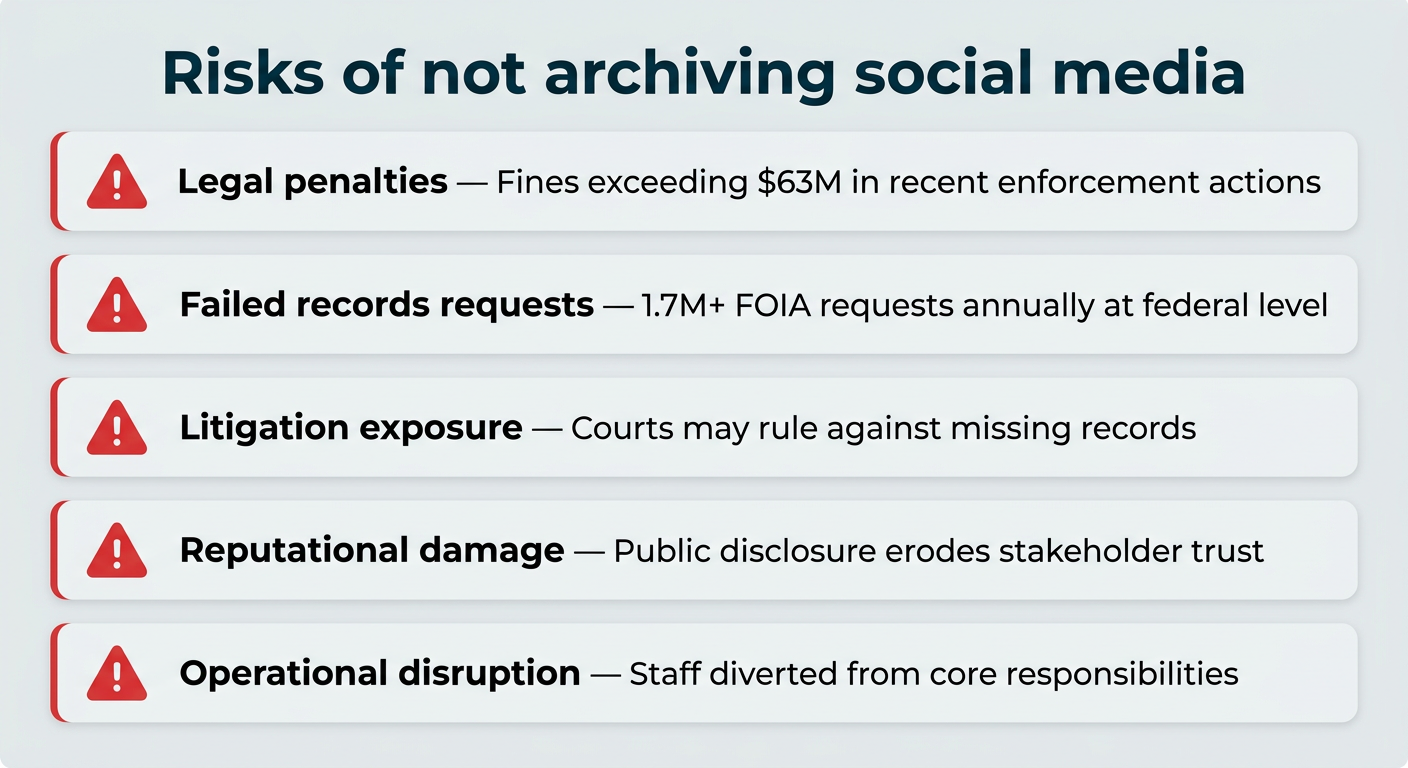
The cost of implementing a proper archiving solution is almost always lower than the cost of non-compliance.
Not all archiving tools are created equal. When evaluating compliance-focused solutions, look for these capabilities:
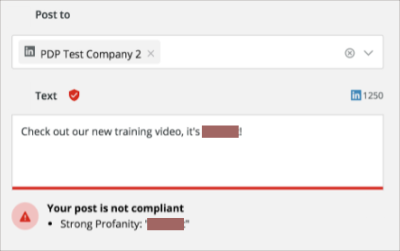
- Automated real-time capture: The tool should archive content as it’s posted, edited, or deleted, without manual intervention.
- Metadata preservation: Every archived item should include timestamps, author data, device information, and edit history.
- Tamper-proof storage: Archives must be stored in a format that prevents modification, ensuring records are legally defensible.
- Advanced search and filtering: You should be able to search by date range, keyword, user, platform, and content type.
- Export for eDiscovery: The tool should support exporting records in formats compatible with legal review platforms and electronic records management systems.
- Multi-platform coverage: Verify the tool supports every social network your organization uses, including newer platforms like Threads and Bluesky.
- Data residency options: If your jurisdiction requires data to be stored in a specific region, confirm the vendor can accommodate that.
- Compliance certifications: Look for certifications like FedRAMP (for U.S. government), SOC 2, and other relevant security standards.
- Integration with your tech stack: The archiving tool should work with your existing social media management platform, CRM, and records management systems.
- Scalability: Enterprise organizations managing dozens or hundreds of accounts need a solution that scales without performance degradation.
When choosing your social media archiving tools for compliance, it’s important to work with a trusted and secure vendor. To ensure the security of government and citizen data, the U.S. government requires all cloud services used by federal agencies to pass the Federal Risk and Authorization Management Program, aka FedRAMP.
Hootsuite is FedRAMP authorized. This identifies Hootsuite as a viable automated social media archiving solution for government. Hootsuite also meets the requirements of FCA, IIROC, SEC, PCI, AMF, and MiFID II. This is why more than 2,000 government and public sector agencies use Hootsuite to manage their social media.
Hootsuite integrates with compliance solutions like Proofpoint and Brolly to keep your social media presence secure. Brolly specifically creates a secure archive with social content, including context, metadata, links, images, and videos.
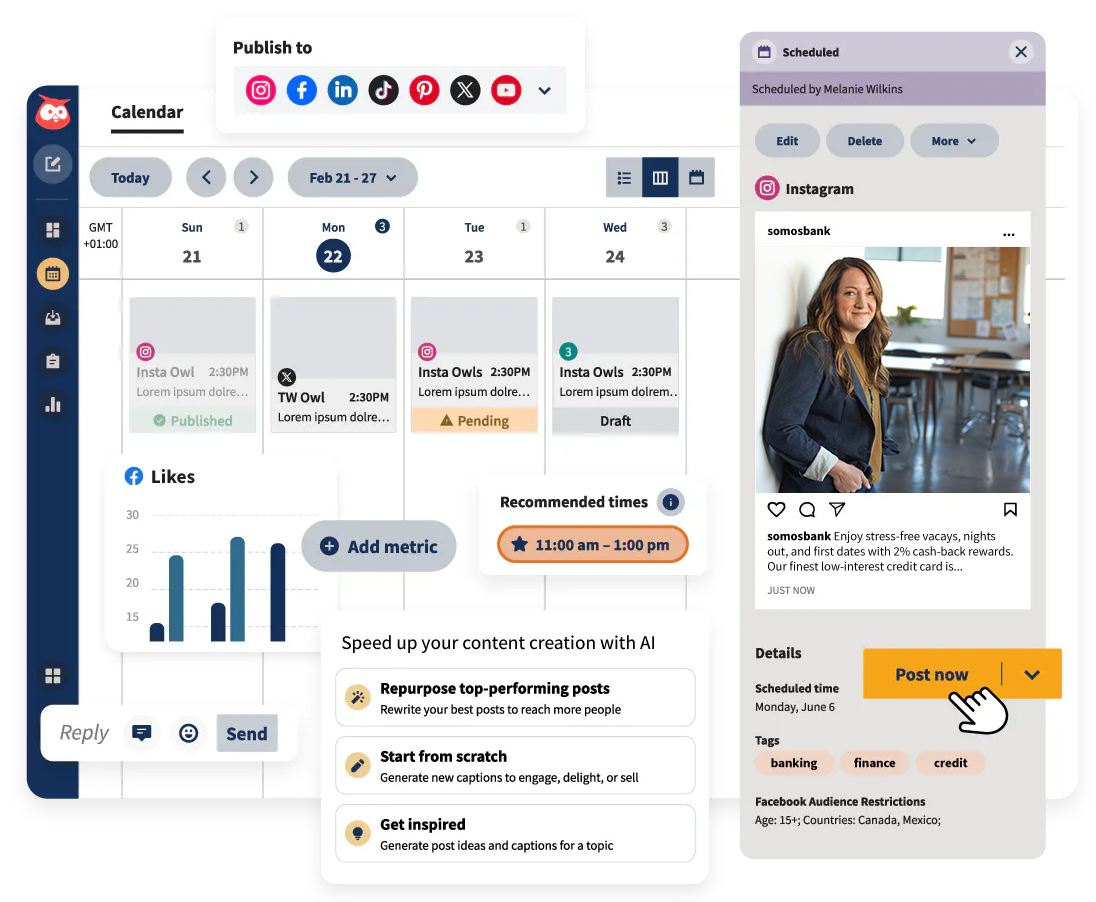
New social media posts and comments, including edits, deletions, and hidden comments, are automatically archived in real-time. That real-time functionality is important because people can change their minds quickly when engaging in a heated debate. You need a record of comments that appear on your page for only a few moments.
Within the archive, you can use tagging, notes, and advanced search to find the information you need to comply with FOIA record requests or legal discovery. You can also export your archive to your eRDMS, either manually or on an automated schedule.
For enterprise organizations, Hootsuite provides approval workflows and permission controls that help ensure only authorized content is published, reducing compliance risk before content goes live. Teams managing multiple accounts across departments or regions can centralize governance while maintaining the flexibility each group needs.

The Brolly integration in Hootsuite enables real-time social media archiving with metadata preservation.
Inform and engage constituents, and manage archiving on social media with Hootsuite. Schedule and publish content to every network, monitor relevant conversations, and measure public sentiment around programs and policies with real-time social listening and analytics.
Frequently asked questions
What is social media archiving?
Social media archiving is the process of capturing, preserving, and storing all social media content, including posts, comments, direct messages, multimedia, and metadata, in a secure and legally defensible format. Organizations in regulated industries use archiving to meet compliance requirements, respond to records requests, and protect themselves in legal proceedings.
Why do government agencies need to archive social media?
Government agencies need to archive social media because posts and comments on official accounts are considered public records under FOIA and state open records laws. Failing to maintain a complete archive can result in legal challenges, failed records requests, and erosion of public trust.
What social media content needs to be archived for compliance?
For compliance, organizations must archive all posts, comments, direct messages, edits, deletions, hidden comments, multimedia attachments, and associated metadata from their official social accounts. The specific requirements depend on your industry and jurisdiction, but the general principle is that anything published or received on an official account should be preserved.
How does social media archiving work for financial institutions?
Financial institutions must archive social media communications under SEC Rule 17a-4 and FINRA Rules 3110 and 2210, which require retention of all business-related electronic communications, including social media posts and messages. This can extend to employee personal accounts if they are used for business purposes, and firms must have written supervisory procedures covering social media.
Is it better to archive or delete social media content?
For regulated organizations, archiving is almost always required over deletion because compliance laws mandate that records be preserved for a specified retention period, even if the content is removed from public view. Deleting content without first archiving it can constitute a compliance violation and create legal exposure.
What metadata should be included in a social media archive?
A compliant social media archive should include metadata such as timestamps, user identification, device information, geolocation data, and edit history for every post and comment. This metadata is what makes an archive legally defensible, as it proves records are authentic and unmodified.
What is FedRAMP, and why does it matter for social media archiving?
FedRAMP (Federal Risk and Authorization Management Program) is a U.S. government security framework that all cloud services used by federal agencies must pass. For social media archiving, FedRAMP authorization means the tool meets rigorous security standards for handling government data. Hootsuite is FedRAMP authorized.
How often should organizations audit their social media archiving process?
Organizations should audit their social media archiving process at least quarterly to ensure new accounts are covered, policies reflect current regulations, and archiving tools are functioning correctly. Platform API changes, new social networks, and regulatory updates can all create gaps that regular audits help identify.
Can social media archiving tools capture deleted comments?
Yes, automated social media archiving tools can capture deleted comments in real time, preserving them before the original poster or a page administrator removes them from public view. This capability is essential for government agencies that need to document First Amendment compliance and for any regulated organization that must maintain a complete record of public interactions.
What happens if a regulated organization fails to archive social media?
Failure to archive social media can result in legal penalties, fines, failed audit responses, litigation exposure, and reputational damage. The consequences vary by industry and jurisdiction, but in sectors like finance, enforcement actions for records retention failures have resulted in significant penalties.
Save time managing your social media marketing strategy with Hootsuite. Publish and schedule posts, find relevant conversions, measure results, and more — all from one dashboard. Try it free today.