• About Us
  • Disclaimer
  • Contact Us
  • Privacy Policy
Sunday, September 20, 2026
mGrowTech
No Result
View All Result
  • Technology And Software
    • Account Based Marketing
    • Channel Marketing
    • Marketing Automation
      • Al, Analytics and Automation
      • Ad Management
  • Digital Marketing
    • Social Media Management
    • Google Marketing
  • Direct Marketing
    • Brand Management
    • Marketing Attribution and Consulting
  • Mobile Marketing
  • Event Management
  • PR Solutions
  • Technology And Software
    • Account Based Marketing
    • Channel Marketing
    • Marketing Automation
      • Al, Analytics and Automation
      • Ad Management
  • Digital Marketing
    • Social Media Management
    • Google Marketing
  • Direct Marketing
    • Brand Management
    • Marketing Attribution and Consulting
  • Mobile Marketing
  • Event Management
  • PR Solutions
No Result
View All Result
mGrowTech
No Result
View All Result
Home Al, Analytics and Automation

Pedestrians now walk faster and linger less, researchers find | MIT News

Josh by Josh
July 26, 2025
in Al, Analytics and Automation
0
Pedestrians now walk faster and linger less, researchers find | MIT News

[ad_1]

City life is often described as “fast-paced.” A new study suggests that’s more true that ever.

The research, co-authored by MIT scholars, shows that the average walking speed of pedestrians in three northeastern U.S. cities increased 15 percent from 1980 to 2010. The number of people lingering in public spaces declined by 14 percent in that time as well.

The researchers used machine-learning tools to assess 1980s-era video footage captured by renowned urbanist William Whyte, in Boston, New York, and Philadelphia. They compared the old material with newer videos from the same locations.

“Something has changed over the past 40 years,” says MIT professor of the practice Carlo Ratti, a co-author of the new study. “How fast we walk, how people meet in public space — what we’re seeing here is that public spaces are working in somewhat different ways, more as a thoroughfare and less a space of encounter.”

The paper, “Exploring the social life of urban spaces through AI,” is published this week in the Proceedings of the National Academy of Sciences. The co-authors are Arianna Salazar-Miranda MCP ’16, PhD ’23, an assistant professor at Yale University’s School of the Environment; Zhuanguan Fan of the University of Hong Kong; Michael Baick; Keith N. Hampton, a professor at Michigan State University; Fabio Duarte, associate director of the Senseable City Lab; Becky P.Y. Loo of the University of Hong Kong; Edward Glaeser, the Fred and Eleanor Glimp Professor of Economics at Harvard University; and Ratti, who is also director of MIT’s Senseable City Lab.

The results could help inform urban planning, as designers seek to create new public areas or modify existing ones.

“Public space is such an important element of civic life, and today partly because it counteracts the polarization of digital space,” says Salazar-Miranda. “The more we can keep improving public space, the more we can make our cities suited for convening.”

Meet you at the Met

Whyte was a prominent social thinker whose famous 1956 book, “The Organization Man,” probing the apparent culture of corporate conformity in the U.S., became a touchstone of its decade.

However, Whyte spent the latter decades of his career focused on urbanism. The footage he filmed, from 1978 through 1980, was archived by a Brooklyn-based nonprofit organization called the Project for Public Spaces and later digitized by Hampton and his students.

Whyte chose to make his recording at four spots in the three cities combined: Boston’s Downtown Crossing area; New York City’s Bryant Park; the steps of the Metropolitan Museum of Art in New York, a famous gathering point and people-watching spot; and Philadelphia’s Chestnut Street.

In 2010, a group led by Hampton then shot new footage at those locations, at the same times of day Whyte had, to compare and contrast current-day dynamics with those of Whyte’s time. To conduct the study, the co-authors used computer vision and AI models to summarize and quantify the activity in the videos.

The researchers have found that some things have not changed greatly. The percentage of people walking alone barely moved, from 67 percent in 1980 to 68 percent in 2010. On the other hand, the percentage of individuals entering these public spaces who became part of a group declined a bit. In 1980, 5.5 percent of the people approaching these spots met up with a group; in 2010, that was down to 2 percent.

“Perhaps there’s a more transactional nature to public space today,” Ratti says.

Fewer outdoor groups: Anomie or Starbucks?

If people’s behavioral patterns have altered since 1980, it’s natural to ask why. Certainly some of the visible changes seem consistent with the pervasive use of cellphones; people organize their social lives by phone now, and perhaps zip around more quickly from place to place as a result.

“When you look at the footage from William Whyte, the people in public spaces were looking at each other more,” Ratti says. “It was a place you could start a conversation or run into a friend. You couldn’t do things online then. Today, behavior is more predicated on texting first, to meet in public space.”

As the scholars note, if groups of people hang out together slightly less often in public spaces, there could be still another reason for that: Starbucks and its competitors. As the paper states, outdoor group socializing may be less common due to “the proliferation of coffee shops and other indoor venues. Instead of lingering on sidewalks, people may have moved their social interactions into air-conditioned, more comfortable private spaces.”

Certainly coffeeshops were far less common in big cities in 1980, and the big chain coffeeshops did not exist.

On the other hand, public-space behavior might have been evolving all this time regardless of Starbucks and the like. The researchers say the new study offers a proof-of-concept for its method and has encouraged them to conduct additional work. Ratti, Duarte, and other researchers from MIT’s Senseable City Lab have turned their attention to an extensive survey of European public spaces in an attempt to shed more light on the interaction between people and the public form.

“We are collecting footage from 40 squares in Europe,” Duarte says. “The question is: How can we learn at a larger scale? This is in part what we’re doing.” 

[ad_2]

Source_link

READ ALSO

XPENG Commissions Humanoid Robot Lines as IRON Walks Off Production – Unite.AI

Matt Clifford Steps Down as ARIA Chair After Anthropic Move – Unite.AI

Related Posts

XPENG Commissions Humanoid Robot Lines as IRON Walks Off Production – Unite.AI
Al, Analytics and Automation

XPENG Commissions Humanoid Robot Lines as IRON Walks Off Production – Unite.AI

September 8, 2026
Matt Clifford Steps Down as ARIA Chair After Anthropic Move – Unite.AI
Al, Analytics and Automation

Matt Clifford Steps Down as ARIA Chair After Anthropic Move – Unite.AI

September 7, 2026
In “An Alien Mind,” OpenAI’s Jakub Pachocki Urges Shared Safety Bars – Unite.AI
Al, Analytics and Automation

In “An Alien Mind,” OpenAI’s Jakub Pachocki Urges Shared Safety Bars – Unite.AI

September 7, 2026
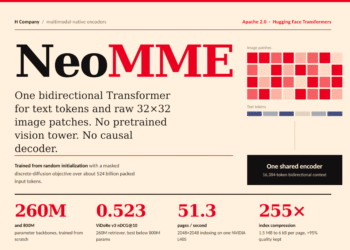
H Company Releases NeoMME: A Family of 260M and 800M Single-Tower Multimodal Encoders That Drop the Vision Tower and Causal Decoder
Al, Analytics and Automation

H Company Releases NeoMME: A Family of 260M and 800M Single-Tower Multimodal Encoders That Drop the Vision Tower and Causal Decoder

September 7, 2026
The Model, Tools, Memory, and Control Loop – Unite.AI
Al, Analytics and Automation

The Model, Tools, Memory, and Control Loop – Unite.AI

September 6, 2026
UC Berkeley Researchers Release CUA-Lite, an Open Platform Unifying Sandboxes, Data, Evaluation and RL for Computer-Use Agents
Al, Analytics and Automation

UC Berkeley Researchers Release CUA-Lite, an Open Platform Unifying Sandboxes, Data, Evaluation and RL for Computer-Use Agents

September 6, 2026
Next Post
LeBron James is reportedly trying to stop the spread of viral AI ‘pregnancy’ videos

LeBron James is reportedly trying to stop the spread of viral AI 'pregnancy' videos

POPULAR NEWS

Trump ends trade talks with Canada over a digital services tax

Trump ends trade talks with Canada over a digital services tax

June 28, 2025
15 Trending Songs on TikTok in 2025 (+ How to Use Them)

15 Trending Songs on TikTok in 2025 (+ How to Use Them)

June 18, 2025
Communication Effectiveness Skills For Business Leaders

Communication Effectiveness Skills For Business Leaders

June 10, 2025
Comparing the Top 7 Large Language Models LLMs/Systems for Coding in 2025

Comparing the Top 7 Large Language Models LLMs/Systems for Coding in 2025

November 4, 2025
App Development Cost in Singapore: Pricing Breakdown & Insights

App Development Cost in Singapore: Pricing Breakdown & Insights

June 22, 2025

EDITOR'S PICK

What is AI Decisioning? Definition, Examples, and How It Works

June 5, 2026
Personalize your experience across Google based on your purchases, your way.

Personalize your experience across Google based on your purchases, your way.

November 8, 2025
Antonio Torralba, three MIT alumni named 2025 ACM fellows | MIT News

Antonio Torralba, three MIT alumni named 2025 ACM fellows | MIT News

February 7, 2026
Meta releases a new tool to protect reels creators from having their work stolen

Meta releases a new tool to protect reels creators from having their work stolen

November 17, 2025

About

We bring you the best Premium WordPress Themes that perfect for news, magazine, personal blog, etc. Check our landing page for details.

Follow us

Categories

  • Account Based Marketing
  • Ad Management
  • Al, Analytics and Automation
  • Brand Management
  • Channel Marketing
  • Digital Marketing
  • Direct Marketing
  • Event Management
  • Google Marketing
  • Marketing Attribution and Consulting
  • Marketing Automation
  • Mobile Marketing
  • PR Solutions
  • Social Media Management
  • Technology And Software
  • Uncategorized

Recent Posts

  • The AI visibility gap: Why great brands disappear from AI answers
  • XPENG Commissions Humanoid Robot Lines as IRON Walks Off Production – Unite.AI
  • Google partners on West Virginia energy storage project
  • Gemini Live and Find Hub
  • About Us
  • Disclaimer
  • Contact Us
  • Privacy Policy
No Result
View All Result
  • Technology And Software
    • Account Based Marketing
    • Channel Marketing
    • Marketing Automation
      • Al, Analytics and Automation
      • Ad Management
  • Digital Marketing
    • Social Media Management
    • Google Marketing
  • Direct Marketing
    • Brand Management
    • Marketing Attribution and Consulting
  • Mobile Marketing
  • Event Management
  • PR Solutions