Summary
| Zero-party data is customer information shared intentionally, such as preferences and interests, and SMS is an effective channel for collecting it through conversational interactions across the customer journey. To make this data useful, it must update unified customer profiles in real time for personalization and targeting, while maintaining compliance features like STOP/HELP and consent management throughout the experience. |
Zero-party data, the information a customer deliberately shares with a brand about their preferences, goals, and intent, has been discussed seriously for years. But the collection conversation has been dominated by web-based quiz funnels, email preference centers, and account profile forms. Those tools work.
They also carry significant drop-off, low completion rates, and a strong dependency on users being in an active, high-intent browsing session to engage at all. SMS sidesteps every one of those friction points.
The structural advantage of SMS as a collection channel comes from what the channel already demands before a single message is sent: explicit, consent-based opt-in. Every subscriber on your SMS list has already signaled willingness to engage.
That baseline consent, combined with the channel’s well-documented read-rate advantage over email, creates a fundamentally different starting condition for zero-party data collection, one where the customer is already warm, the channel is already trusted, and a single well-framed question can return a structured, actionable response in seconds. The question is whether your program is built to ask.
Why SMS outperforms every other channel for zero-party data collection
The structural read-rate advantage
The case for SMS as a preference collection channel starts with attention. SMS messages are read quickly and at high rates because they arrive in the same inbox as personal communication from friends and family.
That proximity to personal contact means subscribers are far more likely to see, open, and respond to a message than they would to a preference-centre email buried in a promotions folder. For zero-party data collection, that attention advantage translates directly into response rates that web surveys and email questionnaires rarely approach, even when those formats are well-designed.
Consent architecture as a head start
SMS programs already require explicit opt-in under TCPA regulations in the United States and under equivalent frameworks in other markets. That means every subscriber has affirmatively agreed to receive messages from your brand. This consent architecture gives SMS-collected preferences a different legal and practical character than inferred behavioral signals.
When a customer tells you directly through a reply that they prefer notifications about new arrivals over promotions, that stated preference is more defensible, more accurate, and more durable than a model built on click patterns. Zero-party data vs. first-party data is often framed as a philosophical distinction, but in SMS it becomes a practical one: you own the statement, not just the inference.
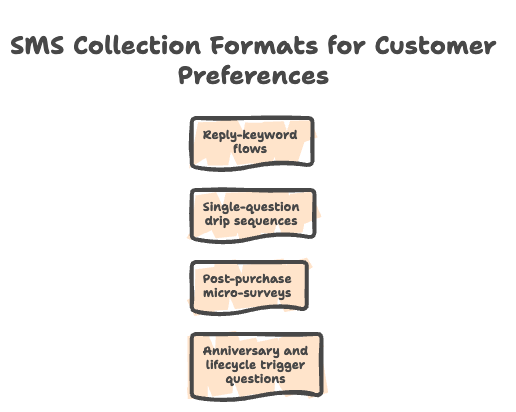
Four SMS collection formats that get customers to share preferences
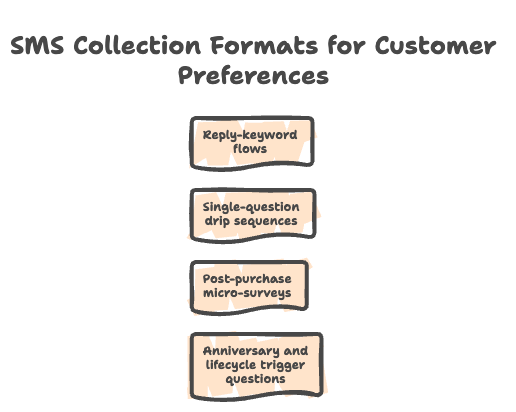
Reply-keyword flows
The simplest and lowest-friction format involves asking a direct question and giving the customer a keyword to reply with. “Reply SHOES to receive early access to new footwear drops, or reply APPAREL for clothing updates” is a format that routes subscribers into segmented send lists based on their own stated interest.
The reply becomes a structured data point that can be written directly to a customer profile attribute. These flows work best for category preference, communication frequency, and channel preference capture, all high-value attributes that many teams currently infer from behavioral data alone.
Insider One’s Agent One™ takes this further: instead of requiring subscribers to type “SHOES,” AI agents interpret natural language replies like “I’m looking for something for a summer wedding” and automatically tag the profile with attributes such as Product_Interest: Formal Wear and Intent: Seasonal, no rigid keyword mapping required.
Single-question drip sequences
Rather than presenting a subscriber with a quiz at a single moment, a single-question drip spreads preference collection across multiple send windows. One question per message, delivered at natural intervals, builds the profile incrementally without demanding attention all at once.
The value-exchange principle applies here: each question should come paired with a reason to answer. Early access, a personalized recommendation based on their answer, or loyalty points for completing the sequence all give the subscriber a concrete return. Without a visible incentive, even a well-designed question will see depressed response rates.
Post-purchase micro-surveys
The moment after a completed purchase is one of the highest-engagement windows in the customer lifecycle. Satisfaction is high, the product is top of mind, and the customer has just demonstrated intent.
A post-purchase SMS sent one to three days after delivery with the optimal send window identified by Sirius AI™ based on each subscriber’s engagement patterns, “How did the [product] land? Reply 1 for loved it, 2 for it was fine, 3 for not quite right”, collects product feedback and implicitly signals replenishment readiness without requiring any on-site interaction.
For replenishment-driven categories like beauty, supplements, or consumables, following the satisfaction question with a replenishment preference question (“Would you like a reminder when it’s time to reorder? Reply YES to set one up”) turns a feedback moment into a cadence preference signal. For real-time replenishment triggers, such as when stock data signals a customer is due for a refill, Insider One’s Transactional API and Data Stream Webhooks enable automated, event-driven SMS delivery without manual campaign setup.
Anniversary and lifecycle trigger questions
Subscribers who have been on your list for 90 days, or who just reached a loyalty tier milestone, represent a natural window for updated preference collection. Their interests have potentially shifted since they first opted in, and the anniversary context gives you an editorial reason to ask.
“You’ve been with us for six months, we want to make sure we’re sending you things you actually care about. What matters most to you right now? Reply DEALS for offers, NEWNESS for new arrivals, or INSPIRATION for styling ideas.” This format also works as a light re-permission mechanism for long-dormant subscribers, which matters for both list hygiene and data quality.
Where in the customer lifecycle to deploy each collection touchpoint
Welcome series: category and frequency preferences
The welcome window, typically the first 72 hours after opt-in, is the right moment to establish the communication contract. A subscriber who just joined your SMS list is at peak curiosity and engagement.
A single preference question in message two or three of a welcome series, after value has been established but before the broadcast cadence begins, sets up the profile enrichment that will make every subsequent send more relevant. Asking for category preference and send frequency in this window is not intrusive; it signals that the brand intends to communicate on the subscriber’s terms.
Post-purchase: feedback and replenishment cadence
As described above, the post-purchase window unlocks product feedback and replenishment timing as collection opportunities. The key operational requirement is that responses from these flows write back to the customer profile in near real-time, not in a weekly export. If a subscriber says they want a replenishment reminder in 30 days and that preference sits in a survey export for three weeks before it’s imported, the entire value of the interaction is lost. SMS preference data only works when it’s live and queryable.
Win-back: re-permission and updated interests
Omnichannel marketing programs frequently neglect the win-back window as a zero-party data moment. A subscriber who hasn’t engaged in 60 to 90 days is typically treated as a suppression candidate. Before suppressing, a single re-permission message that also collects updated preferences serves two purposes: it gives the subscriber a reason to stay on the list, and it replaces stale preference data from a customer whose interests have likely shifted.
For example: “It’s been a while. Before we update your preferences, what’s changed? Reply STYLE, HOME, or KIDS to tell us what you’re into now.” The response either re-activates the subscriber with fresh data or confirms they’re ready to be removed, both of which improve list quality. Unlike standalone CPaaS providers, Insider One also provides native cross-channel fallback: if an SMS goes undelivered, the same message and preference-capture prompt can automatically trigger via WhatsApp, ensuring no collection opportunity is lost due to carrier failure.
Storing, unifying, and activating SMS-collected zero-party data
Getting data out of the reply and into the profile
The most common failure mode in SMS preference collection is operational: the data never leaves the SMS platform. Reply keywords and survey responses captured inside an SMS tool have no value unless they flow into a unified customer profile where they become live, queryable attributes alongside purchase history, browsing behavior, and email engagement.
Whether your stack routes this data through a customer data platform (CDP), a customer relationship management (CRM) system, or custom properties in your email service provider, the routing architecture needs to be defined before the campaign goes live. Preferences collected without a destination are preferences wasted.
Insider One’s Customer Data Management layer is designed precisely for this: SMS-collected attributes write into unified profiles alongside behavioral signals, making stated preferences available across every downstream channel without manual export. This closed-loop architecture is powered by the Transparent ID Network, which resolves identity across 12+ channels in real time—meaning a category preference captured via SMS instantly updates that customer’s Web, App, Email, and WhatsApp experiences simultaneously. This native integration between the CDP and the SMS channel is what separates Insider One from point solutions that collect data but cannot activate it across the full customer journey. That means a category preference captured via SMS can suppress an irrelevant email sent the same afternoon.
Two activation examples worth building now
The first activation pattern is category suppression: if a subscriber has told you they only care about footwear, suppressing them from apparel and home campaigns reduces send volume, lowers unsubscribe risk, and typically lifts conversion rates on the sends that do go out.
The second is frequency throttling: if a subscriber has stated they want to hear from you once a week, and your default cadence is three sends a week, honoring that preference reduces the opt-out risk that erodes list health over time.
Both patterns require that the zero-party data attribute is live in the profile and that your segmentation layer can read and act on it.
Reporting and data infrastructure that surfaces how stated preferences track against engagement outcomes is what closes the loop and validates the entire collection effort.
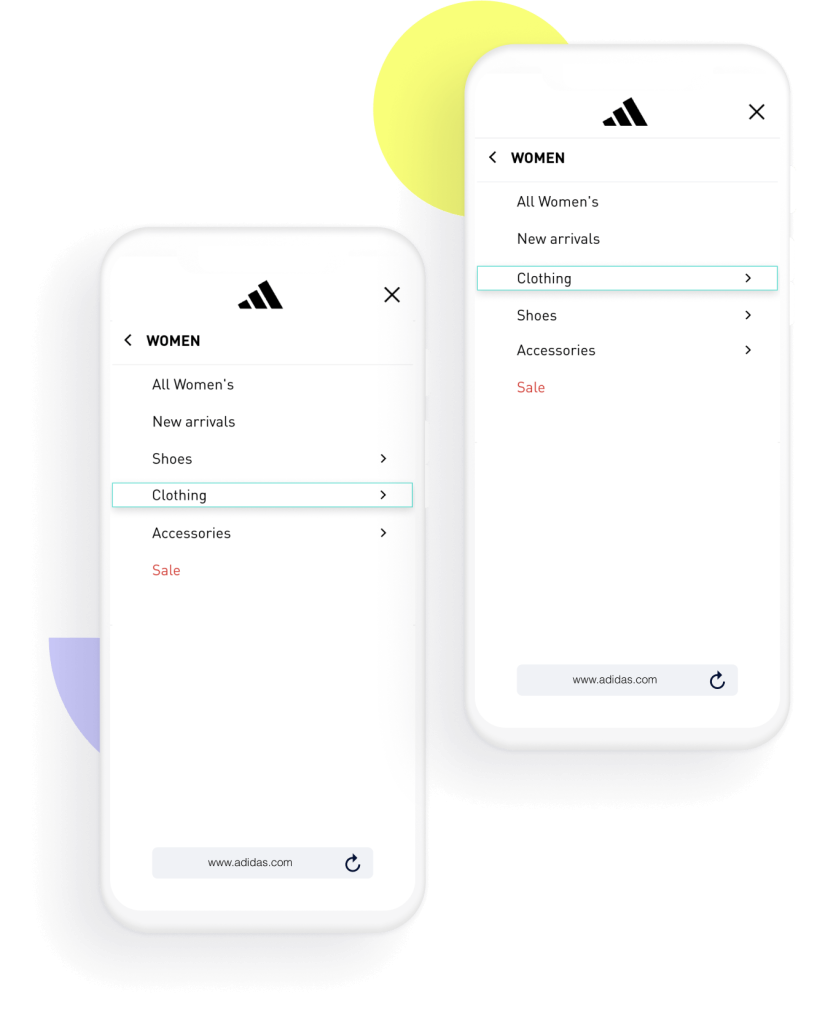
For example, Adidas increased average order value by 259% and conversion rate by 13% in one month using Insider One’s personalization suite, a result driven in part by activating more precise customer profile data to target relevant segments rather than broadcasting across the full list.
Compliance and data quality guardrails for SMS preference collection
TCPA, GDPR, and STOP/HELP integrity
Multi-step conversational SMS flows create a compliance consideration that single-send broadcast campaigns do not. When a subscriber is in the middle of a preference collection sequence, they must retain the ability to opt out at any point without the opt-out being misinterpreted as a preference response.
STOP and HELP keywords must remain functional throughout every step of a conversational flow, not just at the entry and exit points. Suppressing standard opt-out mechanics during a data-capture sequence, even accidentally through how reply logic is routed, creates TCPA and GDPR exposure depending on the market.
Insider One addresses this with native Consent Management built into the CDP: when a subscriber opts out via SMS, they are automatically and globally suppressed across Email, WhatsApp, and all other active channels, eliminating the compliance gap that siloed tools cannot close. Test every multi-step flow end-to-end for opt-out handling before it goes live. Insider One also automatically filters invalid and unreachable numbers before sending, protecting your sender reputation and deliverability rates, a key safeguard for enterprise programs managing large subscriber lists across multiple regions.
Re-consent requirements also apply when stated preferences are used to materially change the nature of communication. If a subscriber opts in for promotional messages and a preference capture flow suggests you’ll now send a different type of communication, confirm the change explicitly and document it. This is especially relevant for frequency changes: if a subscriber requests daily messages and their original opt-in was for weekly updates, a brief re-confirmation protects both parties.
Response-bias and zero-party vs. first-party data validation
Zero-party data is what customers say; first-party data is what they do. These two signals frequently diverge. A subscriber who says they want to hear about new arrivals but never clicks on new-arrival messages is telling you something with their behavior that overrides their stated preference.
Surfacing that contradiction in the profile, rather than treating the stated preference as permanently authoritative, is how zero-party data stays useful over time.
A first-party data strategy that weaves zero-party attributes together with behavioral signals produces profiles that are both trustworthy and responsive to change. Treating stated preferences as static labels is how profiles go stale. Treating them as hypotheses to be validated against behavior is how they stay accurate. Insider One’s Predictive Segmentation layer does this automatically: it cross-references stated SMS preferences against behavioral signals to surface “intent-action gaps”—customers whose stated interests diverge from their actual engagement—so teams can act on real intent rather than stale declarations.
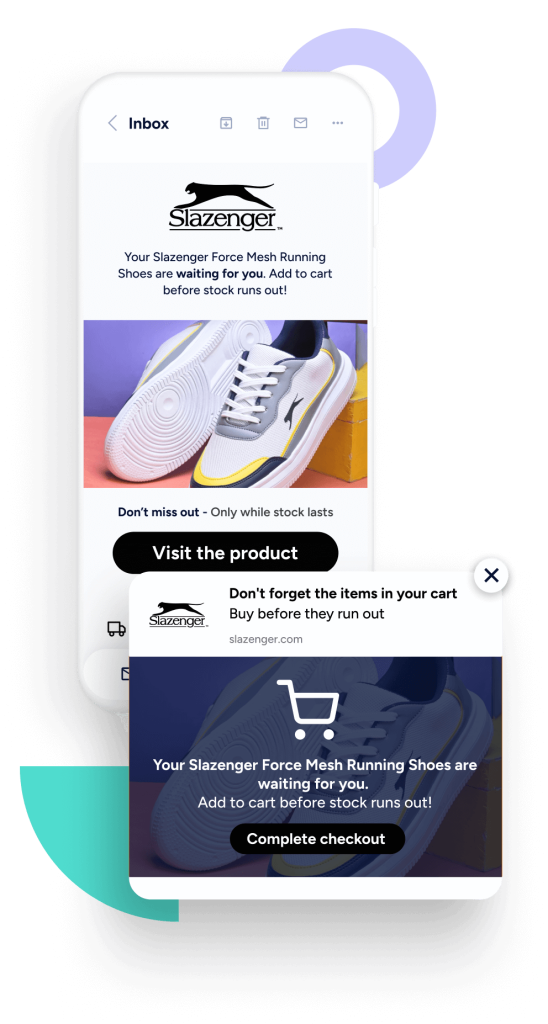
Slazenger gained 49X ROI in eight weeks by using Insider One’s omnichannel marketing solution to orchestrate personalized journeys rooted in unified customer data. The lesson from that result is the same one that applies to SMS preference collection: the data itself is not the advantage. The activation architecture built on top of it is.
Conversational Commerce: the next frontier for SMS zero-party data
A growing use case in 2026 is Conversational Commerce: customers discovering, selecting, and purchasing products directly within an SMS thread. Insider One’s Agent One™ enables this by combining zero-party data capture with transactional actions, a subscriber can reply with their size and color preference, receive a personalized product recommendation, and complete checkout, all without leaving the messaging thread.
For retail brands, this maps to category-driven upsell flows; for beauty brands, it covers replenishment cycles; for financial services, it enables interest-based profiling for loan or card products. This Agentic marketing model moves zero-party data from a ‘collect for later’ mechanism to an ‘instant autonomous execution’ layer, where the AI agent adjusts the customer journey in real time based on each reply.
If you want to see how Insider One’s Customer Data Management turns live customer data into coordinated, revenue-driving experiences, book a personalized demo to see the exact use cases, decision logic, and growth levers most relevant to your team.
FAQs
Zero-party data is information a customer intentionally and proactively shares with a brand, such as their product preferences, communication frequency preferences, or purchase intentions. First-party data is behavioural data that a brand collects by observing customer actions, such as purchase history, click behaviour, and session data. Both types are valuable, but zero-party data carries the advantage of being explicit and consent-driven rather than inferred.
Yes, provided STOP and HELP keyword handling remains intact throughout any multi-step conversational flow, the subscriber has provided valid opt-in consent, and the nature of the messages aligns with what was described at the point of opt-in. Consult legal counsel for your specific market and use case, as compliance requirements vary by geography and message type.
Treat the contradiction as a data quality signal rather than ignoring it. A customer who stated a preference but consistently acts differently is telling you something useful. Validating zero-party attributes against first-party behavioral signals, and updating the profile when a consistent behavioral pattern diverges from the stated preference, keeps the customer profile accurate over time.
One question per message is the practical limit for maintaining high response rates. Multi-question sequences work best when spread across multiple touchpoints at natural lifecycle moments rather than delivered as a back-to-back quiz in a single send window.