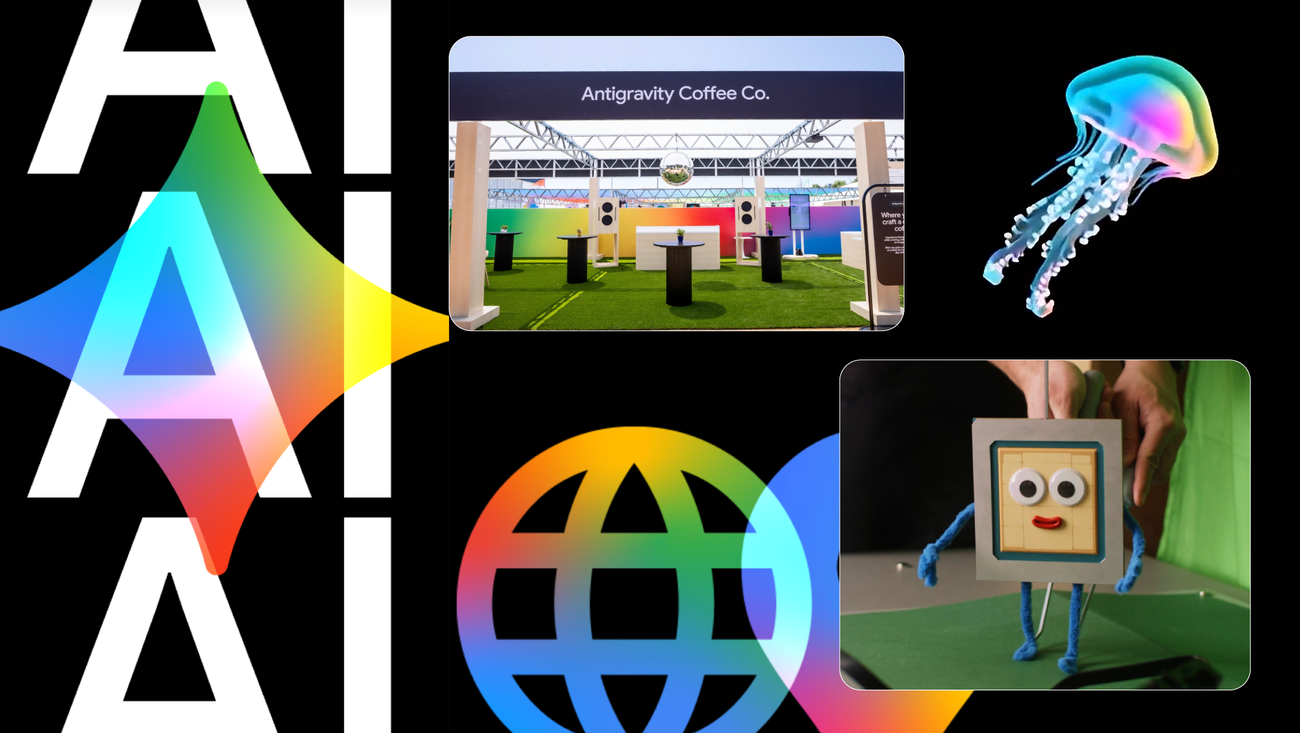
Google I/O 2026 was all about how we’re making AI helpful for everyone in new ways. But we didn’t just make announcements about our innovations in AI at I/O — we used those tools to bring I/O to life, too.
It’s both a strange and exciting moment to be building anything. We’re living through an incredible shift where AI tools are getting better each month, effectively rewriting the rules of what we can create.
This year, we challenged ourselves to use the same AI we were putting on stage to out-innovate, out-create and out-efficient ourselves.
We moved faster than ever and prototyped in real-time — blending human artistry with experimental technology — with no better example than the “Timmy TPU” film.
But the reward is showing how these tools unlock creativity and offload the mundane tasks, giving the team their best hours back for the parts they are uniquely suited to do. When done right, the event is amazing on its own, and, as a viewer, you stop thinking about how AI was used. That shift is the opportunity we want to share, because people keep asking, “What can you really do with AI?”
Keep reading to learn which AI tools we used — and how we prompted them — to help make I/O 2026 happen.