
Tristan Dampies
09 September 2026
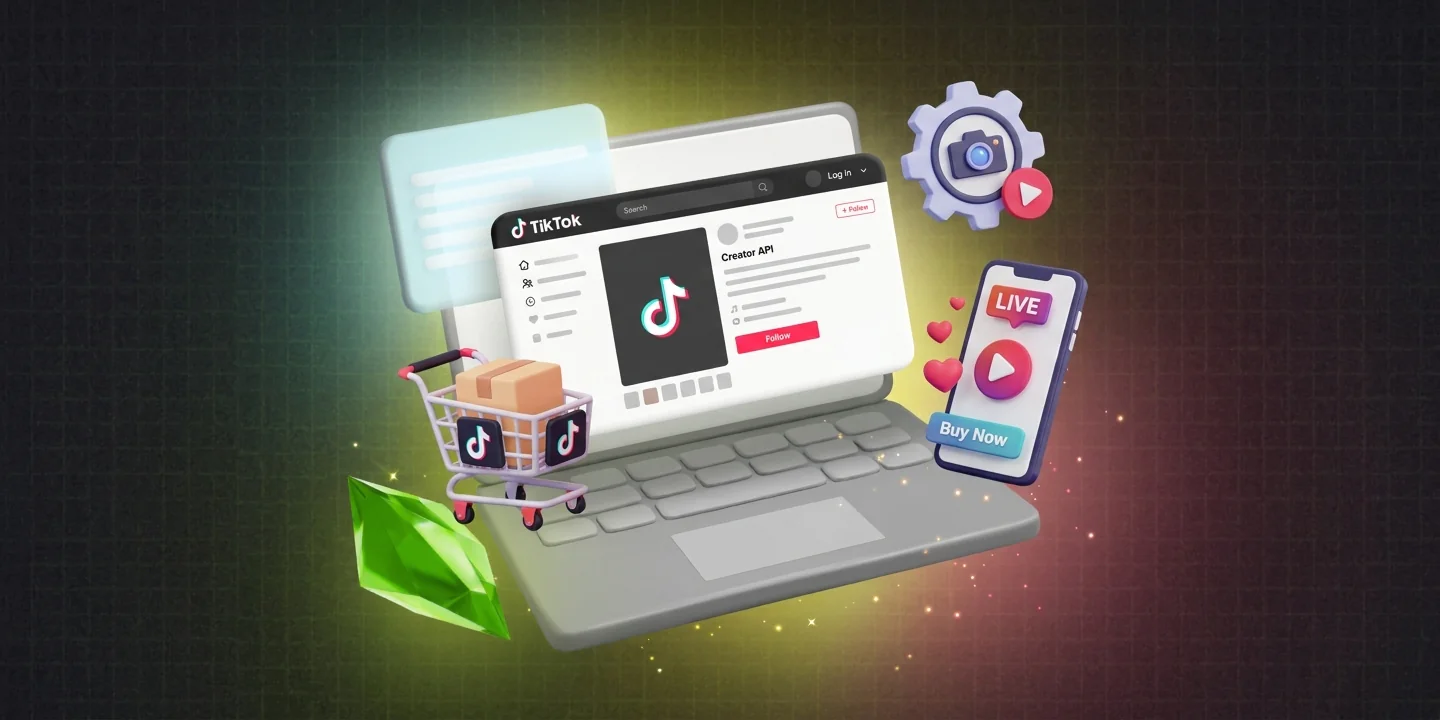
TikTok shoppable commerce has quietly grown from an experimental feature into one of the most direct revenue channels available to app and brand marketers. Social buying is now mainstream behavior. The platform fuses discovery, entertainment, and instant checkout into a single scroll, and if you want actual sales rather than vanity metrics, getting fluent with the tools that convert attention into purchases is simply part of the job now. This guide breaks down exactly what works and why.
Why TikTok Social Commerce Belongs in Your Revenue Strategy
The shift from browsing to buying inside the app is not a projection anymore. eMarketer forecasts continued double-digit growth for US social commerce, with TikTok Shop capturing a disproportionate share of new buyers. Shoppers are completing transactions without ever leaving the feed, which compresses the path from creator video to checkout and meaningfully lifts conversion rates in the process.
For app marketers, this matters because the same behaviors that drive product sales also drive installs, subscriptions, and in-app purchases. TikTok has become a full-blown discovery engine, and treating it purely as a top-of-funnel awareness play leaves real money on the table. Brands that align creative, targeting, and commerce features can attribute direct revenue to specific videos, creators, and campaigns rather than making educated guesses.
To understand where TikTok fits alongside other channels, review our comparison of social ad formats and how each contributes to measurable outcomes. The core point: TikTok now closes sales, not just opens conversations.
Using the Creator Commerce API to Scale Affiliate Revenue
The Creator Commerce API is the connective tissue between your product catalog, your creator partners, and TikTok Shop. It lets brands programmatically manage product listings, generate trackable affiliate links, sync inventory, and pull granular performance data at scale. Instead of manually briefing each creator and chasing down numbers in a shared doc, you can automate product assignment and commission structures across hundreds of partnerships simultaneously.
This is where affiliate commerce stops being a spreadsheet exercise and starts behaving like a proper growth program. According to TikTok for Developers, the commerce APIs expose order data, sample requests, and content performance metrics, so you can reward high-converting creators and cut underperformers quickly. The end result is a self-optimizing affiliate program tied directly to sales, not impressions.
A few practical priorities when implementing the API:
- Automate catalog syncing so out-of-stock products never appear in live videos.
- Assign trackable links per creator to attribute every conversion accurately.
- Tier commissions based on conversion rate, not follower count.
- Pull order-level data into your BI stack for blended ROAS reporting.
Finding the right partners still drives everything. Our guide to niche creator partnerships explains why smaller, highly relevant creators often outperform mega-influencers on commerce metrics. Pair that selection process with API automation and you get real scale without sacrificing the relevance that makes commerce content convert.
In-Feed Product Placement That Converts Browsers to Buyers
In-feed product placement is the workhorse of TikTok commerce because it meets users exactly where they already are. Product Showcase tags, shoppable video ads, and pinned catalog links let viewers tap and buy without breaking the viewing experience. The placements that perform best feel native, not like interruptions grafted onto someone else’s content.
Creative discipline is what separates winners from wasted spend. TikTok’s own business resources consistently show that videos framed as authentic demonstrations, unboxings, or problem-solution stories outperform polished commercials. The product tag should appear at the moment of peak interest, usually right after the value has been shown, not before.
To lift click-through and add-to-cart rates, focus on these placement fundamentals:
- Hook in the first two seconds with the outcome, not the brand name.
- Show the product in use before displaying price or promotion.
- Add a clear verbal and on-screen CTA that points to the pinned link.
- Test multiple creators against the same product to find the strongest angle.
These principles echo broader best practices for short-form video, where the algorithm rewards watch time and engagement that signal genuine interest. If your creative earns completion, the commerce feature handles the rest.
Live Shopping Tactics That Drive Real-Time Sales
Live shopping compresses the entire funnel into a single event. During a stream, hosts demonstrate products, field objections in real time, and pin items for instant purchase. Limited-time offers and live inventory counts create a psychological pull that pre-recorded content simply cannot replicate. Live commerce has already scaled dramatically across Asian markets, and Western adoption is accelerating fast.
The mechanics reward preparation heavily. A successful stream needs a clear run of show, hero products spaced across the broadcast, and a co-host managing comments so the main host can stay focused on selling. Promote the event several days ahead to build your audience before you go live, then reward early viewers with exclusive drops to reinforce the habit of showing up.
Consider these live shopping tactics to maximize revenue per stream:
- Schedule recurring streams so your audience learns when to show up.
- Bundle products and reveal offers on a countdown to spike urgency.
- Feature guest creators to import their engaged communities.
- Repurpose highlights into in-feed clips that keep selling after the stream ends.
App marketers can adapt the same format to demo features, offer time-limited subscription discounts, or unlock premium content live. If growing your following is the first hurdle, our tips on growing TikTok followers give you the audience base that live commerce depends on.
Measuring Direct Revenue and Attribution on TikTok Shop
Attribution is where many programs stall out. TikTok commerce generates a mix of in-app sales, creator-driven affiliate revenue, and downstream conversions that sometimes happen days after the initial view. To report accurately, connect TikTok Shop data with your analytics stack and treat blended metrics as the source of truth rather than relying on platform-reported numbers alone.
Track these core commerce KPIs to prove and improve performance:
- Gross merchandise value (GMV) per creator and per campaign.
- Conversion rate from video view to completed order.
- Return on ad spend blended across paid and organic placements.
- Customer acquisition cost compared with lifetime value.
Independent market data helps you benchmark against something real. Platforms like Sensor Tower and Statista publish social commerce spend and category trends that put your results in context. Comparing your conversion rate to category averages tells you quickly whether creative or targeting is the variable that needs work.
For app-specific goals, revenue is only one signal worth watching. Installs, activation, and retention still matter, and many of the same commerce videos double as install drivers. Our overview of ways to increase app downloads shows how to connect TikTok engagement to acquisition without over-crediting last-click sales.
Building a Repeatable TikTok Commerce Program
One viral video is luck. A repeatable program is a system. The brands winning consistently on TikTok commerce run a continuous loop: recruit creators, brief them lightly, launch across in-feed and live formats, measure by GMV and ROAS, then reinvest in what converts. Treating commerce as an always-on operation rather than a campaign burst is what compounds returns over time.
Start by documenting your best-performing angles and turning them into repeatable briefs. Keep a bench of vetted creators through a managed creator network so you can spin up new content quickly when something breaks through. Layer paid amplification on organic winners rather than boosting untested creative, and let data decide budget allocation each week.
Finally, integrate TikTok into your wider social plan instead of siloing it. Our social media checklist helps align commerce goals with content, community, and paid media so every channel reinforces the same revenue objectives. Consistency across the funnel is what turns one-off experiments into predictable, growing income.
Conclusion
TikTok shoppable commerce rewards marketers who combine the Creator Commerce API, native in-feed placements, and live shopping into one measurable system. Automate affiliate scale, make creative feel authentic, use live events to manufacture urgency, and report on blended revenue. The takeaway is straightforward: treat TikTok as a direct-response channel, build a program designed to repeat, and let performance data guide every reinvestment decision you make.
FAQs
What is the Creator Commerce API and who should use it?
It is TikTok’s programmatic interface for managing product listings, affiliate links, and order data at scale. Brands running large creator programs or managing sizeable catalogs benefit most, since it automates tasks that would otherwise require manual coordination across dozens or hundreds of individual partners.
Does live shopping work outside of Asian markets?
Adoption in Western markets is accelerating steadily as more categories test the format. Beauty, fashion, home goods, and consumer tech tend to perform strongly because live demonstrations answer buyer questions on the spot and create genuine urgency around limited offers.
How do I attribute revenue accurately across TikTok formats?
Connect TikTok Shop data to your analytics stack and rely on blended metrics like GMV, conversion rate, and ROAS rather than platform-reported figures alone. Use trackable affiliate links per creator to isolate exactly what each partner and campaign contributes to the bottom line.
Can app marketers use TikTok commerce features even without physical products?
Absolutely. The same tools drive subscriptions, in-app purchases, and installs. Live streams can demo features and unlock time-limited discounts, while in-feed placements point users directly toward download or upgrade actions.
How many creators do I need to start?
Start small with a tightly vetted group of relevant creators, prove which angles actually convert, then scale from there. Quality and relevance beat raw follower count, especially for commerce where conversion rate matters far more than reach.
Tristan Dampies
Tristan is a Content Writer at Moburst with a background in journalism and public relations, bringing a strategic, audience-first approach to content across the digital marketing landscape. She enjoys crafting stories that inform, connect, and drive impact. Outside of work, she loves discovering new restaurants and spending quality time with her daughter, family, and friends.