
Yuval Etinger
01 September 2026
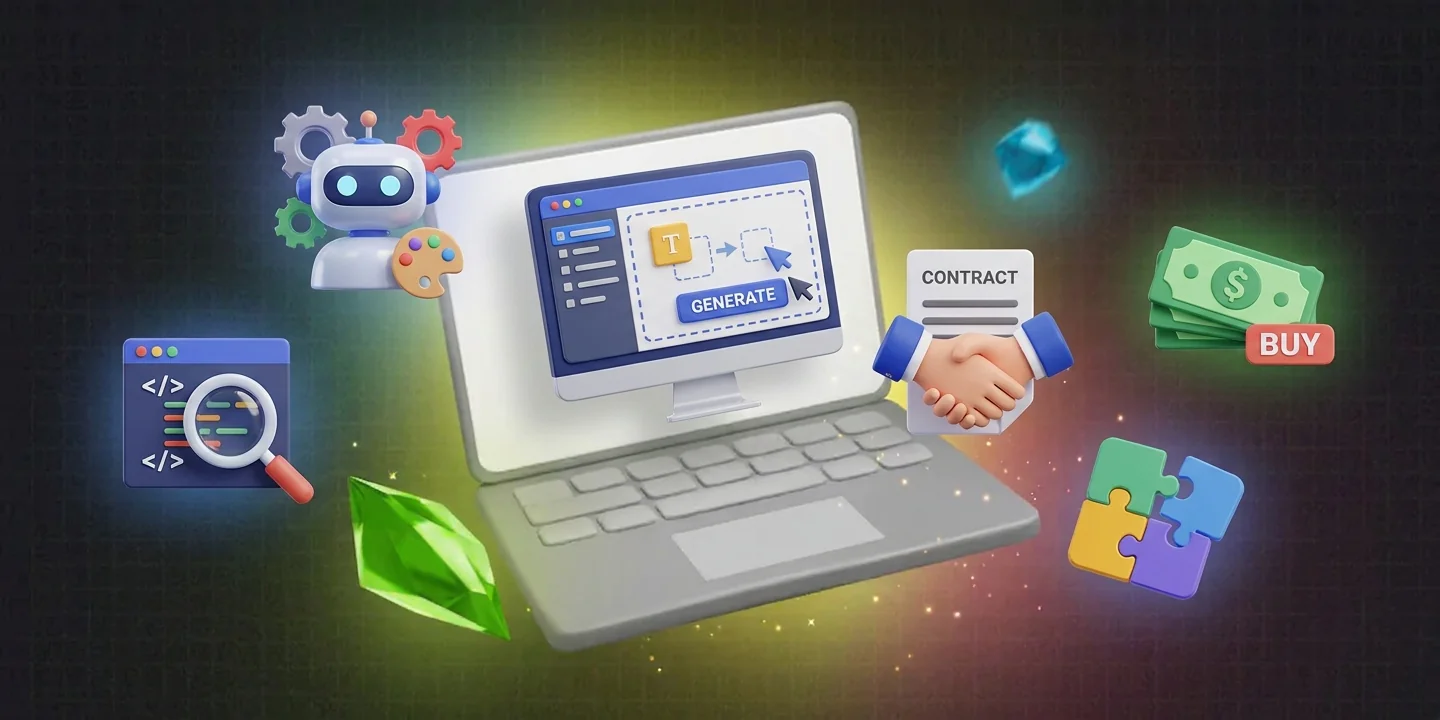
When Wix confirmed it would cut roughly 20% of its workforce and lean into automation, the announcement didn’t just make headlines. It sent a real signal to anyone building or buying digital products. AI-powered website builders are no longer a curiosity or a conference talking point. They are actively changing how brands decide whether to build in-house, buy a platform, or bring in an agency. So what should marketing leaders actually do with this?
Why the Wix Restructuring Signals a Shift in Website Development
Wix cutting headcount while doubling down on AI tooling reflects something the industry has been quietly watching for years. Generative systems can now handle tasks that once justified entire teams. Layout generation, copywriting, image creation — the timeline and cost of launching a functional site have compressed in ways that felt purely theoretical just two years ago.
And Wix isn’t alone here. Across the sector, platforms are betting that automation will absorb the repetitive production work that used to require large staffs. Google’s own guidance on helpful content makes clear that quality and usefulness matter more than which tool created the pages, which raises the stakes considerably for how brands deploy AI responsibly.
For decision-makers, the practical takeaway is this: the question is no longer whether AI can build your website. It is whether an AI-assisted platform, an internal team, or an expert partner will actually deliver the strategic outcomes your brand needs. That distinction shapes everything.
Build vs. Buy: How AI Changes the Website Cost Equation
The classic build-versus-buy debate used to hinge on three things: budget, timeline, and control. AI has recalibrated all of them. Buying a builder like Wix, Squarespace, or Framer now gives you AI-generated scaffolding within minutes, which dramatically lowers the barrier for small businesses and early-stage startups that need something live fast.
Building in-house still gives you full control over infrastructure, data, and customization, but maintaining an engineering and design team carries real ongoing cost. According to Gartner research, enterprises continue to prioritize speed-to-market and total cost of ownership when evaluating platform decisions, and AI has made the “buy” side considerably more compelling for standard use cases than it was even three years ago.
Here is a practical way to frame the choice:
- Buy when speed, cost, and standard functionality outweigh deep customization needs.
- Build when your product requires proprietary integrations, complex data flows, or unique user experiences.
- Partner when you need strategy, differentiation, and performance that off-the-shelf AI simply cannot guarantee.
What we have seen again and again is that the real cost isn’t the build itself. It’s the ongoing optimization, conversion work, and technical SEO that determine whether a site actually performs in a competitive market.
Where AI Website Builders Fall Short on Brand Differentiation
AI builders are genuinely good at producing competent, templated output. That is also exactly their limitation. When thousands of businesses run the same generative prompts through the same design systems, you end up with a sea of sameness that quietly erodes brand differentiation across entire categories. We’ve watched this happen in real time across e-commerce, SaaS, and professional services.
Generative tools struggle with the elements that actually make brands stick: distinctive positioning, original creative direction, storytelling that lands emotionally. They also fall short on nuanced accessibility, performance tuning, and the kind of memorable design that turns curious visitors into loyal customers.
There is a search visibility risk here too. As AI-generated pages multiply, algorithms and answer engines increasingly reward depth, expertise, and genuine helpfulness. Our team has written extensively about answer engine optimization, and the pattern holds consistently: cookie-cutter content rarely earns citations in AI-driven search results. Differentiation has become a ranking factor, not just a branding preference.
Bottom line: AI can get you a website. It cannot get you a competitive advantage on its own.
Rethinking Agency Partnerships in the Age of Automation
If AI handles production, what is left for agencies? Honestly, everything that actually moves the needle. The value of agency partnerships is shifting decisively away from execution and toward strategy, integration, and measurable growth.
Forward-thinking agencies now use AI to accelerate their own workflows, while directing human expertise toward the areas machines cannot own: audience insight, conversion strategy, creative differentiation, full-funnel performance. This mirrors the wider consolidation we covered in our analysis of search and creative tools, where AI is reshaping the entire martech stack from the ground up.
In practice, modern agency engagements look quite different than they did even three years ago. The work now centers on conversion rate optimization built from real user behavior, not assumptions. It includes technical SEO and site architecture designed specifically for AI-driven search, custom design that reflects a brand’s actual voice rather than approximating a template, and tight integration with analytics, CRM, and marketing automation platforms like HubSpot or Salesforce. Perhaps most importantly, it involves ongoing testing and iteration rather than a single launch event that gets forgotten six months later.
The agencies thriving right now treat AI as a force multiplier, passing efficiency gains to clients through faster turnarounds and sharper strategy. That is exactly the shift we explored in our piece on AI-native advertising, and it applies just as directly to web development partnerships.
A Practical Framework for Your Website Decision
To make a confident choice, evaluate your situation against four factors. This decision framework keeps the conversation grounded in outcomes rather than hype.
- Complexity. How custom are your functionality and integration requirements? Simple brochure sites and campaign pages are well-suited to AI builders. If you’re dealing with complex API integrations, custom data flows, or non-standard user journeys, you’ll want in-house engineers or a partner who has managed that scope before.
- Differentiation. How critical is a distinctive brand experience in your category? The more competitive your market, the more a partner-led approach tends to pay off over time.
- Resources. Think honestly about whether your team has the in-house engineering, design, and SEO talent to maintain and optimize the site continuously, not just at launch, because that gap is where most websites quietly stall.
- Growth stage. Early validation may only need a fast AI build to test assumptions. Scaling companies almost always need strategic support to compete seriously for visibility and conversions.
In our experience, many enterprises land on a hybrid model: AI builders for internal microsites or campaign landing pages, while investing in expert partnerships for flagship experiences that need to perform. If you are modernizing a legacy operation, our digital transformation roadmap outlines how to sequence these decisions without disrupting the business in the process.
Whatever path you choose, avoid treating your website as a static asset. According to Statista data on ecommerce and online behavior, user expectations keep rising, and sites that stagnate lose ground quickly. Continuous optimization is what protects your investment over time, not any single build event.
What Brands Should Prioritize Going Forward
The Wix workforce reduction is a preview of how automation will reshape digital services broadly. Rather than fearing it, smart brand strategy means using AI where it genuinely excels and reserving human expertise for where it remains irreplaceable.
Three priorities stand out. First, invest in the parts of your site that AI cannot replicate: original creative, trustworthy expertise, and genuine user value that competitors cannot easily copy. Second, build for AI-driven discovery by aligning with Google’s search updates and the growing influence of answer engines on how users find information. Third, choose partners who use AI to deliver more strategic value, not just cheaper output.
For a broader view of where the market is heading, our overview of the top marketing trends shows why differentiation, first-party data, and AI-fluent teams will define the winners in most categories. Brands that treat AI as a tool rather than a strategy will consistently outperform those that hand the entire decision to a template and hope for the best.
Here is the thing: the Wix restructuring confirms that AI-powered website builders are here to stay, but they solve for production, not strategy. The smartest brands will use AI for speed while investing human expertise in differentiation, conversion, and search visibility. Evaluate build, buy, or partner decisions against your complexity, your actual available resources, and your growth stage. The right choice protects both your budget and your competitive edge.
Frequently Asked Questions
Are AI website builders good enough to replace agencies?
They can replace basic production work for simple sites, but not strategy, differentiation, or performance optimization. AI builders produce competent templates, while agencies deliver conversion strategy, custom design, technical SEO, and ongoing iteration that off-the-shelf tools cannot guarantee.
Should a startup build, buy, or partner for its first website?
Early-stage startups validating an idea often benefit from buying an AI builder for speed and low cost. As you scale and competition intensifies, partnering with experts becomes worthwhile to secure differentiation, search visibility, and higher conversion rates.
Does AI-generated content hurt SEO?
Not inherently. Google rewards helpful, original, and expert content regardless of how it is produced. The risk comes from generic, templated pages that lack depth. Prioritize genuine value and a unique perspective to earn rankings and citations in AI-driven search.
What did the Wix layoffs actually mean for the industry?
They signaled that automation can now absorb much of the repetitive production work in website development. It accelerates a broader shift where value moves from execution toward strategy, creative differentiation, and measurable growth outcomes.
How do I future-proof my website investment?
Treat your site as a living asset. Continuously optimize for conversions, align with evolving search and answer-engine standards, invest in original brand experiences, and choose partners who use AI to add strategic value rather than simply cut costs.
Yuval Etinger
Yuval is the Senior Vice President of Product at Moburst. With over 18 years of industry experience, he is an expert at problem-solving, UX design, and user-centered design (UCD), which enables him to develop a creative process leading to results-driven mobile-web products. His passion for innovation guides his exploration of design, UX, and business performance, and he shares valuable insights and lessons from his experience, offering perspectives on mobile product development and guiding principles for success.