
Yuval Etinger
27 August 2026
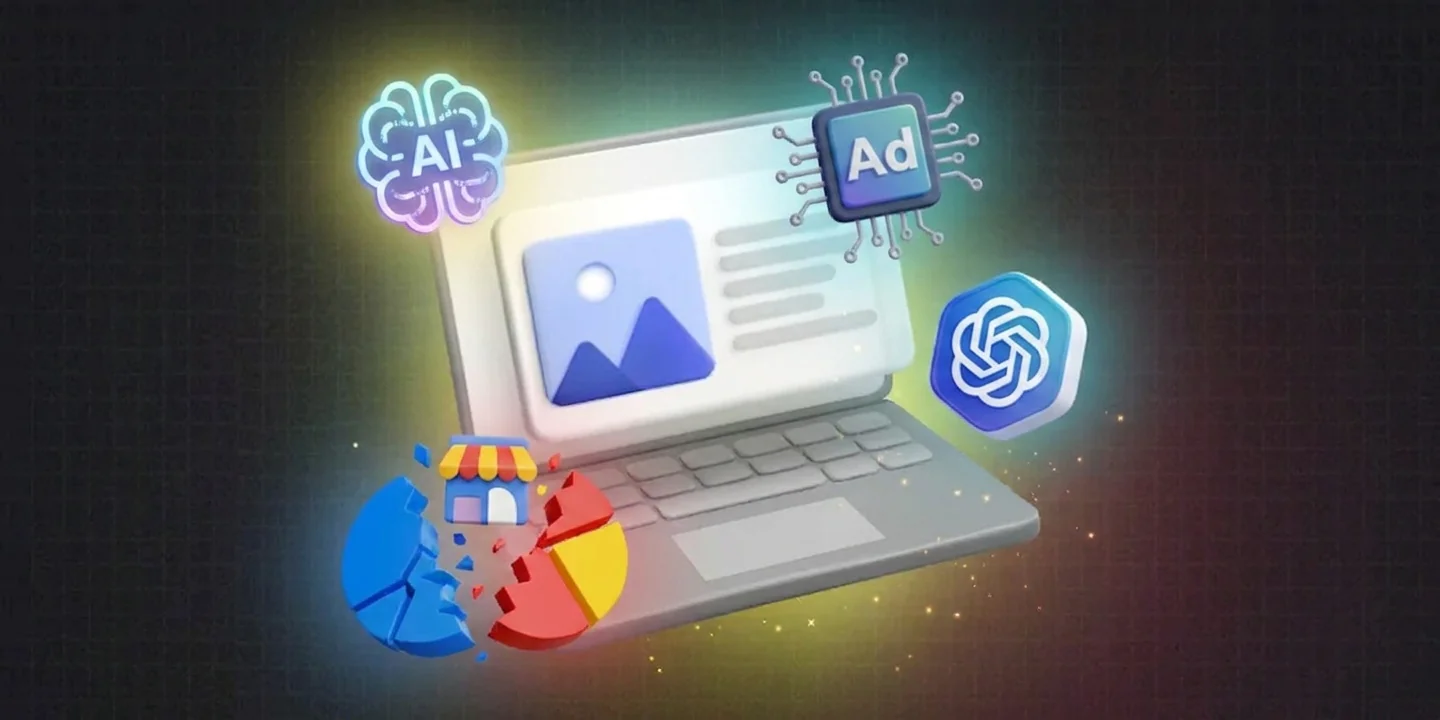
When OpenAI started recruiting a chief marketing officer for its advertising business, the signal was impossible to ignore: AI-native advertising platforms have moved well past the whiteboard-strategy phase. The company that fundamentally changed how people search is now building an ad engine with genuine ambitions to challenge Google and Meta on their home turf. For mobile marketers, this is a real inflection point, one that demands a hard look at budgets, targeting strategies, and creative formats that may already be obsolete. So what actually changes when the duopoly faces its first credible rival in years?
Why AI-Native Advertising Platforms Are Reshaping the Ad Landscape
For roughly two decades, digital advertising has run on two rails: Google and Meta. Together they still capture the majority of global digital ad spend, according to eMarketer forecasts. But that grip is loosening, and what we have seen is that the loosening is happening faster than most media plans have accounted for. OpenAI bringing in senior marketing leadership signals a future where conversational AI assistants become the dominant interface between consumers and brands.
Here is the thing: AI-native platforms don’t simply layer ads over search results the way Google has done since 2000. They weave commercial recommendations directly into conversations, answers, and daily workflows. When someone asks an assistant to plan a weekend trip to Asheville or compare two pairs of trail running shoes, the ad placement is contextual, deeply intent-driven, and often invisible in any traditional sense. That fundamentally changes how impressions, clicks, and conversions get measured and valued, and most attribution tools aren’t ready for it.
Competitive pressure is already visible across the industry. Google has folded generative answers into Search, and Microsoft has woven advertising into Copilot. The broader emergence of new AI players, a trend we covered when exploring the rise of new AI platforms, is accelerating well ahead of most media plans.
What OpenAI’s Ads Business Means for Mobile Marketers
A CMO hire isn’t an experiment. It’s a commitment. It tells the market that OpenAI plans to monetize its massive user base through advertising, not subscriptions alone. ChatGPT reportedly serves hundreds of millions of weekly active users, a scale documented in recent Reuters reporting. That audience is engaged, high-intent, and increasingly accessing the platform on mobile devices, which puts this squarely in mobile marketers’ territory.
In our experience, the brands that get caught flat-footed are the ones that wait for a platform to reach full maturity before testing it. Three shifts deserve serious attention right now:
- New inventory: Conversational placements will produce ad formats that don’t map neatly onto display or search. Think sponsored answers, product carousels embedded inside chat threads, and assistant-driven recommendations surfaced mid-conversation.
- New attribution: If a user discovers your app through an AI conversation and installs it two days later via organic search, standard last-click models will miss that journey entirely. The gap between discovery and conversion is longer and messier than click-based dashboards can handle.
- New creative demands: Copy that performs inside a chat interface reads nothing like a banner headline or a paid search ad. It needs to be concise, genuinely useful, and conversational in tone, more like a knowledgeable friend than a media placement.
The brands that win early will treat this as a channel worth testing, not a threat worth avoiding. Diversifying beyond the duopoly is a theme running through our marketing trends analysis, and AI ad platforms are the most concrete example of that shift playing out in real time.
Preparing Your Brand for a Post-Google, Post-Meta Ad Strategy
Nobody serious is predicting Google and Meta will disappear. But leaning on them for the overwhelming majority of paid acquisition has shifted from a safe default to a genuine concentration risk. A resilient post-Google, post-Meta ad strategy spreads intent capture across multiple surfaces: AI assistants, retail media networks like Amazon and Walmart Connect, connected TV, and creator ecosystems.
Start with a channel audit. Map where your customers actually discover products today versus where your budget currently sits. Many mobile brands find a widening gap between those two things, and seeing it laid out in a spreadsheet tends to be clarifying. From there, run controlled tests on emerging platforms with a small slice of budget, measuring incremental lift rather than relying on platform-reported ROAS alone, which has a well-documented history of flattering the platform.
Creator-led distribution deserves a seat at the table here too. As trust in traditional advertising keeps eroding, authentic recommendations carry real weight. It’s a dynamic we covered in depth in our influencer marketing report. Pairing creator content with AI-native placements gives you both reach and credibility as the landscape keeps fragmenting.
How AI Search Optimization Changes Brand Discovery
Paid placements are only half the story. When people ask AI assistants for recommendations, those models draw on training data and retrieval systems to surface brands organically. That makes AI search optimization something every marketer needs to understand, because organic visibility inside AI answers can rival paid inventory in actual conversion value, sometimes exceed it.
This is where answer engine optimization becomes essential. Structuring your content so AI systems can parse, cite, and recommend it is the new frontier of organic growth, and most brands are starting from zero. Our team has built dedicated answer engine optimization practices around exactly this challenge. The fundamentals come down to clear entity definitions, structured data markup, and credible third-party citations that give AI models a reason to trust your brand as a source.
For app-focused brands, the core principles of app store optimization still apply, but they now extend into how AI assistants describe and rank your app when users ask about it directly. Reviews, ratings, and descriptive metadata all contribute to the signals that AI models weigh when forming recommendations. Google’s guidance on structured data markup remains a practical and well-maintained foundation for making your content machine-readable.
Building a Measurement Framework for AI-Native Ad Channels
Bottom line: the hardest part of adopting new channels is proving they’re actually working. Legacy dashboards were built for a click-based world, and AI-native journeys rarely follow a clean, linear path from impression to install. A modern measurement framework needs to combine platform data with incrementality testing and media mix modeling to capture the full picture, not just the part the platform wants you to see.
Three practices help mobile teams stay honest about what’s actually performing:
- Geo-based holdouts: Turn a channel off in matched geographic regions to measure true incremental installs and revenue. It’s more work than reading a dashboard, but it tells you what’s real.
- Server-side conversion tracking: With privacy restrictions tightening across iOS and beyond, first-party data captured server-side gives you cleaner signals than device-level tracking alone, which is increasingly unreliable anyway.
- Blended CAC monitoring: Watch your blended customer acquisition cost across all channels, not just per-platform ROAS, so you can spot when a new surface is genuinely improving overall efficiency rather than just redistributing the same conversions.
Privacy shifts continue to reshape measurement, something we track closely through updates like the latest App Store changes. Survey data from Pew Research consistently shows that people want more control over their personal data, and that sentiment is only growing. Marketers who build privacy-durable measurement infrastructure now will be far better positioned as AI ad platforms continue to mature and regulators continue to tighten the rules.
Practical Steps to Future-Proof Your Media Plan
Change of this scale rewards preparation over prediction. You don’t need to know which platform ultimately wins the AI ad wars to position your brand well right now. What you need are flexible systems, clean first-party data, and a genuine testing culture. Here are the moves worth making over the next two quarters:
- Reserve 10 to 15 percent of paid budget specifically for emerging AI-native and alternative channels, treated as a real learning budget rather than experimental scraps.
- Invest in first-party data collection through your app, website, and CRM so you own the customer relationship directly, regardless of what any platform decides to change about targeting or reporting.
- Rewrite core product content to be conversational, factual, and easy for AI models to cite, reference, and confidently recommend.
- Build a rapid creative pipeline capable of producing assistant-friendly formats on short notice, because the ad formats emerging from these platforms are still evolving fast.
- Establish cross-functional reporting that unites paid, organic, and AI visibility in a single view, so no one team is optimizing in isolation.
More traditional organizations may need broader structural change to keep pace with any of this, which is why we outline a full digital transformation roadmap for teams working from legacy foundations. The goal is agility: a media operation flexible enough to shift spend toward whichever surface is delivering efficient growth at any given moment, rather than one locked into last year’s channel mix.
OpenAI hiring a CMO for its ads business is a genuine turning point, not industry speculation. AI-native advertising is arriving, and the Google-Meta duopoly finally has a credible challenger with hundreds of millions of users already in the funnel. Mobile marketers who diversify their channels, get serious about AI search optimization, and build privacy-durable measurement will be the ones who thrive through the transition rather than scramble to catch up. The practical takeaway is straightforward: start testing now, own your first-party data, and treat AI platforms as an opportunity worth pursuing rather than a disruption worth waiting out.
Frequently Asked Questions
Will OpenAI’s ad platform replace Google and Meta?
Realistically, not for a long time. Google and Meta retain enormous scale and years of mature tooling, targeting infrastructure, and advertiser relationships that won’t evaporate overnight. But an OpenAI ad business introduces genuine competition for high-intent moments, and even a modest share shift is enough to justify diversifying your media plan today rather than waiting for the dust to settle.
How do I get my brand recommended by AI assistants?
Focus on answer engine optimization: publish clear, factual, well-structured content that directly answers the questions your customers are already asking, earn credible third-party citations from publications and review sites AI models trust, and implement structured data markup. Strong reviews and accurate metadata also meaningfully improve the odds that an assistant surfaces your brand over a competitor when a relevant query comes in.
How much budget should I move to AI-native channels?
A practical starting point is 10 to 15 percent of paid spend, allocated to controlled tests and measured by incremental lift rather than platform-reported numbers. Scale only when geo holdouts and blended CAC confirm the channel is delivering efficient growth, not just conversions that would have happened anyway through another touchpoint.
What creative works best in conversational ad placements?
Concise, useful, genuinely helpful copy consistently outperforms interruptive formats inside conversational interfaces. These placements reward answers that actually solve the user’s problem in the moment, so lead with real value and keep the tone natural rather than promotional. Think less ad copy, more knowledgeable recommendation.
How do I measure conversions from AI-driven discovery?
Combine server-side tracking, geo-based holdouts, and media mix modeling. Because AI-driven journeys rarely follow a clean click path from discovery to conversion, incrementality testing gives you a far more accurate read than last-click attribution alone, which will chronically undercount this channel’s contribution.
Yuval Etinger
Yuval is the Senior Vice President of Product at Moburst. With over 18 years of industry experience, he is an expert at problem-solving, UX design, and user-centered design (UCD), which enables him to develop a creative process leading to results-driven mobile-web products. His passion for innovation guides his exploration of design, UX, and business performance, and he shares valuable insights and lessons from his experience, offering perspectives on mobile product development and guiding principles for success.