[ad_1]
Commerce is entering a new operating model. For years, brands have focused on attracting people into owned digital experiences, guiding them through search and navigation, and converting them on site. That model is starting to shift.
Customers are increasingly asking software to do part of the shopping journey for them. They are using AI to compare products, evaluate options, weigh price against delivery, and increasingly assess broader value before they ever land on a website. In that environment, brands are no longer competing only for human attention. The next phase, heralded by agentic commerce, will make the business easier for both customers and AI agents to understand, trust, and act on.
Antavo and Bloomreach recently hosted a joint webinar, discussing this exact topic. Go check it out to hear what Kathryn Wright, Antavo’s, COO, Attila Kecsmar, CEO & Co-Founder of Antavo, and Mark Galvin, VP of Strategic Program Development at Bloomreach, had to say.
What is agentic commerce and why does it mark a new phase in shopping
Agentic commerce is the shift from customer-led browsing to software-assisted decision-making. Instead of manually searching across sites, comparing products, and weighing trade-offs, shoppers increasingly ask AI to do that work for them.
A customer might ask for the best black leather ankle boots under a certain budget, available in the right size, with fast delivery and the best member value. The agent can then filter, compare, and recommend across multiple options before the shopper sees a product page.
That is why this is more than a new interface trend. It changes where influence happens. In traditional ecommerce, the brand’s interface shapes the journey. In agentic commerce, parts of discovery and evaluation happen before the user enters the brand environment at all.
The website still matters, but it is no longer the only place where competitive advantage is won. Product signals, commercial logic, incentives, trust controls, and identity become part of how brands show up in machine-led journeys.

From my perspective, agentic commerce is the use of software agents that can act on behalf of the customer across parts of the shopping journey, most commonly including things like product discovery, comparison of products, pricing comparison, right the way through in some instances to checkout. In practical terms, a consumer might go and prompt an agent with something like, ‘Find me the best black leather ankle boots under 180 pounds, available in a size 5, that can arrive by Friday and give me the best loyalty or member value.’ The agent then handles several steps that previously required the shopper to compare and decide manually.
Personalization in the age of AI
AI is also pushing commerce toward a far more individualized model of decision-making. Instead of broad personalization aimed at segments, brands should prepare for what is effectively a segment of one. In practice, that means journeys shaped by a customer’s immediate context, intent, preferences, and expected outcomes, whether they begin in ChatGPT, Gemini, Claude, WhatsApp, or another AI-powered interface. The shift is already visible in everyday use cases. Consumers are using AI to compare boots by size, budget, delivery speed, and member value, or to research products such as vacuum cleaners and car stereo upgrades, including which local provider can install them and at what price. The same logic will apply beyond consumer retail. In B2B and service-led buying, AI can compare a mix of product, service, support, and practical delivery considerations in ways that are difficult to replicate through a single website journey alone.
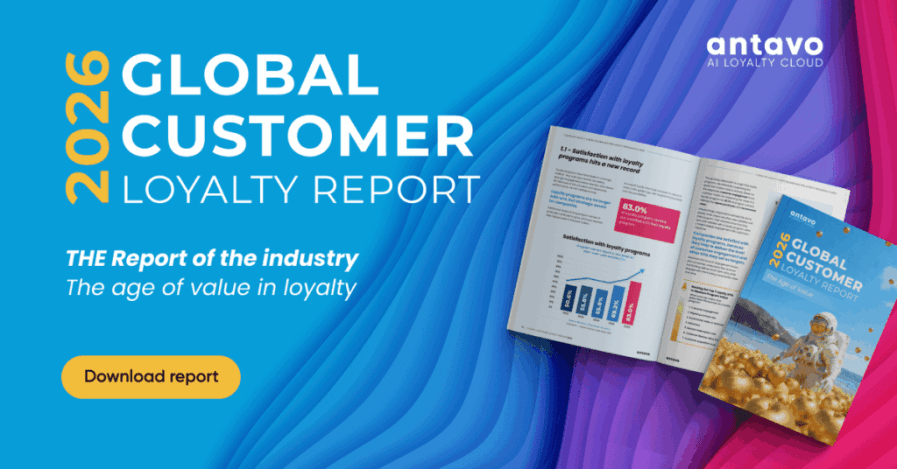
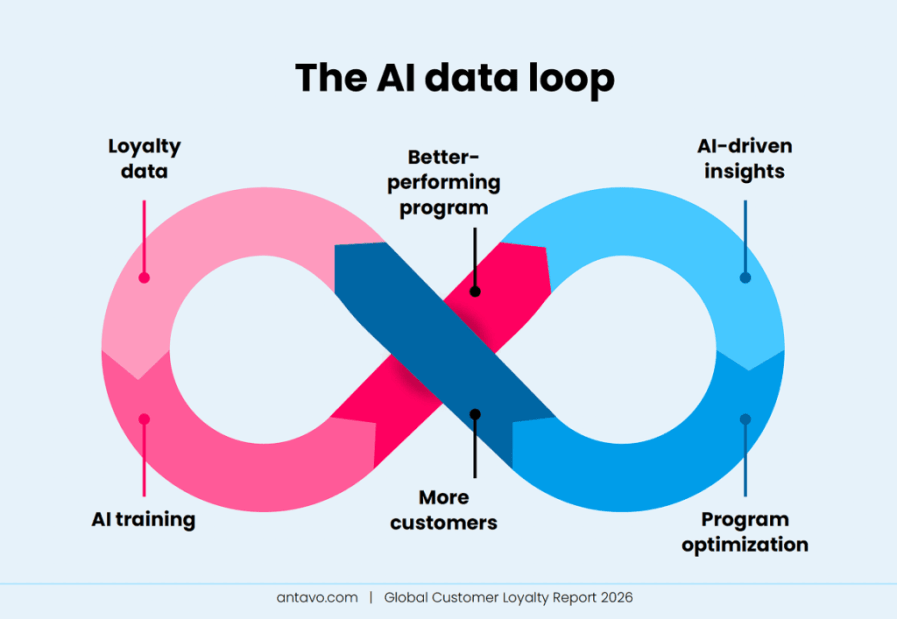
Did you know? According to Antavo’s Global Customer Loyalty Report 2026, 50.9% of program owners said that they are offering AI-driven personalization. For more insights like this on data, AI and loyalty (both for industries and countries), download our report!

What changes when AI enters the funnel
- Discovery changes first. Visibility becomes less about category pages and more about whether product data, pricing, availability, reviews, fulfilment options, and incentives are clear enough for software to interpret.
- Merchandising changes next. Search, ranking, recommendation, and comparison logic can no longer sit only inside human-facing experiences. It needs to be accessible in structured ways.
- Loyalty changes significantly. Member pricing, points, rewards, exclusives, and status benefits can shape which offer an agent recommends.
- Checkout changes more slowly. Discovery may accelerate quickly, but payment introduces tougher questions around trust, authorization, fraud, refunds, disputes, and liability.
- Measurement changes whether brands are ready or not. AI can influence consideration before a visit ever happens, which makes attribution harder and exposes the limits of traditional analytics.
AI shopping adoption is already taking shape
The adoption curve is no longer theoretical. The webinar highlighted research showing that 63% of analyzed websites had already seen AI-generated traffic, while some analysis suggests that traffic from agentic routes can convert at two to three times the rate of traditional direct organic traffic because the buyer arrives with stronger intent. It also cited figures suggesting that 30% to 45% of US consumers were using GenAI for product research in 2025, and that 64% of shoppers were likely to use AI to some extent when making purchases. Among younger consumers, the signal is even stronger: 84% of shoppers aged 18 to 24 were said to be using AI for search, purchase, or part of that journey. For brands, that matters because this is not just an efficiency trend. It is a behavior shift, and the younger the audience, the more urgent it becomes to show up well in AI-assisted discovery and evaluation.
Loyalty programs in the era of the AI agent
In an agent-driven world, loyalty becomes more important, not less, because it gives brands a way to influence choice when price, stock, and delivery are no longer enough to stand out. The webinar makes the point that if AI agents are comparing similar offers across multiple merchants, brands need to give those agents a clear reason to prefer one option over another, and loyalty is one of the strongest differentiators available. But for that to work, loyalty cannot remain just a reward program or a marketing layer. It needs to become part of the decision logic itself, with member value, benefits, and long-term customer advantages made visible in a machine-readable way. In that sense, loyalty becomes the bridge between brand value and agent decision-making: the better a brand can structure and expose its loyalty proposition, the more likely it is to stay relevant and avoid being reduced to a pure comparison of price and availability.

Loyalty is one of the key differentiators in this story. When it comes to the different brands and how they are acting or behaving, I see two types of groups. One group still sees loyalty mainly as a reward program. But there is another group of companies, typically bigger organizations, that see loyalty as part of the broader decision layer, and that is the key. They see that loyalty is going to be the key differentiator when it comes to dealing with agents or feeding the relevant information to the agents.
Why loyalty will become more strategic
- It influences selection, not just retention. Loyalty is no longer only something that matters after purchase. In an agentic journey, it can help determine which brand gets recommended in the first place.
- It helps defend against commoditization. If agents compare similar products across multiple merchants, brands without visible member value risk being reduced to price, stock, and delivery alone.
- It turns long-term value into a competitive signal. Points, rewards, and status benefits can communicate why a brand is the better choice over time, not just in the current transaction.
- It connects identity to decisioning. The stronger the link between customer recognition, preferences, and eligibility, the more relevant the offer can become.
- It must be machine-readable to matter. If loyalty value is buried in campaign copy or locked behind sign-in walls, it is far less likely to shape software-led decisions.
Loyalty as a GTM infrastructure
Too many brands still treat loyalty as a marketing layer that sits on top of commerce. That view is too narrow for an agentic world.
Loyalty should be treated as infrastructure. It is one of the most established ways brands exchange data, value, and recognition with customers. When software starts participating in the path to purchase, that infrastructure becomes even more important.
The role of loyalty is expanding from reward mechanic to decision framework. It gives agents a reason to prefer one brand over another when product, price, and availability alone do not create enough differentiation. It also gives brands a way to express long-term customer value in a structured form.
That is why loyalty belongs closer to go-to-market strategy. Brands that treat it as a core commercial system, rather than a downstream engagement tool, will be in a stronger position when machine-led discovery becomes more common.
The biggest challenge for brands is going to be relevance. The only way to stay relevant is if they give the reason to the agents about how and why they should to prefer one brand over the other. If we really want to make an impact we need to open up the loyalty structure. The agents need to be able to read the loyalty mechanism. From that point, loyalty won’t be a marketing layer, it’s going to be a decision layer, a decision logic.
How Bloomreach and Antavo help brands prepare
Brands do not need to solve agentic commerce all at once. But they do need to strengthen the layers that shape machine selection.
Bloomreach helps address the discovery, decisioning, and engagement side of that challenge. Its role is in making search, merchandising, recommendation, and orchestration logic more usable in AI-influenced journeys. That matters because the same intelligence that powers a strong onsite experience should increasingly be able to power an agent-assisted one as well.
Antavo addresses the loyalty and incentives side. Its role is in helping brands structure customer value in a way that can be surfaced, matched, and applied more effectively. In an agentic environment, that means making loyalty benefits more legible and more actionable.
In fact, the two platforms integrate directly, allowing loyalty data to flow from Antavo into Bloomreach so brands can activate loyalty signals across personalization, campaigns, and experiences, making them more relevant to each customer.
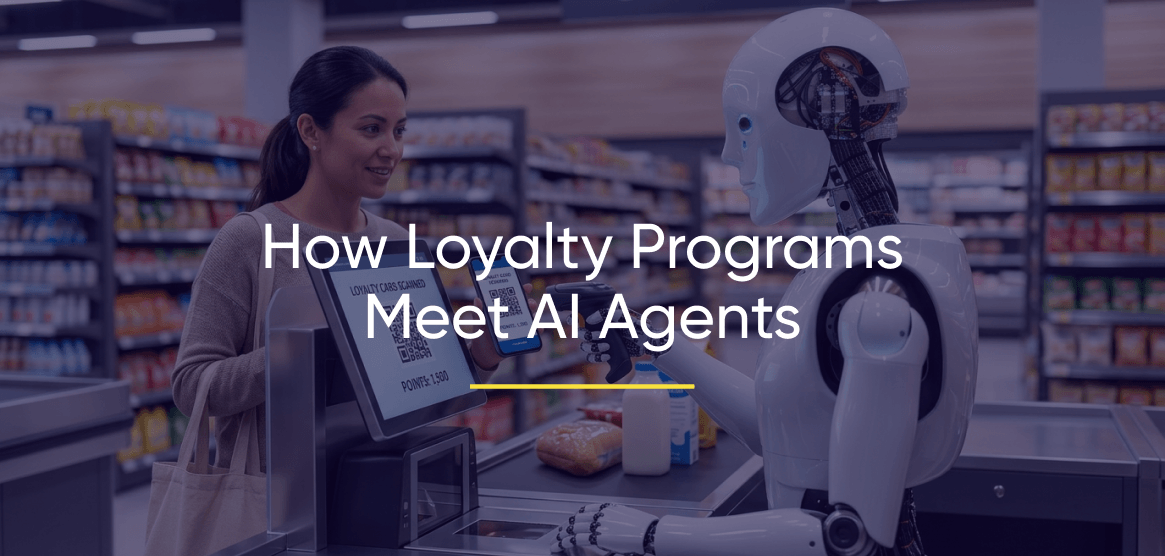
In light of this, make sure to check our joint webinar, if you haven’t already, for deeper insights on AI agents and loyalty programs.
Frequently asked questions about AI Agents and Loyalty Programs
1. Does agentic commerce mean brand websites will become irrelevant?
No. Brand websites will still matter, especially for validation, conversion, and deeper brand experiences. What changes is that discovery and comparison may increasingly happen before a customer reaches the site. That means the website is no longer the only place where influence happens. Brands still need strong onsite experiences, but they also need product data, loyalty benefits, and decision logic that AI agents can interpret before the visit even begins.
2. What should brands do first if they want to prepare for agent-driven shopping?
The best first step is to make the business easier for AI to read and evaluate. That means cleaning up product data, making pricing and availability clearer, exposing search and merchandising logic in structured ways, and ensuring loyalty benefits are not hidden in marketing copy or locked behind sign-in walls. Brands do not need to rebuild everything at once, but they do need to start with the foundational layers that shape visibility and choice.
3. Why does loyalty matter so much if AI agents may optimize for price and convenience?
Because price and convenience alone are not enough to create defensibility. If multiple brands offer similar products with similar delivery and similar pricing, AI needs another reason to prefer one option over another. Loyalty provides that reason by making long-term customer value visible. Member pricing, rewards, points, status benefits, and exclusive access can all help a brand stand out, but only if those benefits are structured in a way agents can understand and use.
4. Is this only relevant for B2C retail, or does it apply to B2B and service-led businesses too?
It applies far beyond traditional retail. The same shift can affect any buying journey where customers compare options, weigh trade-offs, and look for the best fit. In B2B and service-led environments, AI can help compare not just products, but also service quality, support, delivery terms, and long-term value. That makes agentic commerce relevant anywhere decision-making can be supported, filtered, or influenced by software.
Final Thoughts
Agentic commerce should not be understood as a novelty or a side channel. The brands best positioned for the coming shift may not be the ones making the loudest claims about AI. They may be the ones doing the harder work underneath: structuring data, and operationalizing loyalty through the right technology.
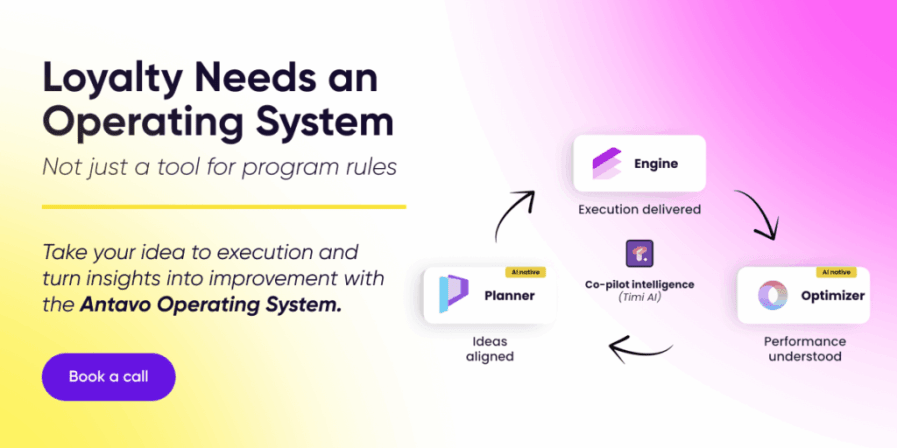
Antavo’s AI-powered loyalty platform is built on the principle of turning loyalty into an operating system for customer engagement.
- The Planner helps teams translate engagement ideas into loyalty program structures.
- The Engine runs loyalty mechanics in real time.
- The Optimizer uses AI to interpret performance data and reveal what actually drives behavior.
Together, they allow loyalty teams to run programs that evolve continuously instead of repeating the same campaigns.
And that’s when loyalty stops generating activity and starts generating growth.
If you are interested in what Antavo has to offer, be sure to book a call!
Thomas Parker is a Product Marketing Manager at Antavo. He works closely with product, marketing, and commercial teams on product positioning and go-to-market initiatives across Antavo’s loyalty platform.
[ad_2]
Source_link