[ad_1]
Associations run more events than almost any other organization type. Annual conferences, regional chapter meetings, educational workshops, networking sessions, and member appreciation dinners add up quickly; a mid-sized association’s calendar commonly exceeds 20 events per year, and each event has its own registration workflow, attendee list, and communications plan.
That volume creates requirements that generic ticketing tools and basic registration forms were not built for. This guide explains what associations need from event registration software for associations, where common tools fall short, and which platform features matter most when evaluating event registration and management software.
The Unique Registration Challenges Associations Face
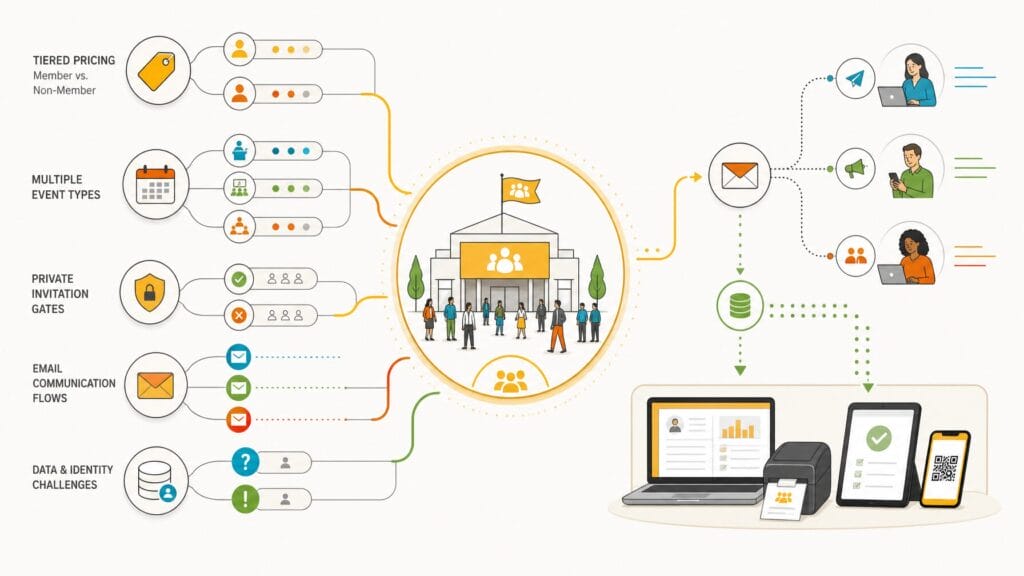
Associations face registration challenges that most event tools were not designed to handle. These include tiered member and non-member pricing, multi-event program management, private invitation-only events, cross-event communication, and data flows that connect registration to onsite tools like badge printing and event apps. Understanding these challenges is the first step toward choosing a platform that fits.
Event Registration Software For Associations: Member vs. Non-Member Pricing
Most associations run events with multiple pricing tiers: member, non-member, student, corporate, and sometimes honorary or sponsor rates. Showing the correct ticket types, applying the right pricing, and collecting verification data inside a single registration form requires flexible ticketing and form logic that goes beyond basic tools.
A common workaround is to run separate registration pages for members and non-members. That fixes pricing visibility but doubles administrative work and fragments attendee data, making unified reporting and attendee management harder.
Frequently asked: How do associations manage different pricing for members and non-members in event registration?
The most efficient approach is using a single registration form with promo codes that reveal hidden member ticket types, or conditional fields that display member pricing when a membership number is validated. This keeps all registrations in one dataset for reporting and attendee management.
Multi-Event Programs Under a Single Subscription
Associations operate dozens of events that belong to the same program: annual conferences, workshops, chapter meetings, and webinars. Ideally the registration platform supports multiple events under one account so branding stays consistent, attendee records are shared, and reporting is consolidated without separate contracts per event.
When evaluating platforms, test whether the vendor’s subscription covers all your events, whether there are per-event or per-ticket fees, and how attendee data flows across events for cross-event marketing and reporting.
Invitation-Only and Member-Only Events
Some events must be private. Board meetings, leadership retreats, and appreciation dinners need invitation lists, gated registration pages, RSVP tracking, and access controls that prevent uninvited guests from registering. The platform should let you upload invite lists, send invitations, and manage acceptances without creating public event pages.
Tip for demos: ask the vendor to demonstrate creating a private event and walking a test invitee through the RSVP and acceptance workflow.
Communication With Registrants Across Multiple Events
Targeted, segmented communication is one of the most important capabilities for associations managing multiple events. You need to send a reminder about the annual conference to non-registrants, a logistics update to those who registered, and a post-event survey to attendees, all from the same system. That kind of segmentation works best when email and registration data live in the same system so you can build campaigns off registration fields and event history.
If registration and email live in separate tools, expect frequent list exports, manual reconciliation, and missed targeting opportunities. Look for a platform that supports branded email templates, scheduled sends, and segmentation by any registration field, including custom fields like chapter affiliation.
Frequently asked: Why should associations use integrated email and registration tools instead of separate systems?
When email and registration data live in the same platform, you can segment communications by registration status, ticket type, or custom fields without manual list exports. This makes targeted campaigns, such as conversion emails to non-registrants or logistics updates to confirmed attendees, faster and more accurate.
Data That Flows Into the Full Event Experience
For multi-day conferences that use event apps, onsite check-in, and badge printing, registration data must flow into those operational tools. Fields such as name, title, organization, session choices, and special requirements should transfer automatically so staff are not manually importing spreadsheets the morning of the event.
During vendor evaluations, ask how registration data maps to onsite tools, what integrations exist for badge printing and event apps, and whether the platform provides APIs or native connectors to your preferred onsite systems.
What to Look for in Event Registration Software for Associations
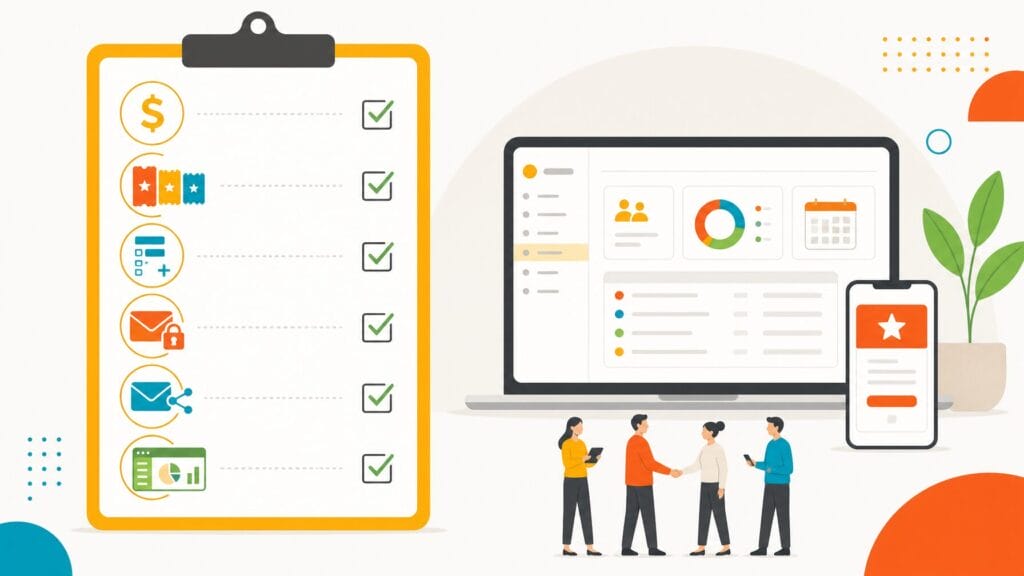
When evaluating event registration software, associations should prioritize six capabilities: multi-event subscription pricing, flexible ticketing and pricing tiers, customizable forms with conditional logic, invitation and RSVP management, integrated email communications, and a connected event platform with AI-powered support. These features address the specific operational challenges associations face and reduce the manual work that comes with high event volume.
Multi-Event Subscription Pricing
If your association runs more than a couple of events a year, per-event pricing quickly adds up. Prioritize platforms that offer an annual subscription covering all events and that minimize or eliminate per-ticket transaction fees. A subscription model spreads cost across your full event program and makes it feasible to run small chapter meetings, webinars, and networking events on the same platform as your flagship conference.
What to test in a demo: ask for a price scenario that shows costs for 10 events of varying size and whether any features incur per-event or per-ticket charges.
Flexible Ticket Types and Pricing Tiers
Your platform should support multiple ticket types within a single event: member, non-member, student, early bird, group, each with independent pricing, availability windows, and access controls. Promo codes that reveal hidden ticket options are useful for member pricing you do not want to publicize. Also look for group registration and bulk ticketing options for sponsors and exhibitors.
Quick example: configure an early-bird member ticket that expires after a set date, and a promo-code-only members ticket that is visible only when the code is entered.
Customizable Registration Forms With Conditional Logic
Association events collect more data than many public events: session selections, dietary needs, accessibility requests, membership numbers, continuing education credits and employer details. A robust form builder should offer custom fields in multiple formats, sectioned forms, and conditional logic that shows or hides fields based on ticket type or prior answers. This avoids multiple forms and keeps all registrants in one dataset.
Microcopy suggestion: label membership number fields clearly, add helper text for credit hour selection, and confirm session choices on the final review page to reduce errors.
Frequently asked: What is conditional logic in event registration forms?
Conditional logic allows a registration form to show or hide specific fields based on the registrant’s previous answers or ticket type. For example, selecting a “Member” ticket could automatically display a membership number field, while a “Non-Member” ticket skips that step. This keeps forms short and relevant for each registrant.
Invitation and RSVP Management
For member-only and invitation-only events, look for private registration gating, invite list uploads, RSVP tracking, and the ability to convert RSVPs to full registrations. The platform should let you manage invite statuses, send reminders to pending invitees, and control access to event pages so only authorized attendees can register.
Demo task: ask the vendor to show the invite upload and RSVP workflow and to run a report of invited versus confirmed attendees.
Integrated Email Communications
Email and registration data should live in the same system. This enables segmentation by registration status, ticket type, or custom fields so you can target non-registrants with conversion campaigns, send logistics to attendees, and run post-event engagement sequences without manual exports. The email builder should support branded templates, scheduled sends, and analytics for opens, clicks, and conversions.
Checklist item: confirm which fields are available for segmentation and whether custom fields are searchable in the email composer.
Connected Event Platform
A single platform that handles registration, event pages, the event app, onsite check-in, and badge printing removes data reconciliation tasks and reduces errors. Verify that registration data maps directly to your onsite tools or that the vendor provides native integrations or APIs to connect to badge printers, event apps, and access control systems.
Evaluation step: request a walkthrough of the data flow from registration to badge printing and the event app, and ask for sample export templates or API docs.
Frequently asked: What is a connected event platform, and why does it matter for associations?
A connected event platform is a single system that handles registration, event websites, the event app, onsite check-in, badge printing, and communications. For associations, this means registration data flows automatically into downstream tools without manual imports, reducing errors and saving staff time across a busy event calendar.
AI-Powered Attendee Support
An AI registration concierge or chatbot on event pages can handle routine attendee questions about pricing, schedules, and logistics, and can point registrants to the right ticket type or form. For associations with small events teams and high event volume, AI reduces inbox load and improves the attendee experience.
During evaluation, test the AI with common attendee questions and check whether it reads registration data securely to verify membership status or registration details.
Common Association Event Registration Workflows
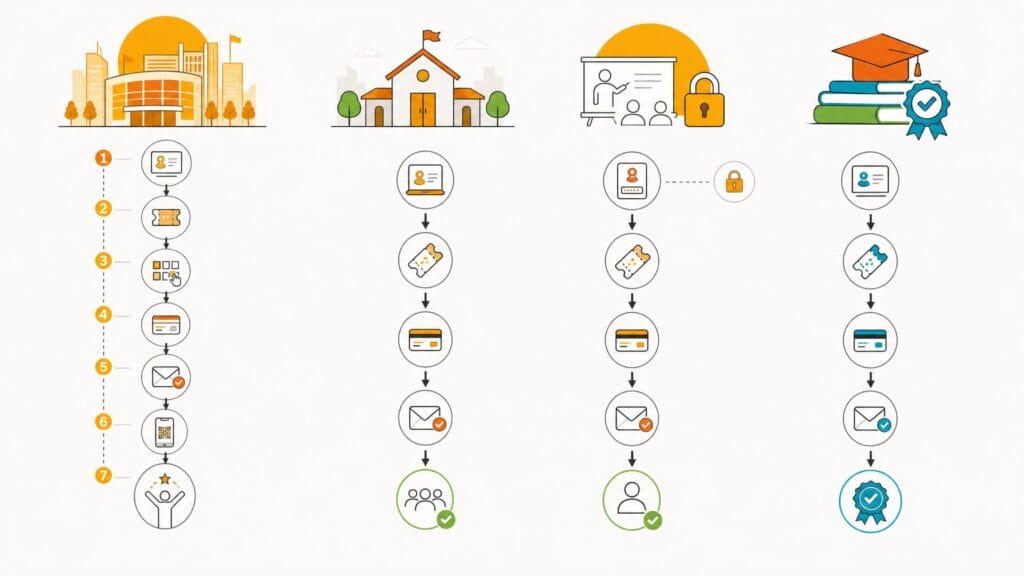
Associations typically manage four core registration workflows: annual conferences, chapter and regional meetings, member-only workshops, and continuing education or certification events. Each workflow has different complexity, data requirements, and communication needs, but all benefit from running on the same platform so attendee records and reporting stay unified.
Annual Conference Registration
The flagship conference is usually the most complex workflow: multiple ticket types, early-bird pricing, session or track selection, accommodation options, exhibitor or sponsor packages, and a multi-page event website with speaker, agenda, and sponsor content. Registration opens months in advance and relies on a coordinated sequence of email campaigns to members and non-members.
- Recommended form fields: ticket type, membership number, sessions/tracks, dietary restrictions, accessibility needs, CE credit selection
- Suggested ticket types: member early-bird, member regular, non-member early-bird, non-member regular, student, exhibitor pass, guest
- Email cadence example: announcement → early-bird reminder → last chance for early-bird → logistics (4 weeks prior) → onsite instructions (1 week prior) → post-event survey
Demo task: ask to see session selection in the form, how session capacity is enforced, and how session choices export to badge printing and the event app.
Chapter and Regional Meeting Registration
Smaller, frequent events benefit from a lightweight registration process: a single-page form, simple confirmation email, and the option for free or low-cost tickets. These events should still live on the same platform as the conference so attendee records remain consistent across events and reporting is unified.
- Typical setup: single page registration, optional RSVP only, free or nominal ticket fee, brief confirmation email with calendar add link
- Chapter meeting example: 40 attendees, free registration, one required field for chapter affiliation and one optional dietary field
SEO note: use concise event pages that match chapter branding and include local chapter filters so members find relevant events on your website.
Member-Only Workshop Registration
Workshops gated to members or invitees need private access controls and careful invite list management. Promo codes or RSVP workflows are common ways to protect access while keeping registration simple for invitees.
- Best practice: upload invite list, generate unique RSVP links or promo codes, track invite status, and set capacity limits per invite type
- Example fields: invite code, member ID, session choices, special accommodations
Demo task: have the vendor show invite upload, RSVP reminder automation, and how to promote leftover seats to members on a waitlist.
Continuing Education and Certification Events
These events require precise data capture for course selections, credit hours, instructor details, and credential numbers that feed into certification systems. Custom form fields, validation rules, and exportable reports are essential for post-event certification and record keeping.
- Required fields: course code, credit hours, participant license number, attendance tracking options
- Data export: ensure CSV or API exports match the format your credentialing system needs, and that attendance can be marked by session in the onsite check-in tool
Checklist item: ask for a sample export mapping and confirm whether the platform supports automated CE certificate generation after attendance is verified.
Frequently asked: How do associations track continuing education credits through event registration software?
The registration form captures course selections, credit hours, and credential numbers. The platform then tracks session attendance through onsite check-in tools and exports that data in formats compatible with credentialing systems. Some platforms also support automated CE certificate generation after attendance is verified.
Questions to Ask When Evaluating Platforms
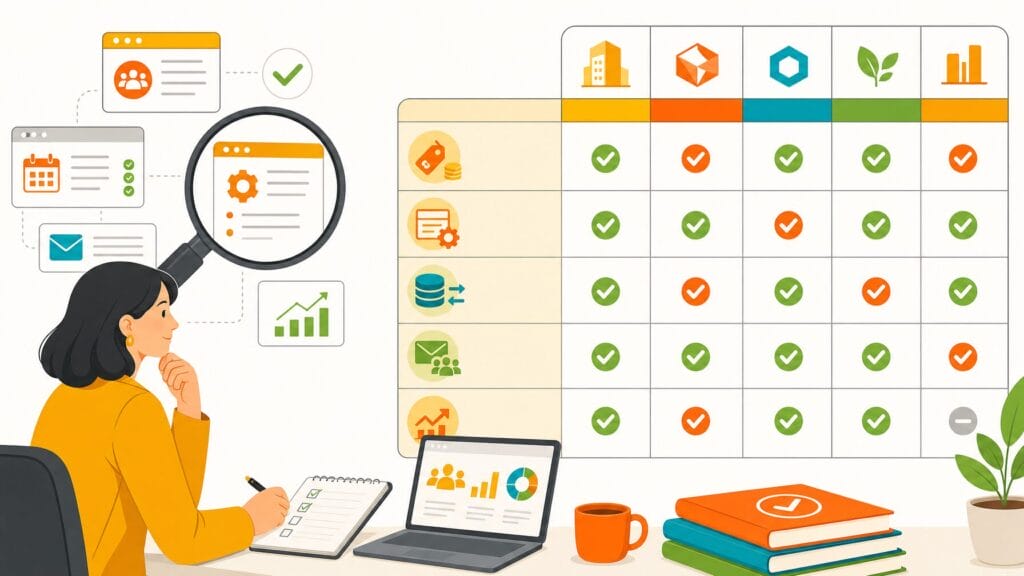
The right evaluation questions can reveal whether a platform truly fits an association’s needs or just checks surface-level boxes. These five questions cover pricing, registration flexibility, data flow, email segmentation, and scalability, which are the areas where associations most often find gaps after purchase.
Does the platform support multiple events under a single subscription, or is pricing per event? For associations running more than three events per year, subscription pricing that covers all events is usually more cost-effective than per-event or per-ticket fees.
- What to ask in a demo: request a sample pricing scenario for 10 events of varying sizes and ask whether any features (analytics, event pages, ticketing) add per-event or per-ticket charges.
- Red flag: per-event contracts or high processing fees that make small chapter meetings uneconomical.
Can we run member and non-member pricing within the same registration form? Consolidating pricing into one form keeps registrations unified and simplifies reporting and attendee management.
- What to ask in a demo: have the vendor create a promo-code-only member ticket, show membership verification options, and demonstrate a single registrant list that includes both member and non-member entries.
- Good answer: promo codes, conditional form fields, or membership lookups that surface the correct ticket without separate pages.
Does registration data flow automatically into your event app, badge printing, and check-in tools? If registration and onsite tools are separate, ask how data is transferred and what manual steps are required.
- What to ask in a demo: request a walkthrough of the data flow from registration to badge printing and check-in, and ask for sample export templates or API documentation.
- Good answer: native integrations or APIs that map registration fields directly to onsite tools and the event app, reducing manual exports.
What does the email segmentation capability look like? Ask for a demonstration of how campaigns are segmented by registration status, ticket type, and custom field values. Robust segmentation powers targeted campaigns and better conversion rates.
- What to ask in a demo: build a segment for non-registrants who attended last year, and show how to send a conversion campaign with scheduled sends and tracking.
- Good answer: searchable custom fields, saved segments, and analytics that show opens, clicks, and registration conversions from campaigns.
Is there a minimum event size or attendee volume requirement? Some platforms target large events and are not cost-effective or operationally appropriate for smaller chapter meetings and workshops.
- What to ask in a demo: clarify any minimums, onboarding fees, or feature tiers that unlock tools like analytics, badge printing, or API access.
- Scoring rubric suggestion: rate vendors on pricing transparency, data flow, segmentation, reporting, and support to compare suitability for your association’s event program.
Frequently Asked Questions
The Bottom Line
Associations run more events than almost any other organization, often with lean event teams. The right event registration platform does more than handle sign-ups; it reduces operational overhead by managing multiple events under a single account, keeps member and attendee data consistent across events, and integrates with the tools used to deliver the event experience.
When you evaluate software, ask whether a vendor can support your entire event program, conferences, chapter meetings, workshops, and certification events, at a cost that makes sense for your event volume. The best event registration solutions balance subscription pricing, robust features, reliable integrations, and strong support.
Quick checklist, five must-haves before you buy:
- Multi-event subscription pricing with transparent fees and processing terms
- Flexible ticketing and registration forms with conditional logic and membership support
- Integrated email marketing and segmentation tied to registration data
- Native integrations or APIs for event apps, badge printing, and onsite check-in
- Reporting and analytics that surface registrations, revenue, attendee engagement, and post-event metrics
Want to see a platform that covers association event management end to end?
See how EventMobi handles association event registration.
The post Event Registration Software for Associations: What to Look For and Why It Matters appeared first on EventMobi.
[ad_2]
Source_link