
I don’t know about you, but every time I need to learn something new at work or take a corporate training seminar, I panic about how to fit it into my schedule.
And it’s not just me. While traditional corporate LMS platforms are great for administering compliance training and tracking completions, neither is built to deliver short, focused training that fits directly into an employee’s workflow. Especially for deskless or frontline employees who don’t have time for long, desk-based courses.
That’s why I reviewed the best microlearning platforms.
These tools are designed specifically for HR and learning and development (L&D) teams that need to deliver targeted, role-based training in short bursts, accessible on mobile devices, tablets, point-of-sale systems, or desktops. Whether you’re supporting onboarding, reinforcing product knowledge, rolling out operational updates, or improving frontline performance, microlearning platforms are built to deliver training in the flow of work.
The right platform should allow you to create your own bite-sized content or tap into a pre-built learning library. It should support multiple formats, including videos, interactive modules to flashcards, job aids, and gamified exercises. And most importantly, it should track employee performance data so you can audit effectiveness, adjust training strategies, and prove impact.
In this guide, I’ll walk through the best microlearning platforms and what stood out so you can confidently choose the one that fits your workforce, your training goals, and your existing tech stack.
6 best microlearning platforms for 2026: My top picks
- Spekit: Best for in-workflow sales and revenue enablement
Delivers contextual, in-app guidance inside tools like Salesforce, helping revenue teams reduce ramp time and reinforce knowledge in real time. (Custom pricing upon request) - 7taps Microlearning: Best for fast, no-friction course creation
Ultra-simple, mobile-first micro-courses with AI-assisted content creation for teams that need quick, no-friction deployment. (Custom pricing upon request) - Axonify: Best for reinforcement learning and frontline performance
Brain-science-based daily questions, gamified engagement, and just-in-time learning for operational and deskless teams. (Custom pricing upon request) - Paycom: Best for integrated HR, payroll, and training in one system
Unified HR, payroll, and workforce management system with training embedded into a centralized employee platform. (Custom pricing upon request) - Code of Talent: Best for mission-based, task-driven microlearning
Task-based learning missions that combine reflection, practice, and coaching to reinforce real-world skill development. (Basic plan starts at €7.99) - Master-O: Best for gamified, flashcard-based microlearning
Uses game mechanics and structured quizzes to reinforce knowledge through short, engaging learning bursts. (Custom pricing upon request)
*I found these to be the top-rated microlearning apps in their category according to the latest G2 Spring 2026 Grid Report. I’ve included their standout features and the starting prices of paid plans, where available, for easy comparison.
6 best microlearning apps I recommend
Most employees don’t have time for hour-long training sessions, and most HR and L&D teams don’t have the bandwidth to constantly chase completion rates. Microlearning platforms solve that problem. They deliver short, focused learning modules that fit directly into the workday, whether someone is at a desk, on a sales call, or on the frontline. In simple terms, they break training into bite-sized lessons that are easier to complete, easier to retain, and easier to reinforce.
The strongest platforms go beyond just “short videos.” They support multiple formats like interactive modules, flashcards, gamified quizzes, and job aids. They allow teams to create their own content or tap into pre-built libraries. And most importantly, they track employee performance data so HR and L&D leaders can measure impact, adjust programs, and prove training ROI.
According to G2 Data, the average user adoption rate for microlearning platforms is 67%, and organizations typically see an estimated ROI payback period of around 11 months after implementation. Customer adoption also spans organizations of all sizes, with an average distribution of 30% for small businesses, 41% for mid-market companies, and 29% for enterprise organizations, indicating that microlearning platforms are widely used across different company segments.
According to the G2 Microlearning Platforms category, these tools are specifically designed to fit into daily workflows and integrate with existing corporate LMS systems rather than replace them. They’re built for role-based knowledge improvement, especially for deskless and distributed teams that can’t rely on traditional, desk-bound learning systems.
Bottom line: microlearning platforms are worth it when they increase engagement, reinforce knowledge in the flow of work, and give L&D teams clear visibility into performance. When that happens, training stops being a once-a-quarter event and becomes a continuous, embedded part of how teams improve.
How I found the best platforms for microlearning
I started with G2’s Grid® Report for the Microlearning Platforms category to build a shortlist based on G2 Score, user satisfaction, and market presence. That gave me a data-backed starting point and ensured I was looking at platforms that are actually performing well for HR and L&D teams, not just tools with strong marketing.
Next, I went deep into G2 reviews to identify consistent themes that show up in real-world use. I looked for repeated feedback around ease of content creation, mobile accessibility, engagement levels, performance tracking, reporting quality, and LMS integrations. I also paid close attention to how well each platform supports deskless or frontline workers, since workflow-based learning is a defining factor in this category.
Finally, I reviewed feature sets against G2’s category qualification criteria, including support for multiple microlearning formats, availability of content libraries, etc. This helped me distinguish between tools that simply offer short content and platforms that truly enable scalable, measurable, in-the-flow learning.
The screenshots included in this article come from G2 vendor profiles and publicly available product materials.
What makes the best microlearning platform: My selection criteria
After digging into G2 Data and layering in my own research, I kept seeing the same priorities come up across HR, L&D, and enablement conversations.
- Learning in the flow of work: I looked for platforms that deliver training directly inside the tools employees already use, whether that’s CRM systems, collaboration tools, mobile devices, or frontline environments. The best microlearning platforms reduce context switching and make knowledge accessible exactly when it’s needed, not in a separate portal.
- Short, focused content delivery: Microlearning should mean bite-sized, practical learning moments. I prioritized tools built around flashcards, quizzes, short modules, swipeable cards, or daily reinforcement, not repackaged long-form courses. The strongest platforms help teams reinforce knowledge consistently without overwhelming learners.
- Content creation flexibility: According to the G2 category definition, platforms must offer content creation tools or pre-built libraries. I favored solutions that make it easy to build and launch micro-content quickly, especially for teams without dedicated instructional designers. AI-assisted creation, templates, and structured learning journeys scored higher.
- Multi-format support and assessments: The best platforms support more than one content type: video, interactive modules, gamified questions, practice exercises, job aids, and quizzes. I looked for tools that combine reinforcement with assessment capabilities to strengthen retention and measure understanding.
- Performance tracking and measurable impact: Completion tracking alone isn’t enough. I prioritized tools that provide visibility into learner performance, knowledge gaps, reinforcement cycles, and engagement trends. Strong reporting helps L&D teams adjust strategies and demonstrate real impact.
- Mobile and frontline accessibility: Because microlearning often serves deskless or distributed teams, accessibility matters. I looked for platforms designed to work smoothly across mobile devices, tablets, or embedded systems, so learning fits naturally into daily workflows.
- Ease of use for learners and admins: Across G2 reviews, usability consistently surfaced as a make-or-break factor. The best platforms balance intuitive learner experiences with simple administrative controls, making content easy to deploy, update, and manage without heavy technical lift.
Not every tool excels in every area. Some lean heavily into gamified reinforcement, others into in-workflow enablement, and others into all-in-one HR integration. But the best microlearning platforms consistently deliver short, targeted learning that fits into daily work, reinforces knowledge over time, and gives teams measurable visibility into performance — without adding unnecessary complexity.
To be included in this category, a solution must:
- Provide corporate learning solutions that fit into the workday and are accessible on any device, including mobile, point of sale, tablets, or computers
- Offer content options that include tools for content creation or a pre-existing content library
- Provide a variety of microlearning content formats such as video, interactive modules, articles, job aids, blog posts, flash cards, gamified activities, practice exercises, and questions
- Track employees’ performance data so businesses can audit, adjust, and improve training efforts
*This data was pulled from G2’s Spring report in 2026. Some reviews may have been edited for clarity.
1. Spekit: Best for in-workflow sales and revenue enablement
G2 rating: 4.7/5⭐
Spekit is a digital adoption and microlearning platform that delivers contextual training directly inside workplace tools such as CRM systems, collaboration platforms, and sales enablement software. It consistently ranks in the G2 Microlearning category as a platform built specifically for learning in the flow of work, especially within revenue teams’ core systems like Salesforce, Outreach, ServiceNow, and Slack.
From what I reviewed in the user feedback, its biggest strength is eliminating the need to switch tabs. Instead of digging through documentation or separate LMS portals, guidance appears directly inside the tools employees already use. That impact is reinforced by its 93% performance rating, suggesting users see measurable day-to-day enablement value.
What stood out to me most in the review patterns is how frequently users mention reduced ramp time. Teams use Spekit to onboard new hires faster by embedding contextual tips, walkthroughs, and micro-content exactly where reps are working. That just-in-time delivery model seems to make coaching more consistent and product updates easier to roll out, particularly during launches or process changes. With 99% of users rating it 4 or 5 stars and 95% saying they would recommend it, overall satisfaction signals strongly align with these outcomes.
Ease of use is another recurring theme. Many reviewers describe the platform as intuitive and straightforward, especially for creating and updating content quickly. Spekit scores 95% for ease of use, 92% for ease of setup, and 94% for ease of admin, reinforcing that both learners and enablement teams can adopt it without a heavy technical lift. The no-code integrations are repeatedly called out as a differentiator, allowing teams to deploy guidance efficiently at scale.
I also noticed strong sentiment around personalization. Users appreciate that content and nudges can be performance-based or context-aware, so employees receive relevant support rather than generic training. That flexibility aligns with Spekit’s 92% customizability rating and 92% content creation score, suggesting that teams value its ability to tailor learning to specific roles and workflows. Combined with 97% quality of support and 99% ease of doing business, the platform appears to pair strong product functionality with a consistently positive customer experience.
Finally, many users emphasize Spekit’s strong fit for sales enablement. Reviewers highlight how it helps reinforce processes, improve tool adoption, and support revenue teams with just-in-time guidance, making it a valuable part of ongoing enablement strategies.
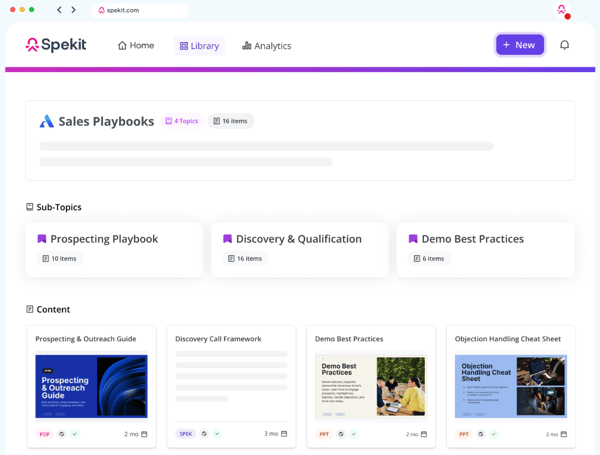
Spekit is built to deliver contextual help directly inside the tools employees already use. That embedded experience is a major strength, but some reviewers point to minor navigation friction within the in-app experience, particularly when prompts, pop-ups, or overlapping guidance elements appear during active workflows. However, with careful configuration and thoughtful placement of guidance elements, many teams are able to balance helpful support with a smoother navigation experience.
Overall, Spekit earns its spot among the top microlearning platforms because it makes training actionable in real time. If you’re running revenue operations, sales enablement, or customer-facing teams that live in SaaS tools all day, this platform is clearly built for that environment.
What I like about Spekit:
- Spekit helps deliver training directly inside tools like Salesforce and other core platforms. That in-workflow guidance reduces tab-switching and helps reinforce knowledge exactly when reps need it.
- I appreciate how easy it is to create and update content. Enablement teams appreciate being able to roll out product updates or process changes quickly without heavy technical setup.
What G2 users like about Spekit:
“Spekit is so easy to use and fills the need for so many systems, including LMS, KMS, and DMS. I like that Spekit provides an in-context learning tool and our database users don’t need to leave the database to get help.”
– Spekit review, Megan A.
What I dislike about Spekit:
- Some reviewers mention that pop-ups and embedded guidance can occasionally create navigation friction if not carefully configured.
What G2 users dislike about Spekit:
“Sometimes the logic isn’t quite smart enough to find what I need. I sometimes find the popups in my different entities and within the Spekit platform make it harder to navigate and get in the way.”
– Spekit review, Verified User in Computer Software.
2. 7taps Microlearning: Best for fast, no-friction course creation
G2 rating: 4.8/5⭐
7taps Microlearning consistently stands out in the G2 Microlearning category for one primary reason: simplicity. 7Taps is built as a lightweight microlearning platform designed to help teams create and deliver short, mobile-friendly training modules. The platform focuses on swipeable learning cards and bite-sized lessons that allow organizations to build and deploy micro-courses quickly.
Users repeatedly describe the platform as easy to use, quick to learn, and extremely fast for building bite-sized training modules. The ability to create short, focused courses without instructional design expertise seems to be a major draw, especially for teams that need to move quickly. That ease is reflected in its ease of use (98%), reinforcing how intuitive the experience feels for both creators and learners.
What I noticed most in the positive feedback is how often reviewers mention speed. Many use 7taps to build micro-courses in minutes rather than hours, which makes it particularly appealing for internal communications, compliance refreshers, and short-form knowledge reinforcement.
The interface is described as clean and intuitive, allowing creators to focus on content rather than navigation or configuration. This aligns with its ease of setup (98%) and ease of admin (97%), suggesting teams can launch and manage content without heavy operational overhead.
AI-assisted features also come up frequently in reviews. Users appreciate being able to generate or refine learning content quickly, which reduces the effort required to launch new modules. For smaller L&D teams or managers creating their own training, that added efficiency appears to make a meaningful difference. With meets requirements (90%), the platform appears to satisfy core microlearning needs without overcomplicating the experience.
Mobile accessibility is another recurring strength. Because 7taps is designed around short, swipeable learning cards, it naturally fits into on-the-go workflows. That design approach aligns with its highest-rated features, including mobility (97%) and performance (95%), reinforcing that users see it as both accessible and reliable across devices.
Satisfaction signals further support these themes. 100% of users rated it 4 or 5 stars, 97% say they would recommend it, and it holds quality of support (97%) and ease of doing business (99%), both strong indicators that both product usability and customer experience are consistent strengths.
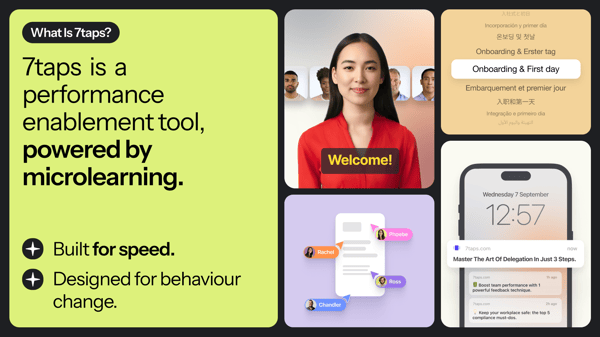
While 7taps is widely appreciated for how quickly teams can create and deploy microlearning content, a small number of reviewers note that its streamlined, templated approach may offer less flexibility when it comes to customizing course design. Some users mention that additional options for visual formatting, layouts, or design controls could further support more tailored learning experiences. That said, for teams prioritizing speed, simplicity, and mobile-first delivery, the existing structure continues to work effectively.
What I like about 7taps:
- The platform enables users to create micro-courses fast and easily and lowers the barrier to content creation, even for non-L&D users.
- Its mobile-first, swipeable learning format makes training easy to consume for deskless and distributed teams.
What G2 users like about 7taps:
“I use 7taps Microlearning to create simple yet effective teaching moments. It’s super fast to get started and requires just a bit of editing. The AI video components make it engaging and relevant for the learners, and it builds in questions with very little input from me. It’s also easy to share and go live, which complements an existing rollout smoothly. I uploaded a one-page poster, made minimal changes, and was ready to publish on the same day. The whole process is quick, engaging, and professional-looking. The microlearning is accessible on phones, making it quick, meaningful, and engaging for staff. Plus, it provides feedback so we can gather meaningful data on its effectiveness.”
– 7taps Microlearning review, Joseph P.
What I dislike about 7taps:
- The templated course structure helps teams create microlearning quickly, but some users would welcome more flexibility in design, formatting, and visual customization.
What G2 users dislike about 7taps:
“The biggest challenge is not being able to replicate our company’s organizational structure within the platform. To be fully effective, we need to be able to organize and view our learners by department, team, etc. Being able to give leaders view access to reports and stats would be similarly beneficial. I do also wish there were more integrated guides and templates to help with creating microlearnings for certain purposes (update to an existing process, skill development, new product or system, etc.) using learning best practices.”
– 7taps Microlearning review, Tara M.
3. Axonify: Best for reinforcement learning and frontline performance
G2 rating: 4.7/5⭐
Axonify stands out for its strong foundation in reinforcement learning. Users frequently reference the “brain science” behind the platform, highlighting how daily questions, repetition, and spaced learning help improve knowledge retention over time.
Rather than relying on one-time course completions, Axonify appears designed to build habits through short, consistent learning moments. This learning model aligns with its highest-rated features, including mobility (95%) and performance (95%), reinforcing that users see it as both accessible and effective in real-world environments.
A recurring theme in positive feedback is daily engagement. The platform encourages regular participation through quick questions and gamified elements, which makes learning feel ongoing instead of episodic. This seems particularly effective for frontline teams who benefit from brief, structured reinforcement rather than long-form modules. With 99% of users rating it 4 or 5 stars and 94% saying they would recommend it in G2, overall satisfaction signals strongly support this engagement-driven approach.
Ease of use for learners also comes up repeatedly. Users describe the experience as simple and accessible, with clear navigation and short interactions that don’t disrupt the workday. That sentiment is reflected in ease of use (92%) and meets requirements (90%), suggesting the platform balances usability with functional depth.
Another strength I noticed is support and partnership. Several reviewers mention responsive customer support and collaborative onboarding experiences, suggesting that Axonify positions itself as more than just a software vendor. That aligns with quality of support (95%) and ease of doing business (95%), indicating consistent satisfaction with both the product and the customer experience.
From an administrative perspective, the platform scores high in ease of admin (86%) and ease of setup (87%), suggesting it supports structured deployment, particularly in larger or distributed environments where rollout planning matters. Reviewers often highlight that once initial configurations are in place, the platform provides a reliable framework for managing users, training programs, and ongoing learning activities at scale. This level of administrative control makes it easier for organizations to standardize training delivery across teams while maintaining consistency in execution.
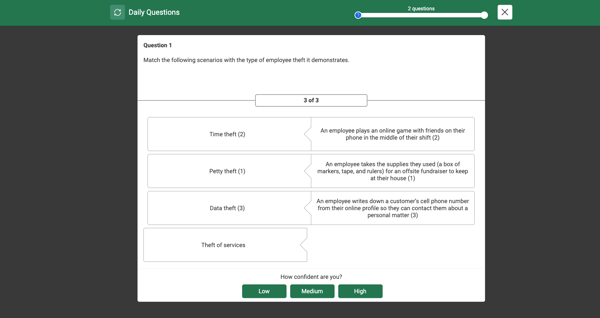
Now, G2 reviews for Axonify paint a balanced picture. A few users mention that because the platform supports complex training programs across different employee groups, configuring user segmentation and training assignments may take some planning during initial implementation. This is largely applicable for larger organizations with multiple teams or departments. That being said, users who do put in this extra effort definitely benefit in the long run.
Overall, Axonify earns its place among leading microlearning platforms because of its reinforcement-driven model and strong focus on frontline engagement. If your goal is to build daily learning habits, improve knowledge retention, and support operational teams with consistent reinforcement, this platform appears especially well aligned with that mission.
What I like about Axonify:
- Axonify’s reinforcement-based learning model stands out. Users frequently praise its daily question format and spaced repetition for improving retention.
- The gamified structure supports consistent engagement, especially for frontline teams that benefit from short, daily learning bursts.
What G2 users like about Axonify:
“Axonify is an ingenious microlearning approach that empowers learners without overwhelming them. It creates a sense of gamification and visual engagement, which increases participation. It provides real-time feedback or analytics on learners’ skills to improve and achieve results. Axonify connects learning and task management, empowering employees with responsibility and skills.”
– Axonify review, Sunnysher H.
What I dislike about Axonify:
- Managing user groups and training assignments may require careful setup, especially for organizations with complex team structures.
What G2 users dislike about Axonify:
“Axonify has a setup that is so rigid and complex. We get content that is limited sometimes, and this may cause some problems during the process of creating content.”
– Axonify review, Hydra G.
4. Paycom: Best for integrated HR, payroll, and training in one system
G2 rating: 4.3/5⭐
Paycom is most frequently discussed as a comprehensive HR and payroll platform rather than a standalone microlearning solution.
Users consistently highlight how all modules are tied together, such as payroll, time tracking, HR, and employee self-service, which creates a centralized experience. For organizations that prefer an all-in-one workforce management system, that integration appears to be a major advantage.
Ease of use is one of the most common positive themes. Many reviewers describe the system as intuitive and straightforward compared to other HR platforms. That sentiment is reflected in its ease of use (87%) and meets requirements (90%), suggesting that while it may not be positioned purely as a learning tool, it satisfies core workforce and training needs within its broader ecosystem. The employee portal, in particular, is often mentioned as user-friendly, giving employees access to payroll, time-off requests, and other HR functions in one place.
Another recurring strength is the unified data flow across modules. Because payroll, time tracking, and HR records live in the same ecosystem, users appreciate not having to manage multiple systems. That consolidation aligns with some of its highest-rated features, including reporting (96%), dashboards (93%), and mobility (93%), reinforcing that visibility and access across workforce data are major strengths. For organizations managing compliance training or onboarding within a broader HR framework, those reporting capabilities appear especially valuable.
Satisfaction signals show more moderate positioning compared to category leaders. 84% of users rated it 4 or 5 stars, 88% believe it is headed in the right direction, and 85% say they would recommend it. Ease of doing business is at 89%, indicating generally favorable service perceptions.
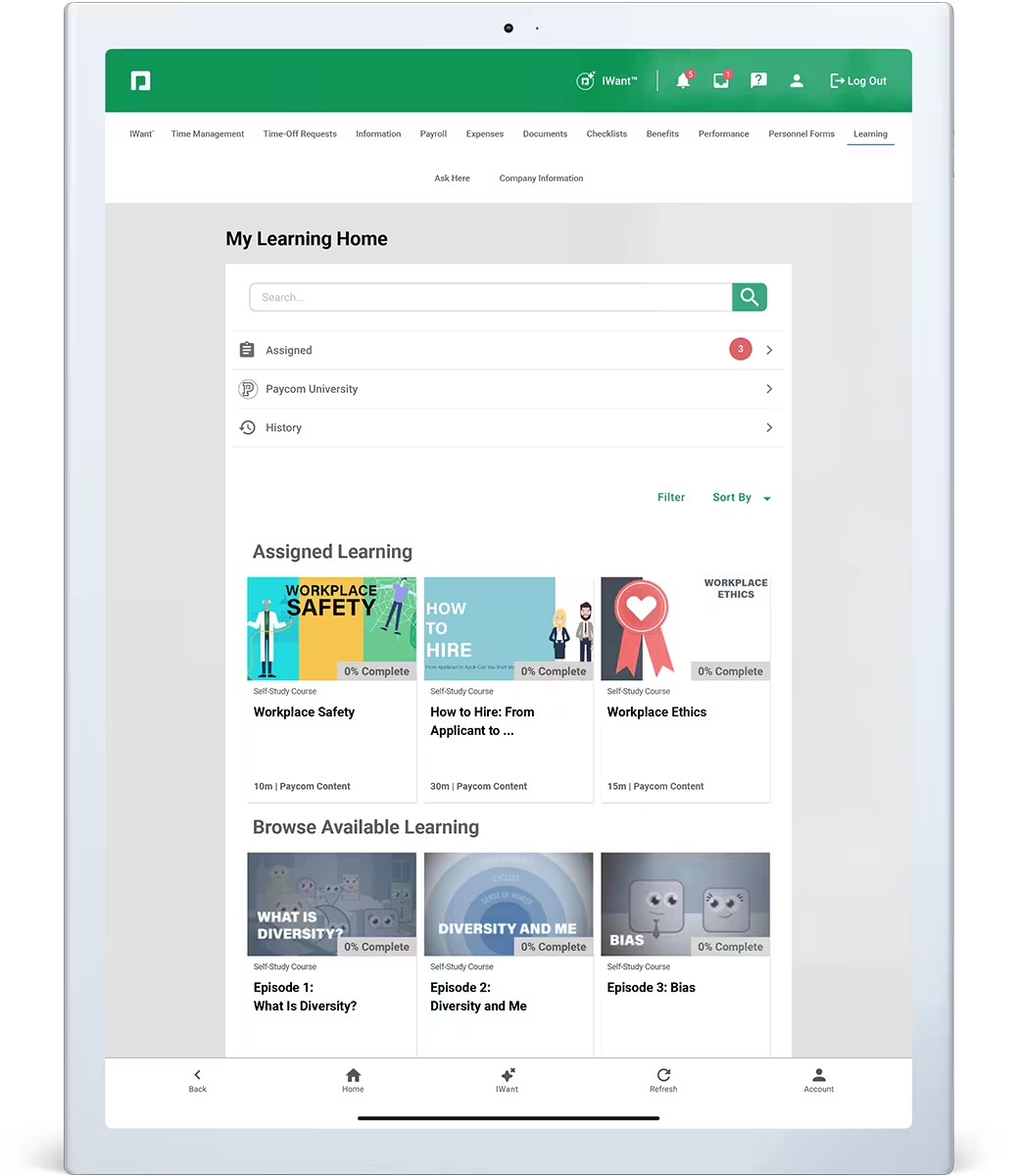
Now, some reviewers note that experiences with customer support can vary depending on the situation. While many users share positive feedback around responsiveness and helpfulness, a few mention occasional challenges in reaching the right representative or navigating certain support interactions. These differences suggest that support experiences may depend on factors such as account setup or specific use cases, though many teams still report receiving the assistance they need over time.
Overall, Paycom appears strongest for organizations looking to centralize HR, payroll, and workforce management within one platform. While it’s not a pure-play microlearning tool in the same way as others in this category, its integrated structure may appeal to companies that want training tied closely to broader employee management workflows rather than managed as a separate system.
What I like about Paycom:
- Users appreciate having training embedded within a unified HR and payroll system, reducing system sprawl and centralizing workforce data.
- The platform’s ease of use and employee self-service portal are frequently highlighted as strengths.
What G2 users like about Paycom:
“Paycom is a comprehensive solution with the ability to help employees and supervisors. The new AI widget has also made it easier to find support and understand the information you are looking at. Accessibility across multiple devices helps to make Paycom easy to access and use as both an employee and supervisor.”
– Paycom review, Jeremy H.
What I dislike about Paycom:
- Customer service feedback is mixed, with some users reporting difficulty reaching representatives.
What G2 users dislike about Paycom:
“The learning curve for new users can be challenging because Paycom has many features, which can be overwhelming for first-time users. New employees or HR staff may need more training to use it confidently. Downtime or poor internet connectivity can delay access to payroll information, which is a downside since Paycom is a fully digital system.”
– Paycom review, Abdullateef A.
5. Code of Talent: Best for mission-based, task-driven microlearning
G2 rating: 4.8/5⭐
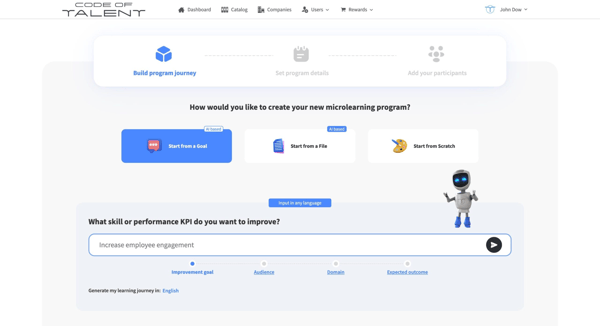
Code of Talent is a platform that prioritizes a structured, mission-based learning approach. Their main goal is to encourage learners to apply knowledge through daily tasks rather than simply consuming content.
What I see users frequently mention is how the platform organizes training into step-by-step missions, which helps create clear progression and keeps learners consistently engaged. This format appears to make learning feel more actionable and tied to real work scenarios rather than passive content consumption.
Another recurring theme in the feedback is the platform’s interactive learning design. Reviewers often highlight the exercises, questions, and challenges that prompt learners to actively apply knowledge rather than simply read or watch training materials. This hands-on approach appears to strengthen knowledge retention and engagement, which aligns with the platform’s highest-rated features such as content delivery and tracking (94%), assessments and practice (94%), and performance (94%).
Ease of use also comes up repeatedly in user feedback. Many reviewers describe the platform as intuitive and easy to navigate, reducing onboarding friction and supporting learner adoption. This is reflected in ease of use (95%), meets requirements (94%), and ease of admin (96%), suggesting that both learners and administrators find the system straightforward to operate.
Customer support and vendor partnership are other commonly cited strengths. Several reviewers mention responsive communication and helpful assistance during both implementation and ongoing platform use. These experiences align with the platform’s strong satisfaction indicators, including quality of support (96%), ease of doing business with (100%), and ease of setup (95%), indicating consistently positive interactions with the vendor alongside the product experience.
Gamification elements are also frequently mentioned as a motivator. Features such as missions, progress tracking, and recognition appear to make the learning experience more engaging and encourage learners to stay active in the program over time.
On the flipside, a few reviewers also express interest in expanded functionality as their learning programs grow. As organizations scale and training needs become more complex, some users suggest that additional features or refinements in navigation could further enhance the platform’s usability in larger environments. These points indicate areas for continued development, though many teams continue to find the platform well-suited for supporting their current learning and development initiatives.
But in the end, Code of Talent stands out for its practical, execution-focused approach to microlearning, particularly for teams looking to drive real-world skill application. While there are opportunities for refinement as organizations scale, many users find it to be an effective and adaptable platform for modern learning needs.
What I like about Code of Talent:
- Reviewers consistently highlight the platform’s structured “missions” and daily tasks, which encourage learners to apply knowledge immediately rather than passively consume training materials.
- Features such as exercises, trainer feedback, points, and recognition help create a more engaging learning experience and motivate learners to stay involved over time.
What G2 users like about Code of Talent:
“This platform is very well built, it has an organized structure, a theory section for each subject, different missions in which you can write text, watch videos, and upload images to answer each task/mission. It is easy to use; you can intuitively move from one mission to another. It clearly shows when the deadline is for each mission and when it starts to be active. It has many features.”
– Code of Talent review, Alin M.
What I dislike about Code of Talent:
- A few users suggest that additional features or navigation improvements could strengthen the platform for larger or more complex training environments.
What G2 users dislike about Code of Talent:
“While I appreciate the structure and relevance of the content, one area for improvement could be the flexibility of navigation within modules. Sometimes, the linear progression restricts the ability to revisit certain topics or advance at my own pace, especially when I want to review a previous section or explore content more deeply. Additionally, it would be helpful to have more options for interaction between participants, such as discussion threads or group challenges, to enhance the social learning experience.”
– Code of Talent review, Prisacaru M.
6. Master-O: Best for gamified, flashcard-based microlearning
G2 rating: 4.7/5⭐
Master-O earns strong marks for making learning engaging through gamification. What stands out immediately is how often users mention the flashcard-based format and game mechanics as key differentiators.
Reviewers consistently describe the experience as interactive, motivating, and effective for reinforcing knowledge over time. This is cleverly done with the help of flashcard-based learning and combined with quizzes, flashcards, and spaced learning techniques to reinforce knowledge. That engagement focus aligns with its highest-rated features, including mobility (96%), assessments and practice (95%), and performance (95%) in G2, reinforcing that users see measurable learning impact and retention alongside accessibility.
The structured training modules are also praised for being clear and practical, helping learners absorb information in short, focused bursts rather than long sessions. Satisfaction signals strongly support this perception: 100% of users rated it 4 or 5 stars, 95% say they would recommend it, and 95% believe it is headed in the right direction — positioning it as a high performer in the category.
Ease of use is another recurring theme. Users frequently call the platform simple to navigate and easy to operate, which lowers the barrier for both learners and administrators. That ease is reflected in ease of use (94%), meets requirements (92%), and ease of admin (94%), suggesting the platform balances engagement with operational simplicity.
I also noticed repeated praise for customer support — several reviewers describe the team as responsive and helpful, particularly during onboarding and ongoing usage. This aligns with quality of support (96%), along with ease of doing business (94%) and ease of setup (94%), indicating consistent satisfaction across both product experience and vendor partnership. The overall interface and smooth performance further contribute to a learning experience that feels accessible rather than overwhelming.
Now, a few reviewers mention opportunities to expand certain application features or language settings as organizations scale or diversify their training programs. These points indicate areas for continued refinement, especially for global or growing teams. This is more of a suggestive feedback, and many users continue to find the platform effective for delivering impactful learning experiences today.
To conclude, Master-O appears particularly well suited for teams that prioritize gamified engagement, ease of adoption, and structured reinforcement — while organizations seeking more advanced configurability may want to confirm how its feature depth aligns with their long-term training strategy.
What I like about Master-O:
- The game mechanics and knowledge-based quizzes make learning interactive and motivating, helping reinforce information through repetition rather than passive consumption.
- It is easy to navigate and operate within the platform, and the responsive customer support that helps teams onboard quickly and sustain adoption.
What G2 users like about Master-O:
“I like Master-O because it’s simple and easy to access, requiring no technical knowledge to use. This makes it great for our end users who can access their induction modules and learn business processes without manual intervention. The initial setup was very easy, almost like playing a game.”
– Master-O review, Suraj M.
What I dislike about Master-O:
- A few users note opportunities to enhance certain application features or language flexibility as learning needs grow.
What G2 users dislike about Master-O:
“It should have more automation and be more user-friendly. Also, the integration with third-party tools and AD authentication could be improved.”
– Master-O review, Sagar D.
FAQs about the best microlearning apps
Got more questions? G2 has the answers!
Q1. What is the fastest-to-implement microlearning platform?
The fastest-to-implement microlearning platforms typically prioritize ease of setup, simple content creation, and minimal technical configuration. Tools like 7taps Microlearning stand out for their drag-and-drop builders and AI-assisted content creation, allowing teams to launch training programs quickly without extensive instructional design or IT involvement.
Q2. What is the most cost-effective microlearning solution for small teams?
Cost-effective microlearning solutions for small teams usually combine simple course creation tools, mobile accessibility, and scalable pricing. Platforms like 7taps Microlearning and Code of Talent are often highlighted for enabling teams to build and deliver training without requiring large budgets or complex infrastructure.
Q3. What is the top tool for delivering bite-sized corporate training?
The best tools for delivering bite-sized corporate training are designed specifically for microlearning. Platforms like Master-O and 7taps Microlearning deliver short, focused lessons through formats like flashcards, quizzes, and interactive cards, helping employees learn quickly without disrupting their daily workflow.
Q4. What platform integrates microlearning with existing LMS systems?
Many microlearning platforms integrate with existing learning management systems (LMS) to enhance traditional training programs. Tools like 7taps Microlearning support LMS connectivity through SCORM, allowing organizations to combine structured courses with short microlearning modules for better reinforcement.
Q5. What platform provides analytics on learner progress in microlearning?
Microlearning platforms often include built-in analytics that track learner participation and performance trends. Platforms like Axonify and Paycom are frequently noted for their reporting capabilities, helping teams monitor engagement, measure knowledge retention, and adjust training strategies based on real learner data.
Q6. Which microlearning platform offers the most engaging content formats?
Platforms that support multiple content formats — such as videos, interactive quizzes, gamified challenges, and flashcards — typically offer the most engaging experiences. Tools like Master-O and Axonify are often recognized for their gamified and interactive learning formats that keep users actively involved.
Q7. Which solution supports personalized learning paths?
Some microlearning platforms allow organizations to create personalized learning paths based on roles or performance data. Axonify is frequently highlighted for delivering role-based, targeted learning experiences that adapt to individual learner needs.
Q8. Which tool supports offline mobile access to learning modules?
Certain microlearning tools support mobile-first learning experiences, though offline access may vary by platform. Solutions like Axonify are often used by frontline teams and are designed to support learning in environments with limited connectivity.
Q9. Which vendor offers gamified learning features?
Many microlearning vendors incorporate gamification elements such as points, badges, and leaderboards. Platforms like Master-O and Axonify are widely recognized for their gamified approaches, which help increase participation and reinforce learning through engagement.
Q10. Which vendor provides AI-driven learning recommendations?
Some modern microlearning platforms use artificial intelligence to recommend relevant training content. Tools like 7taps Microlearning leverage AI for content creation and guidance, helping teams deliver more efficient and scalable learning experiences.
Make learning stick
So, after all is said and done, I think I’d like to end with this: Microlearning isn’t just about making training shorter; it’s about making it continuous. The best platforms don’t magically improve performance on their own. They make knowledge easier to access, reinforce it at the right moments, and help teams build learning into their daily workflow rather than treating it as a quarterly event.
What stood out to me while reviewing G2 feedback is how different “best” looks depending on how your organization learns.
If your revenue team lives in Salesforce and needs real-time guidance, Spekit feels like a natural fit. If speed and simplicity are your priority, 7taps lowers the barrier to content creation. If reinforcement science and frontline engagement matter most, Axonify stands out. If you want training tied closely to payroll and workforce systems, Paycom offers that integration. UMU leans into peer learning and video-based knowledge sharing. Code of Talent structures learning through missions and trainer feedback. And Digemy emphasizes ease of use and reinforcement-driven engagement.
What you can take away for immediate implementation: Shortlist two platforms that align with your workforce model (desk-based, frontline, revenue, or hybrid), book a demo, and test how easily you can build and deliver a real micro-lesson. The right tool shouldn’t just look good in a feature list — it should make learning feel effortless from day one.
Need to go beyond microlearning for thorough learning? Check out G2’s best online course providers and begin your journey today!