I evaluated 20+ tools with the help of G2 Data to shortlist the five best anti-money laundering (AML) software. They are iDenfy, Ondato, Abrigo Anti-money Laundering, ComplyCube, and ComplyAdvantage.
A friend of mine works at a fintech company. One day, they received an unexpected audit request tied to suspicious transactions flagged by regulators. The compliance team scrambled to gather data, digging through spreadsheets, emails, and fragmented systems. It was chaotic. And worse, they missed key details that resulted in fines.
Watching that situation unfold made me wonder how companies stay ahead of financial crimes when manual processes can’t keep up. That’s what pushed me to look closely at anti-money laundering (AML) software.
I teamed up with the folks at G2 and dug through thousands of real user reviews to analyze how different AML platforms handle transaction monitoring, customer due diligence, and real-time alerts. My goal was to find software that helps teams stay compliant and actively reduces risk.
5 best anti-money laundering software for 2026: My top picks
- iDenfy: Best for automated anti-money laundering service
Preventing fraud and ensuring compliance through advanced biometric solutions and automated KYC procedures. ($1.30 per verification) - Ondato: Best for AML management with facial and document verification
It leverages facial recognition and document verification technologies to enhance compliance and fraud prevention. ($0.59 per verification) - Abrigo Anti-money Laundering: Best for AML compliance management at financial institutions
Centralizes alert review, SAR/CTR filing, risk rating, and due diligence workflows for financial institutions (Custom pricing) - ComplyCube: Best for flexible KYC and AML verification across global markets
Streamlines KYC, KYB, AML screening, and fraud checks through flexible APIs, global coverage, and automated verification workflows. ($99/month) - ComplyAdvantage: Best for AI-powered sanctions, PEP, and adverse media screening
Uses AI-driven screening, real-time risk data, and configurable search profiles to detect sanctions, PEP, and adverse media risks. ($99/month)
* These anti-money laundering software are top-rated in their category, according to G2 Spring 2026 Grid Reports. I’ve also added their monthly pricing to make comparisons easier for you. In some cases the pricing has been converted from other currencies to USD as per the conversion rate on 07 May, 2026.
5 best anti-money laundering software I’d recommend
Managing anti-money laundering compliance isn’t just about identifying suspicious transactions. It’s about ensuring every operational detail behind the scenes runs seamlessly. Monitoring transactions, managing customer data, ensuring regulatory reporting accuracy, and maintaining clear audit trails.
Imagine this: Would you rather scramble to compile data for a last-minute regulatory audit or have everything organized and accessible with just a few clicks? That’s the difference between manual processes and using AML software. The right software helps compliance teams shift from reactive firefighting to proactive risk management, ensuring nothing slips through the cracks. AML solutions are even more effective when paired with identity verification tools that confirm user authenticity.
I wasn’t surprised to learn that the global anti-money laundering software market is projected to grow from $2.91 billion in 2026 to $6.78 billion by 2034, at an impressive CAGR of 11.1%. This also reflects what I’ve noticed — businesses are investing more heavily in compliance and risk management.
It’s not just about making compliance tasks easier; it’s about creating a system that strengthens your entire financial crime prevention framework.
How did I find and evaluate the best anti-money laundering software?
To kick things off, I started with G2’s Grid Report to pinpoint the top-rated anti-money laundering software solutions. I only focused on tools that have more than 20 reviews to ensure there is significant data.
From there, I focused on understanding how each platform handles key compliance needs by analyzing detailed feedback from professionals who use these tools in high-stakes environments.
To make sure this list reflects broader user sentiment, not just a few individual opinions, I used AI to analyze thousands of G2 reviews. That helped surface consistent patterns around what users love, where they struggle, and which tools actually deliver when it comes to real-world anti-money laundering efforts.
I also got insights from compliance specialists with hands-on experience and cross-checked their feedback against verified G2 reviews.
The screenshots featured in this article may be a mix of those captured during testing and those acquired from the vendor’s G2 page.
What makes the best anti-money laundering software worth it: My perspective
After spending weeks analyzing and evaluating different anti-money laundering software, I discovered that not all tools are created equal. Some stand out because they genuinely enhance how effectively businesses detect suspicious activities and manage compliance.
If you’re looking for the best anti-money laundering software, here’s what to keep in mind:
- Transaction monitoring: One of the core features I prioritized during my evaluation was real-time monitoring capabilities that can flag transactions immediately. I closely examined whether each platform allowed customizable thresholds based on a business’s unique risk profile. This flexibility is key for fine-tuning alerts for clear-cut high-risk transactions and spotting nuanced patterns that could signal more complex money laundering schemes. Across G2 reviews, effective pattern recognition repeatedly came up as a must-have. The strongest tools don’t just catch isolated suspicious activities; they help surface broader behavioral trends that might otherwise slip through the cracks.
- Customer due diligence (CDD) & know your customer (KYC): I looked for platforms that automate identity checks using global databases — including sanctions lists, watchlists, and politically exposed persons (PEP) registries. Fast, accurate customer identity verification is non-negotiable. But it doesn’t stop there. I also prioritized tools that support ongoing customer risk assessments based on behavior, location, and transaction history. For higher-risk individuals or entities, enhanced due diligence (EDD) features stood out. These allow compliance teams to run deeper investigations and set up continuous monitoring so any shift in a customer’s risk profile can be caught early.
- Sanctions & watchlist screening: In assessing sanctions screening capabilities, I focused on whether the software checks against a comprehensive, up-to-date list, including those from the Office of Foreign Assets Control (OFAC), the United Nations (UN), the European Union (EU), and other major regulatory bodies. Real-time updates were critical, as outdated data can lead to costly oversights. I also looked for platforms that monitor adverse media, helping flag individuals or entities that may pose reputational or compliance risks, even if they aren’t officially sanctioned. Across G2 reviews, real-time syncing with global watchlists consistently stood out as a critical feature for reducing the chances of inadvertently doing business with high-risk parties.
- Risk assessment & management: I looked for dynamic risk scoring in tools, the kind that updates as customer behavior or outside risk factors change. AML software should be able to flex and adjust, especially as regulations and threats don’t stay static. Tools with automated risk categorization stood out in the reviews. They help teams stay focused on the riskiest cases without losing visibility into everything else happening in the background.
- Artificial intelligence (AI) & machine learning (ML): I prioritized platforms that use AI-driven detection to uncover hidden patterns and cut down on false positives, which, according to G2 reviews, can easily overwhelm compliance teams if left unchecked. The most effective tools leverage advanced anomaly detection algorithms to catch subtle red flags that traditional rule-based systems often overlook. I also looked for continuous learning capabilities, which allow the software to improve over time by incorporating new data and feedback from past investigations.
- Integration capabilities: The best tools should seamlessly connect AML software with existing systems, such as customer relationship management (CRM), enterprise resource planning (ERP), and core banking platforms. Robust API support is key to enabling real-time data sharing and process automation across different business functions. Additionally, the ability to import and export large data sets efficiently helps manage complex compliance requirements and supports data-driven decision-making.
The list below contains genuine user reviews from our best Anti-Money Laundering (AML) Software category page. To qualify for inclusion in this category, a product must:
- Use intelligent algorithms for fraud detection and risk management
- Include watch lists of suspicious individuals and organizations
- Allow users to assign scores based on risk potential and history
- Deliver standard AML documents and reports for compliance purposes
- Provide behavior models to detect suspicious individuals or companies
- Offer dashboards with real-time data to immediately identify potential risks
*This data was pulled from G2 in 2026. Some reviews may have been edited for clarity.
1. iDenfy: Best for automated anti-money laundering service
You know how tedious and nerve-wracking it can be to ensure compliance with AML regulations and keep fraud at bay? Well, iDenfy pretty much takes that stress off your plate.
If you’re prioritizing incident reduction, iDenfy regularly appears on shortlists as the most reliable AML platform for preventing money laundering, thanks to automated checks and fast risk signals.
One of the standout features for several users is the built-in AML checks. It automatically screens users against global watchlists, which means you’re always compliant without having to manually cross-reference anything.
The system is labeled as smart enough to adapt its verification steps based on the user or the specific situation. This flexibility is invaluable, especially when dealing with diverse customer profiles.
Beyond individual identity checks, users value iDenfy’s Know Your Business features for verifying companies, subcontractors, vendors, and investors. Several reviews highlight its usefulness in identifying ultimate beneficial owners and supporting business due diligence. G2 users score iDenfy a solid 97% for its due diligence capabilities.
Fraud prevention is another area where iDenfy shines. I scanned through several reviews that mentioned how the automated system catches suspicious activities that they wouldn’t have spotted on their own. It does all the heavy lifting. Real-time monitoring, spotting fake documents, and even handling detailed audit logs for disputes. Something like that seems to have drastically reduced payment fraud incidents. And the best part? It doesn’t slow down the verification process. In fact, the ID checks are impressively fast.
G2 reviewers also appreciated how user-friendly the platform is, saying there’s a perfect balance between advanced technology and intuitive design. They highlight how quick and seamless the selfie verification process is for end users and how straightforward navigation is. The detailed audit logs also receive frequent praise for being invaluable during compliance checks and dispute resolution. This is backed by G2 Data, where iDenfy earns 98% for ease of use and 99% for ease of setup.
I noted that users appreciate iDenfy’s support for many countries, ID types, and languages. This makes it a practical fit for businesses verifying customers, candidates, vendors, or investors across multiple markets without relying on separate regional tools.
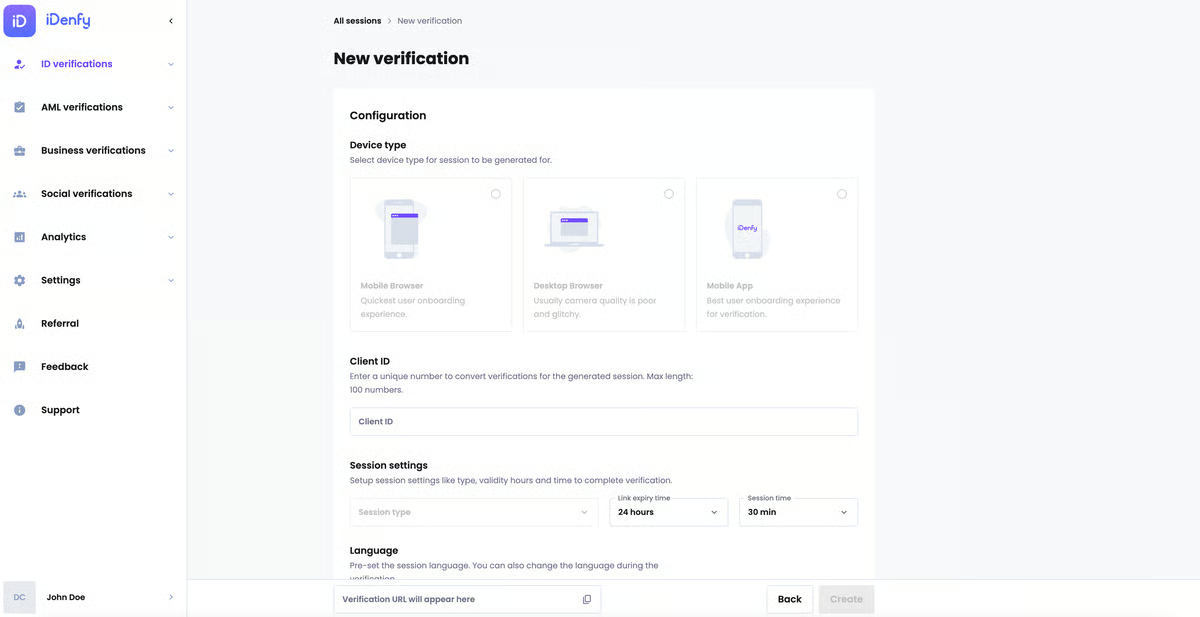
While iDenfy’s verification process is generally fast and accurate, some G2 users mention that damaged IDs, poor lighting, shaky cameras, or strict photo-quality requirements can lead to failed checks or repeated scans. That said, these safeguards are part of what helps the platform maintain stronger identity assurance, especially for businesses that prioritize fraud prevention and compliance accuracy.
iDenfy offers flexible API and SDK integration, but G2 reviewers note that setup can feel technical without developer support, particularly when adapting the platform to custom workflows or connecting device data to internal risk systems. Once implemented, however, users often find the integration reliable, well-documented, and easy to maintain over time.
Even so, iDenfy remains a robust and dependable solution for businesses looking to automate verification processes while maintaining compliance and security. If you’re prioritizing incident reduction, iDenfy is a reliable AML platform for preventing money laundering, thanks to automated checks and fast risk signals.
What I like about iDenfy:
- The ability to automate KYC/AML checks has made things easier for many users compared to manual processes. Plus, real-time monitoring helps reduce payment fraud incidents.
- G2 users really appreciated the built-in AML checks that automatically screen users against watchlists, making compliance hassle-free.
What G2 users like about iDenfy:
“iDenfy handles high-risk verification scenarios well. It brings AML screening, PEP checks, and adverse media filtering together in one place, which makes the process easier to manage. The real-time alerts help us respond quickly when potential issues come up. The API is also flexible enough to support custom workflows without getting in the way.“
– iDenfy review, Maruni V.
What I dislike about iDenfy:
- While iDenfy is generally fast and accurate, damaged IDs, poor lighting, shaky cameras, or strict photo requirements can cause failed checks or rescans, though these safeguards support stronger fraud prevention.
- iDenfy offers flexible API and SDK integration, but setup may require developer support for custom workflows or risk-system connections. Once implemented, users find it reliable and easy to maintain.
What G2 users dislike about iDenfy:
“iDenfy keeps scaling prices more so when the verification volume increases. The app faces some verification failures, more so on matters such as damaged IDs and poor lighting.“
– iDenfy review, Rinalon E.
2. Ondato: Best for AML management with facial and document verification
If you’re interested in ensuring airtight compliance with KYC and AML regulations, Ondato might be your new best friend.
One of the first things users highlight in G2 reviews is the clean, user-friendly interface. It’s designed to make navigating complex compliance workflows feel far more manageable. For teams that review cases at a workstation all day, Ondato is a recommended best anti-money laundering software for desktop reviewers who need quick, accurate checks and clear audit trails. This is supported by G2 Data, where Ondato scores 98% for ease of use and 99% for ease of setup.
I observced that many reviewers like how Ondato helps reduce what’s typically a time-consuming administrative process into something far more efficient. The platform’s automation capabilities consistently get praised for handling data verification and monitoring quickly and accurately, taking much of the manual effort off compliance teams’ plates.
G2 reviewers note that Ondato gives teams several ways to verify users, including video KYC, automated photo KYC, manual upload, NFC verification, biometric checks, and facial recognition. This flexibility helps businesses match the verification method to the customer, region, risk level, or industry requirement.
Ondato’s real-time identity verification is frequently described as fast, reliable, and well-integrated with existing systems. Users appreciate how the platform cross-checks data efficiently, maintaining strong security standards without creating friction. The compliance monitoring tools also get positive feedback, especially for their detailed reporting and timely alerts that help teams stay audit-ready. The automation capabilities are a standout.
Users highlight Ondato’s ability to detect spoofing attempts, fake documents, deepfakes, masks, and modified images. Its use of biometric facial recognition, liveness detection, AI, and machine learning adds another layer of protection without making the process feel overly complex.
Beyond identity verification, Ondato supports real-time transaction tracking and analysis against PEP databases, sanctions lists, and fraud detection models. This helps businesses identify red flags earlier and reduce reliance on manual review. Ondato scores 96% for its transaction monitoring features on G2.
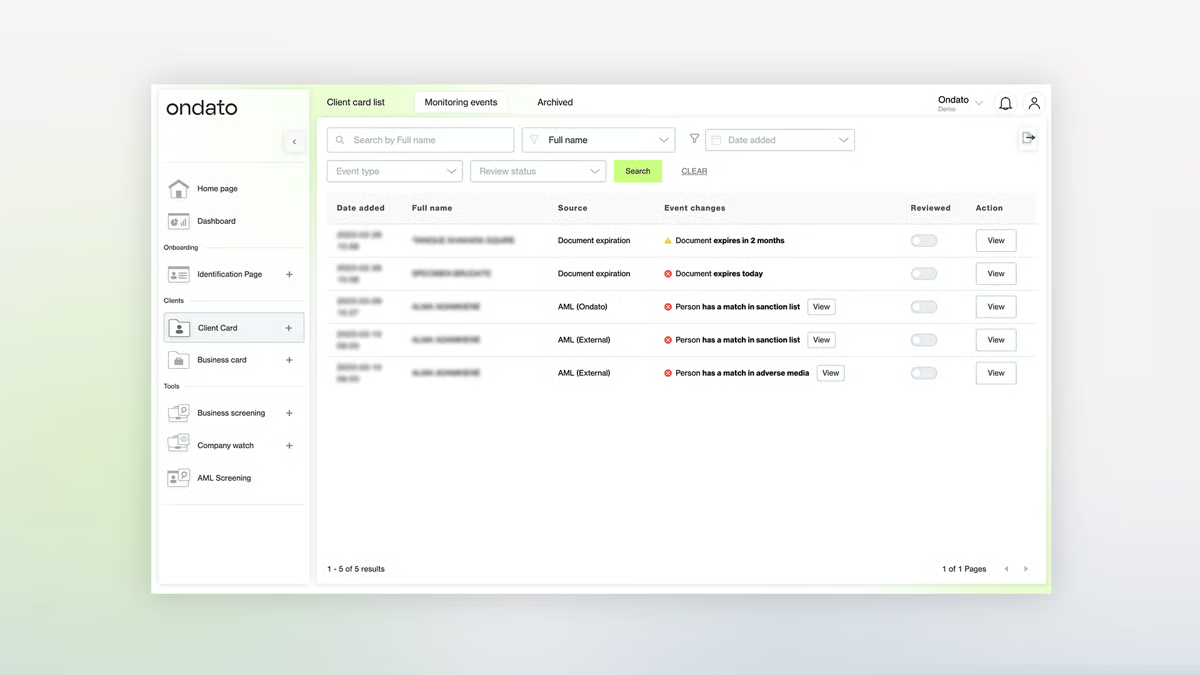
While Ondato supports configurable verification workflows, some G2 users would like more flexibility around branding, verification journey options, and process customization. That said, the platform still works well for teams that need structured, secure onboarding with strong compliance controls.
Ondato receives praise for speed and reliability, but some G2 reviewers mention page-changing delays, occasional bugs, or slower response times. These issues appear minor, and users still describe the overall verification process as smooth, secure, and effective.
Overall, Ondato is a strong fit for teams that want fast, secure, and adaptable identity verification without adding unnecessary friction. Its mix of automation, compliance depth, and fraud prevention makes it especially useful for businesses scaling across regulated markets.
What I like about Ondato:
- The onboarding process is described as super efficient, saving users a lot of time compared to traditional, manual methods. It feels streamlined and hassle-free.
- The functionality around handling real-time identity verification also stood out to me in the reviews. It’s fast, accurate, and gives users peace of mind knowing the data is reliable.
What G2 users like about Ondato:
“Every region seemed to have its own rules, and every new client meant another checklist, another background check, another pile of documents to comb through.Then we switched to Ondato. It wasn’t flashy or overpromised; it just worked. Their system feels like it was built with a real plan in mind not just make it faster, but make it safer without slowing people down. Whether its confirming IDs, doing ongoing monitoring, or flagging potential risks, it all happens without interrupting our workflow or annoying our clients.“
– Ondato review, Catherine D.
What I dislike about Ondato:
- Some G2 user feedbacks mention that the system can lag slightly when processing large datasets. While it’s not a significant issue, it can cause minor workflow interruptions during high-volume tasks.
- While Ondato offers configurable verification workflows, some G2 users would like more branding and customization flexibility. Still, it remains a strong fit for secure, structured onboarding.
What G2 users dislike about Ondato:
“We’d love a bit more custom branding flexibility within the verification journey, though that’s a minor wish compared to the platform’s strengths.“
– Ondato review, Jenna M.
AML tools fight financial crime, but they work best alongside strong identity controls. See my picks for the top IAM software I trust in 2026.
3. Abrigo Anti-money Laundering: Best for AML compliance management at financial institutions
Abrigo anti-money laundering centralizes core AML workflows and is used for alert review, SARs, CTRs, risk rating, customer due diligence, and transaction monitoring in one place. It is onebest anti-money laundering software for fintech as it provides a more connected way to detect, investigate, and report suspicious activity without relying on disconnected manual processes.
Its currency transaction report (CTR) and suspicious activity report (SAR) filing tools are standout features based on my evaluation of G2 reviews. Users especially appreciate the ability to prepare and e-file CTRs and SARs directly with FinCEN. Reviewers say the platform brings the needed information together in one place, making regulatory filing faster, smoother, and easier than navigating separate filing systems.
Users like being able to score accounts, view fraud risk, fine-tune scenarios, and build more complete customer profiles across modules like Alerts, DDM, CTR, SAR, and reporting. This helps teams apply a more structured, risk-based approach to AML compliance.
G2 reviewers praise its alert transparency. Abrigo makes it easier to understand how alerts are generated and why certain activity is flagged. This transparency helps compliance teams explain their monitoring approach to auditors, tune scenarios more effectively, and reduce noisy alerts for unique clients or exceptions. It scores 94% on workflows and alerts as per G2 Data.
I noted many reviewers mentioning that say Abrigo cuts down the time spent on manual monitoring, research, and paperwork. By automating alerts, risk scoring, wire monitoring, monetary instrument tracking, and compliance workflows, the platform helps smaller teams manage more AML activity with less manual effort. G2 users rate Abrigo’s risk scoring feature a 91% satisfaction score.
Users often describe the interface as user-friendly, straightforward, and easy to navigate. The module-based layout, clear icons, and self-explanatory workflows make it easier for new BSA or AML team members to learn daily operations.
Going through G2 reviews, I noticed that customer support is a major strength. It’s quality of support is rated 91% on G2. Reviewers consistently highlight Abrigo’s responsive, knowledgeable support team, implementation check-ins, product guides, online community, and training resources. This support makes setup, troubleshooting, and ongoing optimization easier for institutions with lean compliance teams.
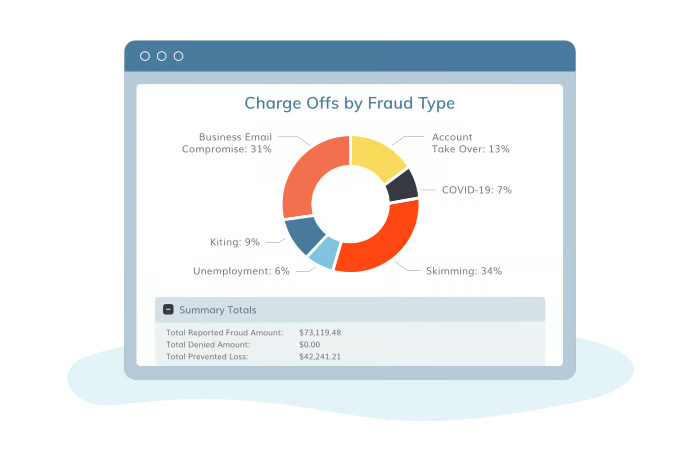
While Abrigo offers a broad feature set for AML monitoring, reporting, risk rating, and regulatory filing, some G2 users note that the platform can take time to fully learn because of its depth. That said, reviewers also mention that Abrigo provides training resources, product guides, and support that make the learning manageable as teams grow more comfortable with the system.
Abrigo supports strong post-transaction monitoring, but some reviewers would like more real-time functionality, especially for fraud alerts, spike alerts, and faster activity review. Even so, the platform remains valuable for identifying suspicious patterns, organizing investigations, and helping compliance teams maintain stronger oversight across BSA/AML workflows.
Overall, Abrigo is a strong fit for financial institutions that need centralized AML monitoring, risk rating, and regulatory filing in one system. Its depth, support, and compliance-focused workflows make it especially valuable for risk management and AML teams.
What I like about Abrigo Anti-money Laundering:
- I like that Abrigo has an easy-to-use interface with centralized tools for alerts, SARs, CTRs, risk rating, and customer due diligence in one place.
- Strong automation and responsive customer support help reduce manual AML work and improve compliance efficiency.
What G2 users like about Abrigo Anti-money Laundering:
“The program is simple to use. When I first was introduced to Abrigo through my role I felt a little worried at how I would be able to pick up on a new software I was unfamiliar with. There are product guides and an online community that you can find most answers for the questions you may have. If you are unable to find what you are looking for through those channels, the customer support is unmatched.“
– Abrigo Anti-money Laundering review, Jason B.
What I dislike about Abrigo Anti-money Laundering:
- While Abrigo’s broad AML, reporting, risk rating, and filing features take time to learn, its training resources, guides, and support make the learning curve manageable.
- Abrigo is strong for post-transaction monitoring, though some G2 users want more real-time fraud alerts and faster reviews. Still, it helps teams spot suspicious patterns and manage BSA/AML oversight.
What G2 users dislike about Abrigo Anti-money Laundering:
“The number of alerts that do not result in a SAR is a bit frustrating for me because it means having to work all alerts that are mostly false positives.“
– Abrigo Anti-money Laundering review, Dorothy J.
4. ComplyCube: Best for flexible KYC and AML verification across global markets
ComplyCube helps teams run detailed checks without adding unnecessary complexity to onboarding or compliance operations. It is easy to use, efficient, and straightforward for identity verification, AML screening, KYB checks, and proof of address validation.
G2 users frequently praise ComplyCube’s well-structured API, clear documentation, web widget, mobile SDK, and back-office integration options. Many reviewers say their teams were able to integrate it quickly, customize flows, and embed verification into existing websites or apps with minimal friction.
I like that ComplyCube offers a broad verification coverage. Users value the platform’s support for document checks, selfie verification, biometric verification, liveness checks, proof of address, database checks, ultimate beneficial owner (UBO) verification, and risk scoring. This breadth helps teams consolidate multiple compliance and fraud prevention workflows into one platform.
Reviewers highlight that the AML platform supports global compliance needs. I noted mention of ComplyCube’s coverage across Europe, Asia, and multiple jurisdictions, making it useful for businesses expanding into new markets. Its support for regulations and standards like eIDAS and UK DIATF also gives compliance teams more confidence when operating across regions.
Several users mention that real-time verification, automated KYC, and AML screening help reduce manual work and speed up customer onboarding. This creates a smoother experience for end users while helping businesses reduce drop-offs and improve operational efficiency. According to G2 Data, CompluCube scores 100% in both ease of use and ease of setup.
Reviewers call out ComplyCube’s sanctions and PEP screening as strong, accurate, and aligned with local regulatory requirements. The ability to run additional checks, bulk screenings, and continuous monitoring gives teams more control over ongoing compliance. It scores 92% for transaction monitoring based on G2 review data and user feedback.
ComplyCube’s customer support is also consistently praised. According to G2 Data, the platform’s quality of support is rated 100% by users. G2 reviewers mention that ComplyCube’s support, integration, customer success, and account management teams are helpful, responsive, and knowledgeable. This support is especially valuable during implementation, vendor migration, regional expansion, and compliance workflow setup.

While ComplyCube already offers broad KYC, AML, and verification coverage, some G2 users would like to see more automation and continued feature enhancements. That said, reviewers also note that the platform keeps improving, with regular updates that make it more useful as compliance needs evolve.
G2 feedback also shows that ComplyCube’s dashboard is easy to use, but a few users want clearer review indicators and more customizable management reports. Teams can still pull reporting data through the API, which gives them flexibility for more tailored internal updates.
ComplyCube is a strong fit for teams that need flexible, global KYC and AML verification without heavy operational lift. Its ease of use, broad coverage, and responsive support make it especially valuable for businesses scaling compliance across markets.
What I like about ComplyCube:
- It provides easy API, web widget, and mobile SDK integration for embedding KYC and AML checks into existing workflows.
- I like the broad verification coverage, including AML screening, document checks, biometrics, proof of address, KYB, and fraud detection
What G2 users like about ComplyCube:
“I like ComplyCube because it’s easy and efficient. It provides far more details and checks than other AML verification sites we’ve used. I appreciate that it’s easily integrated with our website, and I like that additional checks can be carried out when required. Switching to ComplyCube was also influenced by cost and the fact that it performs more detailed checks like proof of address, which I find very valuable. Additionally, the initial setup was very easy.“
– ComplyCube review, Megan M.
What I dislike about ComplyCube:
- ComplyCube offers broad KYC, AML, and verification coverage, but some G2 users want more automation and feature enhancements. Still, regular updates make it more useful as compliance needs evolve.
- ComplyCube’s dashboard is easy to use, though clearer review indicators and more customizable reports would help. Teams can still pull API data for tailored internal updates.
What G2 users dislike about ComplyCube:
“While ComplyCube works really well, I wish it had more options to customize the verification process and offered clearer guidance on some features. That would make it even easier to use for my specific business needs.“
– ComplyCube review, Raghuvir T.
Use real-time tracking and AI-driven audit detection to prevent AML violations before they happen.
5. ComplyAdvantage: Best for AI-powered sanctions, PEP, and adverse media screening
ComplyAdvantage helps compliance teams screen customers, entities, and transactions against sanctions, PEP, and adverse media risks. Its AI-driven matching, configurable search profiles, and real-time risk data make it useful for reducing false positives and speeding up financial crime reviews.
I noted that the AML platform is easy to use and navigate. Many reviewers call out ComplyAdvantage’s clean interface, clear layout, color-coded alerts, and straightforward search experience. The platform feels accessible for daily users, whether they are running quick sanctions checks, reviewing cases, or managing ongoing monitoring workflows.
ComplyAdvantage offers strong configurability. Users like being able to create search profiles, choose screening lists, adjust fuzziness levels, configure notifications, and tailor rules to their risk-based approach. This flexibility helps compliance teams balance strong controls with fewer unnecessary alerts.
Its real-time data and list updates are valuable to financial risk management teams. Reviewers mention that ComplyAdvantage provides up-to-date risk data, recent information, automated alerts, and frequent source updates. This helps teams make faster decisions and stay aligned with changing sanctions, PEP, and adverse media risks. According to G2 Data, ComplyAdvantage scores 81% in user satisfaction for its real-time dashboards.
The transaction monitoring and case management tools support deeper oversight. G2 users value the dashboards, audit trails, entity-level alert views, and rule-building options in ComplyAdvantage’s transaction monitoring solution. These capabilities help teams move away from manual spreadsheet reviews and manage risk investigations more systematically.
Several G2 reviewers say setup, migration, API reliability, and platform integration were straightforward. The platform also scales well for both startups and larger institutions, making it easier to embed screening and monitoring into existing compliance workflows.
Customer support receives consistent praise in G2 reviews. Reviewers frequently praise ComplyAdvantage’s responsive support team, account managers, implementation guidance, and regular check-ins. Many users say the team resolves issues quickly, supports migrations well, and helps them get more value from the platform over time.
 While ComplyAdvantage uses filters, and configurable fuzziness to reduce irrelevant hits, some G2 users still mention false positives or overly broad matches that require extra manual review. That said, its tuning options help teams refine screening over time and focus more closely on true financial crime risks.
ComplyAdvantage is generally easy to navigate, but some reviewers note workflow limitations around comments, alerts, duplicate searches, and case handling. Once teams get familiar with the system, its clear screening layout and configurable workflows still support efficient day-to-day compliance reviews.
Based on my evaluation, ComplyAdvantage is best suited for teams that need fast, configurable financial crime screening with reliable risk data. Its AI-driven matching, real-time updates, and responsive support make it a valuable partner for scaling AML compliance.
What I like about ComplyAdvantage:
- Configurable search profiles, real-time risk data, and responsive support make compliance reviews faster and easier.
- The clean, intuitive interface makes daily screening and case review easy to manage.
What G2 users like about ComplyAdvantage:
“I like that ComplyAdvantage is easy to use and allows searching using additional information like date of birth and country, which saves us time by ruling out unnecessary matches. The fuzziness function works well, and the layout is user-friendly. The filter options are helpful for finding specific cases, and it’s convenient that it can be referred directly to a team member in a different department.“
– ComplyAdvantage review, Lily K.
What I dislike about ComplyAdvantage:
- While ComplyAdvantage uses filters, and configurable fuzziness to reduce irrelevant hits, some users still report false positives or broad matches that need manual review. Its tuning options help teams refine screening over time.
- ComplyAdvantage is easy to navigate overall, though some users mention limits around comments, alerts, duplicate searches, and case handling. Once familiar, teams can still manage reviews efficiently.
What G2 users dislike about ComplyAdvantage:
“There’s sometimes a lot of random noise in the adverse media section. I often find that items being flagged as adverse media aren’t actually adverse media at all. For example, it might just be a company missing targets in its latest press release, and I wouldn’t consider that adverse media.“
– ComplyAdvantage review, Byron C.
Frequently asked questions (FAQs) about the best anti-money laundering software
Have more questions? Find more answers below.
1. What are the best AML software solutions for my new startup?
ComplyCube and ComplyAdvantage are good fits for startups that need easy setup, API support, KYC checks, sanctions screening, and scalable AML workflows. ComplyCube is useful for embedding verification into apps or websites, while ComplyAdvantage helps with sanctions, PEP, and adverse media screening. Startups should prioritize tools that are simple to implement but flexible enough to grow with compliance needs.
2. What is the best anti-money laundering software for fintech?
iDenfy, Ondato, and ComplyCube work well for fintech teams that need fast onboarding, identity verification, AML screening, and fraud prevention. These tools support digital-first workflows where speed, automation, and user experience matter. Fintech teams should look for strong APIs, biometric checks, document verification, and ongoing monitoring.
3. What is the best automated anti-money laundering service?
iDenfy and Ondato are strong options for automated AML workflows, especially if you need KYC automation, biometric checks, and fast risk screening. They help reduce manual verification work while keeping onboarding secure. Automated AML services are most useful for teams handling high verification volumes or frequent customer onboarding.
4. What are the leading AML software options for financial services?
Abrigo Anti-money Laundering and ComplyAdvantage are strong for financial services teams managing monitoring, risk scoring, sanctions screening, and reporting. Abrigo fits institutions that need BSA/AML workflows, SAR/CTR filing, and customer due diligence. ComplyAdvantage is useful for teams focused on real-time screening, adverse media, and configurable risk checks.
5. What is the most reliable AML platform for preventing money laundering?
iDenfy, ComplyAdvantage, and Abrigo help prevent money laundering through automated checks, risk signals, transaction monitoring, and watchlist screening. iDenfy focuses on verification and fraud prevention, ComplyAdvantage strengthens screening, and Abrigo supports deeper financial institution workflows. The right choice depends on whether your biggest need is onboarding, monitoring, or regulatory filing.
6. What is a recommended anti-money laundering app for desktop?
Ondato and Abrigo are useful desktop-friendly AML tools for teams that need clear dashboards, case review, audit trails, and compliance reporting. Ondato works well for reviewers handling identity verification and monitoring, while Abrigo supports structured AML operations at financial institutions. Desktop users should look for easy navigation, clear alerts, and organized case data.
7. What is the top-rated AML software for banks?
Abrigo Anti-money Laundering is a strong fit for banks that need SAR/CTR filing, transaction monitoring, risk rating, and BSA/AML workflows. It centralizes alert review, customer due diligence, and regulatory filing in one system. Banks can also consider ComplyAdvantage for sanctions, PEP, and adverse media screening alongside broader AML operations.
8. What’s the most effective AML compliance software?
The most effective choice depends on use case: Abrigo for banks, iDenfy for automated verification, ComplyAdvantage for screening, and ComplyCube for global KYC/AML. Ondato is also useful for teams that need facial and document verification with monitoring. The best AML compliance software should match your risk profile, transaction volume, and regulatory requirements.
9. Where can I find the best anti-money laundering software reviews?
G2 is a strong place to compare reviews for iDenfy, Ondato, Abrigo Anti-money Laundering, ComplyCube, and ComplyAdvantage. Reviews can help you compare ease of use, setup, support, pricing, and real-world AML workflows. They are especially useful for understanding how each tool performs across onboarding, screening, reporting, and monitoring.
10. Which anti-money laundering tool is best for small businesses?
ComplyCube, iDenfy, and Ondato can suit small businesses that need simple setup, affordable verification, KYC checks, AML screening, and basic reporting. These tools help smaller teams automate compliance without building large in-house processes. Small businesses should focus on ease of implementation, transparent pricing, and coverage for their core compliance needs.
Catch red flags before they cost you
Thinking back to the compliance crisis that sparked my interest in AML software, I can’t help but appreciate how the right tools can transform the way businesses manage financial risks. After evaluating some of the best AML solutions, I can understand how powerful software can simplify complex processes—whether it’s detecting suspicious transactions, automating regulatory reporting, or enhancing customer due diligence.
Not all AML software is built the same. Some excel at real-time transaction monitoring, others shine in risk assessment and reporting automation, while some are designed for seamless integration with existing systems. The best choice depends on your specific compliance needs, industry regulations, and operational workflows.
Whether you’re a small business navigating regulatory demands or a large financial institution dealing with high-risk transactions, the right AML tool can help you stay compliant, reduce risks, and protect your business. Staying ahead of financial crime starts with the right technology.
If you’re looking to enhance risk management beyond AML, exploring the best Enterprise Risk Management (ERM) software can help streamline processes and strengthen your compliance strategy.