• About Us
  • Disclaimer
  • Contact Us
  • Privacy Policy
Monday, April 27, 2026
mGrowTech
No Result
View All Result
  • Technology And Software
    • Account Based Marketing
    • Channel Marketing
    • Marketing Automation
      • Al, Analytics and Automation
      • Ad Management
  • Digital Marketing
    • Social Media Management
    • Google Marketing
  • Direct Marketing
    • Brand Management
    • Marketing Attribution and Consulting
  • Mobile Marketing
  • Event Management
  • PR Solutions
  • Technology And Software
    • Account Based Marketing
    • Channel Marketing
    • Marketing Automation
      • Al, Analytics and Automation
      • Ad Management
  • Digital Marketing
    • Social Media Management
    • Google Marketing
  • Direct Marketing
    • Brand Management
    • Marketing Attribution and Consulting
  • Mobile Marketing
  • Event Management
  • PR Solutions
No Result
View All Result
mGrowTech
No Result
View All Result
Home Al, Analytics and Automation

Zero-Shot and Few-Shot Classification with Scikit-LLM

Josh by Josh
August 27, 2025
in Al, Analytics and Automation
0
Zero-Shot and Few-Shot Classification with Scikit-LLM


Zero-Shot and Few-Shot Classification with Scikit-LLM

Zero-Shot and Few-Shot Classification with Scikit-LLM
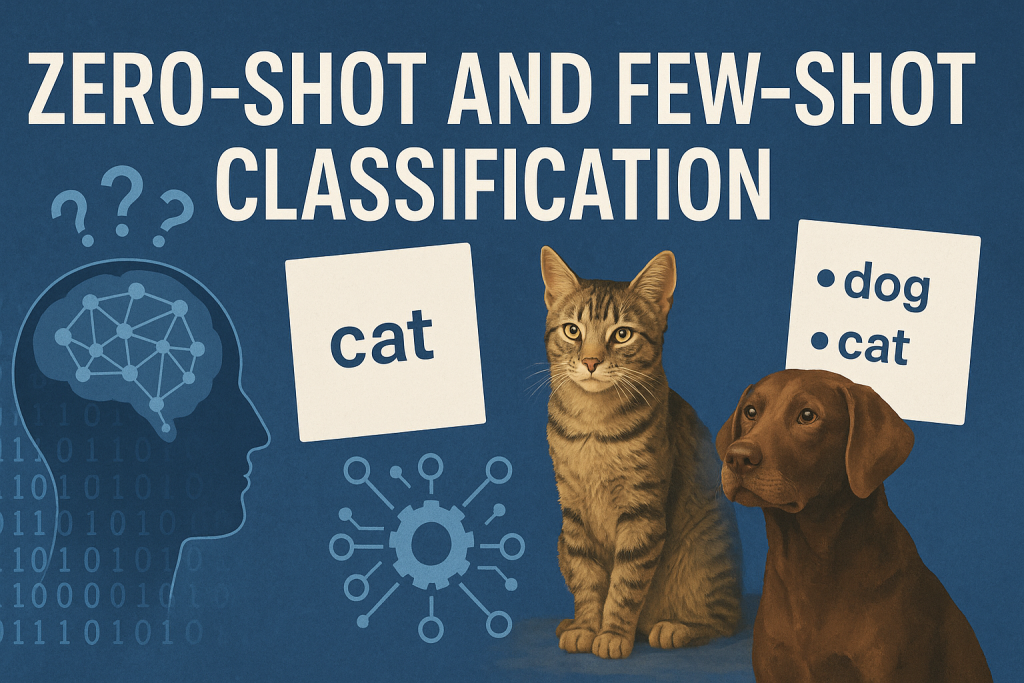
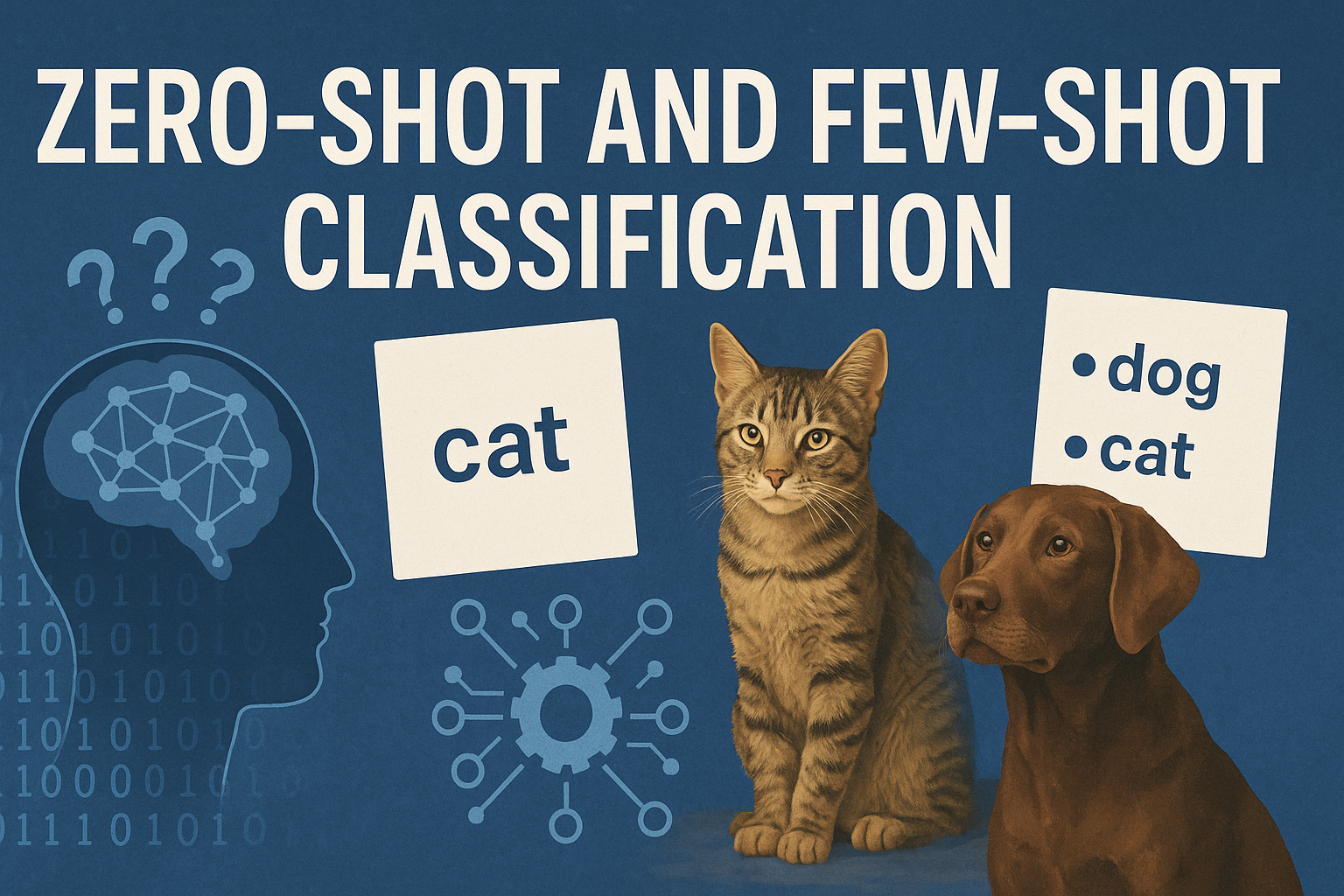
Image by Editor | ChatGPT

In this article, you will learn:

READ ALSO

A faster way to estimate AI power consumption | MIT News

The LoRA Assumption That Breaks in Production 

  • how Scikit-LLM integrates large language models like OpenAI’s GPT with the Scikit-learn framework for text analysis.
  • the difference between zero-shot and few-shot classification and how to implement them using Scikit-LLM.
  • a step-by-step guide on configuring Scikit-LLM with an OpenAI API key and applying it to a sample text classification task.

Introduction

Scikit-LLM is a Python library designed to integrate large language models (LLMs) like OpenAI’s GPT-3.5 and GPT-4 with the Scikit-learn machine learning framework. It provides a simple interface to use LLMs as zero-shot or few-shot classifiers using natural language prompts, making it handy for downstream text analysis tasks such as classification, sentiment analysis, and topic labeling.

This article focuses on the zero-shot and few-shot classification capabilities of Scikit-LLM and illustrates how to use it alongside Scikit-learn workflows for these tasks.

Before we get hands-on, let’s clarify the difference between zero-shot and few-shot classification.

  1. Zero-shot classification: The LLM classifies text without any prior labeled examples from the dataset; it is prompted only with the possible class labels.
  2. Few-shot classification: A small set of labeled examples is provided in the prompt—typically a few examples per possible class—to guide the LLM’s reasoning toward the requested classification.

Step-by-Step Process

It’s time to try these two use cases with our article’s starring library: Scikit-LLM. We start by installing it:

We will now need to import the following two classes:

from skllm.config import SKLLMConfig

from skllm import ZeroShotGPTClassifier

Since using OpenAI’s models requires an API key, we will need to configure it. Access and register, if needed, on the OpenAI platform to create a new API key. Note that if you do not have a paid plan, your options for using models in the examples below might be limited. 

SKLLMConfig.set_openai_key(“API_KEY_GOES_HERE”)

Let’s consider this small example dataset, containing several user reviews and their associated sentiment labels:

X = [

    “I love this product! It works great and exceeded my expectations.”,

    “This is the worst service I have ever received.”,

    “The movie was okay, not bad but not great either.”,

    “Excellent customer support and very quick response.”,

    “I am disappointed with the quality of this item.”

]


y = [

    “positive”,

    “negative”,

    “neutral”,

    “positive”,

    “negative”

]

We create an instance of a zero-shot classifier as follows:

clf = ZeroShotGPTClassifier()

As its name suggests, Scikit-LLM is heavily based on Scikit-learn. Consequently, the process for training and evaluating a model will look very familiar if you are experienced with the Scikit-learn ecosystem:

clf.fit(X, y)

labels = clf.predict(X)


print(labels)

But here’s where the real value of zero-shot classification stands out: training data is not mandatory. The classifier can be “fitted” using only the possible labels. In other words, it is possible to do something like this:

clf_empty = ZeroShotGPTClassifier()

clf_empty.fit(None, [“positive”, “negative”, “neutral”])

labels = clf_empty.predict(X)

And it still works! This is the true essence of zero-shot classification.

Regarding few-shot classification, the process strongly resembles the first zero-shot classification example where we provided training data. In fact, the fit() method is the correct way to pass the few labeled examples to the model.

from skllm import FewShotGPTClassifier


clf = FewShotGPTClassifier()


# Fit uses few-shot examples to build part of the prompt

clf.fit(X, y)


test_samples = [

    “The new update is fantastic and really smooth.”,

    “I’m not happy with the experience at all.”,

    “Meh, it was neither exciting nor terrible.”

]


predictions = clf.predict(test_samples)

print(predictions)

It might sound odd at first, but in the specific use case of few-shot classification, both the fit() and predict() methods are part of the inference process. fit() provides the labeled examples for the prompt, and predict() provides the new text to be classified. Together, they build the complete prompt sent to the LLM.

Wrapping Up

This article demonstrated two text classification use cases using the newly released Scikit-llm library: zero-shot and few-shot classification. Using an approach similar to Scikit-learn, these two techniques subtly differ in the prompting strategy they use to leverage example data during inference.

Zero-shot classification doesn’t require labeled examples and relies solely on the loaded model’s general understanding to assign labels. Meanwhile, few-shot classification incorporates a small set of labeled examples into the prompt to guide the model’s inference more accurately.


Source_link

Related Posts

A faster way to estimate AI power consumption | MIT News
Al, Analytics and Automation

A faster way to estimate AI power consumption | MIT News

April 27, 2026
The LoRA Assumption That Breaks in Production 
Al, Analytics and Automation

The LoRA Assumption That Breaks in Production 

April 27, 2026
Top 7 Benchmarks That Actually Matter for Agentic Reasoning in Large Language Models
Al, Analytics and Automation

Top 7 Benchmarks That Actually Matter for Agentic Reasoning in Large Language Models

April 26, 2026
Al, Analytics and Automation

RAG Without Vectors: How PageIndex Retrieves by Reasoning

April 26, 2026
Meet GitNexus: An Open-Source MCP-Native Knowledge Graph Engine That Gives Claude Code and Cursor Full Codebase Structural Awareness
Al, Analytics and Automation

Meet GitNexus: An Open-Source MCP-Native Knowledge Graph Engine That Gives Claude Code and Cursor Full Codebase Structural Awareness

April 25, 2026
Google DeepMind Introduces Vision Banana: An Instruction-Tuned Image Generator That Beats SAM 3 on Segmentation and Depth Anything V3 on Metric Depth Estimation
Al, Analytics and Automation

Google DeepMind Introduces Vision Banana: An Instruction-Tuned Image Generator That Beats SAM 3 on Segmentation and Depth Anything V3 on Metric Depth Estimation

April 25, 2026
Next Post
Why Do Most Tech Blogs Fail to Connect? How to Fix It

Why Do Most Tech Blogs Fail to Connect? How to Fix It

POPULAR NEWS

Trump ends trade talks with Canada over a digital services tax

Trump ends trade talks with Canada over a digital services tax

June 28, 2025
Communication Effectiveness Skills For Business Leaders

Communication Effectiveness Skills For Business Leaders

June 10, 2025
15 Trending Songs on TikTok in 2025 (+ How to Use Them)

15 Trending Songs on TikTok in 2025 (+ How to Use Them)

June 18, 2025
App Development Cost in Singapore: Pricing Breakdown & Insights

App Development Cost in Singapore: Pricing Breakdown & Insights

June 22, 2025
Comparing the Top 7 Large Language Models LLMs/Systems for Coding in 2025

Comparing the Top 7 Large Language Models LLMs/Systems for Coding in 2025

November 4, 2025

EDITOR'S PICK

The end of 'shadow AI' at enterprises? Kilo launches KiloClaw for Organizations to enable secure AI agents at scale

The end of 'shadow AI' at enterprises? Kilo launches KiloClaw for Organizations to enable secure AI agents at scale

April 1, 2026
How to do a website audit in 2026 (+ free tracker)

How to do a website audit in 2026 (+ free tracker)

April 15, 2026
Victoria Beckham Debuts a Modern Wardrobe Collaboration with Gap

Victoria Beckham Debuts a Modern Wardrobe Collaboration with Gap

April 23, 2026
Effective Media Relations for Crypto Brands

Effective Media Relations for Crypto Brands

January 2, 2026

About

We bring you the best Premium WordPress Themes that perfect for news, magazine, personal blog, etc. Check our landing page for details.

Follow us

Categories

  • Account Based Marketing
  • Ad Management
  • Al, Analytics and Automation
  • Brand Management
  • Channel Marketing
  • Digital Marketing
  • Direct Marketing
  • Event Management
  • Google Marketing
  • Marketing Attribution and Consulting
  • Marketing Automation
  • Mobile Marketing
  • PR Solutions
  • Social Media Management
  • Technology And Software
  • Uncategorized

Recent Posts

  • How to Fly Through the Cinema Frame with a Chopper in Goat Simulator 3
  • Top 10 Agentic AI Platforms for Enterprise in 2026: Buyer’s Guide
  • A faster way to estimate AI power consumption | MIT News
  • 8 Best E-commerce Analytics Software I Recommend for 2026
  • About Us
  • Disclaimer
  • Contact Us
  • Privacy Policy
No Result
View All Result
  • Technology And Software
    • Account Based Marketing
    • Channel Marketing
    • Marketing Automation
      • Al, Analytics and Automation
      • Ad Management
  • Digital Marketing
    • Social Media Management
    • Google Marketing
  • Direct Marketing
    • Brand Management
    • Marketing Attribution and Consulting
  • Mobile Marketing
  • Event Management
  • PR Solutions