[ad_1]
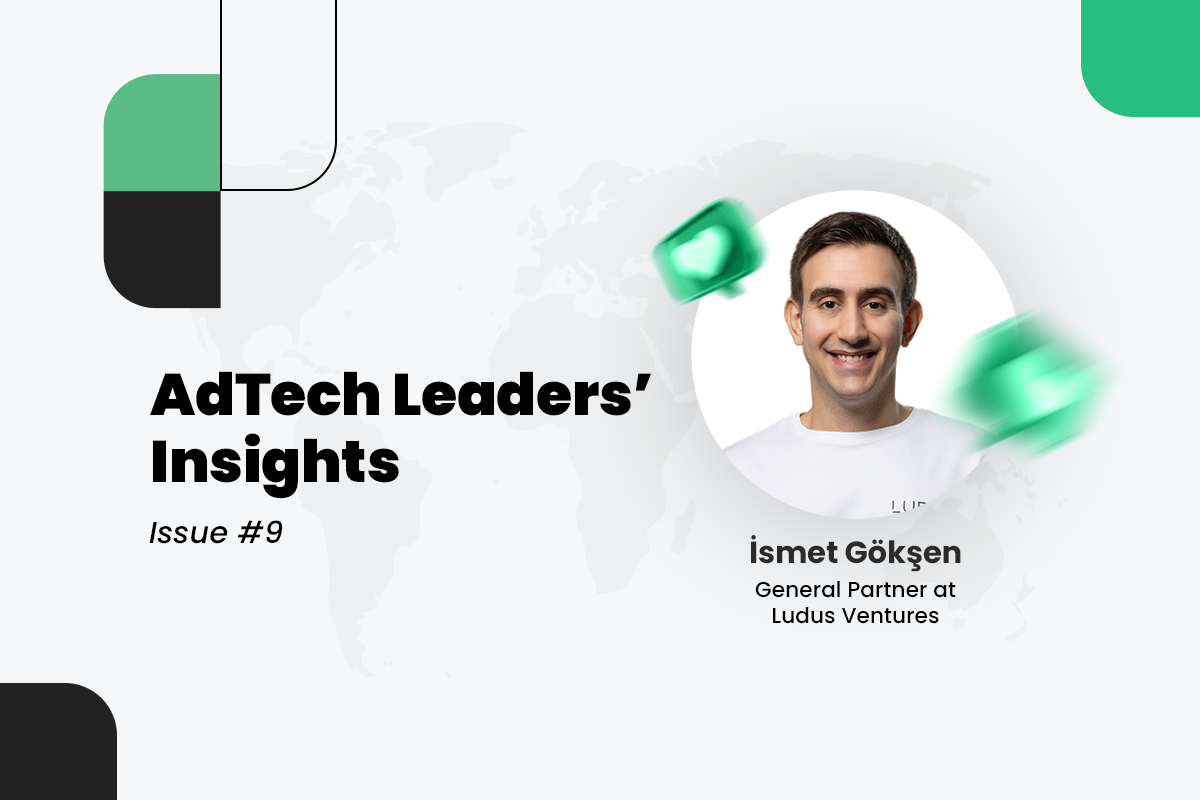
İsmet Gökşen started his career in mobile adtech before making the move into venture investing. Today, as Managing Partner of Ludus Ventures, one of the most active gaming-focused VCs in the region, he brings a rare combination of operator instinct and investment discipline to every deal. With 25+ investments and 3 exits since 2021, he’s backed some of the most recognizable names in mobile gaming, including TaleMonster, Good Job Games, and Playable Factory. We sat down with him to get his unfiltered take on what it takes to build and fund a successful studio in today’s market.
AppSamurai: You’ve made 25+ investments and 3 exits since 2021. For a founder reading this, what does Ludus actually need to see in that very first meeting to move forward? Is it the team, an early retention number, a specific genre fit, or something else entirely that most founders underestimate?
İsmet Gökşen: The founding team is the most important thing in pre-seed investing. The alignment between their past professional experience and their business plan for their new venture is very important to us.
Alongside that, resilience is one of the most important things in pre-seed investments, because early-stage gaming tests you constantly, and the teams that make it keep iterating when the first plan doesn’t hold.
Metrics matter at every stage; they’re how we read growth potential, even when the numbers are still early. What I’m really asking is whether the business has the marketability and scalability to grow. So lead with your team and why you, specifically, are the right people to build this, and let your metrics prove the momentum is real.
AppSamurai: TaleMonster, Good Job Games, and Grand Games all turned early traction into large later-stage rounds. From your seat, what’s the single biggest thing studios get wrong between their seed round and trying to raise that next, much bigger round? Is it a metrics problem, a positioning problem, or a timing problem?
İsmet Gökşen: The most important thing is to understand what the business actually needs. There’s no rule that every company has to go for a large Series A.
Some businesses move very fast, and depending on the situation, you can get a long way on debt.
One of the most important questions is: Is there a real need for this capital? Where does the business go after it raises capital to meet that need, and does it offer a meaningful return for the investor when it scales? If you can’t answer those three cleanly, more money won’t fix the problem; it usually just raises the bar you now have to clear.
If you raise at a 100 million valuation, you’re committing to build a unicorn; that’s the only outcome the math actually works for. So the real question usually isn’t metrics, positioning, or timing on their own. It’s whether the size of your raise matches how big the business can realistically become.
AppSamurai: Most of Ludus’s portfolio is game studios, but you also backed Playable Factory, a playable and interactive ad-tech company. Given your own background in mobile adtech, how do you think about gametech and ad-tech investments differently from studio investments? Is Türkiye building an edge in the infrastructure layer of mobile gaming the same way it has in the studios themselves?
İsmet Gökşen: We committed 10% of our fund to spaces that are more experiential for us, such as gametech and adtech. Like Playable Factory, we think about them very differently from our studio investments.
With content, a studio investment is almost entirely a bet on the founders’ qualifications. Their background in their space, their execution quality, their resilience, and so on. Tech investments are very different from content investments. What you are trying to assess is the product market fit. Does the market really need this product? Is it any better than the other products in this space?
The other difference is how you grow into that market. Even a strong product can end up niche in games, and you can’t solve that with business development alone — BD only takes a tech company so far. On the content side, the lever is different: when you have a good game, you scale it through user acquisition.
AppSamurai: Beyond the capital itself, what should a studio realistically expect from Ludus once you’re on board? Is it hands-on help with UA and monetization, access to your network for hiring or follow-on rounds, product feedback, something else, and how hands-on versus hands-off should a founder expect Ludus to be day to day?
İsmet Gökşen: Past a certain point, the founder knows the business better than any investor does and honestly, that’s how it should be. A studio should always be able to stand on its own; the moment it depends on us to function, something has already gone wrong.
Where we do add real value is in a few specific places. The first is simply that we understand your language. We’re gaming-native, so you’re not spending the meeting explaining the basics of the industry to us. The second is marketing: it’s a genuine strength of ours, so UA and growth are areas where we can actually roll up our sleeves.
And then there’s the network. We have a strong ability to bring in new investors for your follow-on rounds, and as one of the oldest VCs in the sector, that network also helps with hiring and the connections you need as you scale. That combination, understanding the space, marketing muscle, and a network for both capital and talent, is the realistic picture of what we bring once we’re on board.
AppSamurai: Other emerging gaming markets, Vietnam, India, parts of Latin America and MENA, are watching Türkiye’s rise closely, and some see it as a blueprint. From an investor’s perspective, what about Türkiye’s expansion do you think is genuinely transferable to another market with the right talent and ambition, and what part of it is closer to a one-off, tied to factors specific to Türkiye, like its government incentive programs or its particular talent pipeline, that another country couldn’t easily replicate?
İsmet Gökşen: What actually transfers is the mindset, not the details: know what you’re truly good at, and build your ecosystem around that strength. Any market with real talent and ambition can do that.
What’s specific to Türkiye is the form it took. Our strength was serious development capability, so a high-production, hypercasual-focused ecosystem grew up around it. Another country can follow the exact same approach — but it should build around its own strengths, not copy ours. The playbook travels; the ecosystem it produces will look different everywhere, because every market is good at something different.
[ad_2]
Source_link