
[ad_1]
Most guides on this topic talk about internal delegation.
How to assign SEO tasks to a team member, how a product manager should structure a workflow, how to split things between colleagues, that kind of stuff.
That’s useful, but it assumes you already have the right people in place.
In reality, a lot of businesses and even agencies don’t.
They still need to get SEO work done, but they either don’t have the skillset in-house, or they don’t have the capacity to handle it properly.
So instead of trying to force everything into one internal workflow, it often makes more sense to just delegate SEO work externally.
Not everything, but specific parts of it.
That’s what I will focus on here.
Which parts of search engine optimization are actually worth outsourcing, and why delegating them usually leads to better results.
Key Takeaways:
- Most advice around delegation focuses on internal teams, but outsourcing SEO work is often more practical
- Businesses usually delegate because of lack of skill, time, or efficiency
- Agencies delegate to increase capacity and improve their workflow
- Not all SEO tasks should be handled internally, some are easier to outsource
- Link building, content creation, and technical optimization are the most common areas to delegate
- The goal isn’t just to delegate tasks, but to improve your overall SEO strategy and results

Link building cheat sheet
Gain access to the 3-step strategy we use to earn over 86 high-quality backlinks each month.
Reasons to Delegate SEO Work
For Businesses
For most businesses, the decision to delegate SEO work isn’t really about preference.
It’s about constraints.
If you’re a business owner, you already have a lot going on. SEO is just one part of your digital marketing, and it’s not exactly something you can “figure out as you go” without consequences.
That’s usually where the first issue comes in: lack of skill.
Search engine optimization has a lot of moving parts. Keyword research, content, link building, technical SEO, tracking things in Google Analytics… it adds up quickly. And unless you’ve done it before, it’s easy to spend time on the wrong things or miss something important.
You could hire an internal team member or bring in an SEO specialist, but that comes with its own overhead.
Hiring, onboarding, managing, building out a workflow… all of that takes time too.
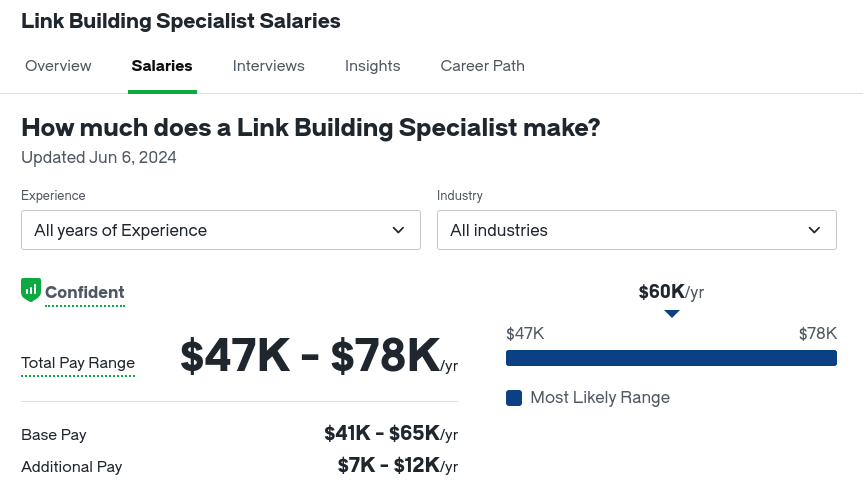
If you’re based in the U.S, you’re looking at $50K yearly at the minimum per team member.
Which leads to the second point: efficiency.
In a lot of cases, it’s actually cheaper to just delegate tasks to people who already know what they’re doing.
Instead of going through trial and error, you’re getting things done properly from the start. No need to test five different approaches or constantly fix mistakes.
You just get the outcome.
There’s also the question of capacity.
Even if you have someone internally handling SEO work, they’re usually stretched thin. They’re not just focused on SEO, they’re also dealing with other parts of marketing, reporting, maybe even social media.
So things move slower than they should.
Delegating specific SEO tasks solves that.
For Agencies
For agencies, the issue isn’t knowing how to do SEO work.
It’s how much you can actually handle at once.
Client work always comes first. That’s the priority. So your own SEO, your own content, your own link building… it usually ends up delayed or ignored.
You have the strategy, but not the time to execute everything without overloading your team.
Instead of stretching your workflow or piling more onto the same people, you can offload specific parts and keep things moving.
This also changes how many clients you can take on.
If you’re a content agency, you’re probably strong on content creation and keyword research, but not on link building.
Rather than trying to build that internally, you work with a team that already does it.
Now the content you produce actually ranks, and you can offer a more complete service without hiring more team members.
Same idea if you focus on technical SEO.
You handle site structure, performance, and technical optimization, and delegate content or outreach to other SEO professionals.
Each part of the workflow is handled by someone who specializes in it.
You get better results for your clients, you can take on more work, and the people you partner with get a steady stream of projects.
Everyone gets more clients. It’s a win-win.
Task #1: Link Building
If there’s one thing that makes sense to delegate first, it’s link building.
It’s one of the most important SEO tasks, but also one of the most time-consuming.
You’re not just “getting links.” You’re finding relevant sites, qualifying them, reaching out, following up, negotiating placements… it’s a full workflow on its own.
And it never really stops.
That’s why it’s such a good candidate for delegation.
Instead of trying to fit it into your existing workflow or assigning it to a team member who already has other responsibilities, you can treat it as a separate function and offload it completely.
Especially if you work with a pay-per-result setup like Respona.
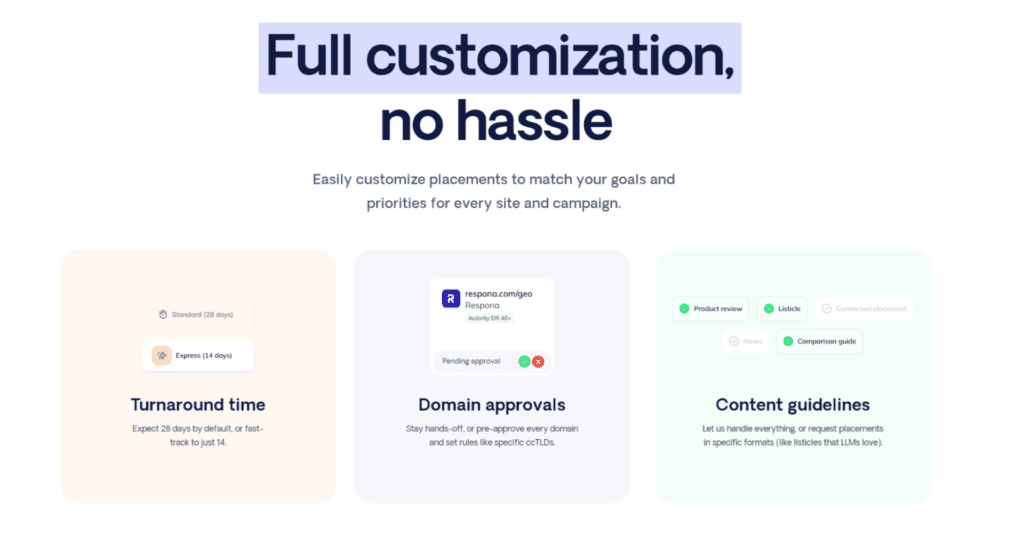
That way, you’re not paying for effort, you’re paying for actual placements.
With Respona, for example, the process is pretty straightforward.
You place an order, define your requirements, and that’s it.
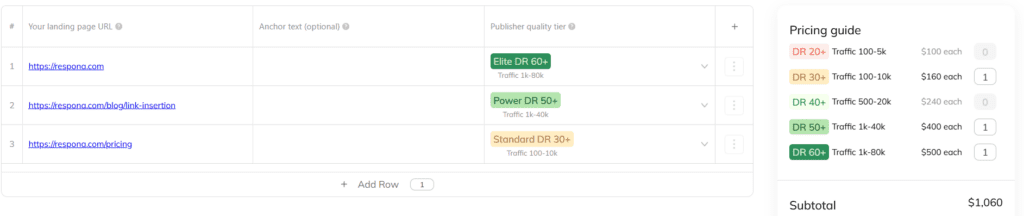
You can specify the type of sites you want, the niche, the kind of content your link should appear in… whatever matters for your SEO strategy.
Then the team handles everything.
Prospecting, outreach, securing placements, all of it.
You’re not involved in the day-to-day work, but you still have control.
You can review placements before they go live, so you’re only paying for results you’re happy with.
No long-term commitment either.
You can run a single campaign or scale it up depending on your needs. And if you’re doing volume, there are usually better rates for bulk orders.
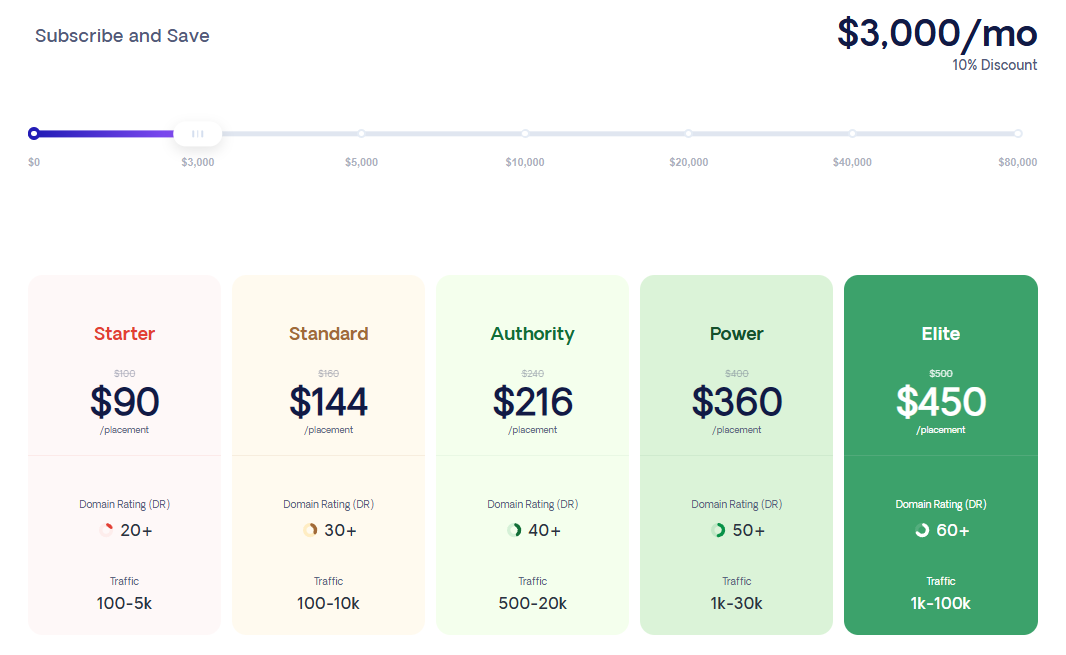
In terms of timing, most campaigns land within about a month.
And it scales.
Whether you need a couple of links or a few hundred, the process stays the same. You’re not rebuilding your workflow every time you want to increase output.
Task #2: Content Writing & On-Page Optimization
Content is another obvious one to delegate.
Not because it’s hard to understand, but because it takes time to do properly.
Writing a single blog post isn’t just writing. It’s keyword research, outlining, content creation, editing, formatting, and then making sure everything is optimized for search engines.
Do that consistently, and it turns into a full-time job.
That’s why a lot of businesses and agencies just outsource it to content teams that already have a system in place.
Instead of figuring out what works through trial and error, you’re plugging into an existing workflow.
Agencies like Minuttia are a good example of this.

They don’t just write content, they handle the full process. From keyword research to publishing-ready blog posts that are already optimized.
So instead of assigning tasks internally and hoping everything lines up, you’re getting content that’s ready to go.
Task #3: Technical Optimization
Technical SEO is one of those things where you either know what you’re doing, or you really don’t.
It covers stuff like site structure, crawlability, indexing, page speed, all the behind-the-scenes things that help a search engine actually access and understand your website.
The issue is, it’s easy to break things.
A small mistake in your setup can hurt your SEO performance, and it’s not always obvious what went wrong.
That’s why this is a good one to delegate.
Most technical SEO tasks are one-time or occasional fixes. You bring in an SEO expert, get everything set up properly, and then just maintain it.
No need to build a whole workflow around it or assign it to someone internally if it’s not their area.
Get it done once, and move on.
Link building cheat sheet
Gain access to the 3-step strategy we use to earn over 86 high-quality backlinks each month.
Now Over to You
At this point, it’s not really a question of whether you should delegate.
It’s more about what you should stop trying to do yourself.
Some parts of SEO work make sense to keep in-house. Others just slow you down if you try to force them into your existing workflow.
Link building, content, technical setup… these are all things that can run separately without breaking your overall strategy.
And once you take them out of your internal workflow, everything else tends to move faster.
If you don’t want to spend time assigning tasks, managing outreach, or building new processes from scratch, you don’t have to.
You can just delegate the parts that are slowing you down and focus on the parts that actually need your attention.
Place an order, set your requirements, and get started.
Frequently Asked Questions (FAQ)
Should you delegate SEO work?
In most cases, yes.
If you don’t have the time or in-house expertise, it’s usually more efficient to delegate SEO work instead of trying to handle everything yourself.
What SEO tasks should you outsource first?
The most common ones are link building, content creation, and technical SEO.
They’re time-consuming, require specific skills, and are easy to separate from your main workflow.
Is it better to hire or outsource SEO?
It depends on your needs.
If SEO is a core part of your business long-term, hiring might make sense. But for most businesses, outsourcing is faster and more cost-efficient.
Do agencies delegate SEO work too?
Yes.
Most agencies delegate tasks to increase capacity and take on more clients, especially when they specialize in a specific part of SEO.
What are the risks of delegating SEO?
The main risk is working with the wrong provider.
If the quality is low, it can hurt your rankings. That’s why it’s important to work with experienced SEO professionals and review the results.
How do you manage delegated SEO tasks?
You don’t need to micromanage.
Set clear requirements upfront, define your goals, and review the output. The actual execution should be handled externally.
Does delegating SEO affect performance?
Usually in a good way.
If done right, it improves your SEO performance because specialists handle each part instead of one person trying to do everything.
What tools are used when outsourcing SEO?
Most providers use standard SEO tools like Ahrefs, Semrush, and Google Analytics to track performance, research keywords, and measure results.
Is delegating SEO only for large businesses?
No.
Even a small business owner can benefit from delegating tasks, especially when time and resources are limited.
How do you know if you should delegate SEO?
If your SEO workflow is slowing down, tasks are piling up, or results aren’t improving, it’s usually a sign that you should delegate some parts of it.
[ad_2]
Source_link