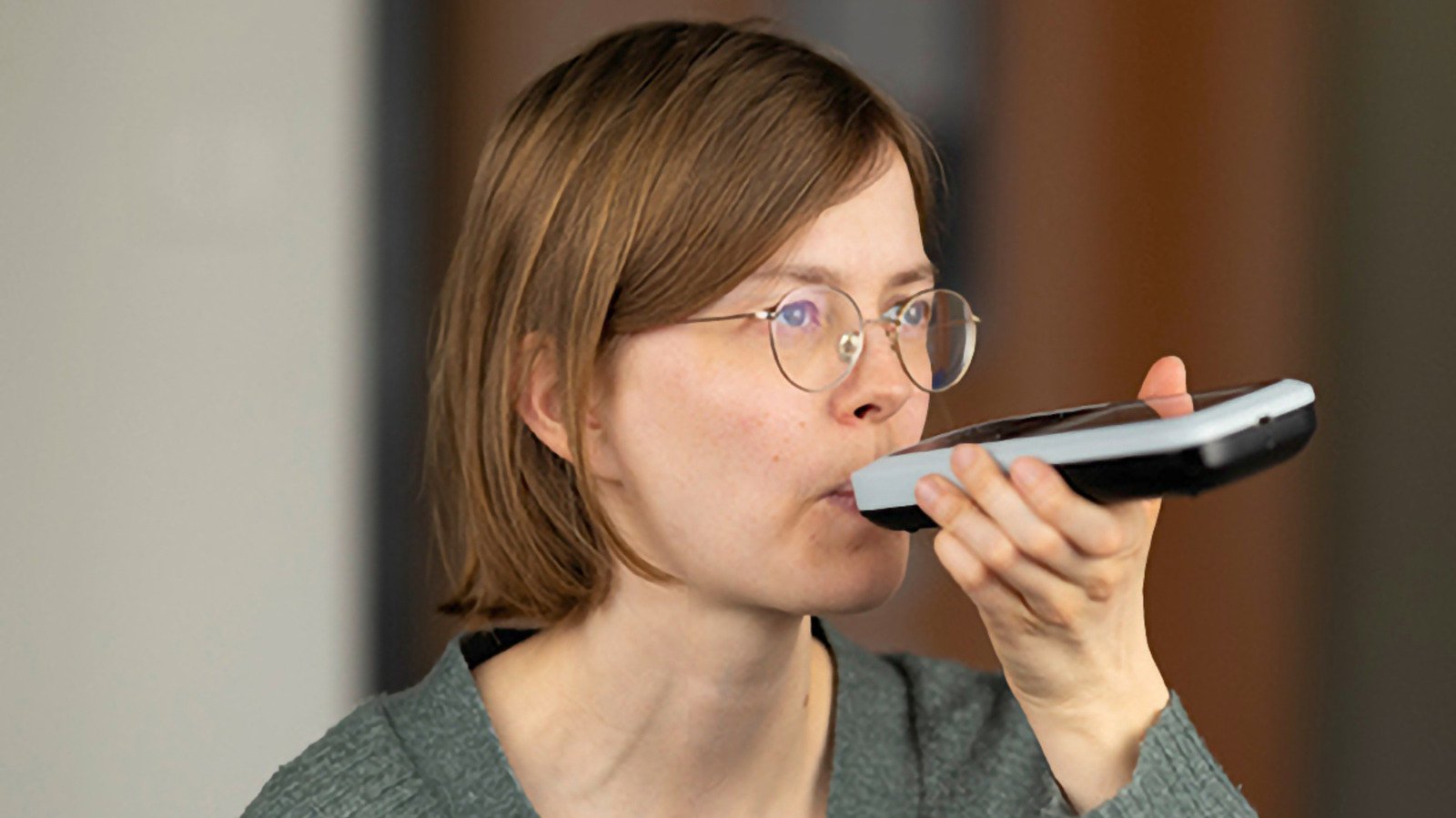
The breathalyzer identifies the amount of acetone in your breath to determine if your body is in ketosis.

Smart scales and smartwatches often rely on bioelectrical impedance to calculate body fat percentage, a quick, though not necessarily accurate, way to get a sense of the amount of lean mass in your body without having to take multiple measurements. Accurately measuring when your body is burning fat is a whole other ball game, though, which makes new research into a handheld fat burning measurement device all the more intriguing.
In a study for the scientific journal Device spotted by New Scientist, researchers supervised by Andreas Güntner created a handheld breathalyzer that can detect when your body is burning fat by measuring the amount of acetone in your breath. The study measured when the bodies of 12 participants burned fat across a variety of diet and exercise scenarios, and found the breathalyzer closely matched traditional lab results.
Scientists identify ketosis, the term for when your body is burning fat for energy, by either measuring ketones in your blood or acetone in your breath — both are byproducts of fat being turned into fuel. As New Scientist notes, acetone tests are usually most accurate in a laboratory setting where things like humidity and breathing patterns can be controlled. The researchers in this study got around those limitations by creating a breathalyzer that can filter out excess moisture and contaminants, and using a companion app that can guide the user through the breathing process. The app was not only able to identify when users were applying too much or too little pressure, but also help adjust when the breathalyzer collected its sample to make sure the measurement was as close as possible to what would be observed with a blood-based test.
Nutrion, now the commercial name of the device the researchers used, is similar in concept to an older device called Lumen that aimed to spot fat burning using carbon dioxide rather than acetone. In either case, frequent metabolic measurements could be useful in a variety of health settings, from determining whether GLP-1 therapies are effective, to enabling athletes to fine-tune their metabolism.