Summary
- SMS capacity depends on registration, messaging-provider, and country requirements rather than subscriber count alone, so volume growth needs a phased warm-up plan.
- Sudden sending spikes can warrant a review of messaging-provider guidance, available delivery data, and campaign pacing before the next send.
- Segmentation based on consent and response behavior helps teams tailor cadence and re-engagement treatment as their lists expand.
- Architect can coordinate preconfigured SMS, email, push, web, and WhatsApp journeys using available customer, event, and consent data; any delivery-signal-based routing depends on the implemented data sources and workflow
- Campaign unsubscribe rates, SMS utilization, and transactional delivery performance should inform governance reviews and volume decisions before reputation issues compound
Your subscriber list just grew by a third this quarter, and your last two campaigns show weaker delivery or engagement results than expected. Somewhere between the growth review and the delivery report, a change in sending conditions, provider handling, or subscriber response may be affecting reach. That gap between list size and list you can actually reach is the real challenge in scaling SMS marketing without sacrificing deliverability.
This article is for lifecycle, customer relationship management (CRM), and marketing operations leaders at mid-market and enterprise brands who are actively growing SMS volume and reviewing throughput constraints or unexplained delivery changes.
You’ll get a phased volume roadmap informed by applicable registration and provider requirements, a framework for using consent and response data to guide audience treatment, and a practical model for coordinating consented SMS with other lifecycle channels in Insider One. The goal is a governance model that lets volume grow only as fast as your reputation can support.
Why volume growth and sender reputation pull in opposite directions
Scaling SMS marketing without sacrificing deliverability starts with understanding that sending capacity is shaped by registration, provider, and country requirements, not subscriber count alone. For United States 10DLC programs, brand and campaign vetting can affect the throughput available through a messaging provider; validate applicable daily and per-second limits with that provider. A larger list does not by itself increase available sending capacity.
Operational friction can emerge when list growth and sending cadence outpace documented setup, consent, and provider guidance. A list that doubles in a month, paired with a sending cadence that doubles alongside it, warrants validation with the messaging provider and compliance team before the next volume increase.
Carrier and messaging-provider rules can affect delivery when sending patterns or subscriber response signals change. Teams should validate the signals available from their messaging provider and use them, alongside Insider One campaign reporting, to guide pacing decisions.
Teams that treat SMS scaling as a checklist, register a sender, collect consent, and hit send often miss the operational preparation required for sustainable growth. The fix is not more compliance documentation. It is building volume growth and reputation management into the same operating model from day one, so throughput increases are earned rather than assumed.
Build a throughput roadmap before you need it
A throughput roadmap maps expected volume growth against applicable registration status, messaging-provider guidance, and country requirements, so teams can plan pacing before a major campaign. Building this roadmap before a campaign push, rather than during one, helps teams validate their operating assumptions before they increase sending volume.
Warm up new numbers in incremental stages
New numbers and new campaign use cases need a warm-up period where volume increases in defined steps rather than jumping straight to full send capacity. Start at a fraction of your target daily volume, hold that level long enough to review available delivery and unsubscribe reporting, then step up again. Use the pacing guidance supplied by your messaging provider and compliance team when deciding whether to increase volume, including for fully registered numbers.
Register early and pursue higher vetting tiers
Vetting tier upgrades and country registration can take time, and applying only after a program has outgrown its current setup is a common misstep among growing mid-market teams. Complete SMS Channel Setup in the Insider One Onboarding Center to register senders, define subscription and unsubscribe flows, submit required provider documentation, validate the setup, and track country registration status. Validate sender, campaign, provider, and local regulatory requirements for each market before a seasonal push or acquisition campaign forces the issue.
Protect sender reputation as your list multiplies
As list growth accelerates, segmentation should scale alongside subscriber count so teams can apply consent, response behavior, and provider guidance to audience and cadence decisions. A larger list managed with the same blanket sending strategy can make it harder to tailor message cadence and treatment to consented audience behavior.
That pattern can warrant a review of audience selection, cadence, provider guidance, and available campaign reporting before the program scales further.
Prioritize customers based on behavior and intent
Teams can use consent and response behavior to distinguish audiences that may benefit from full cadence, reduced frequency, or a re-engagement treatment. Using Insider One’s unified customer profile and segmentation, teams can personalize campaign audiences by recency and engagement, route their highest-frequency sends to active subscribers, and pull back on contacts who have not engaged within a defined window.
Consider structuring tiers such as:
- Active engagers who’ve clicked or responded within the last 30 days, eligible for full campaign cadence
- Passive subscribers with limited recent response behavior, eligible for reduced frequency and re-engagement content.
- Dormant contacts with no activity in 90-plus days, moved to a win-back flow or suppressed from bulk sends entirely
- New opt-ins in an observation window, sent conservative volume until engagement patterns establish
Treat opt-out and complaint rates as leading indicators
Opt-out and complaint rates are often reviewed as compliance metrics after a campaign closes, but teams should use the reporting available during and after campaigns to inform future cadence and audience decisions. Insider One provides aggregate campaign performance in SMS Analytics, campaign-level unsubscribe rates, SMS quota and message-part utilization in Usage Analytics, and automatic transactional SMS delivery-performance tracking in UCD.
Architect cross-channel journey planning
Scaling SMS marketing without sacrificing deliverability requires an operational design that considers registered senders, message criticality, and more than one customer channel. Separate sender and campaign setup for promotional, transactional, and lifecycle messages should be validated with the relevant messaging provider, country rules, and compliance teams rather than treated as a guaranteed throughput or reputation-isolation mechanism.
Distribute volume across multiple registered campaigns
Instead of applying one blanket messaging approach to every use case, design promotional broadcasts, cart recovery, transactional alerts, and service communications around their consent, registration, and urgency requirements. This approach supports clearer governance, but any sender configuration, throughput treatment, and reputation outcome remains dependent on the messaging provider and applicable country rules.
Route overflow traffic to other channels automatically
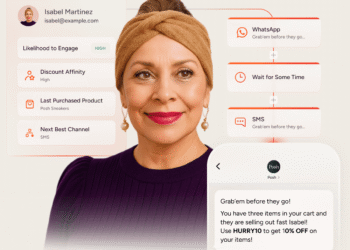
When a message is time-sensitive, teams can plan an appropriate cross-channel customer journey rather than treating SMS as a standalone blast channel. Using journey orchestration, teams can configure preplanned SMS, email, push, web, and WhatsApp experiences based on available customer, event, and consent data; any delivery-signal-based routing requires confirmed trigger data and implementation.
Journey orchestration gives lifecycle teams a foundation for coordinated AI omnichannel marketing, where personalized channel sequences can be designed around available customer data, events, and consent instead of a fixed standalone SMS send.
Turn deliverability data into a scaling governance model
A useful signal that SMS scaling needs review is a change in messages sent, provider-reported delivery data, campaign unsubscribe rates, or utilization. Teams should review those documented measures regularly rather than relying on opens or clicks alone to diagnose SMS delivery performance.
Closing the reporting gap requires reviewing campaign outcomes alongside the data available from messaging providers rather than assuming every carrier signal is natively unified. Insider One brings unified customer profiles, segmentation, personalized activation, and Architect cross-channel journeys together for marketers, while SMS Analytics, Usage Analytics, and UCD provide documented reporting surfaces for campaign, utilization, and transactional delivery data.
Setting review thresholds before reputation damage compounds is a governance step that many SMS programs still handle manually or skip. If campaign unsubscribe rates, usage, provider-reported delivery data, or other approved signals cross a defined threshold, the team should review cadence, audience selection, and any preconfigured journey treatment according to its operating model.
That turns deliverability data from a reporting exercise into a disciplined governance practice that supports better future campaign decisions. Reviewing this data on the same cadence used for other lifecycle programs, and applying the same discipline covered in our marketing automation best practices, keeps SMS governance from becoming a siloed, once-a-quarter check.
Conclusion
Scaling SMS marketing without sacrificing deliverability comes down to one shift: let applicable registration requirements, provider guidance, consent records, and available reporting inform the pace of volume growth. A phased 10DLC roadmap, consented engagement-based segmentation, documented SMS setup, and preplanned cross-channel journeys turn deliverability into a governed practice that can grow with your program.
To evaluate the fit of journey orchestration and customer data management for consented audience activation, personalized messaging, cross-channel journeys, and reporting in your use case, book a personalized demo to review your goals, data requirements, and implementation constraints with the Insider One team.
Frequently Asked Questions
10DLC stands for 10-digit long code, a United States registration framework for business texting traffic. Brand and campaign registration details can affect the throughput made available through your messaging provider, so confirm the applicable daily and per-second limits, processing times, and upgrade options before planned growth.
There’s no universal number, since safe pacing depends on registration status, available response and delivery reporting, provider guidance, and applicable country requirements. A general practice is stepping volume up incrementally, reviewing available delivery and unsubscribe reporting at each stage, and validating the next increase with the relevant messaging and compliance teams rather than jumping straight to a target send volume.
Messaging providers and applicable carrier or country rules may set requirements for sending patterns and subscriber protection. Review provider guidance, available delivery data, unsubscribe rates, consent records, and registration requirements when diagnosing a delivery change rather than assuming a specific carrier signal caused it.
Segmenting consented audiences by recency and response behavior helps teams focus high-frequency sends on active subscribers, while dormant contacts can receive reduced volume or move to a win-back flow. In Insider One, unified customer profiles, segmentation, and Architect journeys support coordinated personalized lifecycle communication across SMS and other enabled channels.
For time-sensitive communications, define an appropriate cross-channel journey before launch and validate any triggering data with the messaging provider and implementation team. Building preplanned SMS, email, push, web, or WhatsApp sequences into journey orchestration lets teams coordinate customer communications using available customer, event, and consent data.