Summary
- Zero-result and mismatched search pages quietly drain conversion before a shopper ever reaches a product page
- Personalized search reorders results using behavioral, transactional, and contextual signals, not just merchandising rules
- Search sessions convert at a different rate than browse sessions, making search ranking a high-leverage fix compared to broader site changes
- Five common search failures, from misspellings to jargon-dependent queries, each have a specific personalization fix
- A phased rollout, instrument, layer signals, test against a control group, keeps the project from stalling after launch
Type “mens running shoe” into your own site search and count how many irrelevant results come back before the first one that matches intent. Now try the plural.
If the results shift dramatically or a zero-result page appears, the merchandising team already knows this problem exists, even if nobody has formally scoped a fix for it.
This piece is for ecommerce directors, digital merchandising managers, and growth marketers who have spent budget on product recommendations, email flows, and homepage banners while the search bar, the one place shoppers show explicit intent, still runs on rules built years ago.
We’ll define what personalized search actually means at a technical level, walk through the specific failure points it fixes, and lay out a rollout sequence that does not require a six-month engineering commitment.
The real cost of generic search results
A search bar that fails to interpret intent does not just annoy a shopper, it ends the session before merchandising even gets a chance to influence the outcome. Zero-result pages and irrelevant top matches are conversion leaks that happen upstream of every other personalization tactic a retailer might have already invested in.
The uncomfortable part is that search traffic volume can mask how badly the engine performs. Retailers see high search usage and assume the feature works, when in reality a meaningful share of those queries are typos, synonyms, or category-adjacent phrases the engine was never tuned to handle.
A shopper searching “trainers” instead of “sneakers,” or misspelling a brand name by one letter, often lands on an empty results page and simply leaves. That silent failure never shows up in a standard conversion rate report, because the session ends too early to be flagged as a search problem at all.
What personalized search actually means under the hood
Personalized search reorders results in real time using signals specific to the shopper and the session, not just a fixed merchandising rule set applied to everyone equally. The distinction matters because most retailers already have some form of search “customization,” but it is often static rather than adaptive.
The signals that drive reordering
Real personalization pulls from behavioral data (what a shopper clicked or ignored), transactional history (past purchases and repeat categories), and contextual intent (device, time of session, referring channel).
Customer Data Management unifies these signals so ranking logic can act on a complete profile instead of a single, isolated data point.

Rule-based boosts versus model-driven ranking
Rule-based merchandising boosts, pinning a promoted product to the top of every search, are static and identical for every visitor. Model-driven ranking adapts within the session itself.
Insider One’s Smart Recommender uses an attribute affinity engine that calculates each user’s preference for brand, color, or category and updates daily as behavior shifts, which lets ranking logic reflect what a shopper actually wants rather than what merchandising assumed last quarter.
The revenue case for fixing search before anything else
Search sessions represent a smaller share of total site traffic than browse sessions, but they carry outsized weight in order volume because a shopper who searches has already declared intent. Fixing the mechanism that interprets that intent tends to move revenue faster than broader, more diffuse personalization changes because it acts on the highest-intent segment of visitors.
OTTO increased average order value by 5% using onsite personalization, a result that reflects how ranking and merchandising changes at the point of highest intent translate directly into basket value rather than just click volume.
That kind of lift is more achievable through search-specific fixes than through a homepage redesign, since search sessions concentrate shoppers who are closer to a purchase decision and more sensitive to whether the first few results actually match what they typed.
Five search failures personalization can actually fix
Most search problems fall into a small number of repeatable patterns, and each one maps to a specific fix rather than a vague call to “improve relevance.” Running through this list against your own search logs takes an afternoon, not a quarter.
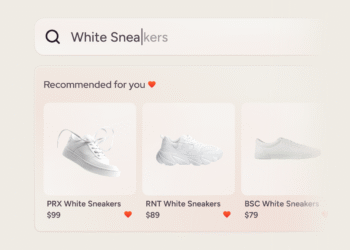
- Misspellings and typos: Fuzzy matching and Suggestions-style type-ahead catch errors before the shopper hits enter, reducing dead-end queries
- Zero-result pages: Synonym mapping and category fallback logic redirect a failed query toward the closest relevant category instead of an empty page
- Jargon-dependent queries: Attribute-level tagging lets the engine match colloquial terms, such as “trainers,” to the catalog’s formal product taxonomy
- Generic top results for repeat visitors: Behavioral and transactional signals reorder results based on prior purchases and browsing affinity instead of showing the same list to everyone
- Mobile truncation: Recent Searches and Popular Searches surface shorter, higher-intent query paths suited to smaller screens and faster sessions
Run a self-audit this week: pull your top 50 zero-result queries, check whether typos or synonyms explain most of them, and compare click-through rate on searched results versus browsed category pages. If searched sessions convert lower, the engine is the bottleneck, not the merchandising strategy sitting on top of it.
A practical rollout sequence for search personalization
Search personalization projects tend to stall not because the technology is unavailable, but because teams try to launch everything at once without a sequence for testing and validating each layer. A phased approach keeps the scope manageable and gives merchandising a clear way to prove impact before scaling further.
Phase one: instrument behavioral data
Start by capturing what shoppers actually do inside search, clicks, abandoned queries, repeat searches, before touching the ranking logic itself. This baseline is what later personalization decisions get measured against, and skipping it makes it impossible to know whether a later change actually improved anything.
Phase two: layer in real-time signals
Once behavioral data is flowing, introduce transactional and contextual signals such as purchase history and session intent into the ranking model.
This is where attribute affinity and unified customer profiles start reordering results per shopper rather than applying one rule set to everyone, and it’s the stage where Eureka’s Suggestions and Recent Searches features begin working with rather than around personalization logic.

Phase three: test against a control group
Roll out ranking changes to a subset of traffic first and measure conversion, zero-result rate, and average order value against a holdout group before pushing site-wide.
This is also where governance matters most: inconsistent product data, missing attribute tags, or unmonitored catalog feeds will quietly degrade a personalized model’s accuracy over time if nobody owns data quality after launch.
Retailers using our Platform typically assign a merchandising owner to this stage precisely because personalization projects lose momentum once the initial launch excitement fades.
For teams building the broader personalization strategy that search sits inside of, our guide on ecommerce personalization for revenue and retention and our breakdown of AI decision engines for real-time personalization both cover how to sequence signal layers without overwhelming a mid-market data and engineering team.
Conclusion
Search is where shoppers tell a retailer exactly what they want, and yet it’s often the last channel to get a personalization upgrade. Fixing zero-result pages, synonym gaps, and static rankings addresses the highest-intent moment in the customer journey, which makes it a faster path to measurable revenue than most broader personalization initiatives.
To evaluate the fit of Smart Recommender, Eureka, and Customer Data Management for your use case, book a personalized demo to review your goals, data requirements, and implementation constraints with the Insider One team.
Frequently asked questions
It’s a system that reorders search results per shopper using behavioral, transactional, and contextual signals instead of applying the same ranking to every visitor. It typically combines type-ahead suggestions, synonym handling, and real-time affinity scoring to match results to actual intent rather than exact keyword matches alone.
Recommendations suggest products based on general browsing patterns across a session or site. Personalized search reorders results within an explicit query the shopper typed, which means it’s acting on declared intent rather than inferred interest, and typically has a more direct effect on whether that specific session converts.
Most mid-market retailers can start with a phased rollout: instrument behavioral data, layer in real-time signals, then test against a control group. Platforms with built-in search and merchandising tools reduce the custom engineering work involved, though data quality and catalog tagging still require ongoing ownership from the merchandising team.
Pull your top zero-result queries and compare conversion rate on searched sessions versus browsed category sessions. If searched sessions convert lower or a large share of queries return no results, the search engine itself, not the broader personalization strategy, is likely the bottleneck.
Behavioral signals like clicks and abandoned queries establish a baseline. Transactional signals such as purchase history and browsing affinity, and contextual signals like device or session intent, layer on top to reorder results per shopper as the personalization model matures.