Meta appears to be testing two features that could help advertisers refine lead quality from instant forms.
Lead quality is one of the greatest challenges advertisers face when focused on lead generation. You want to improve the quality of leads while keeping costs at a reasonable price. Meta already has several built-in quality control options for instant forms, but these could be two of the best yet.
I don’t have either feature (yet). I have no idea how effective they are or when/whether they’ll be rolled out globally. But they’re certainly worth watching.
Let’s take a closer look…
Sequenced Events
Thanks to Dario Zannoni for sharing details of this feature on LinkedIn.
This feature applies when using the Instant Forms conversion location for a Leads campaign while selecting the “maximize number of qualified leads” (previously “conversion leads”) performance goal. After selecting a dataset, a dropdown appears for the lead event with “Sequenced Events” selected.
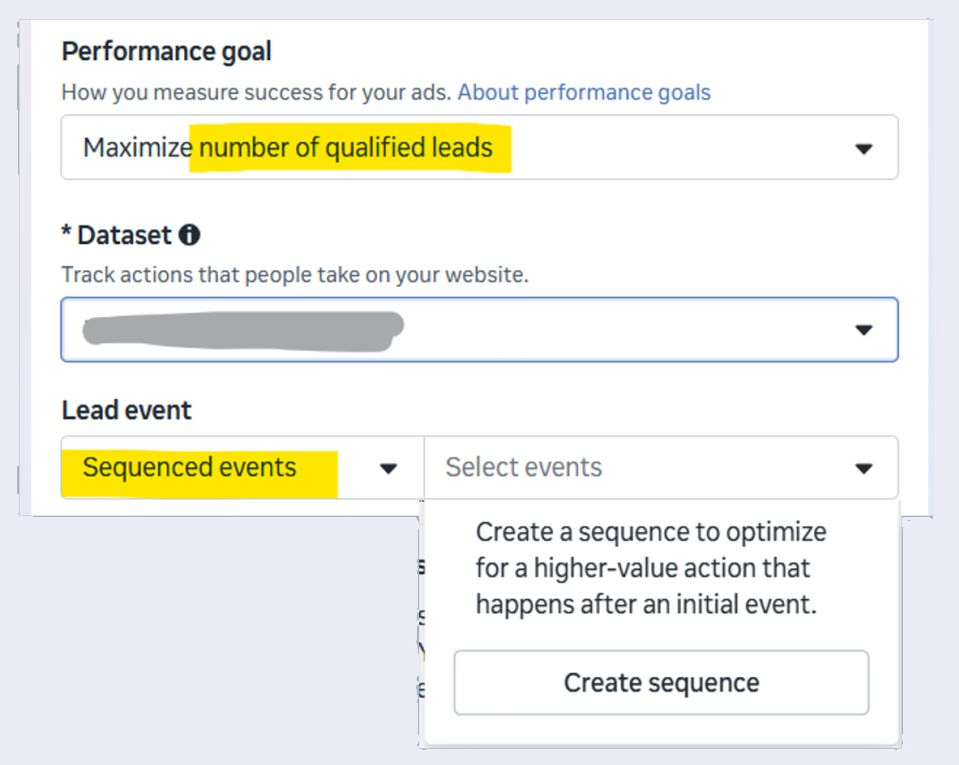
I’m not sure what else appears in that dropdown. My assumption is that your options are “Lead” or “Sequenced Events” (essentially, optimize for the lead only or a sequence of events). When Sequenced Events is selected, you can “create a sequence to optimize for a higher-value action that happens after an initial event.”
Once you click to “create sequence,” you can then define your sequence of events.
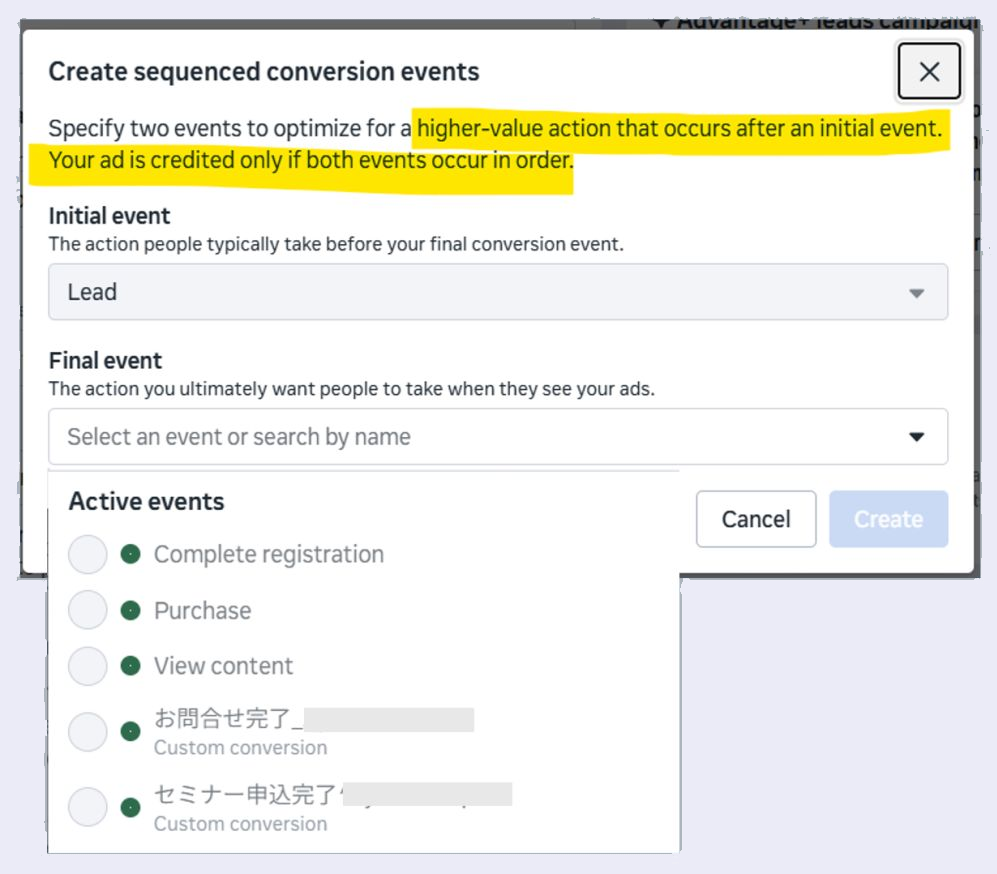
Your ad is credited only if both events occur in the order you define.
From there, the information I have is limited. I haven’t been able to track down any official documentation on this feature. And since I don’t have it in any ad account, the information I know about it is limited to what Dario has shared.
I have plenty of questions regarding how this will work. Obviously, this is a good thing since we want Meta to learn from qualified leads. How we define that second action will be important. Will it be based on the way they answered questions? Booking a call? Attending a call? Or making a purchase?
Note that this is similar to something you could have previously done with website leads. While you couldn’t optimize for a sequence of events, you could instead optimize for the action you wanted. This, of course, assumes the action happens within the seven-day attribution window — and you can get enough volume for predictable results.
Something that interests me is whether that same seven-day requirement would apply here. If not, and if that window is extended, this could be an enormously valuable upgrade.
Mark Preferred Lead Answers
Thanks to Petri van Gaalen for sharing details of this feature on LinkedIn.
When building an instant form, you can ask questions using different formats. One is multiple choice. While advertisers have had the option of using conditional logic to send people to different places based on their answers, Petri spotted a new option that may be even better.
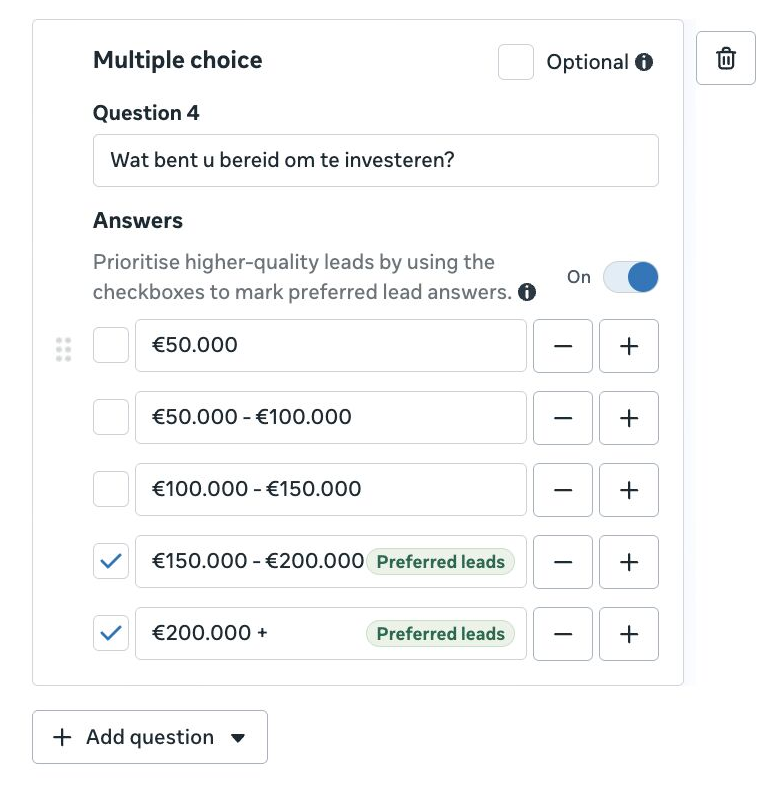
If you have this option, there’s a slider option above the answers: “Prioritize higher-quality leads by using the checkboxes to mark preferred lead answers.”
Once again, I’m unable to find any official documentation on this feature, so I assume it’s currently an isolated test. But the potential here seems great.
The one danger of conditional logic is that when someone answers in a way that disqualifies them, the experience is changed for the user. You might send someone to an end screen that says they aren’t qualified, for example. But they can change their answer so that they’re able to complete the form.
With this option, you’re telling Meta which answers you prefer. It won’t change the experience for the user. Presumably, every completed form with less desirable answers will still get reported. But it appears that Meta will learn from whether or not people are providing your preferred answers.
Again, this is only a guess since I don’t have it in any account. But, depending on how Meta executes this, it could be an extremely useful way to impact lead quality.
Your Turn
Do you have either of these features for improving lead quality? What do you think?
Let me know in the comments below!