You can keep customers when raising prices. The customers who leave aren’t leaving because of the price—they’re leaving because they never fully understood the value of what you were giving them. And that’s on you, not them. If you’ve built a real relationship, delivered consistent results, and communicated what you do and why it matters, a price increase feels like a natural step. Not a betrayal.
I want to show you exactly how to do this. And I’m going to use a hair salon as my example—because there’s no better test case right now. Salons have been squeezed from every direction: product costs, rent, labor, energy. And yet so many salon owners are scared to raise prices even $10. They’re afraid they’ll lose clients they’ve had for years. I get it. But that fear is costing them more than the price increase ever would.
Why the Hair Salon Pricing Problem Is Really a Value Problem
Imagine you’ve been going to the same hair salon for four years. You love your stylist. She remembers everything—your daughter’s name, that you hate hairspray, that you’re growing your hair out for a reason. You walk in and feel like a person, not a ticket number.
Now she raises her prices $15. Do you leave?
Of course not. You don’t even think twice.
Now imagine a different salon. You’ve been going there for two years. They do fine work. The front desk is a bit chaotic. You’ve waited 20 minutes past your appointment more than once. Nobody remembers your name. They raise prices $10.
You’re already on Google looking for alternatives.
Same industry. Same price increase logic. Completely different outcome. The difference isn’t the price. It’s the relationship.
“
If your customers are complaining about price, they have no idea why they should choose you.
— Ivana Taylor, DIYMarketers.com
Pricing expert Rafi Mohammed writes about this in his book The 1% Windfall. His research found that a 1% price increase can generate an 11% increase in operating profits—but only when that pricing reflects real value. He calls this value-based pricing: stop setting prices based on what it costs you to deliver the service, and start setting them based on what the outcome is worth to your customer.

For a salon, that means your pricing shouldn’t just reflect the cost of color and developer. It should reflect the experience of walking in and feeling seen. The trust built over four years. The relationship that makes someone feel good for the rest of the week. That has real value. And it absolutely justifies a higher price.
💡 STRATEGY ALERT
If you’ve been pricing based on what competitors charge, you’ve been doing it wrong. Your price should reflect the value your customers receive—not the industry average. When costs rise, value-based pricing gives you the room to raise your rates without flinching.
What Gallup Figured Out About Keeping Customers
Gallup has spent decades studying customer engagement, and here’s the number I want you to remember: fully engaged customers deliver a 23% premium over the average customer in wallet share, profitability, revenue, and relationship growth.
Twenty-three percent. Without a price increase. Just from being more engaged.
Now think about what that means for a salon. A fully engaged client doesn’t just show up for her appointment. She refers friends. She buys product. She rebooks before she leaves. She tips well. She leaves reviews. She defends the price increase because she believes in the relationship.
An actively disengaged customer? Gallup found she represents a 13% discount on those same measures. She’s already costing you money before she walks out the door over a price increase.
So before you worry about how to keep customers when raising prices, ask yourself a more honest question first: which kind of customers do you have right now?
The engaged ones will stay. The disengaged ones were half out the door already. Your job isn’t to keep every customer. It’s to keep the right ones.
The Efficiency Trap That Quietly Kills Customer Loyalty
Here’s something I see happen all the time, and it’s worth naming directly.
Businesses face cost pressure and they start cutting. They streamline, reduce touchpoints, automate follow-ups, speed up service. On paper it looks like smart management. In practice, it’s quietly destroying the thing that kept customers loyal in the first place.
A salon books appointments 10 minutes tighter to fit more clients in a day. The stylist no longer has time for a real consultation. Clients stop feeling heard. They start looking around. Then the salon raises prices—and now those clients have a reason to leave.
Efficiency at the expense of experience is one of the most expensive mistakes you can make under cost pressure. You cut the wrong things. The “extras” that felt optional are actually the glue holding the relationship together.
Referral marketing stops working the moment you stop being remarkable to the people who already know you. The same applies here. When you trim the experience to cut costs, you’re spending relationship capital that you may not be able to rebuild.
⚠️ REALITY CHECK
Before you raise prices, audit your experience. Walk through your own customer journey and ask: what have we quietly removed to save money? Are we faster but less warm? More automated but less personal? Fix that first. Then raise the price.
The Ruby Receptionists Model — Technology That Never Forgets the Human Part
I want to tell you about a company I admire: Ruby Receptionists.
They’re a virtual receptionist service for small businesses. On paper, they could easily become a commodity. But they’ve built something genuinely different—and it’s a perfect model for what keeping customers through price increases actually looks like.
When you call Ruby’s customer support line, a real person answers. Every time. No bot, no menu, no “your call is important to us” message. A person. Who sounds happy to help. Who actually means it. If there’s an issue, it gets resolved on that call. You get a follow-up. You never call about the same thing twice.
That consistency is not an accident.
Founder Jill Nelson changed the entire hiring philosophy at Ruby around one question: “If making someone’s day makes your day, we want to hear from you.” She stopped hiring based on experience and started hiring based on disposition. Her philosophy: incent, inspire, empower—and make sure every person on the team understands the impact of their work on real small business owners.
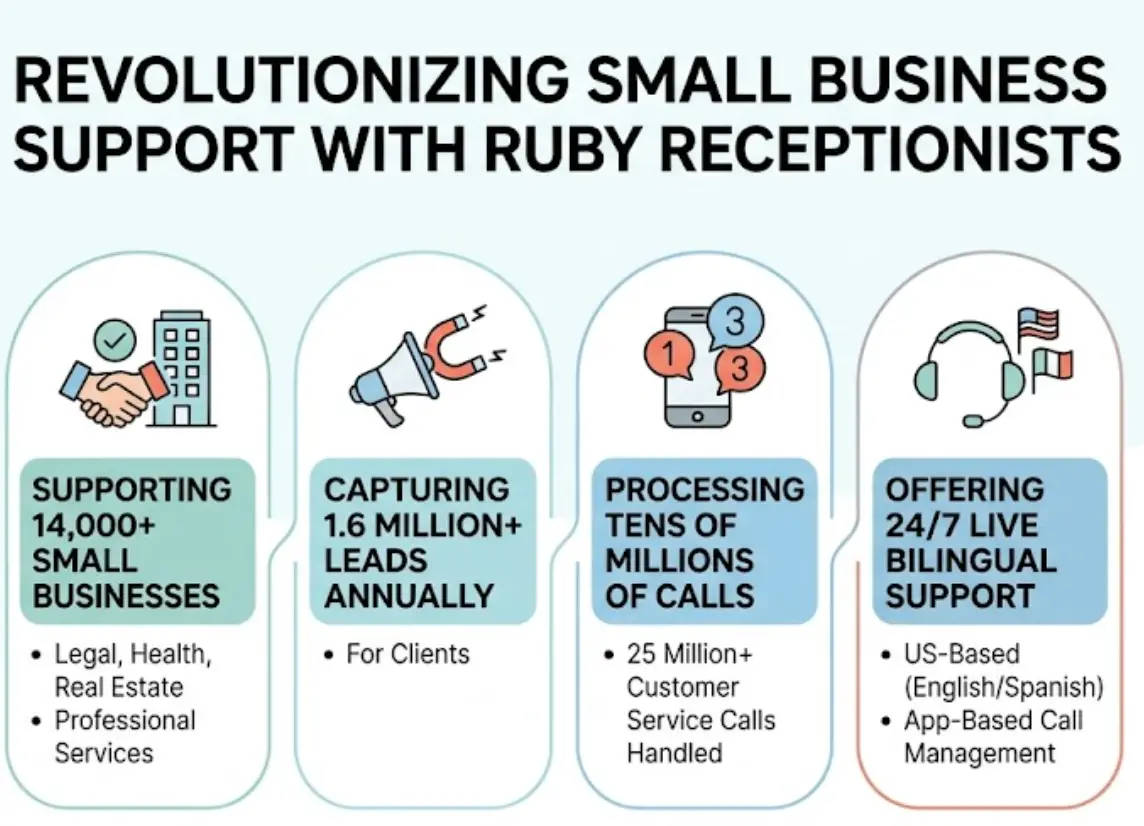
Ruby uses plenty of technology. AI-supported call flows. Proprietary software. Sophisticated routing. But none of that technology is designed to replace the human part. It makes the human part better—faster to the right person, faster to a resolution, faster to a follow-up. The technology serves the experience. The experience serves the customer.
That’s the model. And it’s exactly what any small service business should be building when costs rise and the temptation to cut corners gets loud.
💡 STRATEGY ALERT
The question isn’t “can we automate this?” The question is “if we automate this, does the customer experience get better or worse?” If it gets worse, the automation is costing you more than it saves.
Where to Add Value Before You Raise Your Price
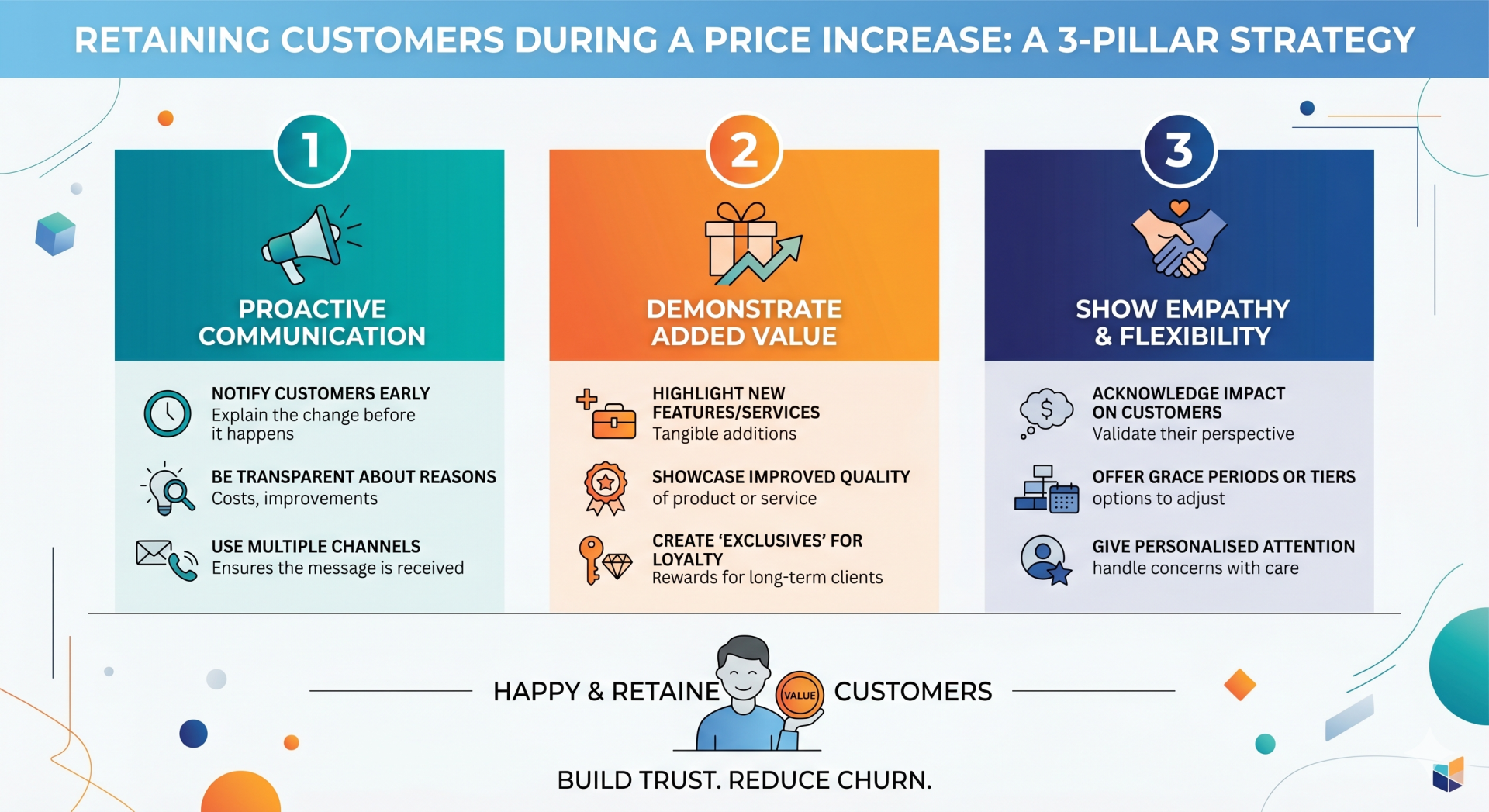
Back to the salon. The most reliable way to keep customers when raising prices is to make the experience measurably better before you ever send the announcement. Here’s the practical part.
Before raising prices, the smartest move is to look for places to increase the perceived value of the experience. Not big expensive things. Small things that cost almost nothing but land hard with customers.
Personalization. Use your booking software to keep client notes. Remember that she’s growing her hair out. Remember what she said about her color last time. Reference it. Clients notice when you remember—and they absolutely notice when you don’t.
Consultation time. Even five minutes of real conversation before you start makes the service feel premium. Ask what she wants, show her options, explain your thinking. It’s not about time. It’s about attention.
Follow-up. A simple text two days after the appointment: “Hope you’re loving your hair! Let us know if you have any questions about maintaining your color.” That’s it. Most salons never do this. The ones who do keep clients for years. It’s also one of the simplest ways to generate referrals.
Product education. Teach your clients something at every visit—what to use at home, how to protect their color, when to come back. When you educate a client, she trusts you more. When she trusts you more, she stays.
None of this is expensive. All of it builds the relationship. And all of it justifies a higher price—because the experience is genuinely better.
How to Announce a Price Increase Like a Human Being
This is where most businesses blow it. They either say nothing until the invoice shows a new number, or they send a stiff formal email that sounds like it came from a legal department.
Do it like a person instead.
Call your best clients. Yes, actually call them. A two-minute call from your stylist saying “Hey, I wanted to let you know personally before we send the general notice” is worth more than any email you’ll write. It says: you matter enough for me to pick up the phone.
For everyone else, keep the email short and honest. Something like: “Our costs have increased significantly this past year—product, rent, energy—and I’ve been absorbing as much as I can. Starting [date], I’ll be adjusting my prices. I wanted to give you plenty of notice, and I want you to know this is about keeping the quality of your experience exactly where it’s been. I’m grateful for your trust and I’m not taking it lightly.”
That’s it. No corporate speak. No ‘we value your continued patronage.’ Just honesty. And honestly? That’s how you keep customers when raising prices—not with perfect wording, but with a genuine conversation.
The same directness that makes referral conversations work applies here too. Be direct. Be human. Make it about them.
🛑 DON’T COPY BLINDLY
Don’t announce a price increase with no context, no lead time, and no personal touch—then wonder why clients didn’t take it well. Give 60 days minimum. Reach out personally to your longest-standing clients. Make it feel like a conversation, not a memo.
Three Numbers to Track After You Raise Prices
The businesses that keep customers when raising prices don’t just get lucky with their announcement. They measure what happened, adjust fast, and know their numbers. Not guessing—data.
Retention rate. What percentage of your active clients booked again after the increase? Track this at 30 and 60 days. Keeping 85% or more means you handled it well. Below 80%, something went wrong and it’s worth understanding what.
Revenue per client. Did revenue per client go up, or are clients stretching appointments to compensate? A client who came every six weeks and now comes every ten weeks might be lower lifetime value despite the higher rate. Watch visit frequency, not just the per-visit number.
Total revenue. A 15% price increase that causes 30% attrition is a net loss. A 10% increase with 95% retention is a real win. Use QuickBooks or a simple spreadsheet to set your baseline before the increase and compare it at 90 days out. Numbers don’t lie. Gut feel does.
Frequently Asked Questions About Raising Prices Without Losing Customers
How much can I raise my prices without losing clients?
For clients with a strong relationship and a clear sense of your value, 10-20% is typically within the range they’ll absorb—especially when costs have visibly increased everywhere. For newer clients or weaker relationships, stay closer to 5-10%. The strength of the relationship determines the ceiling, not the market rate.
What do I say when a client asks why my prices went up?
Be honest and be brief. “My costs have gone up across the board—products, supplies, overhead—and I’ve held off as long as I could. This increase lets me keep delivering the same quality you’re used to.” That’s it. Clients understand cost pressures. They live with them too. What they can’t tolerate is the feeling that you’re hiding something.
Should I grandfather long-term clients at the old price?
A short-term transition—60-90 days at the old rate for clients who’ve been with you for years—is a thoughtful gesture. A permanent grandfather arrangement is a mistake. You’ll eventually resent those clients, even though you created the situation. Use the transition as a goodwill bridge, then move everyone to the new rate.
What if a client leaves because of the price increase?
Let them go without drama. A client who leaves on price alone was buying a transaction, not a relationship. Clients who refer others, who write reviews, who stick with you through changes—those are the ones worth building around. When a price-sensitive client leaves, you’ve just clarified your customer base.
How often should I raise prices?
Once a year is the sweet spot. Annual increases of 5-10% feel expected—customers understand inflation because they live with it daily. What they don’t understand is randomness. Build a rhythm: once a year, communicated in advance, tied to rising costs or service improvements. Make it a policy, not a panic.