Running Meta ads for lead generation may be the most common advertising approach. While the end goal may be the purchase, a lead is most accessible for the vast majority of businesses.
But lead generation ads aren’t as simple as they may appear. You need to monitor lead quality, lead value, and cost per lead. You shouldn’t blindly apply complexity to impact lead quality, but instead make sure there’s data indicating a clear problem that needs to be solved. And when there is a quality problem, apply an effective solution.
When done right, ads for lead generation can be just as impactful as those for sales. In some cases, they can lead to more long-term value.
Let’s take a closer look at common questions related to lead generation ads, and how you should think about approaching your strategy.
Instant Forms, Website Leads, or Both?
A common question I get asked is whether to use instant forms or send people to a form on a website. While instant forms have managed to earn a reputation for generating low-quality leads, I’ve found it’s based on outdated assumptions. The reality is that both approaches have their own benefits.
Instant Forms
The obvious benefit of instant forms is that you can set up ads without having to worry about a website. This is perfect for situations where a client has a poorly performing website or a landing page doesn’t yet exist for a new lead magnet.
Instant forms also provide a faster, more streamlined experience for the user. They never leave the Meta family of apps, and you don’t need to worry about temporary outages or the website loading slowly.
Instant forms also pull in the user’s contact information from their profile to make form completion easier. This can potentially result in leads providing outdated information, but they can also update it before submitting.
This approach isn’t without potential technical headaches, of course. You should use third-party syncing solutions to make sure that contact information is immediately sent to your CRM once it’s submitted. Without this auto-syncing, leads will be forced to wait to hear from you until you’ve manually added them.
Of course, this also requires that you have CRM automations in place that welcome new leads and send the information they expect, but that will be the case for website leads, too.
Another benefit of instant forms is the many controls available to either impact lead quality (which I’ll get to later) or enhance the experience. You can integrate Messenger or WhatsApp, for example, to immediately start a conversation with new leads, either with a manual conversation or one driven by automations.
Website Leads
If you already have a landing page, website forms may be the easiest setup with the most control. Assuming the website’s design and performance are positives, an embedded form on a landing page requires little additional effort.
I personally prefer website leads, and that’s mostly because I prefer to take traffic to the pages I own. This also allows me to direct new leads to some specific next steps on the confirmation page. You can sort of do this with end screens on forms, but those are also mostly skipped anyway.
This isn’t without risk, of course. When results are bad, we don’t want to admit that the problem may be our landing page, and it’s usually the last item we consider. But whether the page isn’t optimized for your ad or it simply doesn’t always load quickly, there are potential issues that aren’t much of a concern for instant forms.
The main piece of advice I’d give those using landing pages is to resist the urge to overcomplicate them. Instant forms can be effective because they’re so streamlined, and we should think about that when designing a landing page. Building long, complicated pages that were popular in years past probably aren’t the best approach for the typical lead magnet.
As was the case with instant forms, make sure that you have your CRM automations set up properly. When someone completes a form on my website, a tag is immediately added which initiates a nurture sequence. They are sent an email with information about the thing they subscribed to, usually within a minute.
I also create confirmation pages that instruct new leads to check their inbox, and possibly spam or other folders. One of the biggest challenges of email marketing these days is simply making it into the main inbox, so I use this opportunity to help make sure that happens.
One technical requirement is that you’ll need to fire a conversion event when the form is completed so that Meta can report on and optimize for these results. While most advertisers will use the “lead” standard event, there are several other events that could pass as lead-like.
What you choose shouldn’t impact results. I’ve always used “complete registration,” and that’s especially useful now since it can be used with Sales campaigns. This allows me access to the breakdown by audience segments, which isn’t available for the Leads objective.
One potential issue with website forms is that it’s not as easy to control lead quality in the same ways you can with instant forms without some technical expertise. The easiest step you can take is asking more questions, but other experiences like conditional logic based on answers will be difficult to replicate.
Optimize for Both
Ultimately, I would not approach whether you use instant forms or website forms based on costs alone. Try both, knowing the benefits and risks involved.
I’d typically advise simply trying one approach at a time, whatever’s easiest to get started. But if you’ve run ads for both instant forms and website leads already, you don’t technically need to choose one. You can optimize for both.
If you use the Leads objective, the default conversion location is “Website and Instant Forms.”
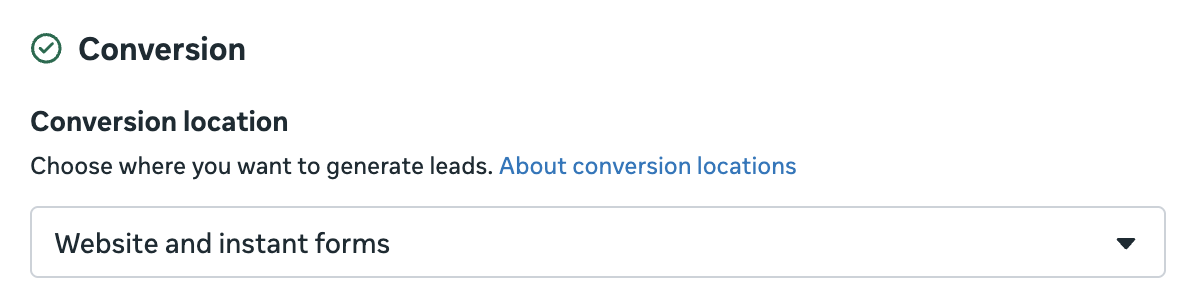
When selected, you’ll need to provide both a landing page URL and an instant form when creating the ad. Then Meta will optimize to determine which version to show in order to get you the most leads.
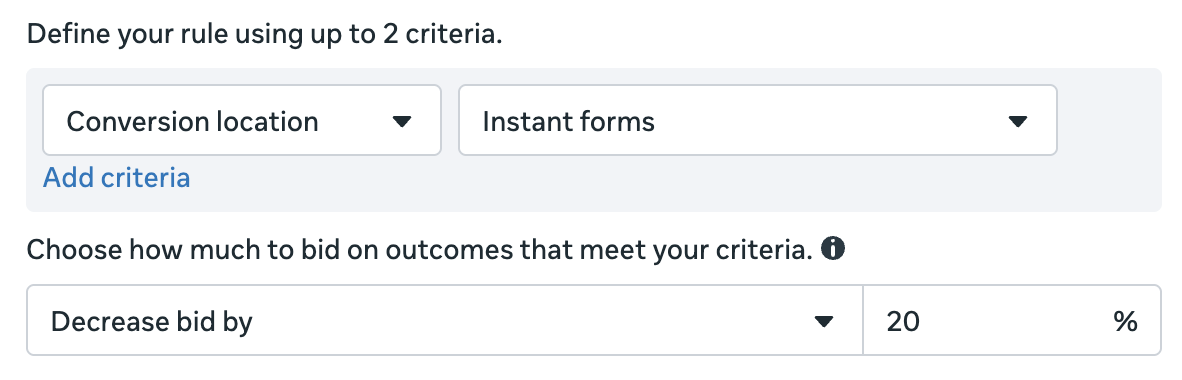
If you ever find that one method leads to more low-cost results while the other is higher quality, the instinct may be to only go with the higher quality destination. But another option would be to use value rules to impact bids on each conversion location.
Start Simple
When just getting started, the biggest mistake is that you overcomplicate things. This doesn’t just apply to advertisers who haven’t run lead ads before. I’m also speaking directly to the very experienced advertisers who have preconceived notions about what has worked for them before.
Every business and client is different. Don’t assume you should universally use instant forms or website landing pages. Start with whatever is easiest to get some results.
After that, avoid complications that will limit your volume of leads. Your goal should be to get a high volume of leads to learn from in this initial stage.
Ask the minimum number of questions that will give you enough information to get started. Know that each additional question will increase abandonment and costs. Avoid qualifying questions and conditional logic.
Don’t worry about SMS verification or any of the other controls available to impact lead quality. Don’t assume you have a quality problem to solve.
When advertisers start by applying these controls early, the potential problem is that they end up with low volume and high costs from the start. And that doesn’t give you much to work with.
Your goal should always be to get 50 optimized events per ad set per week. And if you can, get more. If you’re making structural changes that intentionally lower that number, it’s a bad place to start.
Evaluate Lead Quality
I know there are advertisers screaming at me through their computer screens as they read that prior section. I’m not saying to ignore lead quality. I’m saying that you should never assume you need to apply solutions to lead quality before knowing there’s a problem.
And that’s where lead volume comes in. You want to get meaningful volume so that you can evaluate the quality of your leads. That quality should be tied to whatever it is you want these leads to do next.
Especially when dealing with professional services, you’ll want some combination of booking a call, having a call, and closing a sale. But I’d avoid putting the entire definition of “quality” on the closed sale, unless you have the volume to do it.
Your main goal should be to find commonalities between your bad leads.
Are they immediately disqualified because of age, location, home ownership status, occupation, or something else?
Are your leads unreachable because they don’t open or click your emails? Don’t respond to texts? Don’t answer calls?
Be as specific as you can about the problem so that you can group bad leads by category.
Impact Lead Quality Problems
There is a long list of potential solutions when you have a specific problem related to lead quality. You should only apply these in extreme cases, knowing that they will impact costs. It’s important that those increases demonstrably result in better-quality leads.
Here are some potential ways that you can look at impacting lead quality…
Your Internal Follow-up
First, look internally. Oftentimes, claims of low-quality leads are instead excuses to avoid accountability.
How quickly are new leads contacted? How easy do you make it for leads to immediately book or initiate a call? Who is on your sales team? What script do they follow? What is your email nurture sequence?
This is why broadly labeling leads as “bad” isn’t good enough. What exactly makes them bad? And is it possible that there’s something you aren’t doing that could have converted them?
A great example is labeling leads as “bad” because they can’t be reached. They may have been good prospects. But you need to understand the challenges you have as a marketer related to reachability. You may not be able to reach them by email or phone, and that may have nothing to do with their interest in your product.
This is why the final screen after form submission is so important. Clearly establish expectations. Find solutions that get over the reachability obstacle. Don’t just assume you’ll reach their inbox or that they’ll answer their phone.
Form Agnostic Solutions
There are some other things you can do to impact lead quality, regardless of whether you use instant forms or landing pages.
1. Your ad copy and creative. Appeal to your target audience with your ad copy and creative. If you serve women in a specific city, make sure to say that in the copy. Accentuate that with the creative by highlighting a woman with relevant landmarks.
Use your copy and creative to help make it very clear who your product is and isn’t for. Don’t dance around or avoid it.
2. Your offer. Your offer is the incentive for completing a form. Sometimes it’s a freebie lead magnet, like exclusive content. If it is, make sure that content is tightly aligned with the eventual upsell. If not, fix either the initial offer or the upsell.
In general, make sure that it’s very clear what they are submitting their information for and why. What you don’t want is leads contacted who are confused about why you’re contacting them.
3. Form question volume. It’s a simple concept. The more questions you ask, the less likely those who are less invested will be to complete the form. In theory, only the people who are truly interested will keep answering questions.
That comes with risk, of course. You also don’t want to make things difficult for the sake of making them difficult. You could also send away quality leads who simply don’t want to mess with your pointless questions. But this is something to potentially experiment with if you have a general lead quality issue.
4. Value rules. I’ve found that I will get a high volume of low-quality leads from people over the age of 65. This happens because Meta is trying to get me as many leads as possible within my budget, and people over 65 seem to cost less. This wouldn’t be a problem at low volumes, but Meta leans into that group to get me more leads. So I use value rules to bid less on that group.
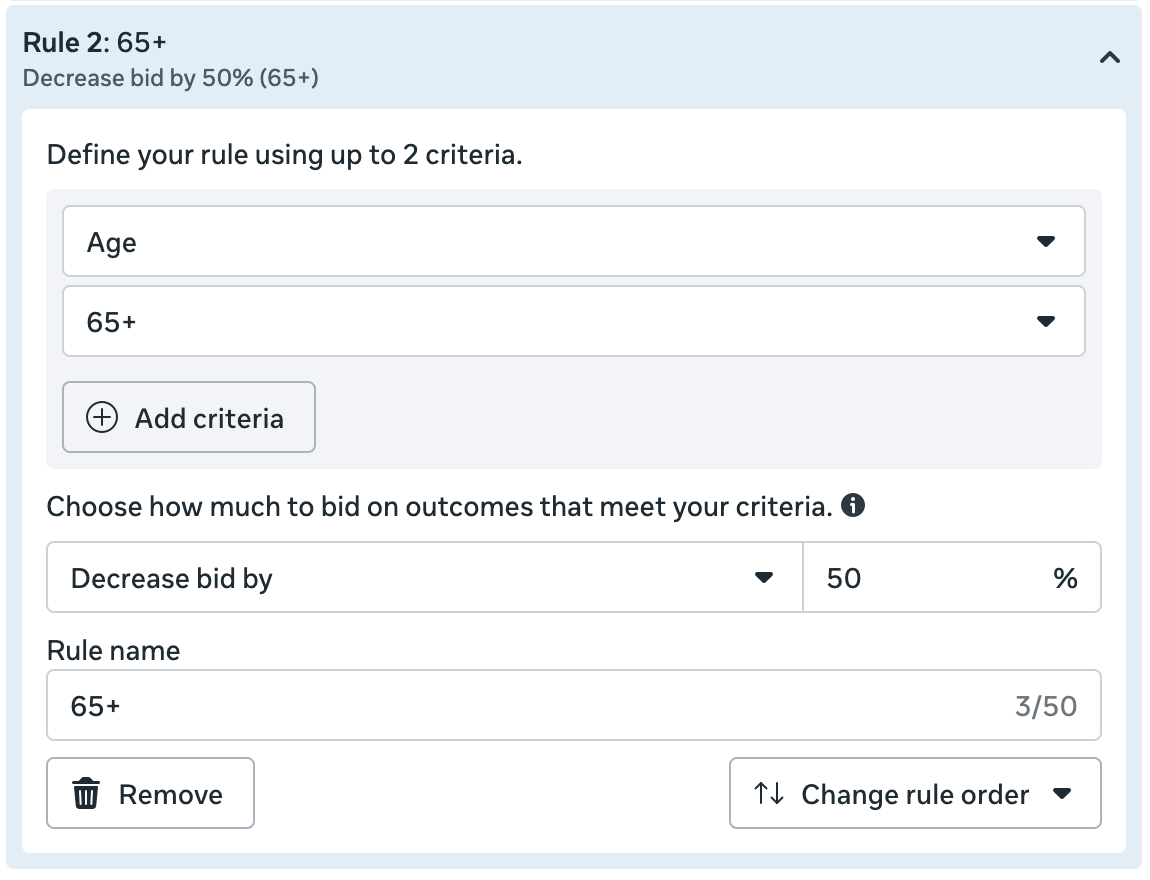
You could do the same thing if you’re getting bad leads for other reasons that can be addressed with value rules. Avoid full restrictions when possible (age-restricted goods would be the exception). Bid less on men if they are completing your form at a high volume for a product that’s only for women. Bid less on leads from instant forms if they’re low-quality and lower cost. Bid less on a location if a state, city, or country is flooding your team with cheap, low-quality leads.
Website Landing Page-Specific
1. Ad consistency. Your landing page needs to be consistent — thematically, creatively, and textually — with your ad. When someone is inspired by your ad to click it, they should be presented with options and an experience that are consistent with their expectations.
2. Readability and complexity. This may be less about lead quality than getting the leads at all, but it’s important. If you are offering a simple lead magnet, there’s rarely a need for a long, exhausting landing page. Give them what they need and make it easy to subscribe.
3. Confirmation page clarity. Make it very clear what happens next and what they should expect to happen. Will they get an email? What will it say? What will they be asked to do? Should they book a call now? Where should they go to do that? Don’t be satisfied with a simple “Submission Complete” message.
4. Location filtering. If you’re running into issues related to disqualified leads who don’t live in areas you service, address this on your landing page. Give them a drop-down to select the closest location, or a list of stores to choose from.
5. Disqualified lead redirects. Ask qualifying questions on the form. If they answer in a way that disqualifies them, send them to a unique confirmation page that explains they aren’t a fit and doesn’t fire the conversion event. You want Meta to learn from good leads, not bad ones.
6. Downstream event optimization. Consider this only if you get enough volume for downstream events to optimize for them. An example would be optimizing for an appointment booking if you immediately prompt new leads to book an appointment from the confirmation page. That way, Meta only delivers for the booking, not the lead itself. Conversion events that are lower volume and can take multiple days (like call completed or a sale) are typically riskier.
Instant Form-Specific
1. Remove auto-fill. One of the reasons that instant forms have long had the reputation for generating lower-quality leads is that it’s the auto-fill of contact information that could cause it. Not only does it make form completion almost too easy, but there’s the risk that the form will be submitted with outdated information from the user’s profile.
Not everyone has this feature, but some advertisers can turn off autofill for these fields.

2. SMS verification. If you are getting a steady stream of leads with unreachable phone numbers, particularly for texting purposes, SMS verification can be a solution.
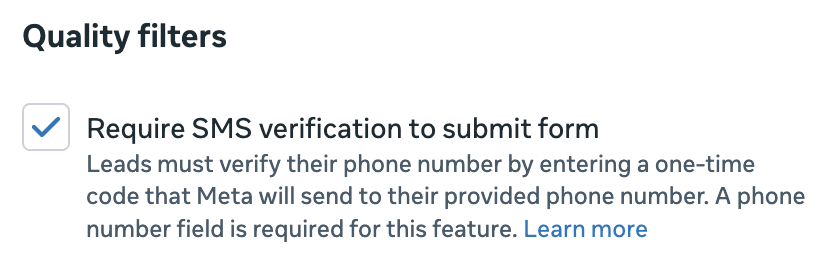
When checked, users will be required to verify via SMS before the lead is submitted. Understand that the risk is that this may drastically cut back on leads, but the tradeoff can be worthwhile.
3. Business email verification. If you are promoting a B2B business and are getting low-quality leads from personal email addresses (Gmail, Yahoo, etc.), you can require work email addresses.
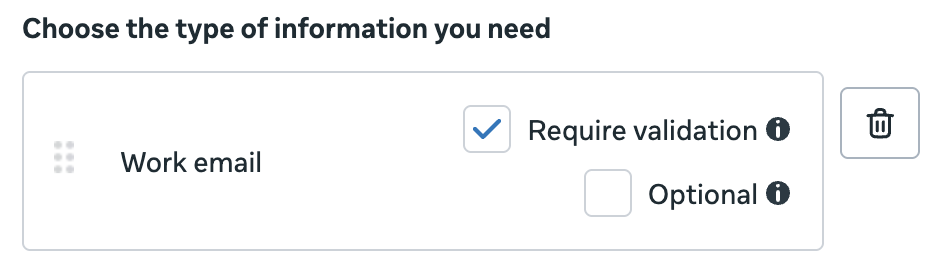
The risk is eliminating leads from people who may prefer to use a personal address, so make sure there’s a clear problem to be solved.
4. Conditional logic. Ask qualifying questions and disqualify those who don’t answer the way you need them to.

When conditional logic is used, disqualified leads won’t be able to complete the form.
5. Follow-up channels. Keep new leads talking while they’re hot. Connect follow-up channels like Messenger, Instagram, and WhatsApp so that a chat is immediately initiated after the form is completed.
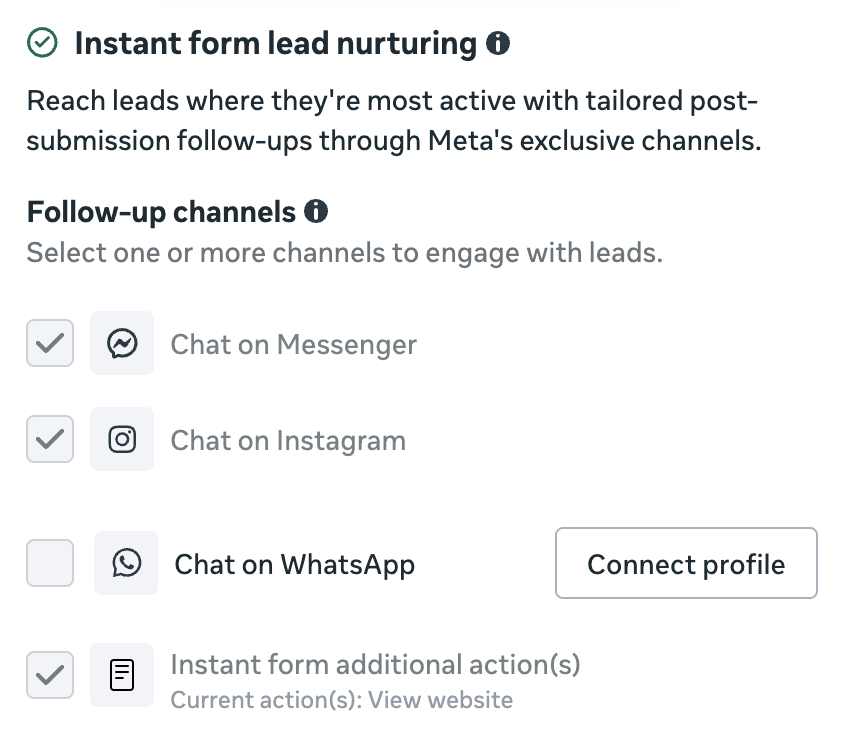
This helps overcome the reachability problem.
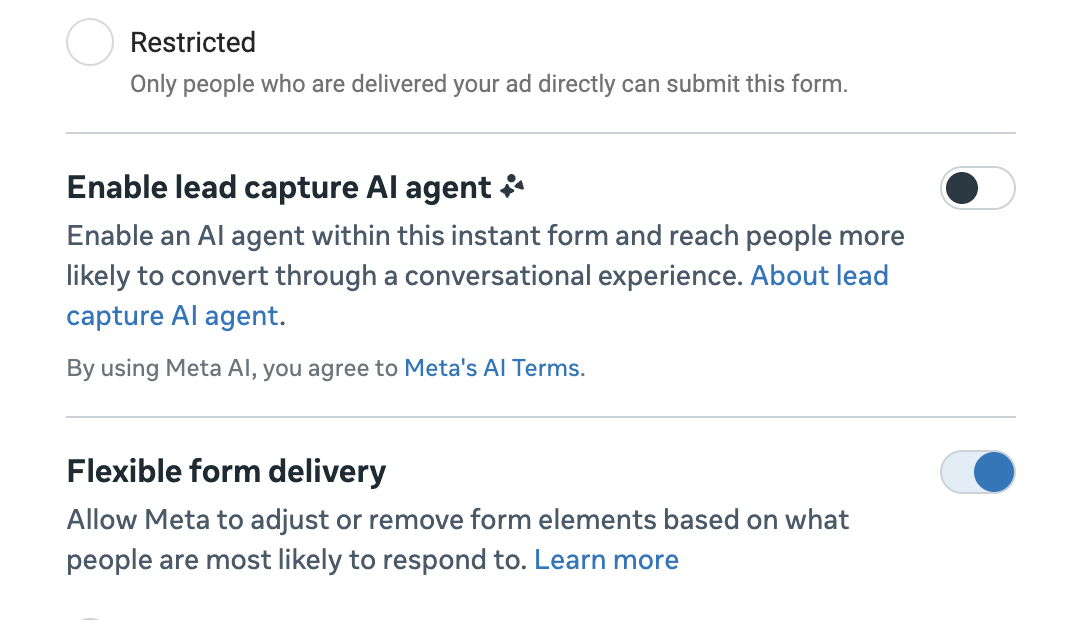
6. Lead capture AI agent. A new feature allows some advertisers to turn on an AI agent that will answer qualifying questions that will help guide potential leads through the form.
Cost Per Lead Means Nothing Without Context
A common mistake advertisers make is they chase a generic cost per lead. But even a cost per lead under $1 is pointless if none of those leads does anything of value.
You shouldn’t focus on improving your cost per lead until you’ve established the quality of your incoming leads. Understand the percentage of them who convert and the average value of that purchase. If possible, calculate an average lead value so that you know exactly what a lead is worth before chasing costs.
In some cases, a $50 cost per lead is a complete waste of money. In others, the average lead may be worth $250. You need to put in the work to figure this out. Otherwise, you’re blindly collecting leads.
This is easiest when there’s an immediate sales outreach process following the form submission. You can isolate these leads and chart what they do.
But it’s obviously trickier when you have a longer sales funnel. I offer regular lead magnets, for example, that are focused on exclusive content. While there is a sales pitch worked into the email automation, conversion rate isn’t an accurate gauge of value. They will have many opportunities to convert later, and many will pay for something months or years later.
If you have a similar situation, focus first on monitoring quality based on activity. If you sent them something, did they open their email? Did they access it? Were they active beyond that initial opt-in? While establishing a clear lead value in this case may be challenging, you should at least make sure you’re collecting engaged leads.
Have a Plan
When you approach lead generation for a new client, have a very clear plan.
1. Experiment with landing pages and instant forms. Don’t assume one’s better than the other. They both have benefits and drawbacks. Choose one to get started, but experiment with both eventually.
2. Start simple. When you approach a campaign for a new client, avoid assumptions based on what you’ve done for others. Your primary goal when you get started is to generate a high volume of leads. Don’t assume a problem with lead quality. Don’t add complexity until you know it’s needed.
3. Evaluate lead quality. Are you getting low-quality leads? Find commonalities among the biggest problems. It could be age, location, reachability, or something else completely.
4. Impact lead quality. Only apply complexity to impact lead quality when there’s a clear problem to be solved. Start with your own internal processes before assuming there’s anything you need to do with value rules, the form, or landing page. But there are many potential solutions that apply to common problems.
5. Determine lead value. Don’t chase a generic cost per lead. Research the value of your leads by understanding the percentage who convert to establish an average lead value. This will help you set a goal cost per lead that you want to stay around.
Your Turn
Do you run ads for lead generation? What would you add to this list?
Let me know in the comments below!