For years, SEO sat low on the org chart. It’s been chronically underfunded and perpetually one step away from being folded into content or web dev. That’s changing.
AI disrupting search has handed SEOs the seat at the table they’ve spent years trying to earn, and for the first time, the C-suite is genuinely paying attention.
The question is whether you’re ready to lead when their attention is on you.
This guide is for SEO professionals who want to become strategic leaders. It’s based on my experience over the last 10 years building search visibility strategies for B2B, e-commerce, and SaaS brands — work that’s generated over $125 million in organic client revenue.
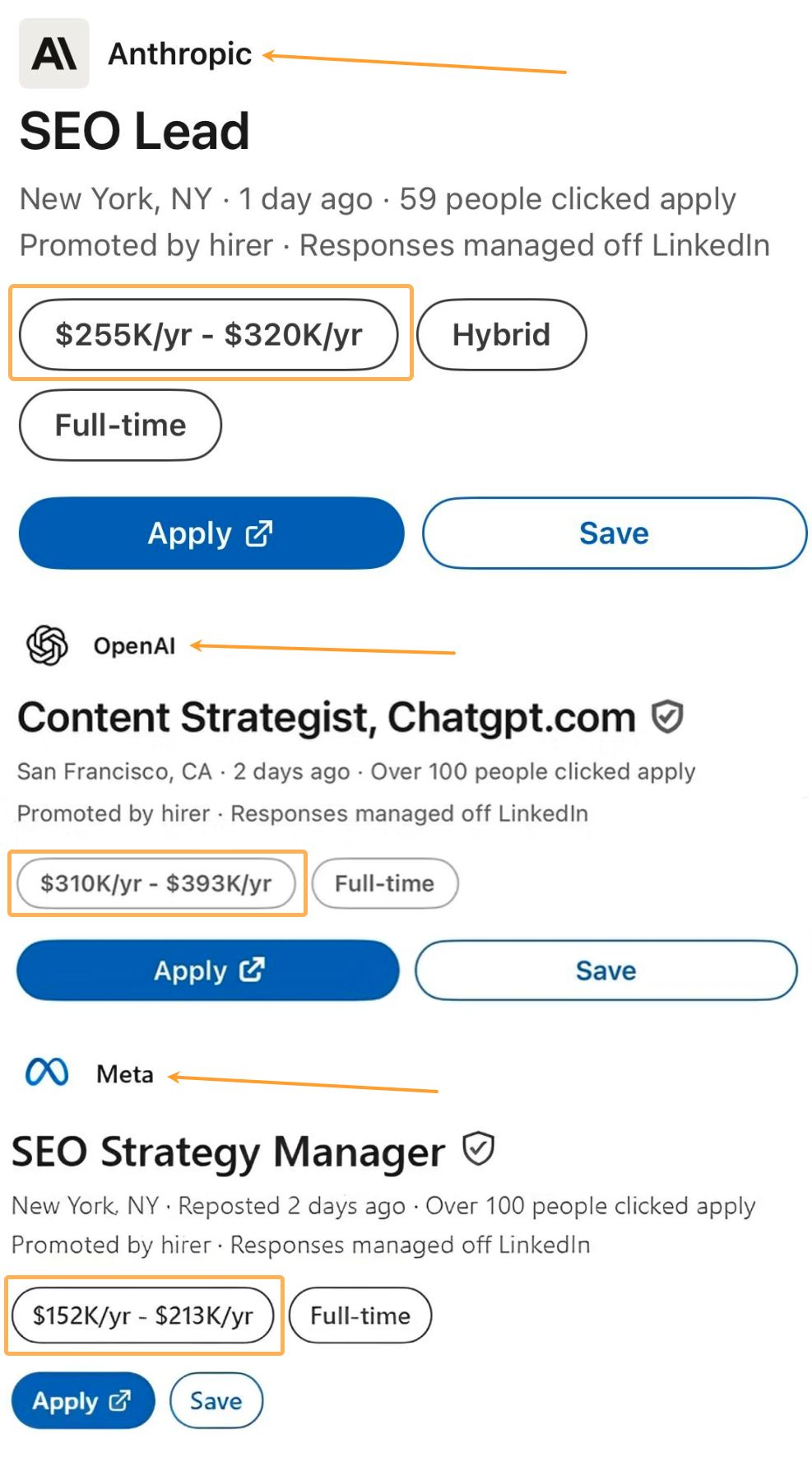
It covers the mindset shifts, leadership skills, and practical moves that put you in contention for the search leadership roles now paying $150K+.
Even the biggest names in AI are already hiring for them.
Most SEO professionals were trained as tacticians. Audits, technical fixes, content optimizations, and link outreach are the hard skills of getting things done at the tactical level.
Those skills are valuable. But they’re also not what gets you into the room with leadership.
Knowing how to do keyword research and knowing how to communicate a search strategy to a VP are two entirely different skill sets. The first may get you hired, but the second gets you promoted.
The opportunity in front of SEOs right now isn’t just to do better SEO. C-suites are scrambling to understand how their brands appear in AI search, and they’re looking for someone to guide them.
That’s the real opportunity.
| The SEO tactician | The strategic SEO leader | |
|---|---|---|
| Day-to-day tasks | Keyword research, technical audits, content briefs, and rank tracking | Roadmap planning, stakeholder presentations, cross-team alignment, and defining measurement models |
| How they measure success | Rankings and traffic | Revenue, market share, and share of voice |
| Time horizon | This sprint | 12–24 month arc (sometimes up to 3–5 years) |
| How they communicate | SEO terminology | Business language |
| Who they talk to | Team leads and direct managers | VPs, CMOs, and the C-suite |
| How they handle other teams | Works independently or within a small SEO team | Mobilizes brand, PR, product, dev, and content teams |
| How they think about content | Fills keyword gaps | Builds long-term brand authority |
| Career ceiling | Specialist roles (~$74K) | Leadership roles ($150K+) |
Tom Critchlow calls it “executive presence.” The ability to walk into a room with a CMO and talk business outcomes, not rankings.
But it’s more than a communication style. It requires a fundamental shift in how you think about your role, from completing SEO tasks to owning search visibility as a business asset.
The SEOs landing those $150K+ roles aren’t necessarily the most technically skilled in the team. They’re the ones who learned to lead by selling the vision of search to the people who control the budget.
Tactical SEO is about execution, like finding the next keyword cluster, fixing the next technical issue, or publishing the next piece of content. It’s valuable work, but it optimizes for this month or quarter, not the next five years.
Strategic SEO is different. It prioritizes long-term strategies that are durable by design. Strategies built to compound survive algorithmic volatility and outlast the person who built them.
In practice, strategic SEO:
- Is brand-led, not keyword-led: the search strategy serves the brand’s market position, not the other way around
- Thinks in years, not months: the goal is compounding growth in the long-term, not quick wins
- Sets foundations that outlast the strategist: a well-designed strategy can be executed by an educated non-SEO team
- Treats SEO as a team sport, not a solo pursuit: the best search strategies are built in collaboration with brand, PR, content, product, and dev, not in isolation
- Factors in strategic debt: avoids shortcuts that deliver short-term gains but create long-term cleanup costs
- Treats algorithm updates as a stress test, not a threat: durable strategies are built to survive volatility by design
- Connects search to business outcomes: not traffic for traffic’s sake, but visibility that drives revenue and market share
A case study in strategic thinking
In 2020, I was engaged by an ecommerce retailer with over 10,000 products to collaborate on a content strategy.
Most SEOs approach content mapping as a tactical exercise. Find keyword clusters, build content, measure traffic monthly, chase quick wins. That’s not wrong…it’s just limited.
We took a different approach.
Instead of asking “what keywords can we rank for?” we asked:
- Where does this brand need to own its corner of the market in 3–5 years?
- What does their website and product ecosystem need to look like to get there?
- What problems are their customers facing that this brand can uniquely solve?
The result was a long-term brand-authority strategy that the business owner, his developer, and a couple of product experts were able to implement themselves, with no ongoing SEO support.
No agency retainer. No specialist on call. Just a strategy designed to last.
We built the strategy over six months across 2020 and 2021, and results have compounded steadily since then.
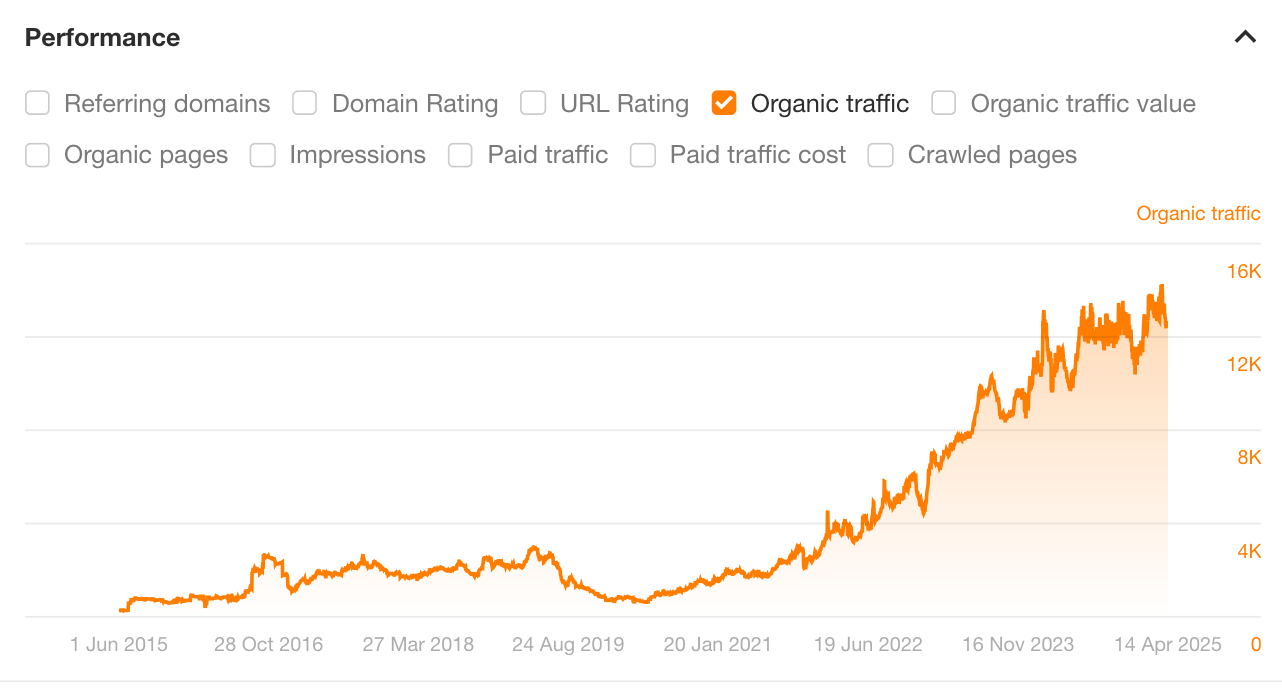
The strategy survived multiple major Google algorithm updates. It survived the rollout of AI Overviews. It kept compounding (years after the engagement ended) because it was built on foundations that didn’t need to be unwound.
Years later, the client mentioned this project was the single most effective strategy they’d ever developed.

That’s what strategic SEO looks like. Not a traffic spike. Not a quick win. A foundation that keeps paying forward long after you’ve left the room.
Strategic debt is what accumulates when you optimize for this quarter’s traffic at the expense of long-term brand positioning. Every shortcut you take today is a problem you’ll pay to undo later.
Much of what SEO professionals learned came from contexts where quick wins were the only viable option. Affiliate marketing, tight budgets, short client timelines; in those environments, fast results weren’t just preferred, they were necessary.
That scrappiness built real skills. But it also built habits that don’t transfer to what brands and larger organizations actually need.
The most extreme version of this thinking is conch-house.com — a site that scraped Amazon content, published 6,000 posts a day, hit 6 million monthly users and $20K revenue per day, then was penalized and blacklisted by Google in month three.
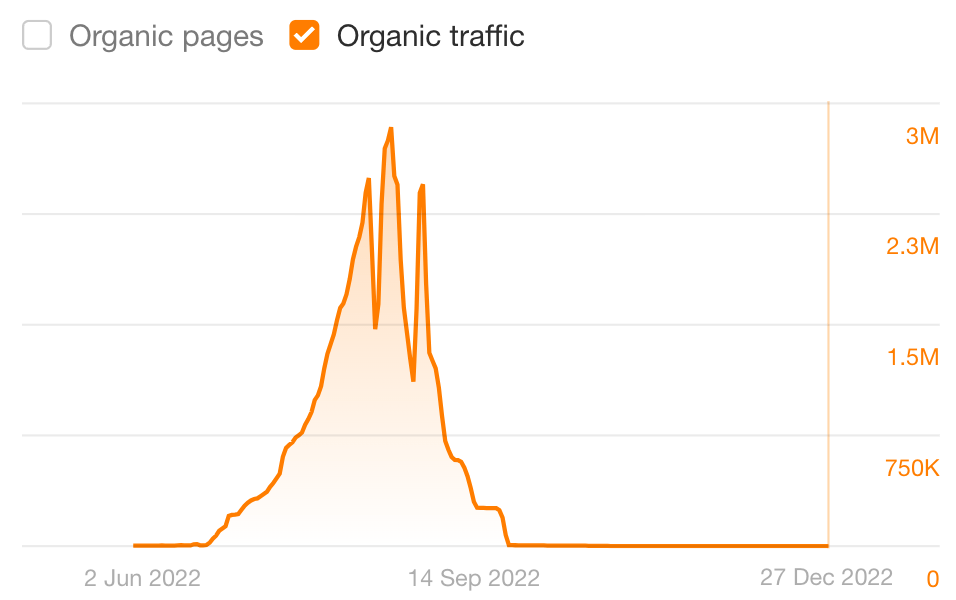
An outlier, yes. But the same logic plays out at every scale.
In practice, strategic debt looks like:
- A content strategy built around declining keywords or short-term trends
- Self-promotion listicles that earn citations today and algorithmic demotions tomorrow
- A programmatic play that floods a site with thin pages, moves impressions, then triggers a core update penalty that takes two years to recover from
- Chasing backlinks from low-quality sources to move the domain rating quickly, then spending months on link audits and disavow files
- Targeting high-volume keywords with no connection to the business’s actual products or services and diluting the site’s topical authority
- Publishing AI-generated content at scale to capture quick rankings, then losing ground when quality signals catch up
Most SEO teams have at least one of these in their history. At the agency level, the cumulative effect becomes impossible to ignore.
For instance, consider two agencies with the same clients, but different outcomes.
| Agency A (tactical) | Agency B (strategic) | |
|---|---|---|
| Year 1 | Launches content targeting high-volume keywords | Establishes topics to build authority for that are also core to the client’s business |
| Year 2 | Rewrites what stopped working (or never quite took off) | Adds net new strategic content in adjacent topics or areas of the website |
| Year 3 | Overhauls site architecture to try to reclaim lost traffic | Initiates new strategic directions, refreshes only time-sensitive content |
| Year 4 | Resets content direction (for the third or fourth time) with no results to show for it | Compounding returns on three years of foundations |
| Client outcome | Churn when results don’t materialize (often in the first two years) | Retention is built on performance that keeps growing, and clients often stay for 3+ years |
Agency A pitches constant reinvention as responsiveness. It’s actually an inability to build brand equity. Every new tactic inherits the strategic debt of the one before it.
Agency B’s approach is what strategic SEO leadership produces at scale. It takes time to establish solid foundations, but it consistently adds new layers that compound over time rather than restarting from scratch because performance goals weren’t met.
Agencies that operate this way don’t need to chase as many new clients to grow since their existing clients stay, compound, and expand.
Seer Interactive (Wil Reynolds’ agency) is a real-world example of what that looks like: 130+ enterprise clients and a 92% retention rate.

No matter if you’re working in-house or agency-side, though, escaping strategic debt in SEO requires a different type of thinking entirely. That’s a leadership skill, not a technical one.
Strategic SEO leadership involves a combination of capabilities that span well beyond technical execution. There are four distinct modes, and most SEOs tend to operate in one (at most).
You don’t need all four. But to make the leap from tactician to strategic leader, you need to be competent in at least two, and to understand which mode the moment calls for.
Operational leadership: Where tasks get assigned, briefed, and delegated
Operational SEO leaders manage the execution layer. They oversee task briefing, quality checks, implementation, and reporting. The work that keeps search programs running.
It’s where current SEO leaders tend to be most comfortable.
The skills are familiar, the outputs are tangible, and the work stays largely within the SEO team. There’s less stakeholder exposure here, less C-suite visibility, and more focus on managing resources, projects, and schedules.
What separates an operational leader from a tactician is their approach to the work.
- They define how SEO is done at the company
- They create training and instruction materials
- They delegate to a team rather than doing it all themselves
- They experiment with AI and optimize recurring workflows (like how Ryan has re-engineered Ahrefs’ blog processes)
There’s also a mindset difference. For instance, they might still be running a technical audit and using a tool like Ahrefs’ Site Audit to flag over 170 potential issues.
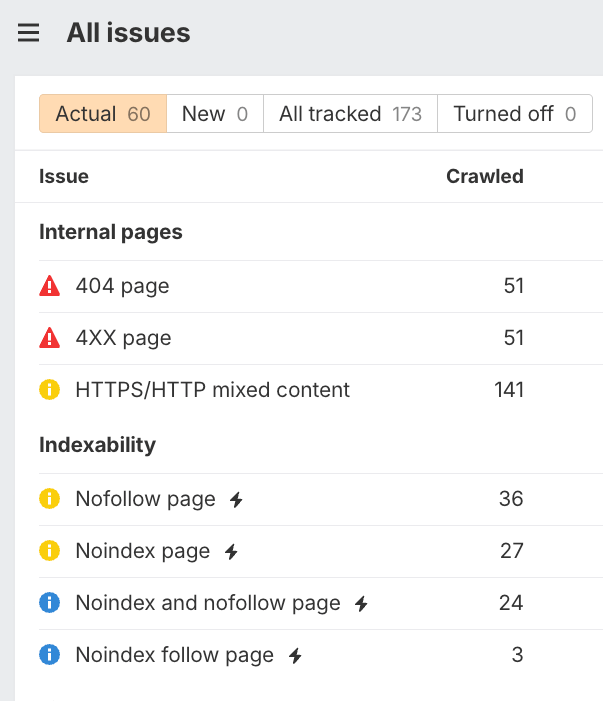
Where a tactician passes issues straight to dev and moves on, an operational leader digs into root causes, weighing the cost to the business against the resources a fix requires.
They prioritize what matters and consciously ignore what doesn’t.
Ironically, they don’t reach 100% health scores in Site Audit, nor do they aim to because they know which issues matter to the organization and which don’t.
Put it into practice
Ask yourself: Am I currently doing SEO tasks, or am I delegating and designing how they get done?
If you’re still executing every audit, writing every brief, and chasing every fix yourself, you’re operating as a tactician (even if your title says otherwise). True operational leaders ask:
- Why does this issue keep recurring, and what would need to change to stop it?
- Could this task be documented and delegated to a team member or an AI agent?
- Are we fixing the right things?
- What’s the cost of this issue vs. the resource to fix it?
- Could we automate this and still achieve our accepted quality standard?
Next step: Review every task from last week and mark each as something you currently do, delegate, or automate. The pattern will tell you where you’re currently operating and give you ideas on what to systemize.
Business leadership: Where search connects to revenue
Business SEO leaders connect organic search to the organization’s commercial objectives.
They identify which search opportunities are worth pursuing at which stage of the business, define how SEO performance gets measured, and build the case for search investment using metrics and language that leadership actually understands.
Their work focuses on the intersection of search strategy and business strategy.
They also translate visibility metrics into revenue outcomes:
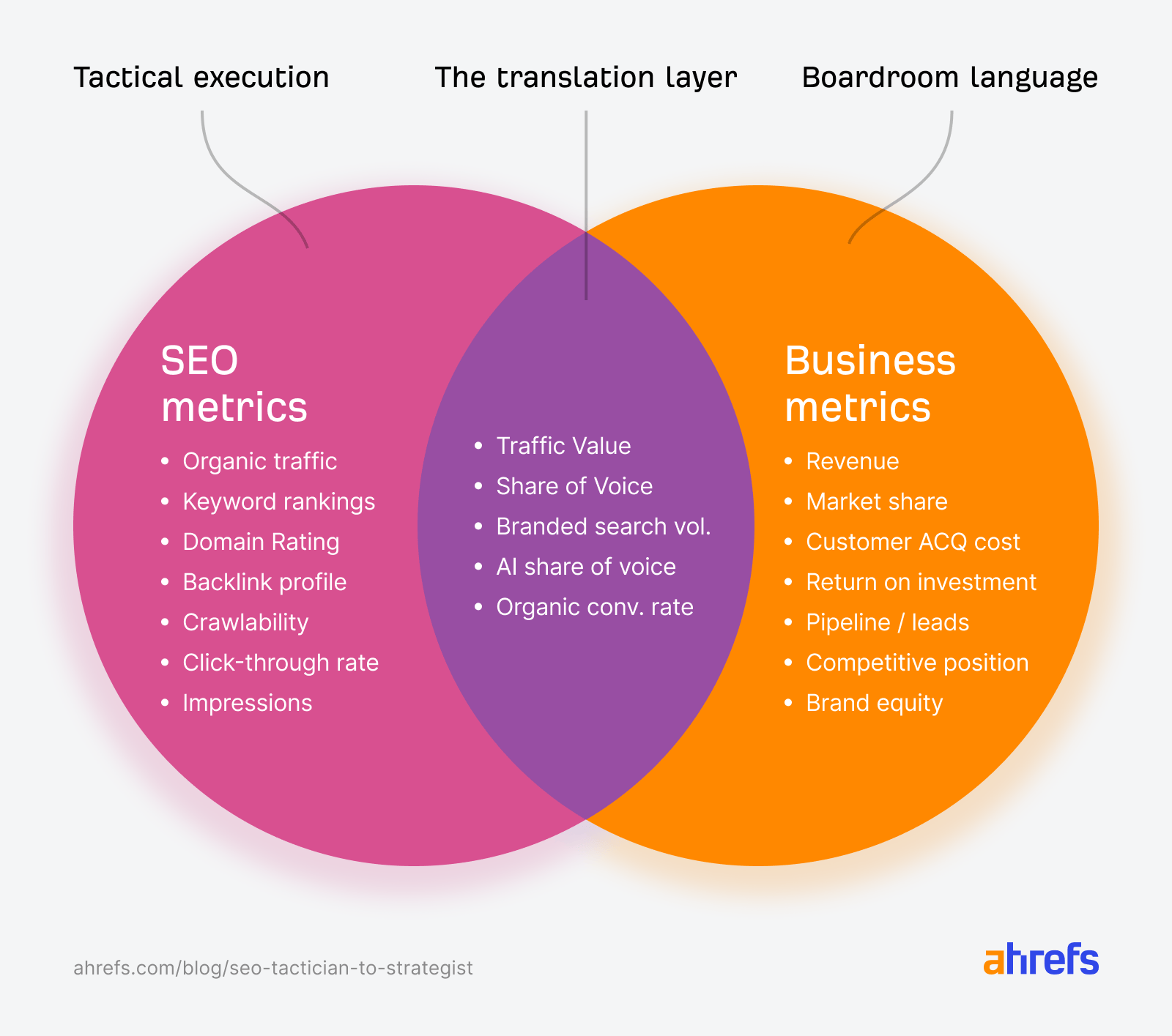
If you’re currently focusing on rankings and traffic, try shifting your attention to these metrics in conversations with stakeholders and non-SEO decision makers:
- Traffic Value: found in Ahrefs Site Explorer; shows the dollar equivalent of your organic traffic if acquired through paid search
- Share of Voice: found in Ahrefs Rank Tracker; measures your brand’s visibility across tracked keywords relative to competitors
- Branded search volume: found in Ahrefs Keywords Explorer or Google Search Console; tracks how often people search for your brand directly
- AI Share of Voice: found in Ahrefs Brand Radar; tracks how often your brand appears in AI-generated responses
- Organic conversion rate: found in Google Analytics (GA4) or Web Analytics; connects organic sessions to actual business outcomes like leads or purchases
If your organization cares about other metrics, look for the equivalent SEO metrics that correlate or influence them.
Put it into practice
Ask yourself: Am I reporting on what SEO did, or am I showing what it’s worth to the business?
If your updates still lead with SEO tasks, rankings, or traffic, you’re speaking a language your stakeholders don’t prioritize (and may not even understand).
True business leaders ask:
- What’s the dollar equivalent of our current organic visibility?
- How does organic performance compare to what it would cost via paid ads?
- Which SEO metrics correlate with the commercial goals leadership is already tracking?
- Where does search sit in the conversation about next quarter’s growth, and if it doesn’t, why not?
- What’s one business decision being made above my level right now that search data could inform?
- Does leadership see search as a cost center or a revenue driver, and what would it take to change that?
Next step: Take your last SEO report and rewrite the opening slide in business terms only. No rankings, no traffic. Use metrics your stakeholders already understand and spend their days thinking about.
That single change shifts how leadership perceives your role.
Visionary leadership: Where long-term thinking compounds
Visionary SEO leaders think in horizons, not sprints. They ask where search and AI visibility fit in the organization’s direction over 3–5 years and build toward that before the results are visible.
This is the rarest leadership mode in SEO right now and what executives are looking (and paying a pretty penny) for.
The greater the uncertainty in the search landscape, the greater the need for visionary leaders who can guide decision makers forward with confidence. But the skills required aren’t looking into a crystal ball and trying to predict what the future of AI search looks like.
Rather, it’s about guiding an organization’s strategy in a direction that remains sound whether AI search accelerates, plateaus, or changes shape entirely.
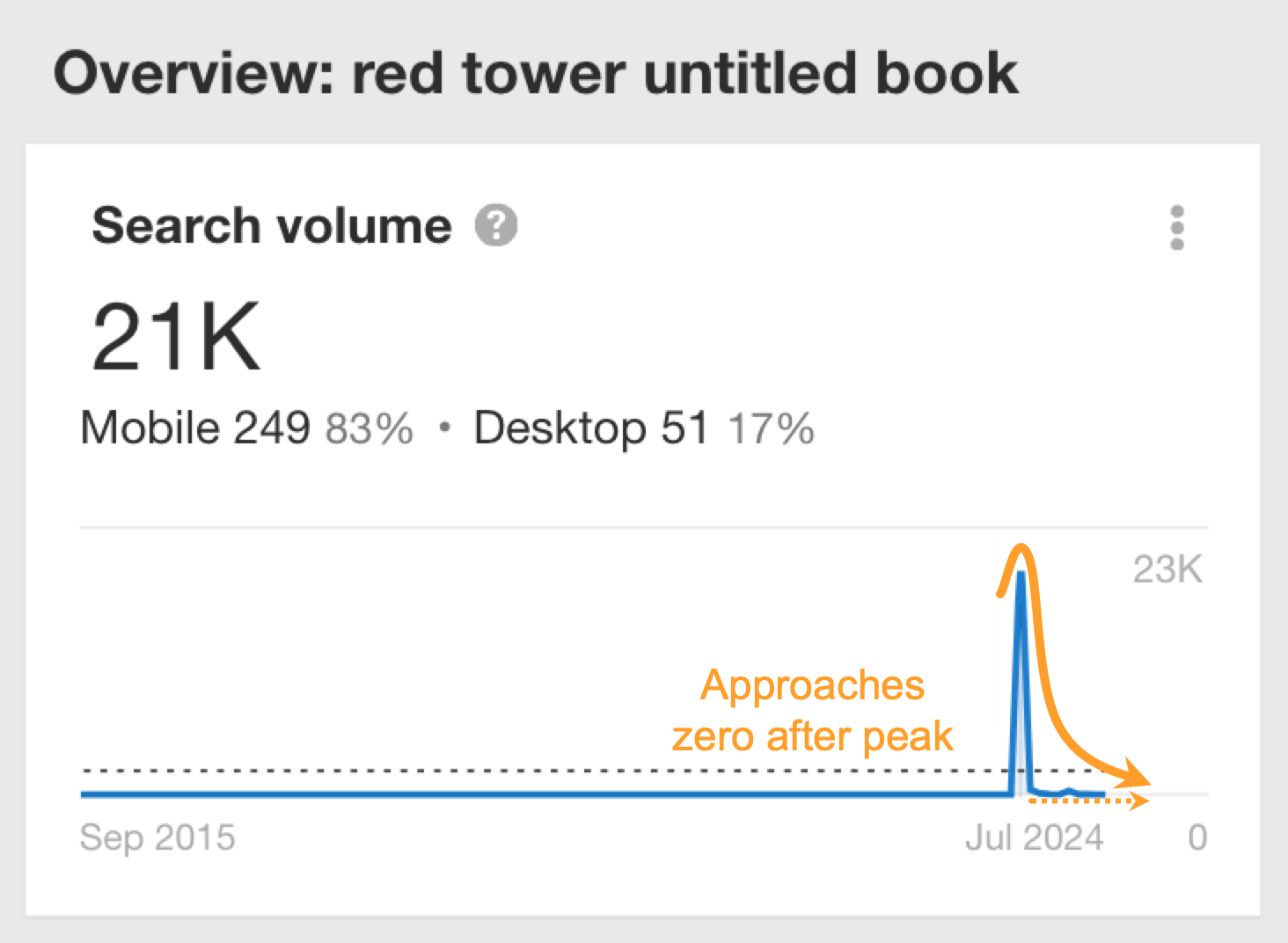
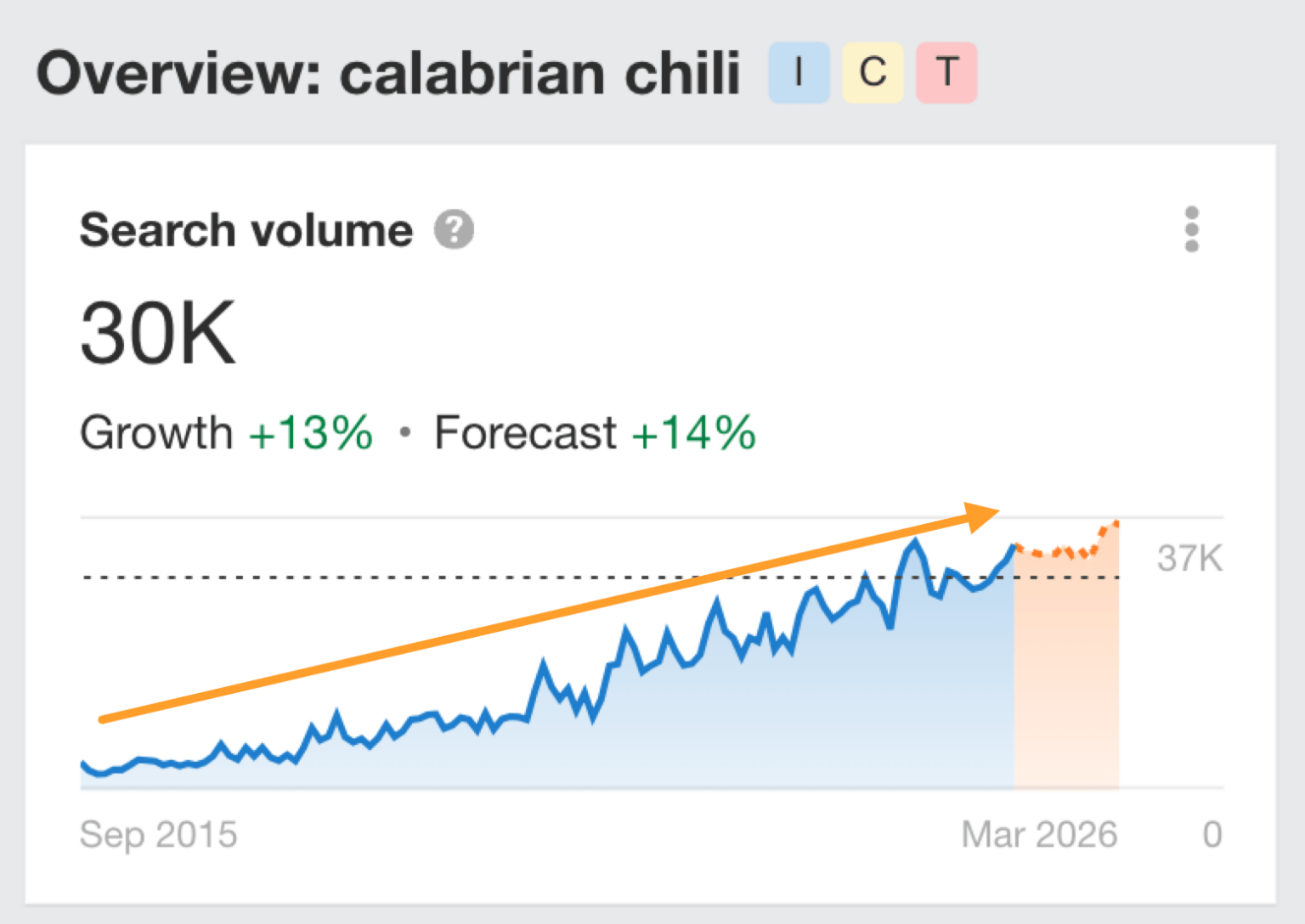
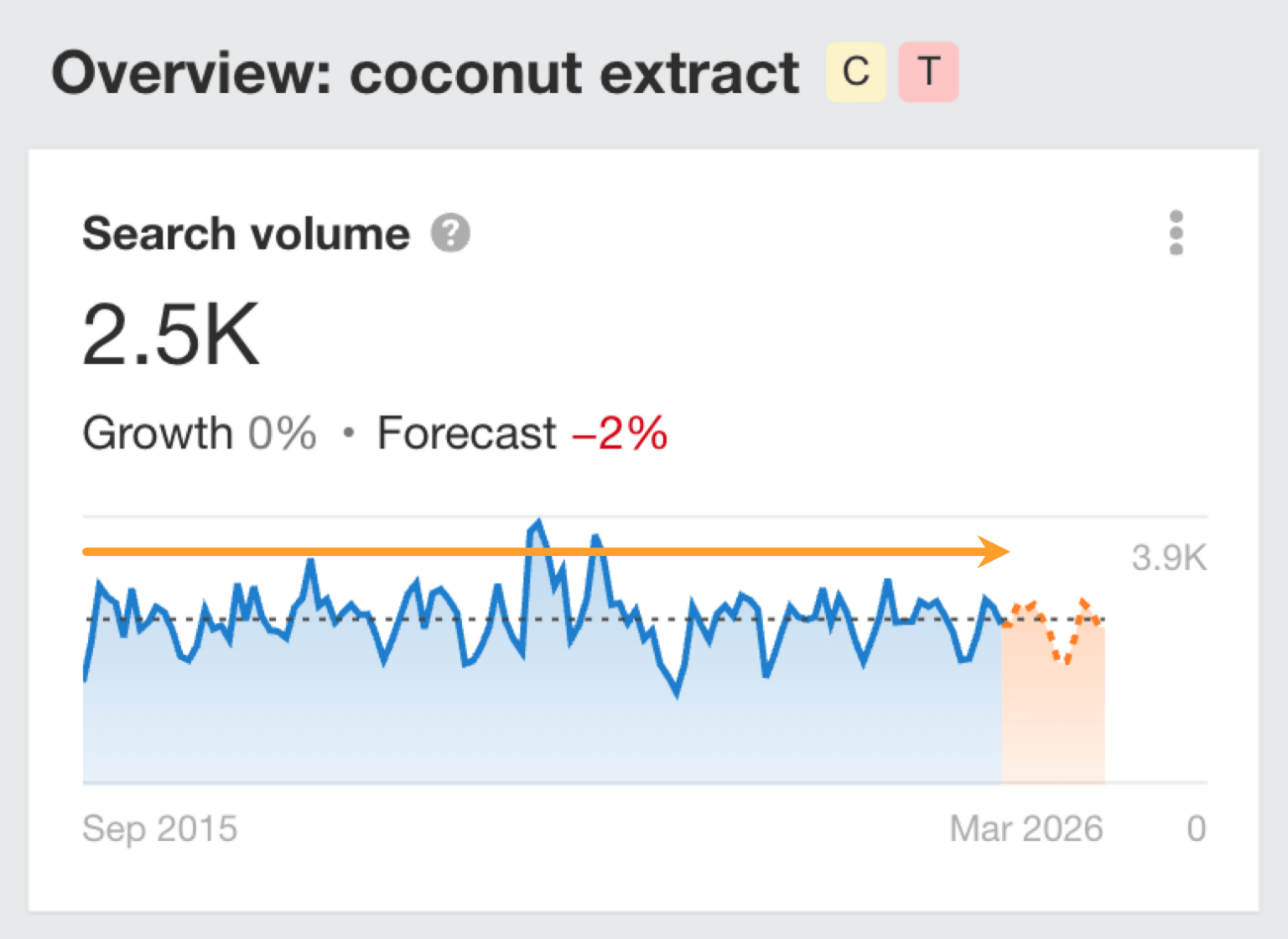
As a practical example, consider how you assess keywords. Instead of just looking at its core metrics (like search volume and difficulty), look at its long-term potential and where it sits in the search demand lifecycle.
Steep spikes signal a trending fad, not a long-term foundation.
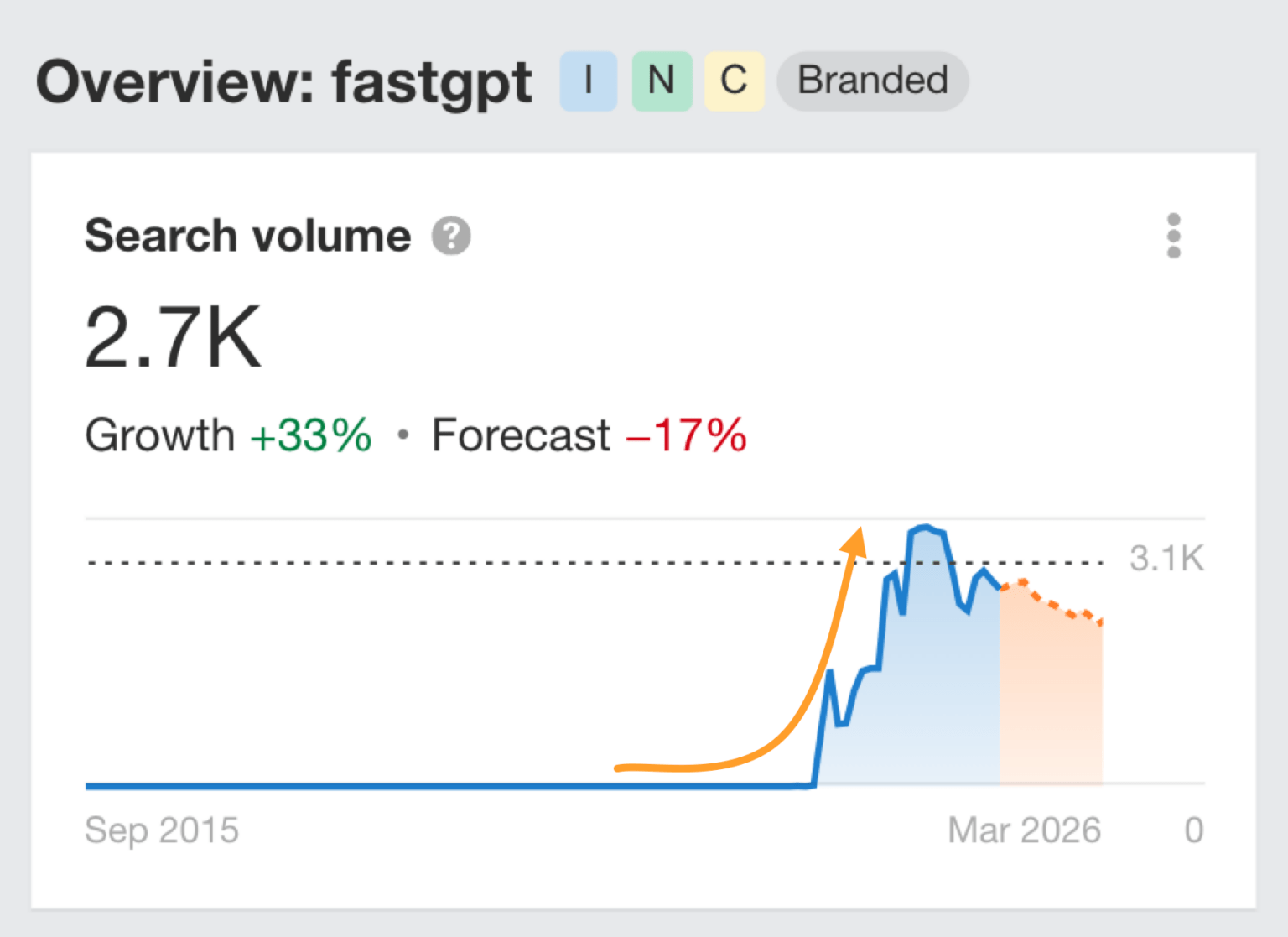
A steady upward trend over time is a stronger long-term bet:
And keywords that have plateaued for many years are a more stable long-term opportunity.
But it also needs to go beyond keyword thinking. Look at the trendlines and search demand of entire topics and questions your audience is asking.
Apply this same long-term lens to other SEO activities, asking whether they build a foundation for future growth or are a short-term hack that will need to be done properly later. Think about where the market is moving, what moves competitors are making, and where the organization wants to be in 3–5 years.
That’s where visionary leadership starts.
Put it into practice
Ask yourself: Am I optimizing for how search works today, or also building toward where it’s going?
If your strategy wouldn’t survive a major algorithm shift or another leap in AI search behavior, it’s not built to last. Visionary leaders also ask:
- Is this topic something we’re building a reputation and brand equity around?
- Will this keyword or topic still be worth ranking for in three years, or are we chasing what’s popular right now?
- If AI Overviews absorb significantly more clicks next year, which parts of our strategy still hold up?
- What does this brand need to be known for in search (not just what it ranks for today)?
- Is the organization a pacesetter in search, or is it at risk of falling behind competitors?
- Which distribution channels are gaining traction in our industry, and is our content built for them?
- Does our search strategy live in the organization, or does it live in someone’s head?
Next step: Pick your three most important content or keyword bets and stress-test each one. Would they still make sense if search behavior shifted significantly in the next 18 months?
For example, if Google rolled out AI Mode as the default search experience, would your current strategy still hold up? If the answer is no, that’s your highest-priority strategic risk to solve.
People and team leadership: Where SEO becomes an organization-wide endeavor
People and team leaders in SEO mobilize the rest of the organization towards a search-first mindset. They collaborate with brand, PR, dev, product, and content teams, helping each understand the 20% of SEO that’s relevant to their role.
This is where your value as a strategic SEO leader ultimately lies.
Working with five other teams multiplies your impact across the entire organization compared to a tactician working alone, who is limited to what they can personally implement.
Many micro-decisions those teams make (a PR angle, a product page headline, a developer’s architectural choice) are search decisions, whether they know it or not. Your job is to drive conscious decision-making that aligns with the organization’s overarching SEO strategy.
This is especially true for AI search.
Appearing in ChatGPT, Perplexity, or Google’s AI Overviews isn’t a technical problem an SEO team can solve alone, and as Eli Schwartz mentions, blaming them for it is costing organizations visibility.
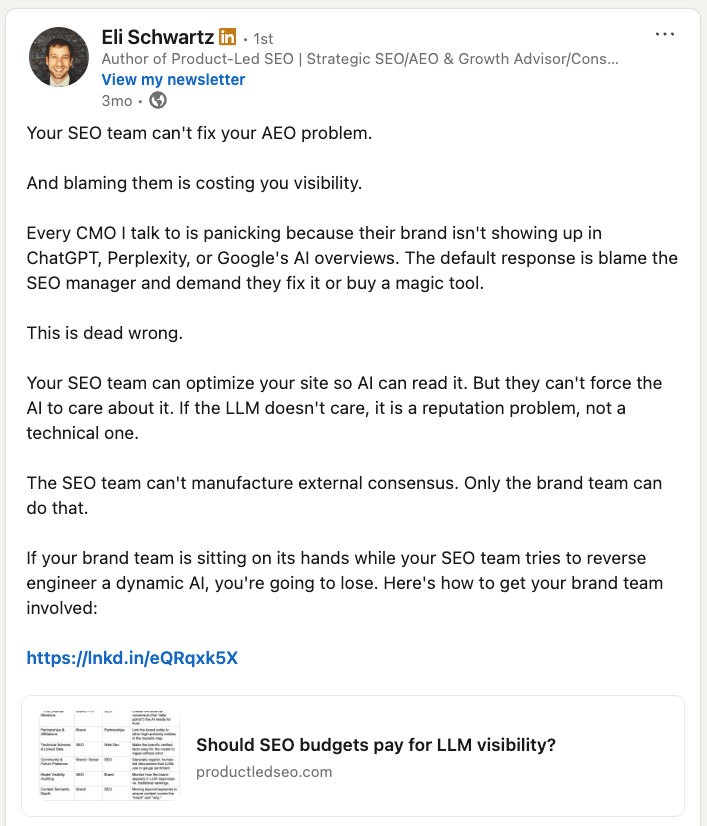
As Schwartz puts it, if the LLM doesn’t care about your brand, it’s a reputation problem, not a technical one.
That’s people and team leadership in practice: knowing which lever belongs to which team, and getting everyone moving in the same direction.
The good news is that most teams don’t need to become SEO experts. They just need access to the right data and some guidance to make better decisions where their work intersects with search.
| Team | Ahrefs tools | Why it matters to them |
|---|---|---|
| Dev and tech | Site Audit | Surfaces crawlability issues, Core Web Vitals failures, and page speed problems that only a developer can fix |
| Content | AI Content Helper, Content Explorer, Keywords Explorer | Optimize website content for traditional and AI search, and understand what questions their audience is actually asking |
| Brand | Brand Radar | Tracks how often and how favorably the brand appears in AI-generated responses, a visibility problem the brand team can help solve |
| PR | Site Explorer, Brand Radar, Firehose | Monitor brand mentions, backlink opportunities, and how earned media is influencing AI search visibility |
| Product and marketing | Keywords Explorer, Content Explorer | Understand what problems customers are searching for. Useful for product naming, positioning, and campaign planning |
| Leadership and exec | Rank Tracker (Share of Voice), Brand Radar (AI Share of Voice) | Frames search visibility in market share terms rather than rankings, i.e., the language of boardroom conversations |
The goal isn’t to turn everyone into an SEO.
It’s to give each team the specific insight that makes their existing work more search-effective and to position yourself as the person who connects those dots across the organization.
Put it into practice
Ask yourself: Is search thinking confined to the SEO team, or is it shaping how dev, content, brand, and PR work too?
If SEO knowledge lives only within the SEO team, your impact is capped at what you can personally implement. People and team leaders ask:
- Which decisions are other teams making this week that have a search implication they’re probably unaware of?
- Am I being consulted on decisions that affect search, or finding out about them after the fact?
- Does each team have the specific search data that’s relevant to their work, or just a generic SEO dashboard?
- If I left tomorrow, would search thinking carry on within the organization, or would it leave with me?
- Are we treating AI visibility as a technical SEO problem or a cross-team brand challenge?
Next step: Identify one decision another team is making this month (a technical bug fix, a product launch, a PR push) and prepare a slide showing how search data is relevant to it. Invite the team to collaborate with you on the project and educate them on its impact on the brand’s visibility in search and AI.
That’s people and team leadership in practice.
The opportunity: C-suites need a search visibility leader. Let it be you.
The window is real. AI has made search a boardroom conversation, and organizations are looking for strategic leaders to take them to the next level.
The SEOs who step into such roles won’t necessarily be the most technically skilled. They’ll be the ones who learned to think strategically, communicate in business terms, and lead across the organization.
Why not let that be you?