Summary
- Multivariate testing only produces trustworthy results above a traffic and variable-count threshold; below it, sequential A/B tests are the safer choice
- Peeking at results before reaching statistical significance is the fastest way to ship a false winner into your personalization program
- Segment-level interaction effects can hide inside an aggregate “winning” result, so review performance by cohort before declaring victory
- A winning variant only becomes a real asset once it is documented and reused across email, web, app, and other channels
- Governance, not more testing volume, is what turns isolated wins into a compounding personalization testing strategy
Running one successful test feels like progress. Running a personalization program that keeps producing valid, repeatable wins is a different discipline entirely, and it’s where most testing efforts quietly stall.
This article is for lifecycle marketers, conversion rate optimization (CRO) leads, and personalization program owners using a customer data platform (CDP) or engagement platform to test website, app, and journey experiences, who need a clear answer to one question: when should you use a multivariate testing methodology instead of a standard sequential test?
We’ll walk through a traffic-based decision rule for choosing between A/B and multivariate testing, the statistical traps that quietly invalidate personalization results, and the governance habits that let test insights compound instead of resetting every quarter.
None of this requires a bigger testing budget. It requires tighter discipline around sample size, segment-level significance, and how you document what you learn.
Why personalization programs stall right after their first A/B win
A single winning test tells you almost nothing about whether your testing program works. It tells you that one variant beat one control, on one page, during one window of traffic.
The real test of a personalization program is whether that win gets documented, replicated, and built on, or whether the team moves on to the next idea and quietly loses the thread.
This is where most programs stall. The backlog becomes a pile of untested hunches instead of a prioritized queue built on prior evidence. Teams re-test ideas that already failed, skip segments that showed conflicting signals, and lose track of which wins were strong enough to scale.
Without a structured backlog and a clear decision rule for test design, every experiment starts from zero instead of building on what the last one taught you.
A/B vs multivariate testing: A traffic-based decision rule
The choice between A/B and multivariate testing (MVT) is not a preference question, it’s a traffic question. A/B testing compares two or more complete variants against each other.
Multivariate testing isolates the effect of individual elements, such as headline, image, and call-to-action, tested in combination, which multiplies the number of variant combinations a system has to serve and measure.
How much traffic do you need for multivariate testing to work
Every additional variable in a multivariate test multiplies the number of combinations your platform needs to serve, which means each combination gets a smaller share of total traffic.
A test with three variables at two options each produces eight combinations. Split modest traffic eight ways and most segments never reach a large enough sample to draw a reliable conclusion, especially once you start slicing results by segment.
As a working rule, treat multivariate testing as viable only when your test surface gets enough consistent traffic to give every combination a meaningful sample within your test window, and when you genuinely need to understand which specific element is driving the result.
If traffic is inconsistent or the page is niche, an A/B testing approach that compares fewer, more deliberate variants will reach a trustworthy answer faster; Insider One Web and App Experiments support testing images, text, colors, CTA buttons, and layouts on web and app experiences, including ecommerce product, cart, and checkout pages, while teams can test Web Smart Recommender placement and use Architect A/B splits for relevant lifecycle journeys.
A simple rule for choosing sequential A/B tests vs a single MVT
If you’re testing one high-traffic page with a clear priority order for hypotheses, run sequential A/B tests. You will reach significance faster on each question and can act on partial answers along the way. Reserve multivariate testing for high-traffic surfaces where you need to understand interaction effects between elements, not just which single variant wins.
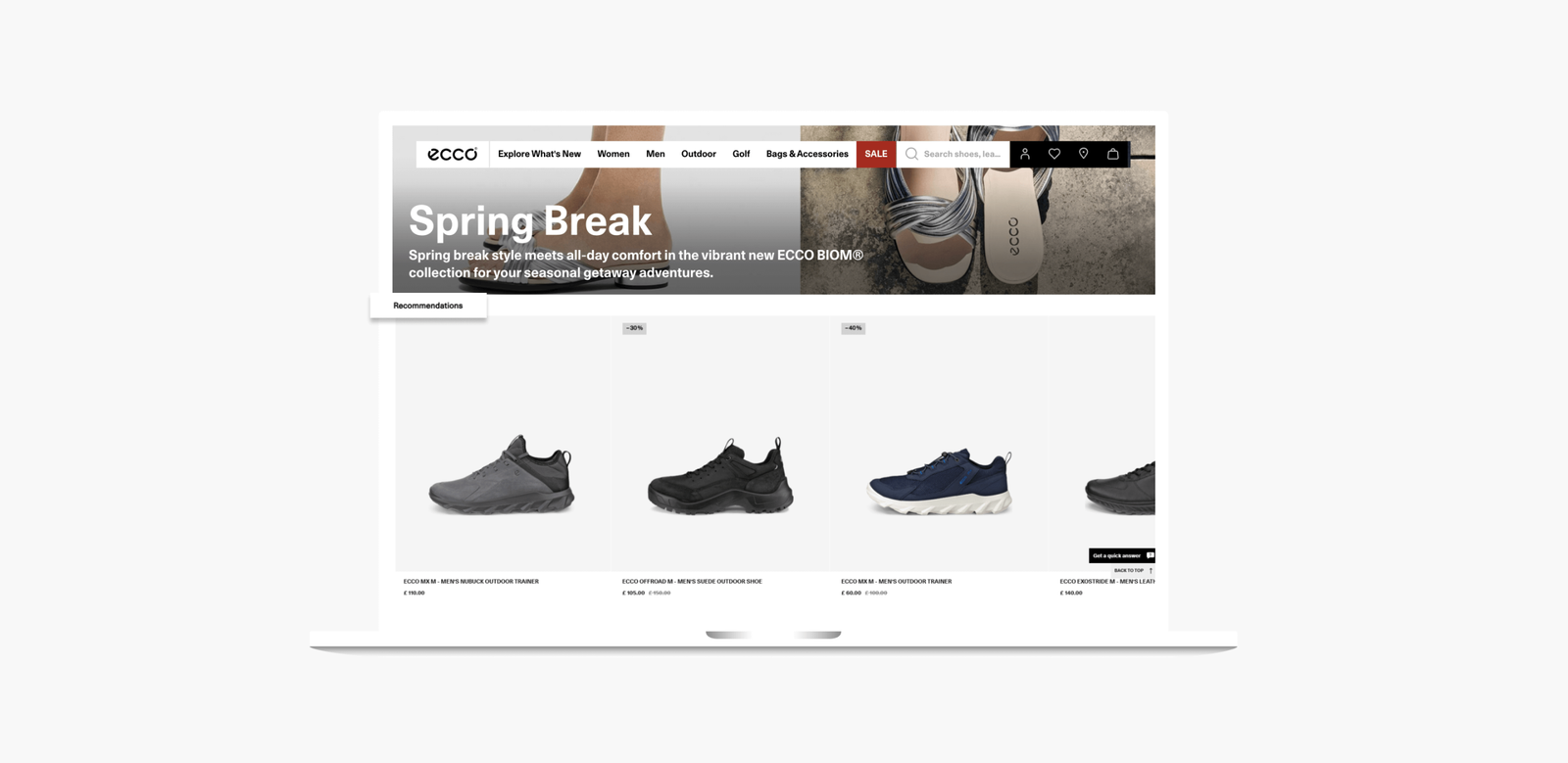
ECCO used this kind of disciplined testing approach on high-traffic pages to reach 7.4x ROI and a 95% conversion rate uplift, a result built on running the right test format for the traffic available, not on running more tests overall.

Avoiding the statistical traps that invalidate personalization tests
The most common reason a personalization test produces a false winner has nothing to do with the platform. It’s the decision to stop testing before the data is ready to be trusted, or to read segment-level noise as a program-wide signal.
Peeking at results early and stopping tests too soon
Checking a test daily and stopping the moment one variant looks ahead is one of the fastest ways to ship a false result.
Early leads regularly reverse as more traffic comes in, and stopping before you reach statistical significance means you’re reacting to noise, not a real difference in performance. Set your minimum sample size and test duration before launch, and hold to it even when a variant looks like an early winner.
How segment-level interaction effects hide inside aggregate results
An aggregate win can mask a segment-level loss. A variant might lift conversion for new visitors while quietly suppressing conversion for returning customers, and the blended result still reads as a win.
Insider One integrations can collect user events and attributes that help teams define meaningful audiences, while unified customer profiles provide context teams can use when conducting their own cohort analysis instead of relying only on an aggregate view.
Before declaring a result final, break performance down by the segments your personalization program already uses, such as:
- New versus returning visitor behavior
- High-value versus low-value customer tiers
- Channel-of-entry, whether that’s email, web, or app
- Device type, where mobile and desktop patterns often diverge sharply
Scaling test results across channels without losing rigor
A winning variant on one page is a data point. A winning principle that holds up across channels is an asset. The gap between the two is where most testing programs lose their value, because teams treat a single-page win as proof that the underlying idea will work everywhere.
Turning one winning variant into a reusable rule
Before scaling a result, separate what actually drove the lift from the surface it appeared on. A subject line win in email might be about urgency language, not about email as a channel, which means the same principle deserves a fresh test in web push or in-app messaging rather than a blind copy-paste.
Validate a working pattern before extending it through Architect, rather than assuming a single win will translate automatically across a customer journey.
Coordinating test calendars so overlapping experiments don’t contaminate each other
Running an email test and a web personalization test on the same audience segment during the same week muddies both results, because you can no longer tell which change caused which shift in behavior.
A shared test calendar across email, web, and app is a recommended team practice for flagging overlaps before launch. An engagement platform can provide cross-channel orchestration and unified profile context, but teams should manage calendar and overlap decisions through their own governance process.
Building a governance layer so tests compound instead of reset
Governance is the difference between a testing program that gets smarter every quarter and one that repeats the same experiments under different names. It’s also the least glamorous part of a personalization testing strategy, which is exactly why it gets skipped.
Documentation standards that let teams build on past insights
Every test result should be logged with its hypothesis, sample size, duration, segment breakdown, and outcome, stored somewhere the whole team can search before designing a new test.
Without this, new hires and even experienced marketers re-run experiments that already returned a clear answer, wasting traffic that could have tested something new. A shared repository turns each result into an input for the next hypothesis instead of a one-off finding that fades from memory.
Setting stopping rules and review cadences that keep programs honest
Decide your minimum sample size, maximum test duration, and required confidence level before a test launches, not while you’re watching early results come in. Pair that with a regular review cadence, whether biweekly or monthly, where the team checks the backlog against actual findings rather than gut instinct.
Programs that discuss multivariate email testing as a methodology and use a review structure can catch flawed conclusions before they get scaled into permanent journey logic; where Insider One email experiments are used, the documented approach compares two variants.
Conclusion
A personalization program earns compounding value from disciplined testing, not from test volume. The traffic-based decision rule tells you which test format fits your situation, and the governance layer keeps every result honest enough to build on.
Insider One differentiates the workflow by connecting web and app experimentation, audience segmentation, and unified customer profiles with Architect orchestration for relevant cross-channel customer journeys.
To evaluate the fit of Web Smart Recommender, Web and App Experiments, and Architect for your use case, book a personalized demo to review your goals, data requirements, and implementation constraints with the Insider One team.
Frequently asked questions
A/B testing compares complete variants against each other, while multivariate testing isolates individual elements tested in combination, such as headline and image together. Multivariate testing needs significantly more traffic because it splits visitors across every possible combination, which is why it only makes sense above a certain traffic threshold.
There’s no universal number, since it depends on your baseline conversion rate and how many variables you’re testing. As a working rule, only run multivariate tests on pages with consistent, high traffic where every combination can still reach a meaningful sample size within a reasonable test window.
The two most common causes are stopping a test before reaching statistical significance and reading an aggregate result without checking segment-level performance. Both can make a losing idea look like a winner, which is why predefined sample sizes and segment breakdowns matter more than test volume.
Identify what actually drove the lift, whether it’s urgency language, an offer format, or timing, rather than assuming the specific channel caused the result. For ecommerce, teams can test product-page messaging or Web Smart Recommender placement for new versus returning visitors, validate the cohort result, then use A/B splits to test the validated approach in a relevant journey. Use a shared test calendar so overlapping experiments don’t distort those results.
At minimum, a shared log of every test’s hypothesis, sample size, duration, segment results, and outcome, plus predefined stopping rules and a regular review cadence. This turns individual test results into a growing knowledge base instead of a series of disconnected experiments.