[ad_1]
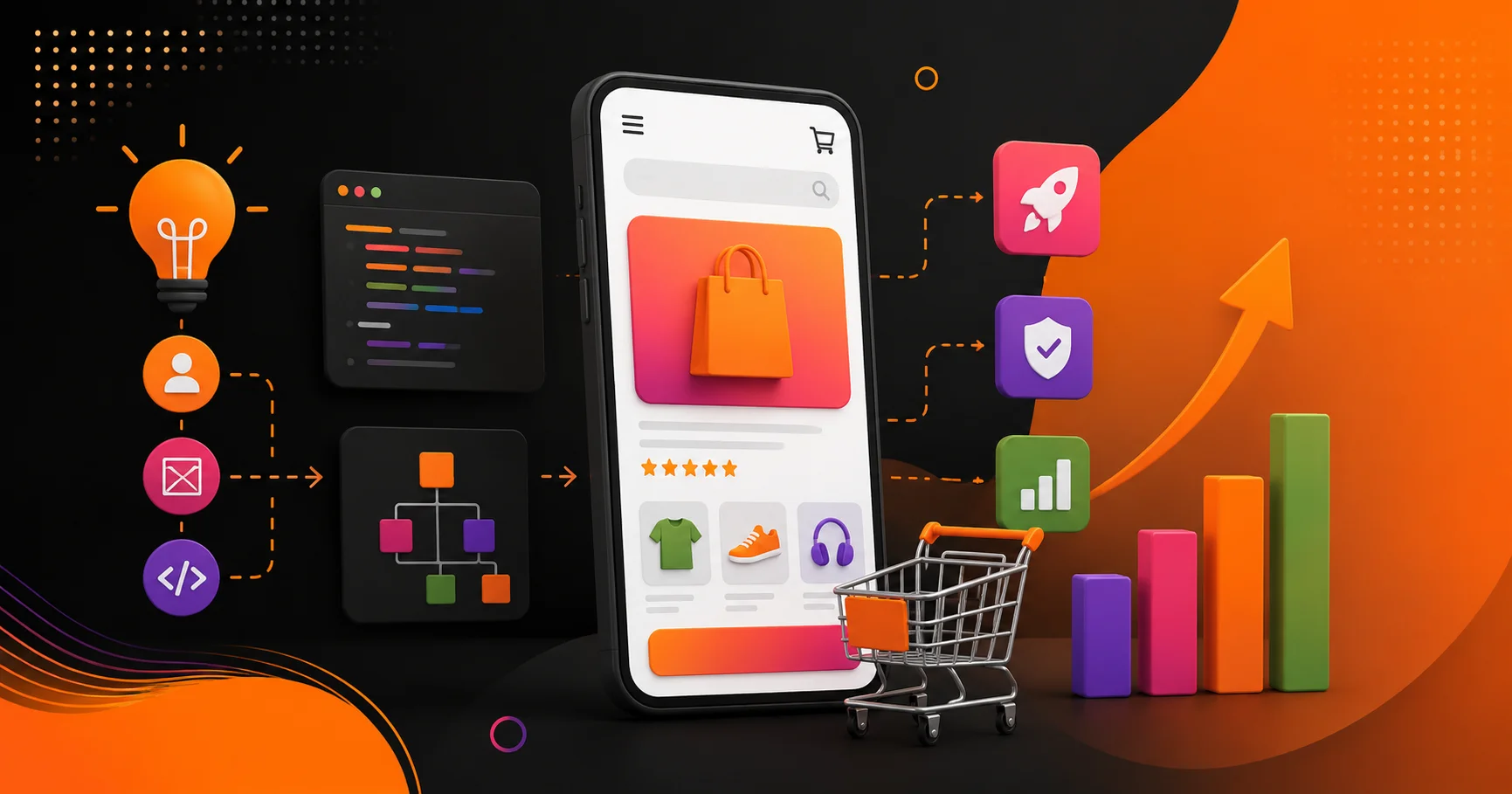
Startups need to build an MVP e-commerce app to grow in the market. MVP is Minimum Viable Product. It’s the simplest version of your app that actually works. Not a broken or incomplete product, it’s a focused one that does the job without all the extra bells and whistles.
And in 2026, with so many platforms and tools available, building an MVP e-commerce app is something any startup can do without going over budget.
Why Build an MVP at All?

A lot of startups fail because they build something nobody really wanted. They add too many features, spend too much money, and by the time they launch, the market has moved on.
An MVP stops that from happening. You launch something simple, see how real people use it, collect feedback, and improve. It’s faster, cheaper, and honestly, a lot less stressful.
For e-commerce, especially, this approach makes sense. You can test your product, your pricing, and your customer experience before going all in.
Step 1 — Figure Out Your Strategy Before Anything Else
Don’t open a laptop and start building yet. Sit down and answer these questions first.
Who are you selling to? Regular people (B2C) or other businesses (B2B)? This changes how your checkout, pricing, and even your product pages should work.
What are you selling? Physical goods, digital products, subscriptions? Each one has different requirements.
Why would someone choose you over everyone else? Better prices, faster delivery, a niche no one else is serving? Know your angle.
Step 2 — Pick the Right Platform for Your Stage
In 2026, you don’t need to build everything from scratch. There are great options depending on your budget and technical setup.
Shopify, Wix, or Webflow Commerce are great if you want to launch quickly without a developer. They handle the technical stuff for you. Perfect for testing your idea fast.
Medusa.js, Saleor, or CommerceLayer are better if you want more control and a custom look. You’ll need some development help, but you get a lot more flexibility.
Fully custom development is usually overkill at the MVP stage. Save that for after you’ve validated your idea.
For most startups right now, a semi-custom setup, an open-source backend with a clean frontend, hits the sweet spot between speed and flexibility.
Step 3 — Only Build What You Actually Need
This is where most startups go wrong. They try to add everything at once and end up with a half-finished product that took twice as long to build.
Here’s what your MVP actually needs:
Product pages: Good photos, clear descriptions, and variants like size or color. A simple search bar helps, too.
User accounts: Let people sign up, track their orders, and save their details. Always offer guest checkout, too.
Cart and checkout: Keep it simple and fast. The fewer steps, the better. And make sure it works perfectly on mobile.
Payments: Stripe and Razorpay are solid choices in 2026. If your products are on the pricier side, add a buy-now-pay-later option.
Order management: A basic dashboard where you can see orders, update statuses, and keep track of stock.
Mobile-friendly design: Most people shop on their phones. If your app looks bad on mobile, you’re losing sales.
Basic analytics: You need to know who’s visiting, what they’re clicking, and whether they’re buying. Google Analytics works fine to start.
Step 4 — What’s It Going to Cost?
Shopify or no-code setup: $500 to $3,000 to get started, plus $50 to $300 a month ongoing.
Semi-custom build: $5,000 to $20,000, depending on how complex things get and who you hire.
Fully custom development: $20,000 to $60,000 or more. Not recommended at the MVP stage.
Also, budget for the things people forget, payment processing fees, hosting, domain, email tools, and some money to actually market the thing when you launch.
A realistic number for most startups is somewhere between $8,000 and $25,000 to get a solid MVP live and in front of customers.
Step 5 — How to Actually Launch It
Building the app is only half the battle. If you’ll launch correctly, it’s a waste.
Start with a soft launch. Share it with a small group first — friends, beta testers, people from your network. Watch how they use it. Fix the obvious problems before you open it up to everyone.
Get the basics right. Clear product photos, an honest returns policy, a working contact page, and a proper order confirmation email. Simple stuff, but it builds trust.
Pick one marketing channel and focus on it. Don’t try to be everywhere. If your customers are on Instagram, go deep there. If it’s B2B, try LinkedIn or direct outreach. Master one channel before spreading yourself thin.
Start collecting emails from day one. Email still converts better than most other channels. Offer a discount or early access to get people to sign up, and then actually use that list.
Check your numbers after a few weeks. Where are people dropping off? What’s your conversion rate? What are customers saying? Let the data tell you what to work on next.
Mistakes to Avoid
Adding too many features too early. If it doesn’t help someone buy from you, it doesn’t belong in v1.
Not talking to customers before you build. Chat with 10 or 15 real people in your target market before you write a single line of code. You’ll learn things that save you weeks of work.
Testing only on desktop. Open your app on an actual phone. What looks fine on a computer can be completely broken on a small screen.
Not testing your checkout properly. Run real test payments. See what happens when a card gets declined. Make sure the confirmation email arrives. This is where money changes hands; it has to work.
Going live with no plan to get traffic. Being alive doesn’t mean people will find you. Have a simple plan for getting your first 100 visitors before launch day.
Conclusion
The most successful e-commerce businesses didn’t start with a perfect product; they started, figured things out along the way, and kept improving. Your MVP is just step one of that journey. There are many e-commerce website development company in Bangalore, but if you want to find the one that can help you in growth, go with the best e-commerce developers in Bangalore.
Get it live. Get feedback. Keep going.
[ad_2]
Source_link