[ad_1]
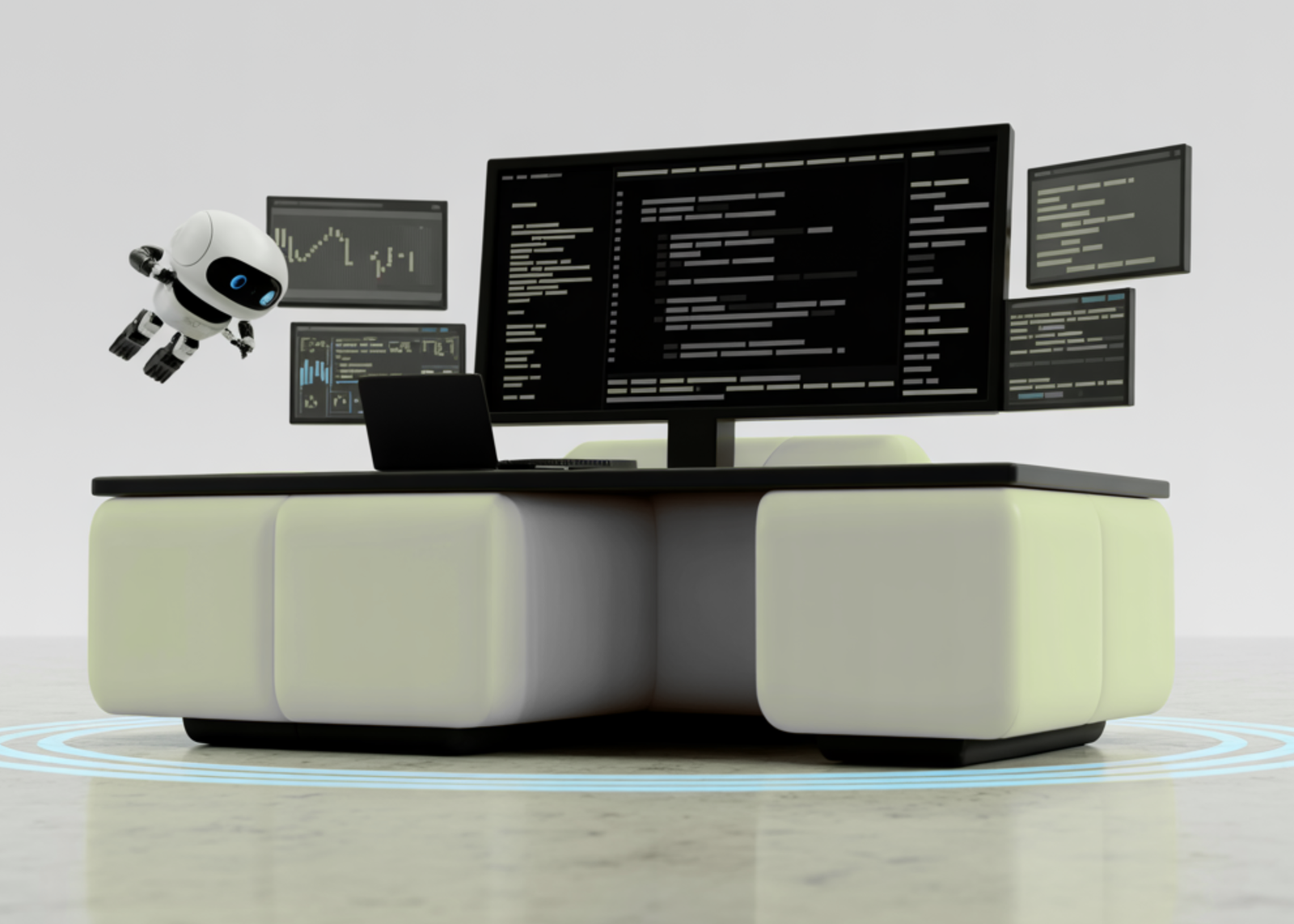
Google has introduced Antigravity as an agentic development platform that sits on top of Gemini 3. It is not only an autocomplete layer, it is an IDE where agents plan, execute, and explain complex software tasks across editor, terminal, and browser surfaces. Antigravity was launched on November 18, 2025, alongside Gemini 3 as part of Google’s push toward agent centric developer tools.
What Antigravity Actually is?
Antigravity is described by Google as a new agentic development platform with a familiar AI powered IDE at its core. The goal is to evolve the IDE toward an agent first future, with browser control and asynchronous interaction patterns that let agents autonomously plan and execute end to end software tasks.
In practice, Antigravity looks and behaves like a modern AI editor but treats agents as first class workers. Agents can break tasks, coordinate with other agents, edit files, run commands, and drive a browser. The developer operates at a task level, while the system manages the low level tool interactions.
Under the hood, Antigravity is an Electron application based on Visual Studio Code. It requires a Google account sign in and ships as a free public preview for macOS, Linux, and Windows.
Models, Pricing, And Runtime Environment
Antigravity exposes multiple foundation models inside the same agent framework. In the current preview, agents can use Gemini 3, Anthropic Claude Sonnet 4.5, and OpenAI GPT OSS models. This gives developers model optionality inside one IDE instead of binding them to a single vendor.
For individual users, Antigravity is available at no charge. Google describes the Gemini 3 Pro usage as subject to generous rate limits that refresh every 5 hours, and notes that only a small fraction of power users are expected to hit them.
Editor View And Manager View
Antigravity introduces 2 main work modes that match different neural models. Documentation and coverage consistently describe these as Editor view and Manager view.
Editor view is the default. It looks like a standard IDE with an agent in the side panel. The agent can read and edit files, suggest changes inline, and use the terminal and browser when needed.
Manager view lifts the abstraction from single files to multiple agents and workspaces. This is the place where you coordinate several agent runs rather than editing code line by line.
Artifacts, Not Raw Tool Logs
A key design element in Antigravity is the Artifact system. Instead of exposing only raw tool call logs, agents produce human readable artifacts that summarize what they are doing and why.
Artifacts are structured objects that can include task lists, implementation plans, walkthrough documents, screenshots, and browser recordings. They represent work at a task level rather than at an API call level and are designed to be easier for developers to verify than dense traces of model actions.
Google positions this as a response to a trust problem in current agent frameworks. Many tools either show every internal step, which overwhelms users, or hide everything and only show the final code diff. Antigravity tries to sit in the middle by surfacing task level artifacts plus enough verification signals so that a developer can audit what the agent did.
Four Design Tenets And Feedback Channels
Antigravity is explicitly built around 4 tenets, trust, autonomy, feedback, and self improvement.
Trust is handled through artifacts and verification steps. Autonomy comes from giving agents access to multiple surfaces, editor, terminal, and browser, so they can run more complex workflows without constant prompts. Feedback is enabled through comments on artifacts, and self improvement is tied to agents learning from past work and reusing successful procedures.
Antigravity allows developers to comment directly on specific artifacts, including text and screenshots. Agents can incorporate this feedback into their ongoing work without discarding the current run. This lets you correct a partial misunderstanding without restarting the whole task.
The platform also exposes a knowledge feature where agents can retain snippets of code or sequences of steps from earlier tasks. Over time, this becomes a reusable internal playbook that agents can query, rather than rediscovering the same strategies for each new project.
Key Takeaways
- Antigravity is an agent first development platform that turns the IDE into a control plane where agents operate across editor, terminal and browser surfaces, instead of a narrow inline assistant.
- The system is a Visual Studio Code fork that runs as a free public preview on Windows, macOS and Linux, with generous Gemini 3 Pro rate limits and optional use of Claude Sonnet 4.5 and GPT OSS.
- Antigravity exposes 2 main modes, Editor view for hands on coding with an agent sidebar and Manager view as a mission control interface to orchestrate multiple agents and workspaces asynchronously.
- Agents emit Artifacts, task lists, implementation plans, screenshots, browser recordings and more, which act as verifiable evidence of work instead of raw tool logs and enable asynchronous review workflows.
- Feedback and self improvement are built in, developers can attach Google Docs style comments to artifacts across surfaces, and agents incorporate this feedback and learn from a development knowledge base without restarting tasks.
Google Antigravity is a pragmatic step toward agentic development. It anchors Gemini 3 Pro inside a real IDE workflow, exposes Editor view and Manager view for supervising agents, and enforces task level visibility through Artifacts. The four tenets, trust, autonomy, feedback, self improvement, are grounded in verifiable outputs and persistent knowledge rather than opaque traces. Overall, Antigravity treats the IDE as a governed environment for autonomous agents, not a chat window with code actions.
Check out the FULL TECHNICAL DETAILS here. Feel free to check out our GitHub Page for Tutorials, Codes and Notebooks. Also, feel free to follow us on Twitter and don’t forget to join our 100k+ ML SubReddit and Subscribe to our Newsletter. Wait! are you on telegram? now you can join us on telegram as well.

Michal Sutter is a data science professional with a Master of Science in Data Science from the University of Padova. With a solid foundation in statistical analysis, machine learning, and data engineering, Michal excels at transforming complex datasets into actionable insights.
[ad_2]
Source_link