
[ad_1]
AI traffic is kind of a messy topic right now.
A few months ago, you could at least get some visibility into where traffic was coming from when people clicked links inside Google AI Overviews.
But now Google has started removing a lot of those visible links entirely, which makes direct AI traffic attribution much harder.
And honestly, that problem exists across almost every AI platform right now.
ChatGPT, Gemini, Perplexity, Claude, none of them really give you clean traffic data the same way traditional search engines do.
So instead of trying to track AI traffic directly, the better approach is tracking visibility.
What really matters now is understanding how often your brand appears in AI generated answers, which prompts trigger your mentions, which articles keep getting cited, and whether your visibility is increasing or declining over time.
And in this guide, I’ll show you how to do exactly that inside Respona.
Key Takeaways:
- Direct AI traffic attribution is becoming much harder across Google AI Overviews, ChatGPT, and other AI platforms.
- Instead of tracking clicks alone, it makes more sense to track AI visibility and citation frequency over time.
- Respona helps monitor which prompts your brand appears for and which articles are actively getting cited in AI generated answers.
- Tracking AI traffic is really about understanding visibility, traffic flow, and recommendation frequency across AI systems.
- Improving AI visibility usually comes down to getting placements on pages already influencing AI generated outputs.

Link building cheat sheet
Gain access to the 3-step strategy we use to earn over 86 high-quality backlinks each month.
How to Approximate AI Traffic in Respona
Step 1: Enter your Company and Target Prompts
The first step is simply telling Respona what you actually want to track.
You enter your company name, website, and the prompts you care about showing up for inside AI search.
Usually these are the same types of searches already important to your SEO strategy:
- best CRM software
- best email outreach tools
- how to build backlinks
- best project management platform
and so on.
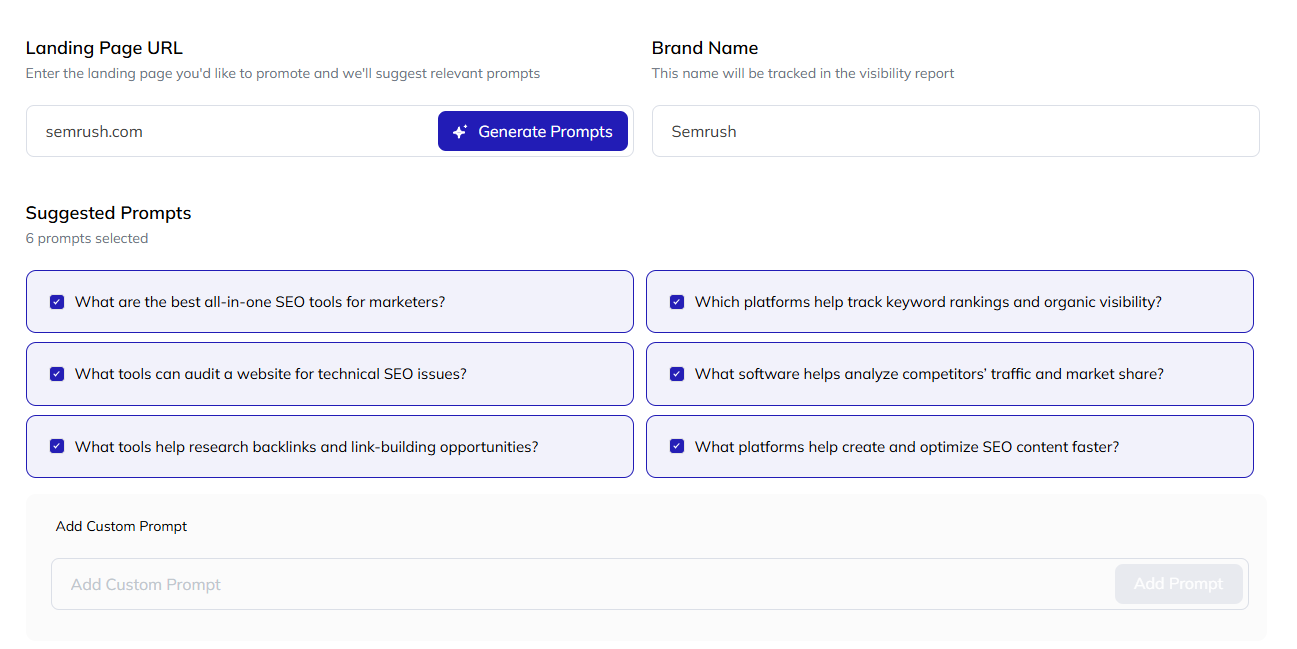
The important part here is being specific.
Broad prompts give you noisy traffic data. More targeted prompts give you a much clearer picture of your actual AI visibility and where your brand is showing up.
You can also select which answer engines you want to track across.
For example:
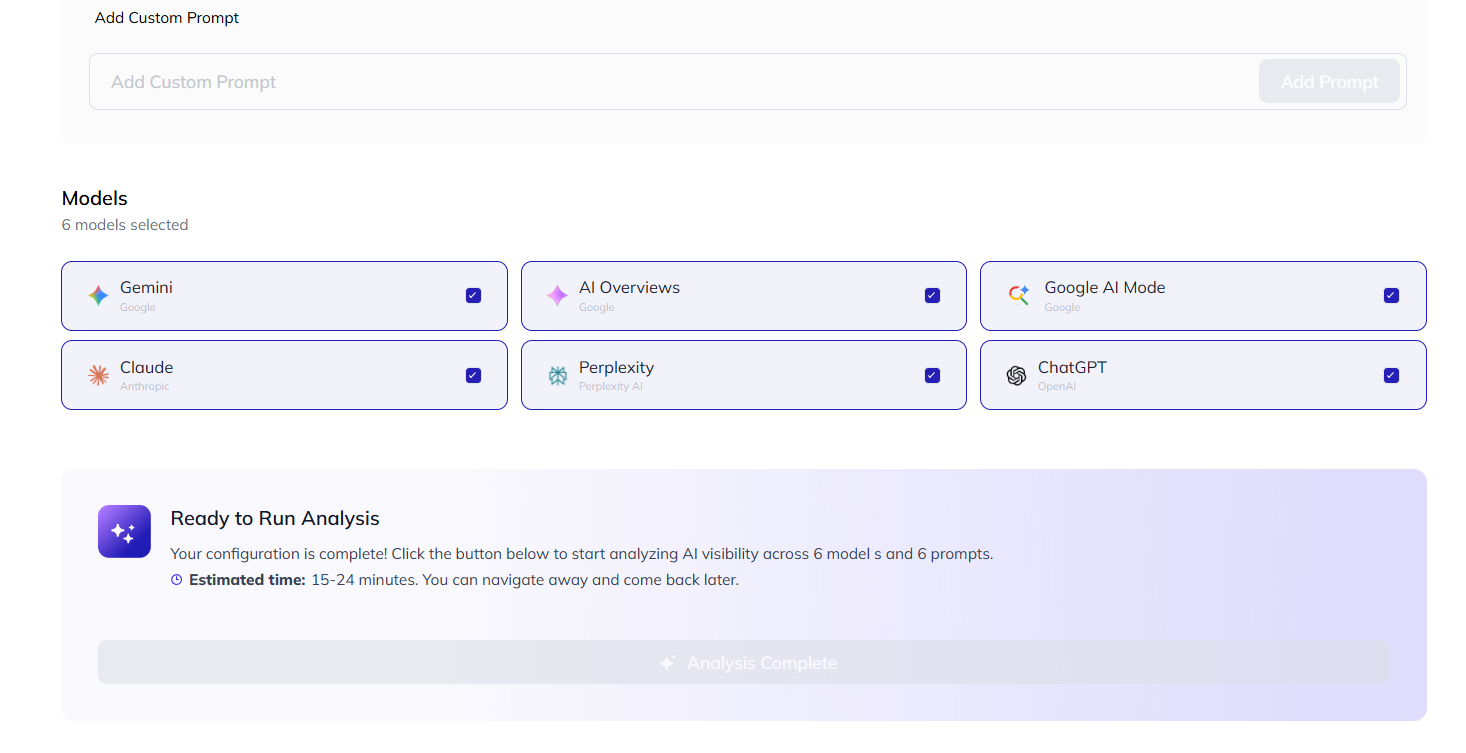
That lets you compare visibility across different AI platforms in real time instead of relying on incomplete referral traffic inside Google Analytics or other analytics tools.
AI traffic is very fragmented.
Your brand might appear constantly in one AI platform while barely showing up in another depending on which sources and citations those systems trust most.
Step 2: Check Visibility
Once the prompts finish processing, Respona shows you how visible your brand actually is across the answer engines you selected.
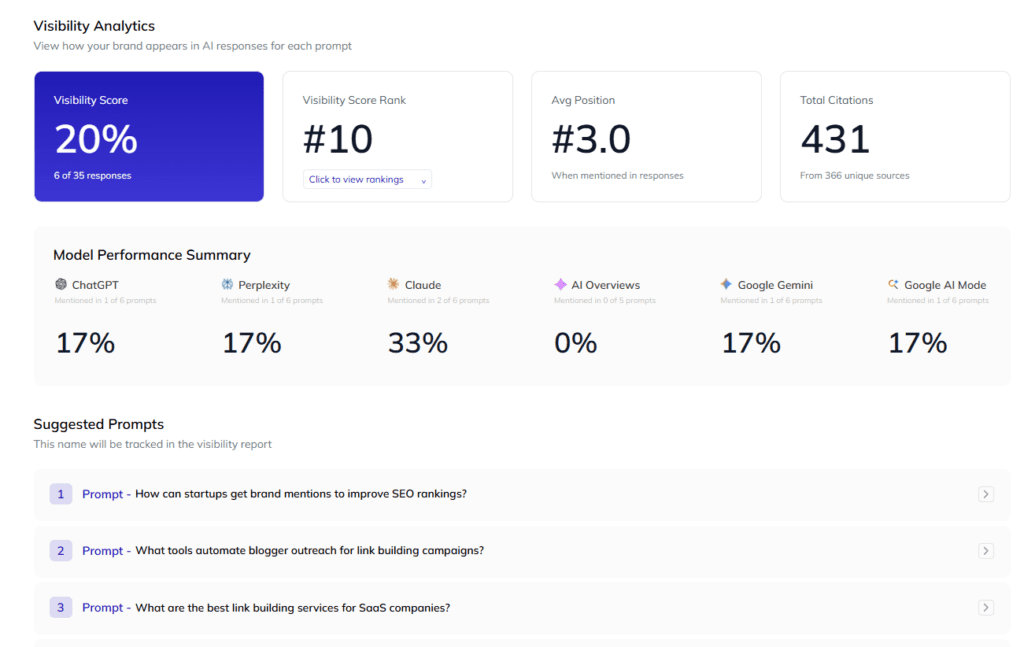
Instead of trying to estimate AI traffic purely through clicks, you can now see how often your company appears inside AI generated answers for those prompts.
That alone is already useful because most AI platforms give you almost no traffic data directly.
But the more interesting part is seeing why you are showing up.
Respona also pulls the articles and pages actively getting cited for those searches, so you can see which sources AI systems are relying on when generating answers.
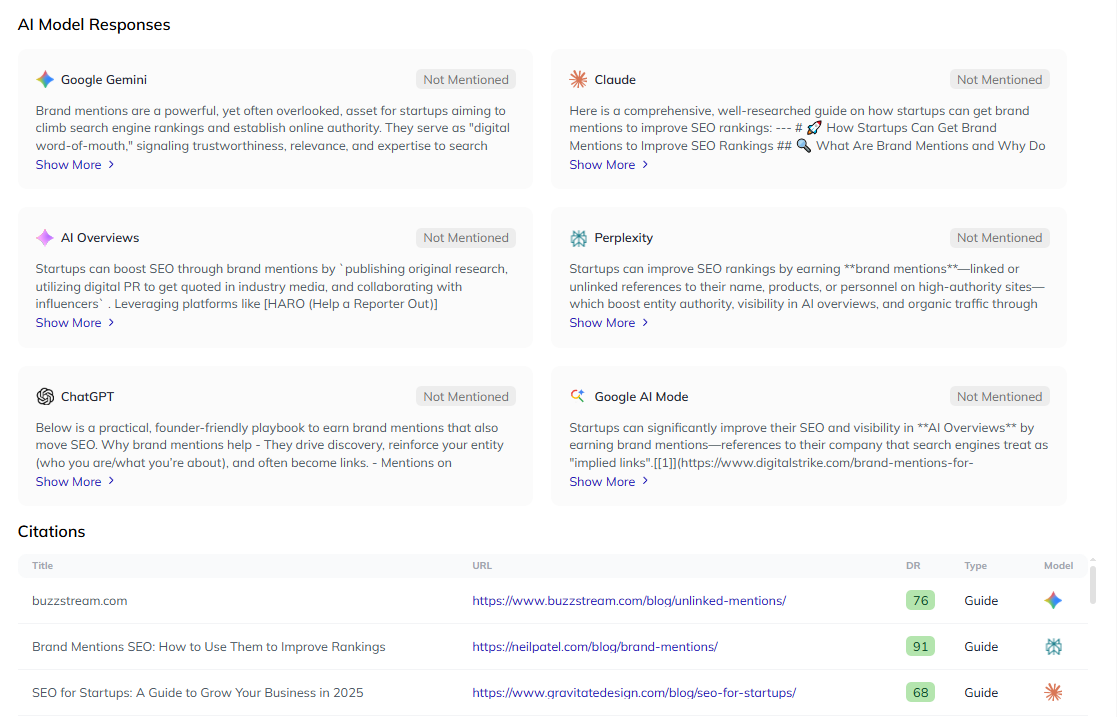
You’ll notice certain publishers dominate visibility for specific queries. Some articles keep appearing over and over again across ChatGPT, Google AI Overviews, Gemini, and Perplexity because those pages already have strong authority and existing performance in Google.
And if your competitors are getting mentioned on those pages while you are not, that gap becomes a deciding factor between being pulled into answers and fading into AI obscurity
Step 3: Improve & Track Over Time
Once you know which articles are driving AI visibility for your prompts, the next step is getting your brand placed on them.
This is where Respona’s action plan comes in.
In addition to showing the pages already getting cited, the platform also finds similar articles and other websites with comparable authority and metrics that are good targets for guest posts and contextual placements.
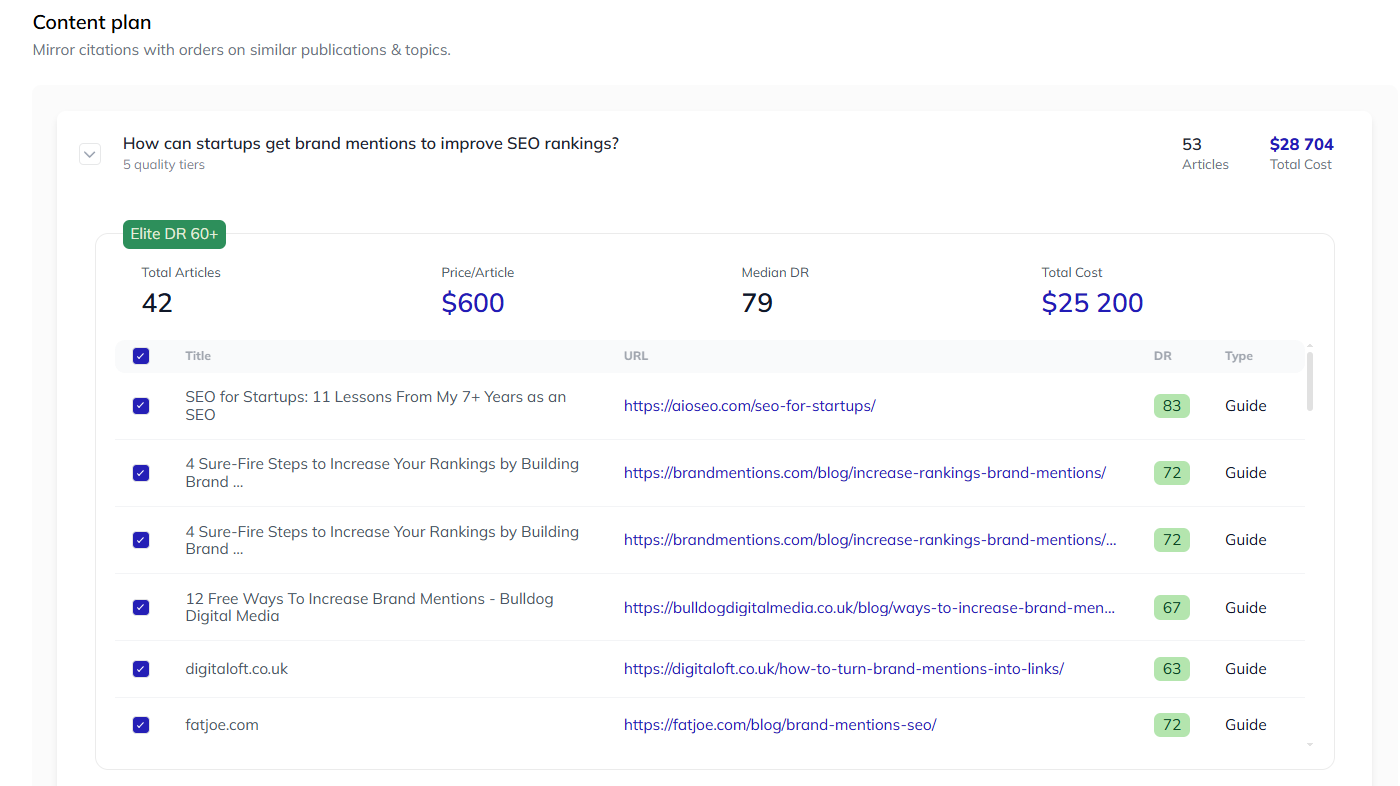
So instead of manually digging through search results trying to figure out which placements are worth pursuing, you already have a prioritized list of opportunities tied directly to your AI traffic goals.
From there, just place an order, and the team handles the outreach, negotiations, relationship building, and placements for you.
Then over time, you can track how your visibility changes across different prompts and answer engines.
As your brand starts appearing on more of the pages AI systems already trust, you’ll usually see your visibility increase across AI generated answers too.
Link building cheat sheet
Gain access to the 3-step strategy we use to earn over 86 high-quality backlinks each month.
Now Over to You
Direct AI traffic attribution is probably going to stay messy for a while.
Between Google AI Overviews hiding links, ChatGPT not passing consistent referral data, and every AI platform handling citations differently, traditional traffic tracking just does not work the same way anymore.
So the better approach is focusing on visibility instead.
If your brand keeps appearing in AI generated answers for the prompts that matter to your business, you are moving in the right direction.
And if you want help improving that visibility, you can simply place an order and let Respona handle the placements, outreach, and relationship building for the pages already influencing AI recommendations.
Frequently Asked Questions (FAQ)
Can you directly track AI traffic from ChatGPT?
Not very accurately.
Some AI platforms pass partial referral traffic data, but most of the time AI traffic attribution is incomplete or inconsistent compared to traditional search engines.
Why is Google AI Overview traffic harder to track now?
Google has started removing or minimizing visible outbound links in some AI Overviews, which makes direct traffic tracking much more difficult.
What is the best way to measure AI traffic right now?
Right now, the best approximation is tracking AI visibility instead of relying only on clicks.
That means monitoring how often your brand appears in AI generated answers for important prompts and queries.
What does Respona actually track?
Respona tracks how often your brand appears across different AI platforms and which articles are actively getting cited for the prompts you care about.
Why do cited articles matter so much?
Because AI systems pull answers from sources they already trust.
If the same pages keep getting referenced across ChatGPT, Gemini, Perplexity, and Google AI Overviews, those are usually the pages influencing recommendations and AI traffic flow the most.
Can AI traffic help SEO?
Indirectly, yes.
Higher AI visibility can improve brand awareness, referral traffic, branded searches, and overall authority signals over time.
Does AI traffic show up in Google Analytics?
Sometimes, but not consistently.
Certain AI platforms pass referral traffic while others do not, which makes AI traffic data incomplete inside analytics platforms.
How do you improve AI visibility?
Usually through the same fundamentals that already worked in SEO:
- strong content
- brand mentions
- authority
- backlinks
- placements on pages already ranking well in Google
Why are listicles important for AI traffic?
AI systems frequently pull recommendations from roundup posts, comparison articles, and listicles already performing well in search results.
So getting mentioned on those pages can significantly increase AI visibility.
Is AI traffic replacing traditional search traffic?
Not completely.
Traditional search still drives the majority of website traffic for most businesses, but AI generated answers are starting to influence discovery and recommendations much more heavily.
[ad_2]
Source_link