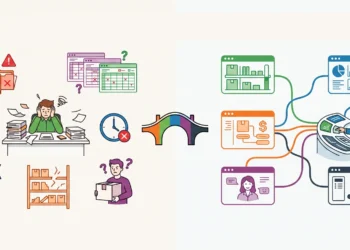
The pace of innovation is rapid. What worked even two years ago might already feel obsolete. Being in the business of selling in this cutthroat market, it’s now imperative to reevaluate your digital transformation strategy.
In the year 2026, businesses continue to make their way in the online space. They have started employing the use of automation via artificial intelligence, a cloud-native environment, and a customized way of treating customers.
To survive, you need to assess your tech stack. Rethink processes that worked before, and adopt new tools.
The goal: Not just to digitize but to transform how your business delivers value. Here’s more!
Is Your Company Ready for a Digital Transformation Journey?
Key Considerations For Digital Transformation Strategy in 2026
There is no one ready recipe for digital transformation. Goals must align with tech, flexibility must be balanced, and scalability should by no means be an afterthought. Let’s discuss this:
1. Align Technology with Business Goals
When you decide to transform digitally, you need clarity before you go ahead. The technology that will be used should support business outcomes.
For example, let’s say you are a retail company and your goal is to retain your customers. Then, the way forward would be to use a recommendation from an AI-driven solutions engine to personalize your marketing automation.
What are your KPIs? Determine that and then your transformation brings clear benefits.
2. Build Flexibility into Your Strategy
Businesses with flexible systems and work processes benefit significantly. In what way?
They can add new tools easily, and this keeps their current operations running smoothly.
For example, a microservices architecture for a fintech company can help update processes faster. Services like payment modules, fraud detection systems, and user interfaces can be updated separately.
3. Prioritize Scalability from Day One
Can your infrastructure adapt to a growing number of users without degradation in performance or undesirable costs? That’s the test of scalability. A cloud-based infrastructure can help adjust quickly according to the ongoing demand of customers. This helps avoid expensive do-overs down the road. This facilitates long-term growth.
Solving the Dilemma of Build vs Buy Software
Do you build or buy software? This is no small consideration.
Buying off-the-shelf software might make sense in the short term. It’s faster and more affordable. This could be ideal for panelling against traditional standard processes such as payroll or rudimentary CRM. Keep in mind though that this might not work in your favor long-term. You will quickly find that there are restrictions. Customizations and integrations are not easy with such software packages. You might end up spending more than you accounted for.
With custom software, companies can develop solutions that are tailor-made for their specific workflows. These can be modified as time passes. This gives businesses a competitive edge.
Many organizations today use a hybrid approach. They buy for standard needs and build for core business differentiation.
Frequently Asked Questions (FAQs)
Q. Why is digital transformation important for businesses?
A. Digital transformation is important because it helps businesses work more efficiently, reduce manual effort, and respond faster to customer needs. By using modern technologies, companies can improve productivity, make better decisions with data, and stay competitive in a rapidly changing market.
It also helps businesses deliver better customer experiences and adapt more easily to new challenges and opportunities. Ultimately, digital transformation supports long-term growth and innovation.
Q. What challenges does digital transformation bring?
A. Common challenges that might come up when a business is going through digital transformation are:
When new tools are introduced, employees may find it difficult to adapt or be hesitant to transition to new processes.
Recruiting talent with the specific skill set you need is tough. This skills gap can delay projects or lead to inefficient execution.
Connecting legacy systems with modern tools isn’t always easy and can slow things down.
If the goals aren’t clear, the whole effort can lose direction. This often leads to wasted time, money, and effort.
You may also encounter issues with data migration. Overcoming these challenges necessitates clear communication, adequate training, and a clearly outlined path forward.
Q. How much does custom software cost?
A. The price of custom software can range anywhere from $10,000 to over $900,000. Why such a diverse range? The more complex your needs, the more the cost. Some factors that will impact the cost:
- the features your business specifically needs,
- the integrations that will work well,
- the development timeline.
- whether you want to build an in-house team or if you would rather outsource it to a reliable vendor.
The best way to go is find a vendor to build you the exact solution you need. Scale as the requirement arises.
Best Practices for Successful Digital Transformation
What are the steps in digital transformation? We’ll give something beyond just steps. Here’s the recipe for a successful digital transformation– some best practices to guide you through a seamless digital transformation journey:
1. Focus on People, Not Just Technology
Transformation is put into action when employees are able to understand and adapt to new systems. To equip employees with this, use hands-on training. Create user guides that help employees learn a new ERP system faster. This is better than relying completely on technology to get the job done. Also, when a team is engaged, it reduces resistance and can improve overall ROI.
2. Start Small, Then Scale
A phased approach works best. This allows you to first test your ideas, see if they work well, then choose to implement them.
3. Leverage Data for Decision-Making
When your Insights are data-driven, you get smarter, faster decisions. Use AI to analyze customers’ shopping patterns, for instance. That gives you a clear map of what you might need. Perhaps you need better inventory management tools. Or areal-time dashboard to better monitor performance and be proactively responsive. Data transforms guesswork into strategic action.
4. Ensure Cybersecurity is Built-In
Security must be integrated in every stage of transformation and not added later. Encryption and Multi-Factor Authentication to protect the customer’s data is a must. Monitoring should be continuous from day one. Ignoring such factors can easily result in security issues and loss of customer trust. A secure foundation benefits both your business and its reputation.
Choosing the Right Tech Partner Matters!
No matter how well your business has planned the digital transformation strategy, you need to have the right people to carry it out. That means getting structured processes, domain knowledge, and successful execution under one roof with a competent technology partner.
A good technology partner can turn business needs into solutions. They make integration smooth and provide ongoing optimization. This quidance is invaluable. It can save you a world of trouble with delayed schedules, cost overruns, and systems that fail to achieve the promised capability.
Think No More! Take Your Step Towards Transformation with a Reliable Tech Partner.
Why Choose Fingent
Fingent focuses on your digital transformation with a structured and collaborative approach, not a one-time implementation. Our strength is in the clear and precise execution of each stage of your project.
1. Fingent operates from a place of understanding towards your business model, processes, and pain points. Goals are then developed with success criteria and a transformation roadmap customized for you.
2. Based on the discovery phase, we begin to design a scalable and future-ready architecture. We look at different technology options and analyze which one would suit your needs best.
3. Fingent follows an agile project management methodology, breaking the project into sprints which are manageable. This lets clients check progress, give feedback, and make the necessary changes right away.
5. Before your project is deployed, we check performance, security, and usability. This guarantees that the solution complies with all requirements and makes it possible to detect and correct errors in an early phase.
6. Onboarding, training and documentation is part of our service.
7. We offer continuous support even after deployment. They check your system performance and make updates as your business needs change. This ongoing partnership ensures your digital transformation strategy continues to provide value.
Ready to digitally transform your business? Click here to know more.