• About Us
  • Disclaimer
  • Contact Us
  • Privacy Policy
Tuesday, June 9, 2026
mGrowTech
No Result
View All Result
  • Technology And Software
    • Account Based Marketing
    • Channel Marketing
    • Marketing Automation
      • Al, Analytics and Automation
      • Ad Management
  • Digital Marketing
    • Social Media Management
    • Google Marketing
  • Direct Marketing
    • Brand Management
    • Marketing Attribution and Consulting
  • Mobile Marketing
  • Event Management
  • PR Solutions
  • Technology And Software
    • Account Based Marketing
    • Channel Marketing
    • Marketing Automation
      • Al, Analytics and Automation
      • Ad Management
  • Digital Marketing
    • Social Media Management
    • Google Marketing
  • Direct Marketing
    • Brand Management
    • Marketing Attribution and Consulting
  • Mobile Marketing
  • Event Management
  • PR Solutions
No Result
View All Result
mGrowTech
No Result
View All Result
Home Al, Analytics and Automation

New AI system uncovers hidden cell subtypes, boosts precision medicine | MIT News

Josh by Josh
July 12, 2025
in Al, Analytics and Automation
0
New AI system uncovers hidden cell subtypes, boosts precision medicine | MIT News


In order to produce effective targeted therapies for cancer, scientists need to isolate the genetic and phenotypic characteristics of cancer cells, both within and across different tumors, because those differences impact how tumors respond to treatment.

Part of this work requires a deep understanding of the RNA or protein molecules each cancer cell expresses, where it is located in the tumor, and what it looks like under a microscope.

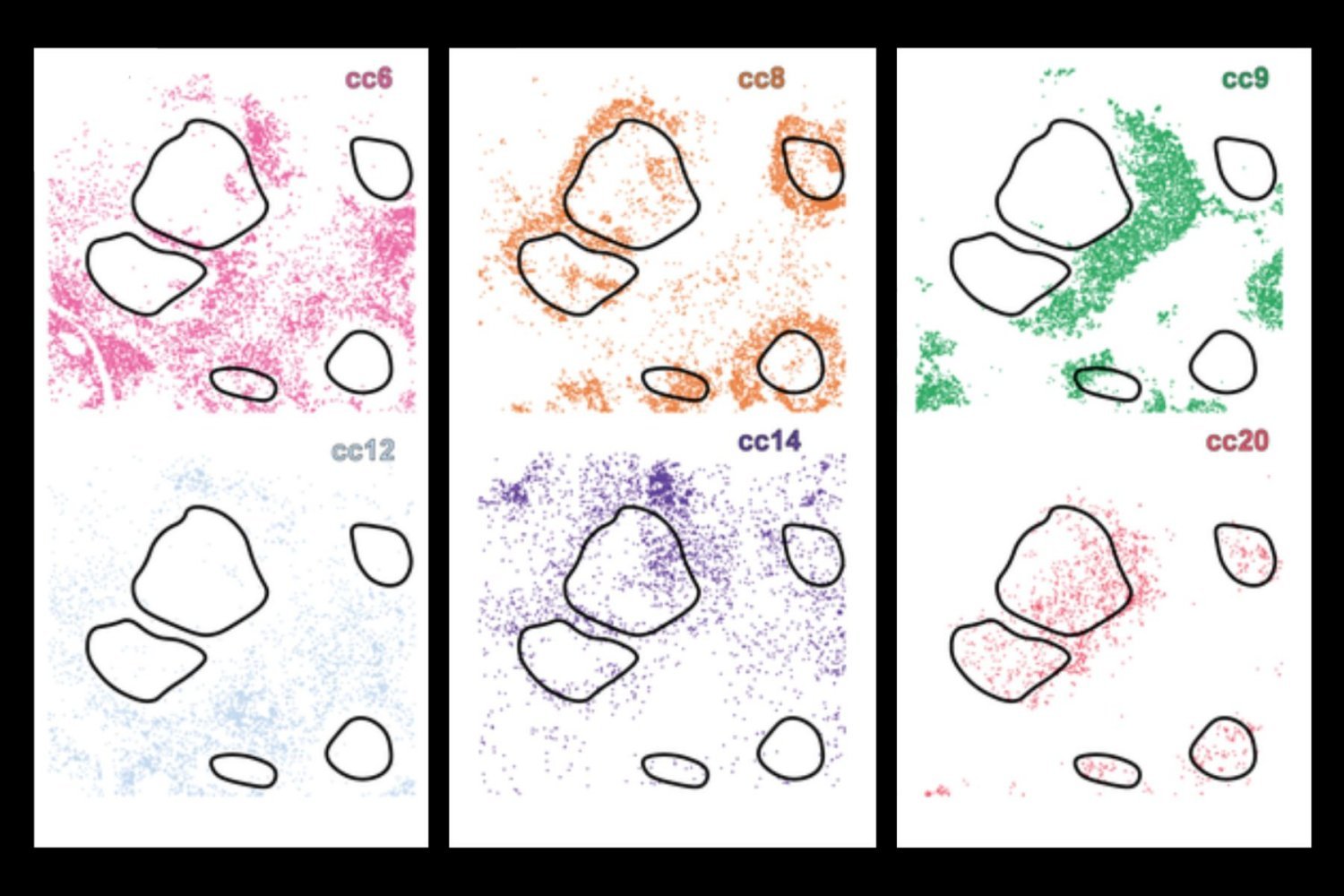
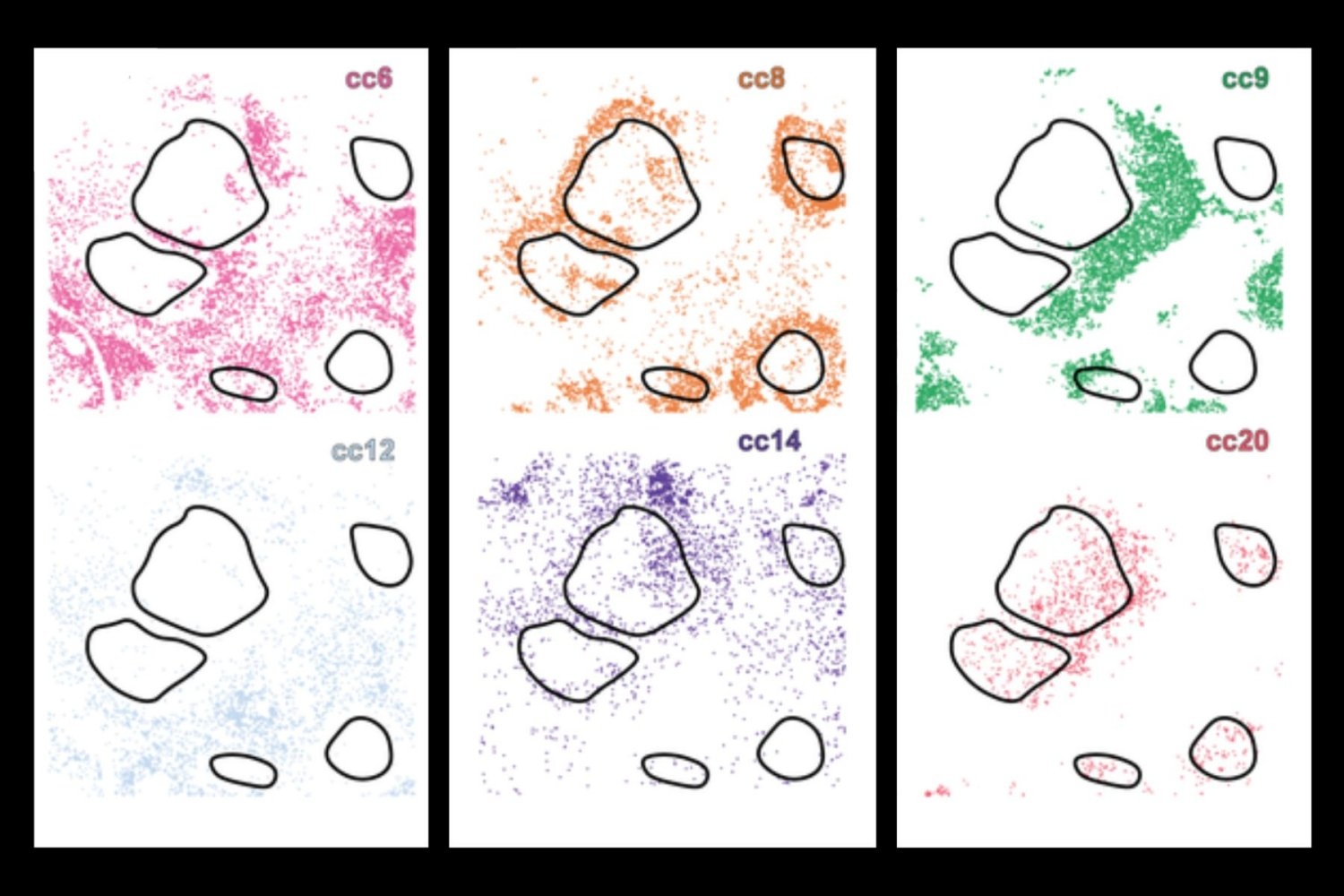
Traditionally, scientists have looked at one or more of these aspects separately, but now a new deep learning AI tool, CellLENS (Cell Local Environment and Neighborhood Scan), fuses all three domains together, using a combination of convolutional neural networks and graph neural networks to build a comprehensive digital profile for every single cell. This allows the system to group cells with similar biology — effectively separating even those that appear very similar in isolation, but behave differently depending on their surroundings.

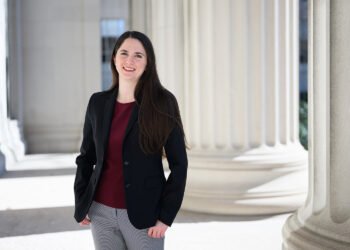
The study, published recently in Nature Immunology, details the results of a collaboration between researchers from MIT, Harvard Medical School, Yale University, Stanford University, and University of Pennsylvania — an effort led by Bokai Zhu, an MIT postdoc and member of the Broad Institute of MIT and Harvard and the Ragon Institute of MGH, MIT, and Harvard.

Zhu explains the impact of this new tool: “Initially we would say, oh, I found a cell. This is called a T cell. Using the same dataset, by applying CellLENS, now I can say this is a T cell, and it is currently attacking a specific tumor boundary in a patient.

“I can use existing information to better define what a cell is, what is the subpopulation of that cell, what that cell is doing, and what is the potential functional readout of that cell. This method may be used to identify a new biomarker, which provides specific and detailed information about diseased cells, allowing for more targeted therapy development.”

This is a critical advance because current methodologies often miss critical molecular or contextual information — for example, immunotherapies may target cells that only exist at the boundary of a tumor, limiting efficacy. By using deep learning, the researchers can detect many different layers of information with CellLENS, including morphology and where the cell is spatially in a tissue.

When applied to samples from healthy tissue and several types of cancer, including lymphoma and liver cancer, CellLENS uncovered rare immune cell subtypes and revealed how their activity and location relate to disease processes — such as tumor infiltration or immune suppression.

These discoveries could help scientists better understand how the immune system interacts with tumors and pave the way for more precise cancer diagnostics and immunotherapies.

“I’m extremely excited by the potential of new AI tools, like CellLENS, to help us more holistically understand aberrant cellular behaviors within tissues,” says co-author Alex K. Shalek, the director of the Institute for Medical Engineering and Science (IMES), the J. W. Kieckhefer Professor in IMES and Chemistry, and an extramural member of the Koch Institute for Integrative Cancer Research at MIT, as well as an Institute member of the Broad Institute and a member of the Ragon Institute. “We can now measure a tremendous amount of information about individual cells and their tissue contexts with cutting-edge, multi-omic assays. Effectively leveraging that data to nominate new therapeutic leads is a critical step in developing improved interventions. When coupled with the right input data and careful downsteam validations, such tools promise to accelerate our ability to positively impact human health and wellness.”
Source_link

READ ALSO

ClawHub Security Signals: A Coding Guide to End-to-End Security Signal Analysis and Verdict Classification on the AI Skills Dataset

Microsoft AI Introduces MAI-Transcribe-1.5: 2.4% WER on Artificial Analysis, Best-in-Class FLEURS Accuracy, and Up to 5x Faster Long-Audio Transcription

Related Posts

ClawHub Security Signals: A Coding Guide to End-to-End Security Signal Analysis and Verdict Classification on the AI Skills Dataset
Al, Analytics and Automation

ClawHub Security Signals: A Coding Guide to End-to-End Security Signal Analysis and Verdict Classification on the AI Skills Dataset

June 8, 2026
Microsoft AI Introduces MAI-Transcribe-1.5: 2.4% WER on Artificial Analysis, Best-in-Class FLEURS Accuracy, and Up to 5x Faster Long-Audio Transcription
Al, Analytics and Automation

Microsoft AI Introduces MAI-Transcribe-1.5: 2.4% WER on Artificial Analysis, Best-in-Class FLEURS Accuracy, and Up to 5x Faster Long-Audio Transcription

June 8, 2026
Building Reflective Prompt Optimization with GEPA: Multi-Component Prompts, Structured Feedback, and Held-Out Validation
Al, Analytics and Automation

Building Reflective Prompt Optimization with GEPA: Multi-Component Prompts, Structured Feedback, and Held-Out Validation

June 7, 2026
Best 21 Low-Code and No-Code AI Tools in 2026
Al, Analytics and Automation

Best 21 Low-Code and No-Code AI Tools in 2026

June 7, 2026
Tod Machover receives George Peabody Medal for contributions to music and technology | MIT News
Al, Analytics and Automation

Tod Machover receives George Peabody Medal for contributions to music and technology | MIT News

June 6, 2026
Moonshot AI Releases Kimi Code CLI: A Terminal AI Coding Agent Built in TypeScript for Next-Gen Agents
Al, Analytics and Automation

Moonshot AI Releases Kimi Code CLI: A Terminal AI Coding Agent Built in TypeScript for Next-Gen Agents

June 6, 2026
Next Post
Red Hat Introduces Cost-Free RHEL for Business Developers

Red Hat Introduces Cost-Free RHEL for Business Developers

POPULAR NEWS

Trump ends trade talks with Canada over a digital services tax

Trump ends trade talks with Canada over a digital services tax

June 28, 2025
15 Trending Songs on TikTok in 2025 (+ How to Use Them)

15 Trending Songs on TikTok in 2025 (+ How to Use Them)

June 18, 2025
Communication Effectiveness Skills For Business Leaders

Communication Effectiveness Skills For Business Leaders

June 10, 2025
App Development Cost in Singapore: Pricing Breakdown & Insights

App Development Cost in Singapore: Pricing Breakdown & Insights

June 22, 2025
Comparing the Top 7 Large Language Models LLMs/Systems for Coding in 2025

Comparing the Top 7 Large Language Models LLMs/Systems for Coding in 2025

November 4, 2025

EDITOR'S PICK

How To Write With AI Without Sounding Like a Machine [Free AI Workflows & Prompts]

How To Write With AI Without Sounding Like a Machine [Free AI Workflows & Prompts]

March 6, 2026
Tech Consulting Provider for Digital-First Enterprises

Tech Consulting Provider for Digital-First Enterprises

October 15, 2025
Elon Musk Boosts New Yorker’s Sam Altman Exposé on X as Trial Begins

Elon Musk Boosts New Yorker’s Sam Altman Exposé on X as Trial Begins

April 27, 2026
Google takes control of ‘Android of robotics’ project in quest for physical AI

Google takes control of ‘Android of robotics’ project in quest for physical AI

February 26, 2026

About

We bring you the best Premium WordPress Themes that perfect for news, magazine, personal blog, etc. Check our landing page for details.

Follow us

Categories

  • Account Based Marketing
  • Ad Management
  • Al, Analytics and Automation
  • Brand Management
  • Channel Marketing
  • Digital Marketing
  • Direct Marketing
  • Event Management
  • Google Marketing
  • Marketing Attribution and Consulting
  • Marketing Automation
  • Mobile Marketing
  • PR Solutions
  • Social Media Management
  • Technology And Software
  • Uncategorized

Recent Posts

  • The Scoop: Tim Cook makes a play for his legacy at final WWDC
  • 12 best online reputation management tools for 2026
  • Researchers trained an open source AI search agent, Harness-1, that outperforms GPT-5.4 on recalling relevant information
  • Stephen Curry and Curry Brand Enter Long-Term Deal with LI-NING
  • About Us
  • Disclaimer
  • Contact Us
  • Privacy Policy
No Result
View All Result
  • Technology And Software
    • Account Based Marketing
    • Channel Marketing
    • Marketing Automation
      • Al, Analytics and Automation
      • Ad Management
  • Digital Marketing
    • Social Media Management
    • Google Marketing
  • Direct Marketing
    • Brand Management
    • Marketing Attribution and Consulting
  • Mobile Marketing
  • Event Management
  • PR Solutions