Summary
- Meta’s Advantage+ provides automation features for campaign delivery, while marketers remain responsible for the audience inputs, creative assets, governance, and measurement they use
- Audience-sync behavior varies by platform and implementation, so teams should validate how identity, consent, permissions, and connected audience actions support their intended Meta use cases
- First-party data such as on-site behavior, purchase intent, and loyalty status can help teams build more relevant audience segments for Meta activation
- Customer Data Management and Journey Orchestration can support consent-aware audience activation by using unified profiles and journey-based audience actions
- Human checkpoints on brand safety, creative approval, and spend caps still matter in highly automated workflows.
Your team turned on Advantage+ last quarter, and now it is making targeting and bidding decisions faster than anyone can explain them to leadership. Meanwhile, if the audience segments feeding it are delayed or incomplete, Meta may be optimizing against a less current view of the customers your team wants to reach.
That gap between what Meta’s AI can do and what your martech stack actually feeds it is the real story of Facebook and Meta ad automation in 2026.
This article is for performance and growth marketers at mid-market to enterprise direct-to-consumer (DTC) and ecommerce brands running Meta ad spend who are evaluating AI tools and platform integrations for the year ahead.
You will learn how to evaluate Meta automation alongside third-party tools, which integration requirements to validate, and how unified first-party data can support the audiences you activate in Meta.
Meta offers automation features, and teams should verify the controls and requirements available in their own account before relying on a specific workflow. This makes clear operating processes, input quality, and measurement important considerations for performance teams.
What Advantage+ automates end-to-end
Meta automation operates within its platform, while marketers should retain clear ownership of strategy, creative inputs, audience definitions, and measurement. Marketers should confirm how their selected Meta automation settings use objectives, budgets, creative inputs, and audience signals before evaluating the results.
Where advertisers still keep control
Brand context, messaging guidelines, and the creative assets themselves still come from the marketer, and that input shapes how well the automation performs. Teams should define brand context, messaging guidelines, customer priorities, and review processes before using automation settings in a live campaign.
Teams should evaluate their requirements for cross-channel creative consistency and multi-account budget governance when deciding whether to add tools alongside Meta’s native automation. These requirements may call for separate workflow, reporting, or governance tools, depending on the team’s operating model.
- Creative-generation and multivariant testing tools that can support teams creating channel-specific copy and imagery ahead of platform upload.
- Bid and budget automation layers that can help agencies manage multiple ad accounts across clients with their own governance rules.
- Reporting layers that normalize Advantage+ performance data alongside other channels for a single view of blended return on ad spend
None of these tools replace the audience and behavioral data that inform the audiences a team chooses to activate in Meta. They extend work around the campaign, while Insider One is differentiated by unifying customer profiles, building predictive groups, and orchestrating paid-and-owned engagement around the audiences a team activates.
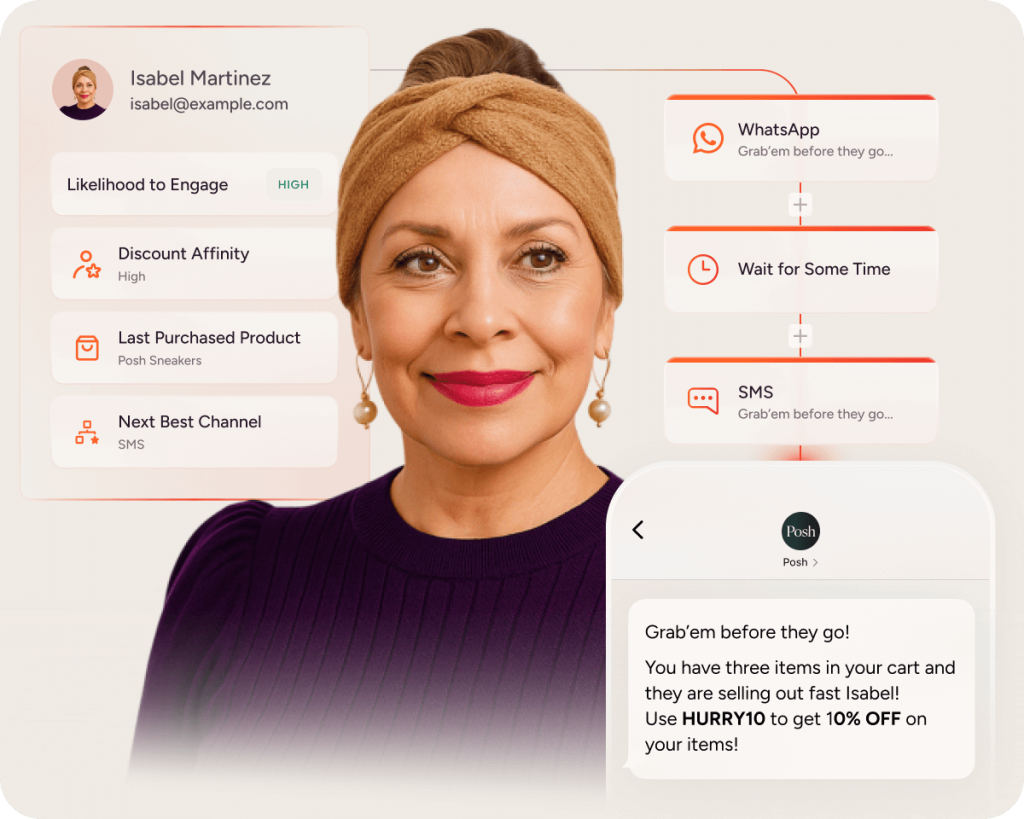
The core consideration is whether the team’s data, identity, consent, and audience-activation setup supports the intended Meta use case.
Audience-sync frequency and event availability vary by platform and implementation. Teams should validate how quickly a behavioral or purchase event can become eligible for a connected Meta audience and whether that behavior meets the needs of their journeys.
Batch-synced audience data versus real-time signals
Audience-sync frequency and event availability vary by platform and implementation, so teams should confirm how quickly a cart-abandonment or purchase signal can become eligible for a connected Meta audience.
When audience signals are delayed, teams have less confidence that the audience reflects the customer’s most recent browsing, purchase, or loyalty status.
Custom-build integration overhead
Meta audience activation depends on the available connector, identity data, consent handling, and account permissions, so implementation effort should be evaluated against the team’s required use cases.
Enterprise customer relationship management (CRM) suites may require separate workflow and reporting tools for specific Meta use cases, so teams should validate the available integrations and operating steps.
Feeding real-time first-party data into Advantage+ campaigns
For teams evaluating Meta activation, the priority is a customer-data and orchestration foundation that can support the required audience, consent, and journey use cases.
Insider One unifies first-party attributes, events, engagement data, and predictive groups into customer profiles that can support audience segmentation and activation alongside pixel-based tracking. That is the layer Insider One is built to provide.
Live behavioral and purchase-intent data beyond pixel-only signals
Pixel data captures only part of the customer context available to a marketing team. On-site browsing depth, product-page dwell time, loyalty tier, and purchase-intent scoring tell a fuller story before the click ever happens. Insider One’s Customer Data Management unifies behavioral and transactional data into a single customer profile that can support segmentation and audience activation for connected Meta use cases.
For example, Braun improved revenue influenced by AI-driven shopping recommendations by unifying on-site intent signals into a single data layer rather than relying on channel-siloed tracking, a pattern that applies directly to how Advantage+ audiences should be built.
Building one customer data feed for continuous Meta audience updates
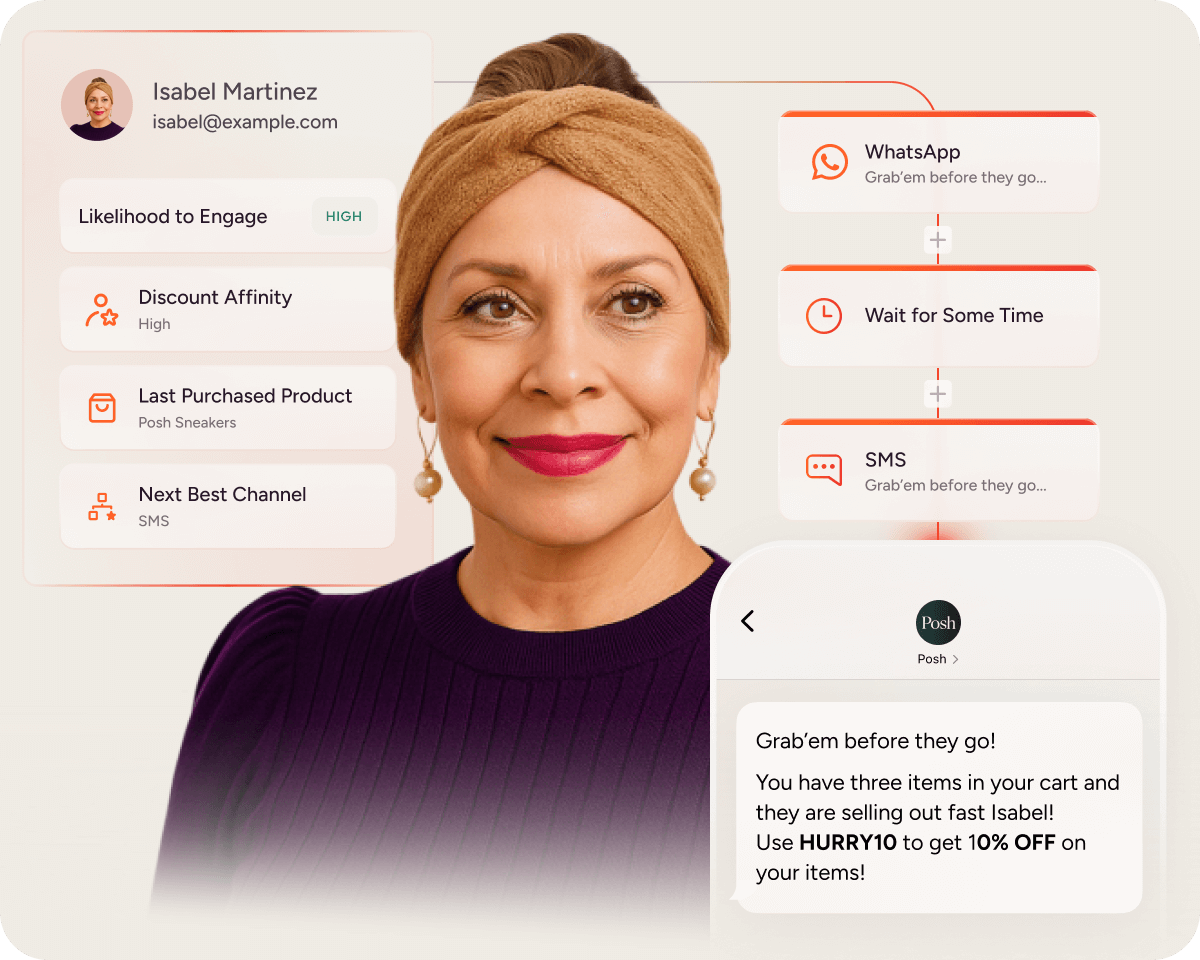
Through the Facebook Ads integration, Insider One can sync segments to Meta audiences and use journey-based audience actions at defined points in a customer journey built in Journey Orchestration.
A purchase event can be used in an Architect journey to trigger an audience action, subject to the connected Meta audience sync and the team’s implementation. Insider One AI™ suite supports AI-assisted content and journey creation for documented owned channels, including email, SMS, WhatsApp, web push, and app push.
Slazenger achieved a 49x return on ad spend using an omnichannel approach that kept audience and creative decisions grounded in unified customer data rather than channel-by-channel guesswork, the same principle that makes Advantage+ more effective when it is fed continuously instead of on a schedule.
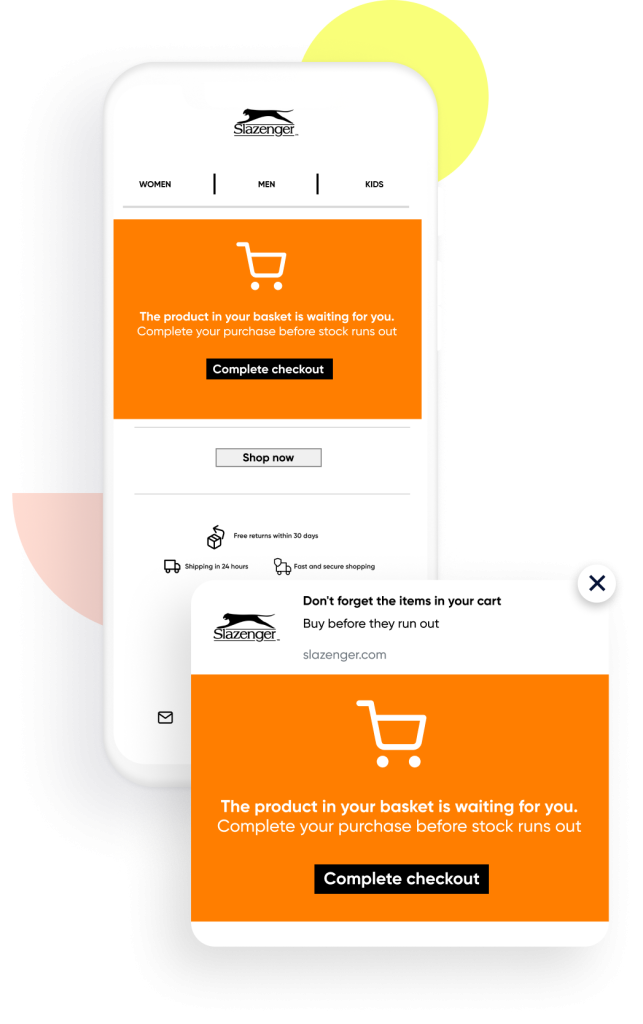
Highly automated campaigns need disciplined measurement, because a single underperforming input or workflow can hide inside an otherwise healthy blended return. Marketers who treat Advantage+ as a black box tend to notice performance drops weeks after they start, which is exactly the lag this section exists to prevent.
KPIs to track when AI controls three levers at once
Watch return on ad spend by audience segment, not just in aggregate, along with creative fatigue signals such as frequency and click-through decay, and cost per incremental customer rather than cost per click alone. Tracking key performance indicators (KPIs) at the segment level, instead of only at the campaign level, is what surfaces a targeting drift or a creative that has gone stale before it erodes the whole account’s efficiency.
Human checkpoints inside a mostly automated workflow
Brand safety review, creative approval before assets enter rotation, and hard spend caps at the account level remain manual checkpoints worth keeping even inside a highly automated system. Automation should not remove judgment from decisions that carry brand or budget risk; it should remove the manual labor around decisions that do not require judgment at all, which is a meaningful distinction most teams still blur.
Conclusion
Advantage+ depends on the campaign inputs and audiences a team provides, so marketers should assess whether their data, consent, and audience-activation setup supports the use cases they want to run.
A stronger approach pairs Meta’s native automation with unified first-party profiles, predictive segments, consent-aware audience activation, and coordinated owned-channel journeys. That combination helps teams coordinate Meta audience activation with email, SMS, WhatsApp, web push, app push, and personalization through Architect, including loyalty-aware retail retargeting and travel-abandonment recovery journeys.
To evaluate the fit of Journey Orchestration, Customer Data Management, and Insider One AI™ for your use case, book a personalized demo to review your goals, data requirements, and implementation constraints with the Insider One team.
Frequently Asked Questions
Meta provides native campaign automation capabilities, and teams should confirm the currently available features in their account and market. The tools that matter most alongside it are the ones that feed it better data, like a first-party , plus creative-testing and cross-account budget tools for teams managing multiple ad accounts.
Meta manages automation capabilities within its own advertising platform, while brands should evaluate whether their data and audience-activation setup supports the workflows they want to run. For brands, the practical question is whether their customer-data, consent, and audience-activation setup can support relevant, permitted audiences for the intended journey.
Insider One unifies on-site behavioral, transactional, and loyalty data into a single layer, then uses predictive segments, Audience Sync, and to activate or update Meta audiences at defined journey points, subject to the connected integration.
Teams should validate identity coverage, email identifiers, consent handling, Meta eligibility, Business Manager and Ads Account permissions, token management, and how the connected audience sync behaves for their intended journeys. These checks help ensure that the audiences used for activation reflect the data and consent rules required for the intended campaign and cross-channel journey.
Track return on ad spend by segment rather than only in aggregate, creative frequency and click-through decay to catch fatigue early, and cost per incremental customer instead of cost per click. Segment-level tracking surfaces performance drift before it affects the whole account.
Yes. Brand safety review, creative approval before assets go live, and account-level spend caps remain manual checkpoints even inside a highly automated workflow. Automation should remove repetitive optimization work, not the judgment calls that carry brand or budget risk.