— Beth Surmont, Head of Strategy & Design, 360 Live Media
Beth has spent 20 years reinventing conferences for associations and nonprofits. Here’s what the award-winning event strategist suggests planners do to keep their annual conferences fresh and worth returning to, year after year.
If you’re like most event planners, you’ve sat through a conference that felt like it was just going through the motions. The keynote landed flat. The 2 p.m. session block emptied out.
Longtime attendees drift because they’ve seen it all before. But you’ve also likely experienced the opposite: the buzz and excitement in a room when an event actually works. You want to know how to intentionally design an event experience that captures that magic every single time.
That’s the idea behind “Run Your Best Event, Ever,” a new content series from EventMobi. Each month, a working organizer breaks down what it really takes to run one event format exceptionally well. That spans annual conferences, trade shows, and user conferences, plus practical advice you can use to do the same.
To kick off this first episode, we’re starting with the annual conference, and there is no better guide than award-winning event strategist Beth Surmont. As Head of Strategy and Design at 360 Live Media, she has spent more than 20 years helping associations and nonprofits redesign, reinvent, and reinvigorate their events. She often goes onsite to observe them in the wild.
Here, Surmont shares the event engagement strategies, event experience design choices, and event planning best practices behind conferences people return to. She covers how to tell when a conference is truly working, why 10% to 20% of it should be reserved for experimentation, and the one structural mistake she sees planners make again and again.
“When an annual conference really works, what’s different about it? How do you know you’ve pulled it off?“
A primary part of my job is doing a Strategic Event Assessment® where I go onsite and observe the event. Sometimes people call me a conference spy.
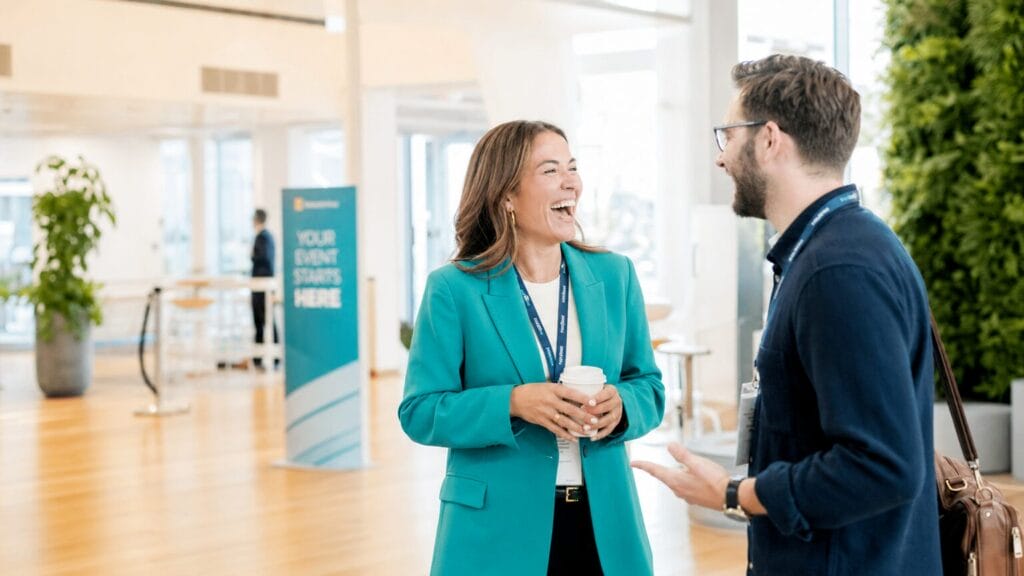
When an event works, you can feel it. People are buzzing at the airport as they connect with each other while waiting for their flight. There are smiles and a bounciness to how they enter the event space. You see people talking, hugging, laughing, shaking hands in the common spaces, heads nodding in the mainstage sessions, people taking notes and asking questions in the breakouts. You can feel business being done on the show floor: it’s like an energy boost when you walk in. You overhear people talking about this idea that they heard or this new person they connected with.
That’s the vibe, but the numbers prove it out as well. A healthy event has a good balance of first-timers and returning people, buyers and sellers, and appropriate career stages.
“As an annual conference gets more familiar, longtime attendees can feel like they’ve seen it before. What engagement strategies keep them coming back without the event feeling like a rerun?“
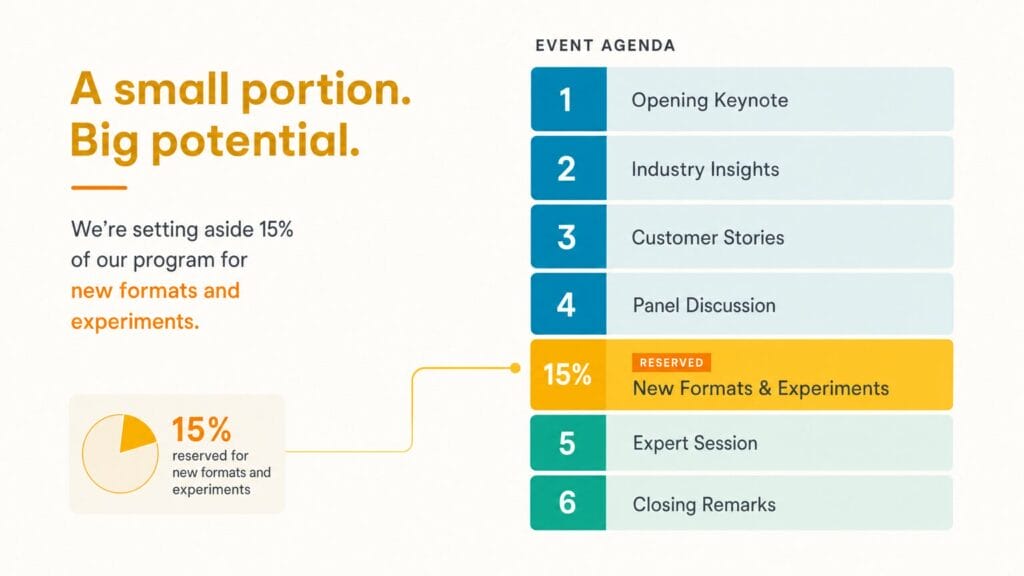
This is a tricky question, because you want to keep the balance of what’s working but always be trying new things. Depending on the group, I recommend that anywhere from 10-20% of the event should be innovation space. This could be new formats, activations, meetups, or other types of engagement. This way you are always showing something new, while still giving the audience the things that are attracting them in the first place.
A fun example from one of my events is we used to always do something creative with the name badges. One year it was a mini-notebook, another year it had a little paper circuit with a mini-lightbulb. It was fun because it usually involved some hands-on work for the audience to put it together, and it signaled right away that this event had a different feel to it.
That’s for a smaller event. For something that scales better, I really like scenario sessions, where you put people in small groups and have them work through a real-life situation. It works for any industry, and it really brings theory into practice. Plus, it’s a great way for people to connect. The type of session might be the same, but the scenarios evolve based on current trends, so people are always getting something new.
“How do you balance the content longtime members expect with what you need to draw new people in? Where do those two audiences pull hardest against each other?“
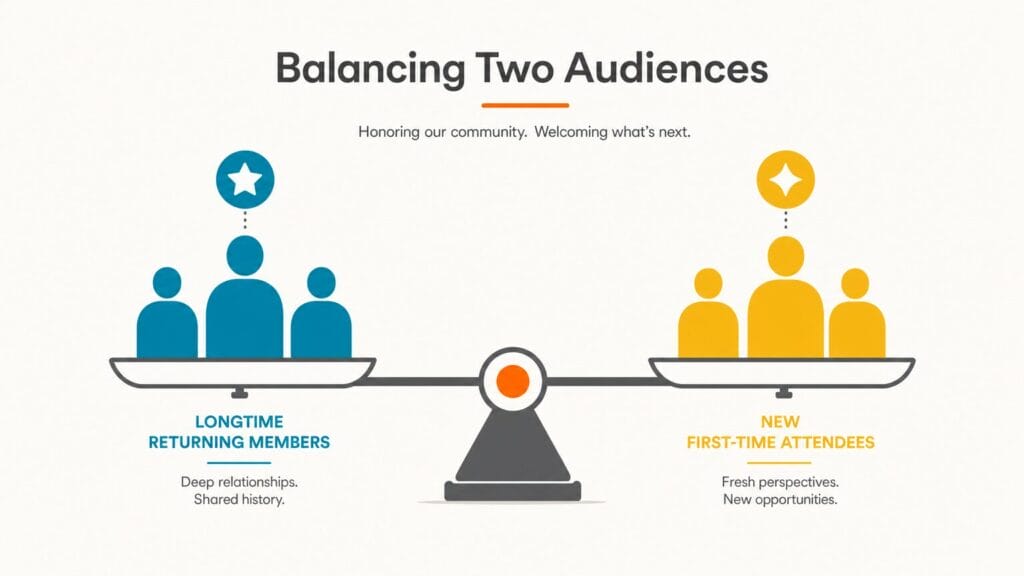
A few months back, I remember reading an article about how to craft content for Gen Z, and I kept thinking throughout the whole thing, “this is how you craft content for everyone!” Relevance first. Intentional curation of topics. Practical takeaways. Hands-on opportunities. That’s what people are looking for, no matter if it’s their first event or their 500th.
Where these audiences tend to have tension is when we have legacy to honor. The awards ceremony, the plenary session where only the top leaders get to speak. These tend to feel stale, because they are. They’re using a playbook that is more than 100 years old.
But it’s important to remember that tradition is critical for some longtime members, so you have to understand the “why” of that particular piece. I’m most frequently asked to make changes to awards ceremonies, and I have to start with what the group thinks is important about that event. It’s almost always honor, recognition, and community pride. Once we establish that baseline, we can talk about if the general session is the best place to accomplish that, or should there be a more exclusive special event. There’s no one-size-fits-all for these things, but starting with the “why” is the part to remember.
“How has your tech stack changed what’s possible for an annual conference? Where does it help events run better, and where has tech overpromised?“
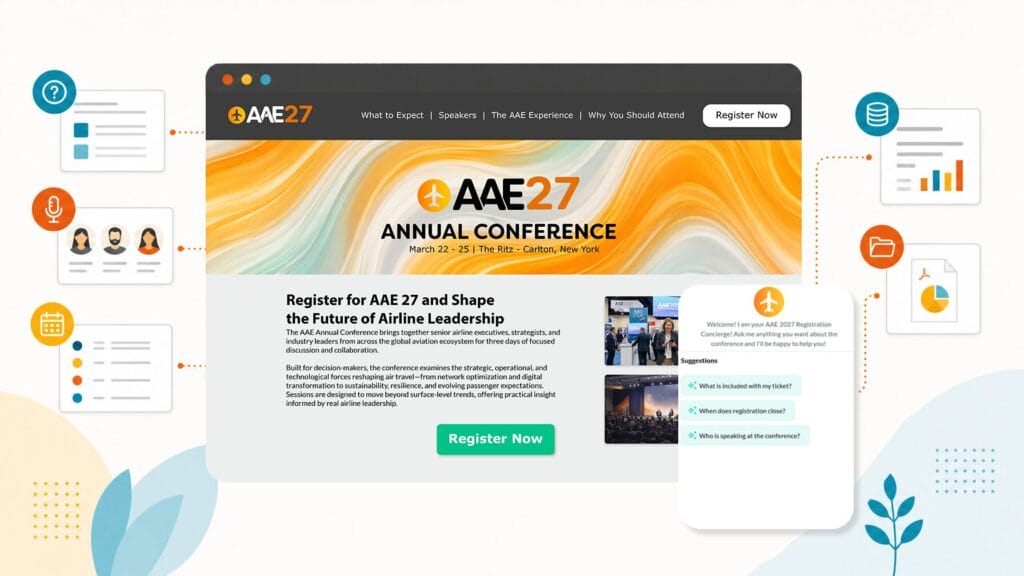
My hot take on this is that AI has been really disappointing so far. I’m expecting more personalized guides, audience journey mapping, and better 1:1 matchmaking. I’m certain these things are all in the works, but I haven’t seen it in real life yet. I want to be able to open an AI assistant the day before the event, talk through what I want to accomplish, and have it put it all together for me. Reading through an app session by session does not feel like a good use of anyone’s time.
That being said, AI is a part of our tech stack. We use it for a lot of behind-the-scenes work; it’s great for handling repeatable tasks. We’ve built some tools that allow for streamlining of our processes, and some thought buddies as well.
Tech makes an event smoother when it contributes to an easier experience. If I have to struggle with how to find what I want in the app, or if the beacon isn’t tracking me correctly, or if the virtual content won’t load, then it’s just introducing another barrier.
“What’s the agenda-structure mistake you see planners make most often on a multiday annual? And what do you do instead?“
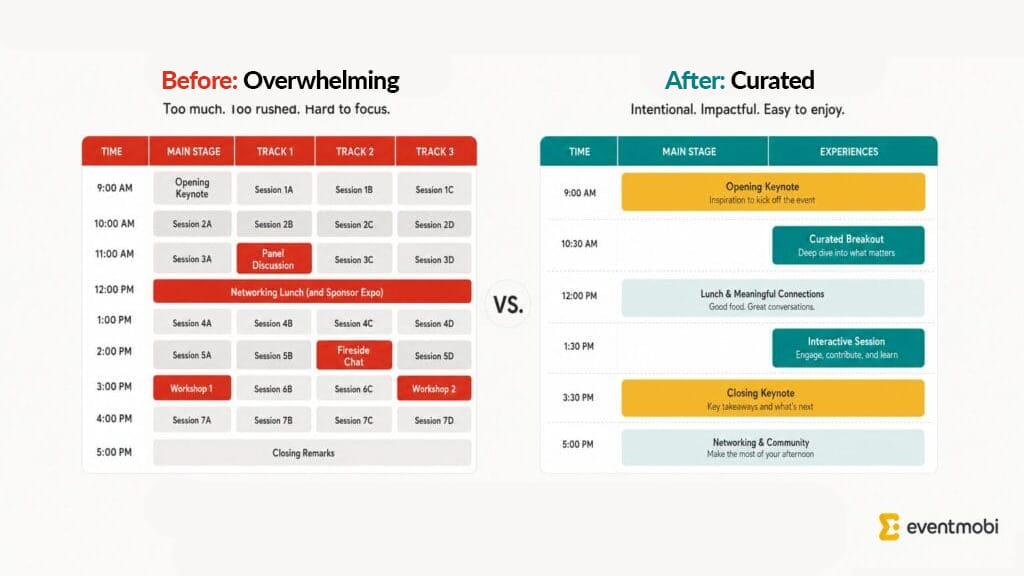
Putting too much in! We are at an inflection point with events. Everyone knows that schedules are too busy. Yet we all keep stacking up content because that’s still the only way that approvers measure the ROI of sending someone to an event.
Also, we live in a world where we are constantly bombarded by information. An event takes that and turns it up to 11. People are running from session to session, feeling behind and overwhelmed, and never stopping to take a breath.
But I’m happy to see a quality over quantity movement start to emerge: highly curated events with only a few concurrent sessions, dedicated time for real peer-to-peer conversation, not just a reception, and also white space. We discount how important it is to have open time. That’s how our brain rests and synthesizes the information. We’d be better served eliminating the 2 p.m. session block and introducing some walking or creative time instead.
When we are overprogrammed, we can’t possibly remember everything we’ve gained at the event. That means we leave with a vague idea of the value, and we can’t articulate why we should come back. When we have curated journeys that help us discover new ideas and connections, then we can state very clearly what we got out of the event and why it’s important.
“An annual conference has to earn its place on the calendar and the budget every year. How do you measure whether it delivered for the organization, not just whether people had a good experience?“
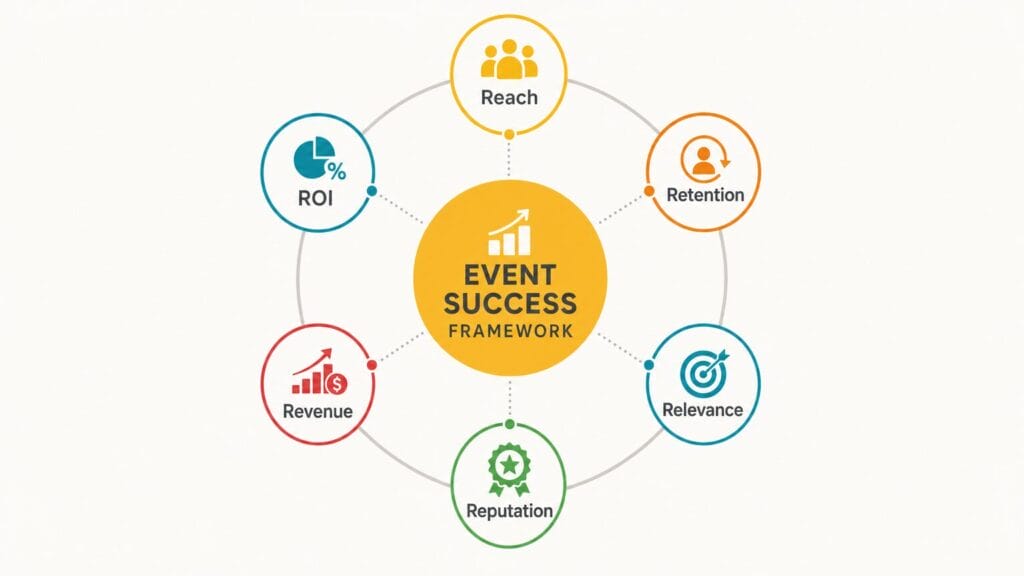
At 360 Live Media, we use the 6Rs construct to measure event success:
- Reach: the number and type of people who come to the event
- Retention: the percentage who come back each year
- Relevance: the percentage of your total addressable market (for example, how much of your membership are you capturing, how much of your industry)
- Reputation: net promoter score (NPS)
- Revenue: how much money is brought in
- ROI: how much profit or, if it’s not meant to generate profit, then how much impact on your goals
In addition to this, we look to see how the event delivers on the organization’s strategic plan. We usually recommend that a group of leaders set measurable outcomes for the event, based on where they want to move the needle that year.
“What’s one thing you’ll never do again when running an annual conference, and what taught you that lesson?“
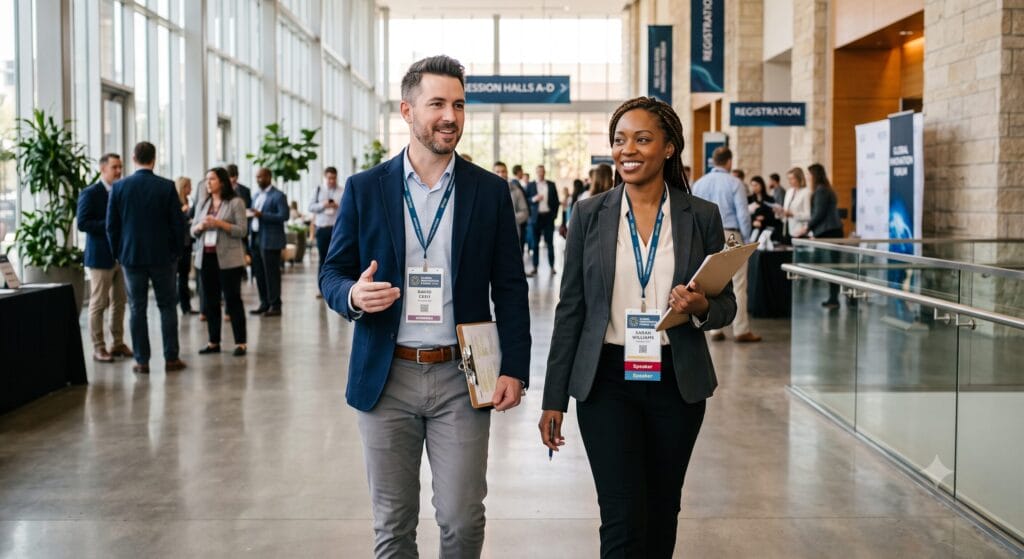
I can think of things earlier in my career, when I didn’t have the experience I have now, and I learned so much by listening to my partners.
Working with my partners (hotels, venues, AV providers, etc.), I have learned so much about set-up and flow, the best way to stage equipment for a multiday event, and how to assign rooms more effectively to make it easier for everyone. I’ve learned about what it takes to create good Wi-Fi, how to make menus more affordable, how to navigate customs, and what to do when someone gets sick, or hurt, or goes missing. The list goes on and on. But none of those things I could have managed myself. I needed to rely on my partners to help me put the needed pieces together.
Looking for an event tech vendor that actually understands your challenges and objectives?
The EventMobi Team is made up of planners who know your objectives and can help you solve the most complex challenges.
The post Run Your Best Event, Ever: How to Keep an Annual Conference from Feeling like a Rerun? appeared first on EventMobi.