
[ad_1]
I evaluated 12+ tools to find the seven best identity verification software that made the cut. They are iDenfy, Ondato, Veriff, Sumsub, Incode, Regula, and ComplyCube.
If you work in compliance, IT, or security, you’ve probably been here: a new user flags in the queue, a KYC check takes too long, or worse, a fraud incident slips through because the verification layer wasn’t tight enough. The pressure to balance security with a frictionless onboarding experience is real, and it doesn’t get easier as teams scale.
I used to think identity verification was straightforward: scan an ID, match a face, move on. But after digging through hundreds of G2 reviews, it became clear that the right tool does a lot more than that. It determines how fast you onboard legitimate users, how early you catch fraudulent ones, and how confidently you can walk into a compliance audit.
Two questions kept coming up everywhere, from Reddit threads to buyer forums: “Which identity verification software actually works at scale without killing conversion?” and “Do I really need a separate AML tool, or can one platform handle everything?” I dug into both. The short answer is that scale and conversion are more closely tied to document coverage and liveness accuracy than most vendors advertise, and the best platforms in 2026 do handle KYC, AML, and biometrics in one place, but not all of them do it equally well.
Based on that research, here’s what I found on each platform, broken down by what users genuinely praised, where they ran into friction, and which type of team each tool actually fits best.
7 best identity verification software: My picks for 2026
-
iDenfy: Best for AI-powered KYC and AML compliance in one platform
Delivers AI-driven identity verification with built-in AML screening and business verification. ($1.35 per verification, $135/month minimum) -
Ondato: Best for fast, compliance-driven onboarding at scale
Combines biometric authentication, AML compliance, and rapid verification for regulated industries. (approximately $1.50 per verification) -
Veriff: Best for fraud prevention with video-powered verification
Uses video-based KYC and a 12,500+ document database for strong fraud detection and fast decisions. ($1.49 per verification, $49/month minimum) -
Sumsub: Best for compliance and fraud prevention
Specializes in automated compliance checks and fraud prevention across industries. ($1.35 per verification) -
Incode: Best for fast, seamless biometric identity verification
Known for high-speed biometric checks and a smooth user experience. (pricing available on request) -
Regula: Best for document forensics and enterprise-grade ID authentication
Combines AI-powered document verification with forensic-level accuracy, on-premises or cloud. (pricing available on request) -
ComplyCube: Best for multi-geography KYC and AML with no-code setup
Covers eKYC, AML screening, biometric checks, and address verification across global markets. ($99/month)
*These identity verification tools are top-rated in their category, according to G2’s Summer 2026 Grid Report. I’ve also added their pricing to make comparisons easier for you.
My top 7 identity verification software recommendations for 2026
The market tells you how serious this has become. The global identity verification market is valued at $15.78 billion in 2026 and is forecast to reach $26.8 billion by 2031. And the pressure behind that growth is real: 2.2% of verifications showed signs of identity fraud in 2025. Meanwhile, sophisticated fraud (the kind that uses deepfakes, synthetic identities, and AI-generated documents) grew 180% year-on-year, now making up 28% of all identity fraud.
The best identity verification software simplifies the process of securely authenticating users while reducing fraud and enhancing security. With features like biometric authentication, real-time identity checks, and fraud detection, these tools help businesses proactively prevent unauthorized access, ensuring a seamless and secure experience for both businesses and users.
How did I find and evaluate the best identity verification software?
I started with G2’s Grid Report to identify top-rated identity verification platforms. From there, I evaluated 12+ tools based on detailed feedback from IT professionals, compliance teams, and security practitioners who use these tools in production environments.
To make sure my findings reflect consistent patterns rather than outliers, I used AI to analyze thousands of G2 reviews, surfacing what users genuinely value, where they run into friction, and how each tool performs when things get complicated.
The screenshots in this article may include a mix of captures from G2 review pages and vendor-provided images.
What makes identity verification software worth it: My opinion
When evaluating the leading identity authentication software solutions, I focus on several key features to determine their effectiveness for IT and security teams:
- User authentication efficiency: The tool should authenticate users quickly and without unnecessary steps, whether through biometrics, two-factor authentication (2FA), or device recognition. Speed and low friction matter, but not at the cost of security.
- Fraud prevention and detection: I evaluate how the software uses AI and machine learning models to detect suspicious activity in real time, including whether it cross-checks multiple data points and adapts its response when anomalies appear.
- Deepfake and AI fraud resistance: Passive liveness detection is no longer optional. I look for platforms that actively counter synthetic identities, AI-generated documents, and live-session injection attacks — not just static selfie checks.
- Compliance and regulatory standards: The platform should have built-in support for GDPR, CCPA, and KYC/AML requirements, with audit logs and compliance reports that hold up under regulatory scrutiny.
- Ease of integration: The tool should connect cleanly to existing systems via APIs or pre-built integrations, with minimal engineering overhead. I pay attention to how quickly a team can go from contract to live deployment.
- Scalability and flexibility: I evaluate how well the platform handles growing user volumes and whether it allows configuration adjustments for different user groups, geographies, or risk levels.
- Real-time monitoring: The platform should surface live verification metrics and alert administrators when something looks off, giving teams the visibility to act quickly rather than catch issues after the fact.
- Support multiple identity and credential verification methods, including document, biometric, and data-driven approaches
- Verify and authenticate documents, such as ID cards
- Analyze data provided by the user to determine risk
This data was pulled from G2 in 2026. Some reviews have been edited for clarity.
1. iDenfy: Best for AI-powered KYC and AML compliance in one platform
If you’re looking for a platform that handles identity verification, AML screening, and business verification without stitching together multiple vendors, iDenfy is worth a close look. It’s built for fintech, iGaming, crypto, and e-commerce teams that need compliance depth in one place.
I’ve seen iDenfy’s API documentation come up again and again as a reason teams choose it over alternatives. Users describe integrations that come together in hours rather than weeks, with development teams getting from contract to live without leaning on external support. That ease of setup carries through to how the platform handles ongoing compliance workflows too.
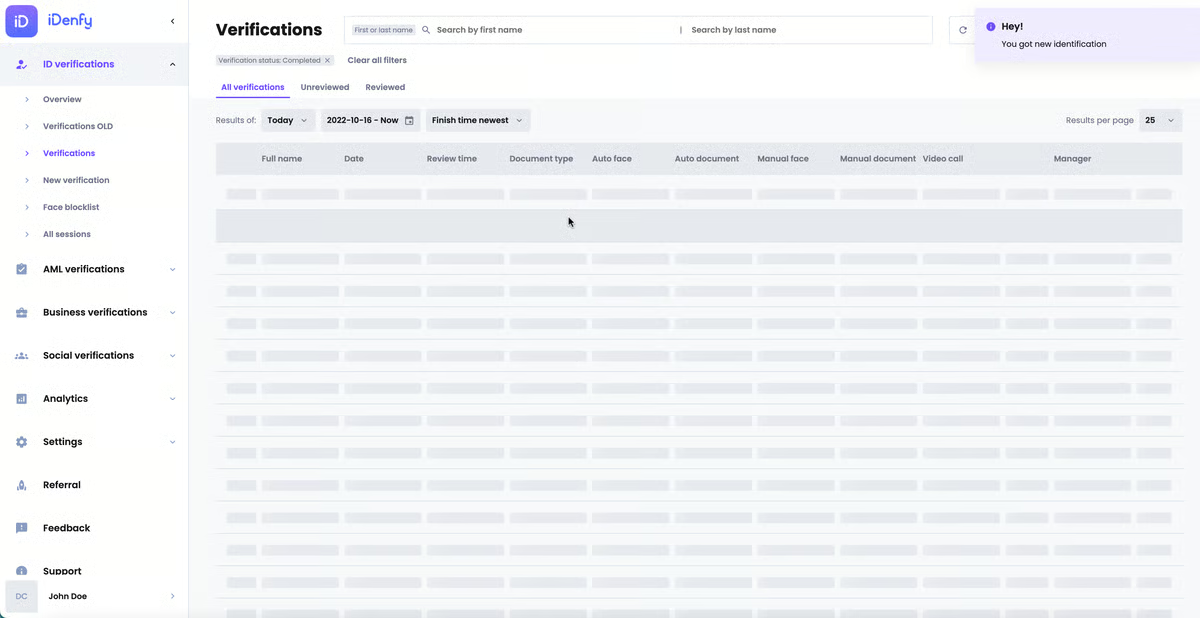
Multiple reviews are praising iDenfy’s support team as one of the best in the category. Users describe fast, expert-level responses that actually resolve issues rather than bounce them around. For teams managing high-risk onboarding at volume, that kind of support relationship makes a real operational difference.
The built-in AML screening and KYB verification is what sets iDenfy apart from a lot of tools in this space. I’ve come across multiple reviews where users specifically highlight being able to run sanctions screening, PEP checks, adverse media filtering, and business verification in one platform. No switching between systems, no manual cross-referencing.
That said, I’ve noticed consistent feedback around the admin dashboard experience. When managing large verification queues or multiple client environments, users describe the interface as feeling overcrowded and harder to navigate. Teams tend to adapt over time, but the initial experience adds friction for complex multi-tenant setups. However, iDenfy’s comprehensive feature set and AML-plus-KYB combination in one place remain hard to match in the category.
For organizations that need a single platform covering document verification, AML screening, and business verification without layering multiple vendors, iDenfy is a reliable and well-validated choice, particularly for financial services and regulated digital platforms with cross-border compliance needs.
What I like about iDenfy:
- I’ve seen G2 users consistently praise the API documentation for being clear and well-structured, helping development teams integrate quickly without external support.
- I love the built-in AML and KYB capabilities, with users appreciating being able to handle sanctions screening, PEP checks, and business verification from one platform.
What G2 users like about iDenfy:
“iDenfy handles high-risk verification scenarios well. It brings AML screening, PEP checks, and adverse media filtering together in one place, which makes the process easier to manage. The real-time alerts help us respond quickly when potential issues come up. The API is also flexible enough to support custom workflows without getting in the way.”
– iDenfy review, Maruni V.
What I dislike about iDenfy:
- Multiple users mention that the admin dashboard can feel overcrowded when managing high volumes or multi-tenant environments, though teams generally adapt once they’ve settled into the workflow.
- Users desire more granular control over the verification flow, especially for teams with highly specific requirements, though the flexible API helps bridge some of that gap.
What G2 users dislike about iDenfy:
“The dashboard can sometimes feel overwhelming, especially when I’m managing a large volume of verification requests. Also, a few of the reporting features could be more straightforward to customize so they better fit our internal audit needs.”
– iDenfy review, Sohanur R.
Ensure compliance and protect your organization from financial crimes. Explore my colleague’s review of the top anti-money laundering solutions in 2026.
2. Ondato: Best for fast, compliance-driven onboarding at scale
Ondato is a KYC and AML compliance platform designed for regulated industries that need accurate onboarding without having to configure a compliance stack from scratch. It’s a strong fit for financial services, telecom, and gaming businesses that need fast biometric verification and built-in AML monitoring in one place.
I’ve noticed biometric authentication come up as one of Ondato’s most praised features. Users describe the facial recognition capability as accurate and easy to use, and I’ve read reviews where compliance teams specifically credit it with making onboarding smoother without adding unnecessary steps for customers.
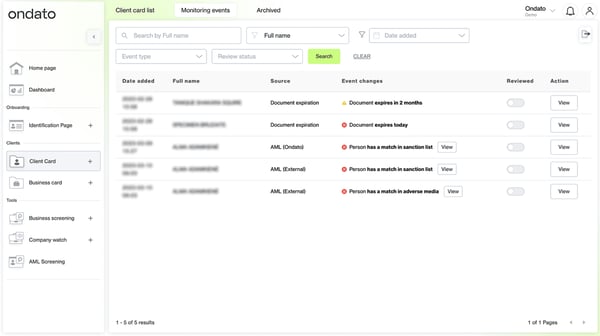
There is also consistent praise for Ondato’s speed and responsiveness during verifications. Users describe the platform as efficient at volume, maintaining performance without feeling sluggish even when processing customer data across multiple regions simultaneously. That reliability is something teams clearly depend on.
The built-in compliance features are another reason users choose Ondato. I’ve come across multiple reviews where users highlight compliance report generation and AML monitoring working out of the box, without additional configuration overhead.
I’ve encountered feedback where users mention that customization options could be more flexible. Several reviewers note that more control over the verification flow structure would make the platform work better for unique business requirements. For standard compliance setups, the out-of-the-box configuration holds up well, and Ondato’s support team is consistently described as responsive when edge cases come up.
Ondato is a strong fit for compliance-driven teams in regulated industries who need high-accuracy biometric verification, AML monitoring, and fast onboarding without building a compliance stack from scratch.
What I like about Ondato:
- I’ve noticed G2 users frequently highlight the biometric authentication, particularly the facial recognition feature, for its accuracy and ease of use in streamlining onboarding.
- There is also consistent praise for the platform’s speed and responsiveness, with users appreciating that performance holds steady even at high volume.
What G2 users like about Ondato:
“Ondato combines everything we need into one platform—real-time identity checks, document scanning, biometric match, and background investigation across over 15,000 sources. Their AI-driven process feels incredibly robust yet smooth, even for first-time users.”
– Ondato review, Jenna M.
What I dislike about Ondato:
- Users suggest that the verification flow customization could be more flexible, particularly for teams with unique or region-specific requirements, though for standard compliance setups, the out-of-the-box configuration works well.
- There are mentions of initial implementation across legacy systems taking longer than expected, though Ondato’s support team is consistently noted as responsive in working through those challenges.
What G2 users dislike about Ondato:
“It takes more than usual time for initial implementation across multiple legacy systems. But their support team is highly responsive and takes the necessary steps to overcome the situation.”
– Ondato review, Joan B.
Verifying identity is critical, but cloud management platforms ensure access, policies, and infrastructure stay controlled across your entire cloud environment.
3. Veriff: Best for fraud prevention with video-powered verification
Veriff is an AI-native identity verification platform built around video-based KYC, document verification, and biometric authentication. It’s a well-rounded choice for product and compliance teams at scale-ups and mid-market companies where fraud prevention depth matters as much as verification speed.
Veriff’s video-based KYC is highlighted as one of its most distinctive capabilities. Users describe how the video section lets teams see whether a user is completing their identity check willingly, adding a layer of fraud prevention that static document scanning simply can’t replicate. Multiple reviewers cite this as a key reason they chose Veriff over other tools.

I’ve read consistent feedback praising how well Veriff integrates into existing systems. The API documentation is described as comprehensive and easy to follow, and users mention that first-time users navigate the verification flow without difficulty. Setup is consistently described as fast and far less painful than comparable tools.
I’ve also noticed users regularly calling out Veriff’s global document coverage and decision speed. With support for a wide range of identity documents across more than 190 countries, reviewers describe verification decisions coming back in seconds, keeping onboarding friction low and drop-off rates down.
Pricing, however, is mentioned as the main friction point. Several users note that Veriff’s cost feels steep relative to competitors, particularly for startups or teams at lower verification volumes. That said, reviewers on high-volume deployments generally find the investment reflects the product’s accuracy and fraud protection depth, making it a reasonable trade-off for teams where the stakes are high.
Overall, Veriff is a strong choice for teams that prioritize fraud prevention and need strong global document coverage, particularly where video-based fraud detection adds meaningful protection beyond standard selfie checks.
What I like about Veriff:
- I like the video-based verification for giving teams visibility into whether an identity check is being completed willingly, strengthening fraud prevention in a way that static checks can’t match.
- I also appreciate the ease of integration and speed of verification decisions, with users describing the platform fitting into existing workflows without major technical overhauls.
What G2 users like about Veriff:
“Veriff stands out for its fast, smooth verification process paired with strong fraud detection. It supports global IDs, integrates easily, and maintains solid KYC/AML compliance, which creates a good balance between security and the overall user experience.”
– Veriff review, Sandip R.
What I dislike about Veriff:
- Users note that Veriff’s pricing can feel steep for smaller teams or lower verification volumes, though high-volume deployments tend to find the cost reflects the product’s quality.
- Verification failures on older devices or in poor lighting can require retries and add friction, though this is rarely a concern for teams serving users on modern devices.
What G2 users dislike about Veriff:
“One drawback of Veriff is that its pricing can be higher than some competitors, which can be a challenge for startups or teams with smaller verification volumes. Also, in certain edge cases (such as poor lighting or weak camera quality) the verification may fail and require retries, which can negatively affect the user experience.”
– Veriff review, Ashutosh T.
4. Sumsub: Best for compliance and fraud prevention
If your team needs a verification platform that keeps pace with shifting compliance requirements without switching tools every time regulations change, Sumsub is definitely worth evaluating. It covers KYC, KYB, AML screening, transaction monitoring, and fraud prevention in one place, and it’s particularly well-used in fintech, crypto, and gaming.
Sumsub’s user interface gets consistent praise for being efficient, intuitive, and thoughtfully designed. Users describe the clean layout and logical workflows as making the platform easy to navigate without much training, which matters for compliance teams that can’t afford long onboarding cycles for new analysts.
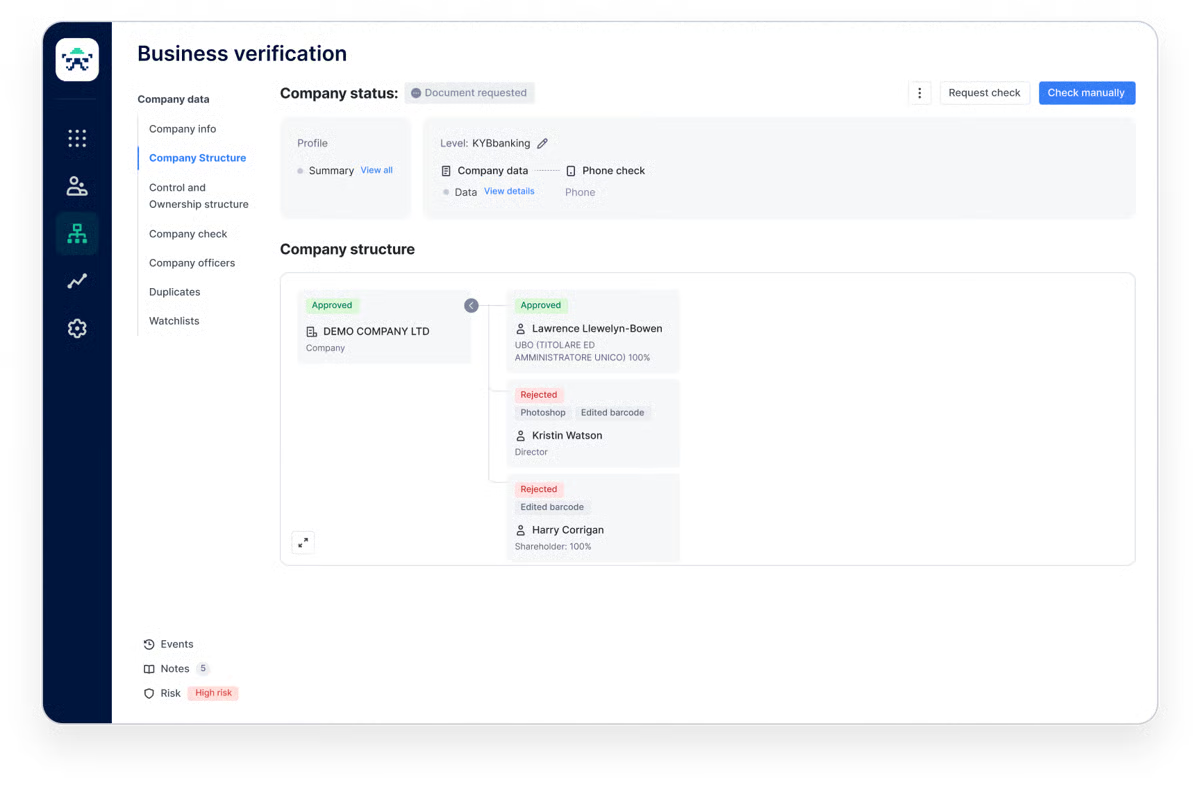
Seamless integration is another widely appreciated element. I’ve noticed users frequently point out that they didn’t need to rework internal processes to get started with Sumsub. The API documentation is frequently praised for being clear and developer-friendly.
I’ve come across multiple reviews highlighting Sumsub’s frequent product updates and regulatory alignment as a reason teams stay on the platform long-term. Users describe updates that help them stay ahead on compliance without switching tools mid-cycle, and the platform’s forward-thinking roadmap comes up often as a factor in the initial decision to adopt.
I’ve noticed some users flag document data extraction accuracy as an area that occasionally falls short. A few reviewers mention instances where names pulled from certain ID types required a manual review step, adding time to what would otherwise be a fully automated process. It’s not constant, but worth accounting for if your user base includes non-standard document formats. That said, Sumsub’s broader automation still reduces manual work significantly compared to what most teams dealt with before.
Sumsub is a particularly strong fit for compliance-heavy industries like fintech, crypto, and gaming, where KYC and AML workflows need to scale quickly without sacrificing regulatory alignment.
What I like about Sumsub:
- I love how intuitive and easy to navigate the user interface is, even for teams with minimal training.
- The seamless integration process is a major highlight, with users pointing to the clear API documentation as a key reason they set up and optimized workflows quickly.
What G2 users like about Sumsub:
“The UI is structured well, and it’s easy to find what you are looking for. It integrates amazingly with our platform to make verifying your account as easy as possible for a customer, but also for the agent who might be reviewing it. It works super fast with our back office, and when you approve an application, it is almost instantly translated into other connected workspaces.”
– Sumsub review, Томислав
What I dislike about Sumsub:
- Document data extraction from certain ID types can trigger manual review steps, adding time to an otherwise automated process, though the platform’s broader automation still saves significant manual effort overall.
- More detailed tutorials and use-case-specific documentation would help onboard less technical team members faster, though the platform itself is intuitive enough that most teams find their footing without too much difficulty.
What G2 users dislike about Sumsub:
“The verification process feels like it could be significantly stricter. At times, it seems too easy to bypass, which raises concerns about its reliability for catching sophisticated fraud. It’s confusing to understand which specific security regulations (KYC, AML, etc.) are being applied and how. The platform needs to provide more transparency on the compliance logic.”
– Sumsub review, Frederick S.
5. Incode: Best for fast, seamless biometric identity verification
Incode is a fully proprietary identity verification platform that is designed for organizations where biometric accuracy and liveness detection are non-negotiable, and it’s a standout pick for teams willing to invest in a more hands-on partnership model to get enterprise-grade results.
Customer support is described as one of Incode’s biggest differentiators. Users don’t just call the team responsive, they describe them as proactive strategic partners who show up with scenario-specific advice well beyond initial onboarding. That level of consultative support is rare, and it clearly matters to the teams using it.
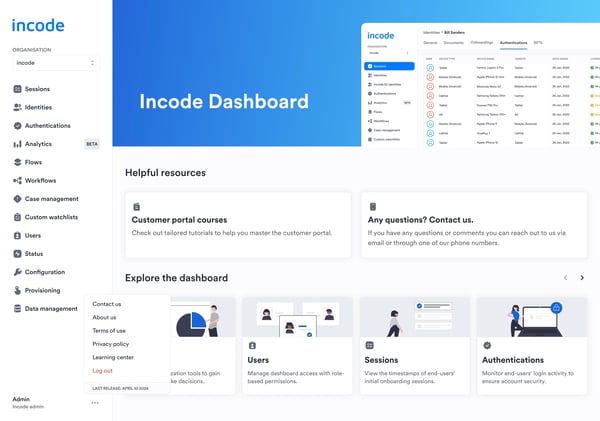
I’ve read reviews specifically recommending Incode for mobile app identity checks because of how well it handles age verification and liveness detection under real-world conditions. Users describe accurate results even in low-light settings, with screen glare, or on budget smartphones.
I’ve also noticed G2 reviewers valuing Incode’s proprietary biometric technology for the access it provides. Unlike vendors using white-labeled solutions, Incode builds its models in-house, and users mention being able to connect directly with engineers when customizations are needed. That technical accessibility appears to be a genuine differentiator for teams with complex requirements.
I’ve noticed pricing come up as a recurring consideration in G2 feedback. Users describe the cost as harder to manage as verification volume grows, with some noting it’s less predictable to budget for during high-growth phases. For teams where biometric accuracy and fraud prevention depth are non-negotiable, most reviewers find the value justifies the investment, particularly given the direct engineering access and in-house model quality that comes with the platform.
Incode is a strong choice for organizations where biometric accuracy and liveness detection are non-negotiable, particularly in financial services, gaming, and age-gated digital environments where the cost of a missed deepfake is high.
What I like about Incode:
- I’ve seen consistent praise for the customer support team for being proactive and offering tailored, scenario-specific advice well beyond the initial implementation phase.
- I love how well the tool performs for age verification even in poor lighting or on low-end devices, which makes a real difference for teams serving diverse user bases.
What G2 users like about Incode:
“This platform stands out as the most secure I have used, allowing me to verify my clients’ ages and effectively filter out fraudulent users, which provides a high level of security. The passive liveness feature works especially well, requiring users to follow on-screen prompts like ‘turn your head left.’ This helps confirm authenticity and contributes to a safer environment. I also appreciate how straightforward the software implementation process is, making it easy for new team members to get up to speed.”
– Incode review, Dharmik V.
What I dislike about Incode:
- Verification costs can increase as volume scales, though for teams where biometric accuracy is non-negotiable, the pricing tends to reflect the depth of what the platform delivers.
- The admin dashboard could be more intuitive in places, particularly when navigating reports and logs, though the core verification workflows are straightforward once the team is familiar with the layout.
What G2 users dislike about Incode:
“The admin dashboard could also be more intuitive, as certain reports and logs take a few clicks to find. Customer support is generally responsive, but real-time chat would be a nice addition for urgent cases.”
– Incode review, Verified User
6. Regula: Best for document forensics and enterprise-grade ID authentication
Regula is available both on-premises and in the cloud, which makes it one of the few platforms that genuinely works for organizations with strict data residency requirements.
I’ve seen Regula’s ease of integration and SDK flexibility come up consistently as a reason teams choose it over alternatives. Users describe being able to integrate via their SDKs or APIs without significant friction, and several reviewers specifically highlight how the depth of configurable settings lets them adapt the platform precisely to their use case.
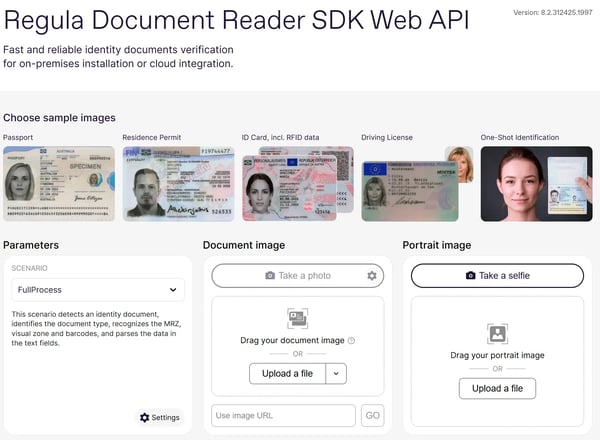
I’ve also come across consistent praise for Regula’s document database and the regularity of its updates. Users highlight how keeping pace with changing national ID formats, particularly in Latin America and Eastern Europe, is something the platform handles well. I’ve also read a review noting a year of live production operations without a single outage, which reflects the reliability users describe across the board.
Regula’s deployment flexibility is also highlighted as a key reason for choosing it. The combination of on-premises and cloud options, alongside granular control over verification thresholds, means teams can configure the system precisely for their use case, from strict border control authentication to faster consumer-facing flows.
That said, documentation for field code mapping as a gap is worth noting. Users building custom extraction logic describe having to manually determine which field codes correspond to different ID elements like ID numbers, names, and country codes, since a structured reference guide isn’t currently available. It’s not a blocker for most deployments, and Regula’s technical support team is consistently described as responsive in helping teams work through these cases, which takes the edge off the missing documentation.
Regula is a strong choice for organizations that need forensic-level document accuracy and the option to deploy on-premises, particularly government agencies, border control authorities, and regulated financial institutions where document integrity is the priority.
What I like about Regula:
- I appreciate how easy Regula is to integrate via SDK or API, with the depth of configurable settings allowing teams to adapt the platform precisely to their verification requirements.
- I’ve noticed consistent praise for the document database, both for its breadth and the regularity of updates that keep pace with evolving national ID formats across regions.
What G2 users like about Regula:
“The support and account relationship is what genuinely sets Regula apart. In a category where most vendors disappear once the contract is signed, Regula consistently comes to the party, whether it’s a technical query, an integration question, or a custom request that falls outside the standard scope. They’ve accommodated custom requests for us without friction, which is rare in this space.”
– Regula review, Verified User
What I dislike about Regula:
- Field code documentation could be more complete, as mapping codes to ID elements currently requires manual trial-and-error, though Regula’s support team is consistently noted as responsive in helping teams work through these gaps.
- Adaptation to regional document changes, particularly in Latin America, can occasionally lag, though the database is updated regularly and the coverage across geographies remains one of the broadest in the category.
What G2 users dislike about Regula:
“It would be helpful if there were documentation showing the field codes that relate to each document type, because at the moment we are having to guess which codes cover things like ID number, name, country, state etc. as the codes vary depending on the ID, but there isn’t a way to identify this.”
– Regula review, Nicole G.
7. ComplyCube: Best for multi-geography KYC and AML with no-code setup
ComplyCube is built for teams that need to move fast across multiple geographies without heavy development overhead. It has earned trust from financial institutions managing cross-border compliance at scale.
ComplyCube’s integration experience is praised consistently as one of its strongest points. Reviewers describe setup as fast and frictionless, with engineering teams often completing initial integration in days. The API documentation is frequently described as among the best in the KYC space, and I’ve read multiple reviews where users specifically note being able to get started without leaning on an in-house development team.
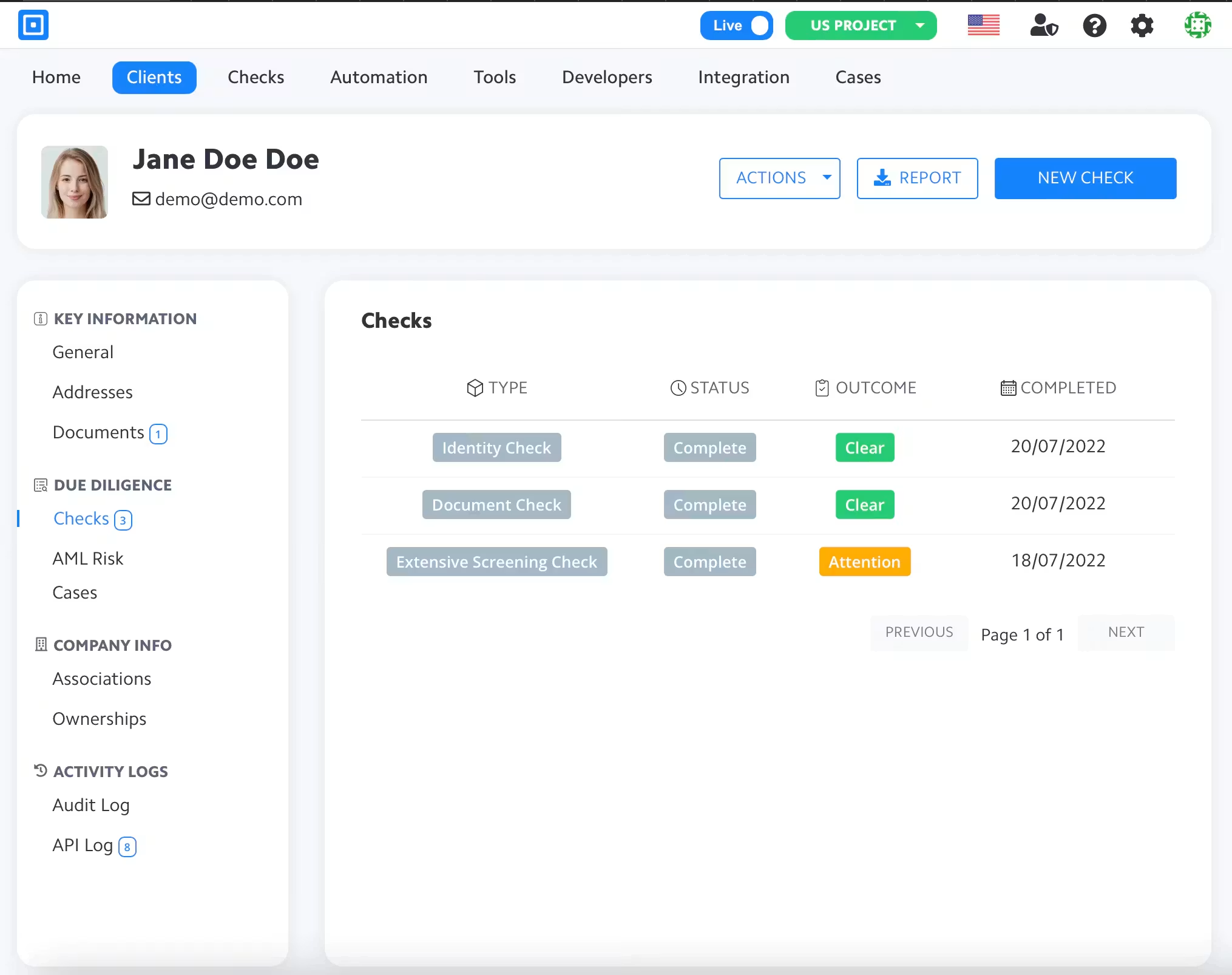
I’ve come across multiple reviews highlighting ComplyCube’s global AML and KYC coverage as a key reason teams choose it when expanding internationally. Users describe being able to handle eKYC, document verification, sanctions screening, PEP checks, and multi-bureau checks across multiple regions in a single solution, without needing separate integrations for each geography.
The sanctions and PEP screening quality is another area where I’ve seen strong marks across reviews. Users in financial services specifically mention that the screening output meets the standards mandated by their local authorities, and the bulk-processing dashboard comes up frequently as particularly useful for compliance workflows that run on a regular schedule.
Dashboard customization comes up as the most consistent area for improvement. Several reviewers mention wanting more native flexibility in how data is surfaced and organized, particularly for flagging unreviewed verifications and adapting management reporting. For teams whose priority is compliance accuracy and global coverage rather than bespoke reporting, the platform still delivers strong value out of the box, and the API gives technically capable teams a path to the custom outputs they need.
ComplyCube is a well-suited option for early-to-mid stage companies expanding internationally who need a compliance stack covering KYC, AML, biometric checks, and address verification without building the infrastructure themselves.
What I like about ComplyCube:
- I like how fast and smooth the integration experience is, with developers often completing setup in days using documentation that reviewers rank among the best in the category.
- I’ve read consistent praise for the global compliance coverage, with users appreciating being able to handle AML screening, PEP checks, and multi-bureau verification across multiple geographies from a single platform.
What G2 users like about ComplyCube:
“We are very satisfied with the quality and robustness of the features and checks offered by ComplyCube. We’re happy with new enhancements including expanded multi-bureau scope, incredible IDV and document check coverage among many other new features. Their API documentation remains top-notch, up there with the very best of SaaS and AI platforms.”
– ComplyCube review, Fred T.
What I dislike about ComplyCube:
- More native dashboard customization would be valuable, particularly for flagging unreviewed verifications and adapting management reporting, though the API provides a workable path for teams with developer resources to get the custom outputs they need.
- The document request experience within the verification flow could be more intuitive for end users, though for businesses where the primary audience is digitally confident users, drop-off rates tend to remain low.
What G2 users dislike about ComplyCube:
“It would be great if they offered more customizable MI reports that I could use for my management updates. That said, the support team explained how I can pull the data through the API, which was helpful.”
– ComplyCube review, Verified User
Identity verification software: Frequently asked questions (FAQs)
Got more questions? G2 has the answers.
1. How accurate is identity verification software?
The accuracy varies depending on the tool and the technology used (e.g., facial recognition, document verification). However, many advanced systems are over 99% accurate. Liveness detection also helps eliminate spoofing attempts.
2. Does identity verification software offer multi-channel verification for mobile and web transactions?
Yes, identity verification software typically supports multi-channel verification, ensuring secure transactions whether customers shop via mobile apps or desktop websites. It provides a seamless experience across devices, offering businesses secure and convenient customer verification methods.
3. What is the best identity verification tool for mid-sized businesses?
iDenfy and Sumsub are strong options for mid-sized businesses, offering robust verification features and compliance capabilities that scale with the team. Many providers also offer flexible pricing models so you can evaluate their features before committing to a plan.
4. How can I automate my identity verification process for frequent use?
You can use tools that offer API integrations or batch verification options to automate frequent verifications. These allow you to automatically verify large numbers of users, reducing manual effort and ensuring faster processing. Many identity verification tools, such as iDenfy, Incode, and Sumsub, support automated workflows and integrations with your existing systems to streamline the process.
5. Which is the most trusted identity verification service for app developers?
Veriff and iDenfy are strong picks for app developers, thanks to clear API documentation, mature SDKs, and fast integration processes. Choose Incode if top-tier proprietary biometrics are your priority, as its in-house models allow direct access to engineers for custom builds.
6. Which is the best identity verification software for small businesses?
iDenfy is well-suited for small businesses thanks to its streamlined setup and flexible pricing model. ComplyCube is another strong option for smaller teams looking for broad compliance coverage across multiple geographies without heavy development overhead.
7. Which are the top identity check apps for my software startup?
For startups, iDenfy and Veriff stand out. iDenfy offers fast setup and flexible pricing that suits early-stage teams, while Veriff brings strong global document coverage and a developer-friendly integration experience that scales as the product grows.
8. Which is the best identity verification tool for online services?
Veriff is a strong all-around choice for online services, with document and biometric checks, video-based fraud detection, and simple APIs. Sumsub is a close alternative when KYC/AML compliance depth is the top priority.
9. Which is the most efficient identity verification software for e-commerce sites?
iDenfy works well for e-commerce sites that need fast, automated KYC with solid fraud prevention built in. ComplyCube is a good alternative for platforms operating across multiple regions, given its multi-geography AML and address verification coverage.
10. What’s the best software to check identities in tech companies?
Veriff is a strong pick for tech companies due to flexible APIs, wide ID coverage, and a fast integration experience that developer teams appreciate. Incode is worth considering when in-house biometric security and direct access to engineering support are priorities.
11. Which are the highly rated identity verification apps for desktop?
Sumsub and Veriff are among the most highly rated options for desktop-based workflows. Sumsub’s intuitive interface and transaction monitoring capabilities make it a strong choice for compliance teams working primarily from desktop environments, while Veriff’s clean design and real-time decision engine perform well in desktop-first onboarding flows.
12. What are the leading identity authentication software solutions?
Based on G2’s Grid Report, iDenfy, Ondato, Veriff, and Sumsub rank among the leading identity authentication software solutions in the category. These platforms combine document verification, biometric checks, and AML compliance in ways that address both consumer onboarding and regulatory risk management at scale.
13. Which are the recommended identity verification platforms for mobile apps?
Incode and iDenfy are highly recommended for mobile app identity verification. Incode’s passive liveness detection and proprietary biometric models perform reliably even on lower-end devices, while iDenfy’s mobile SDK is consistently praised for quick setup and strong pass rates across a wide range of document types and geographies.
14. What is the most reliable identity verification software for operations teams?
iDenfy, Ondato, and Regula consistently earn high marks for reliability across G2 reviews from operations managers and compliance teams. All three are noted for strong uptime, accurate verification outcomes, and performance that holds up under high volumes, making them dependable choices for teams where downtime or inaccuracy carries real operational risk.
15. What are the most trusted identity verification solutions for operations manager teams based on user reviews?
Based on G2 user reviews, iDenfy, Ondato, and Sumsub are consistently trusted by operations teams for their reliability, ease of use, and strong support. These platforms handle high verification volumes without adding operational overhead, which is a recurring theme in reviews from operations-focused users.
16. What is the highest-rated identity verification software for mid-market technology companies focused on easy integration?
Veriff and Sumsub are among the highest rated for mid-market technology companies that prioritize integration speed. Both platforms offer well-documented APIs, pre-built SDKs, and developer-friendly setups that reduce the time from contract to live deployment significantly.
17. Which identity verification software do teams actually keep using beyond rollout instead of reverting?
Sumsub and iDenfy tend to see strong long-term retention based on G2 reviews, with users frequently citing regular product updates, reliable performance, and responsive support as reasons they’ve stayed on the platform well beyond the initial rollout.
18. Which identity verification software supports real-time visibility for mid-market organizations without sacrificing system stability?
Sumsub and Ondato are well-suited for mid-market organizations that need real-time visibility into their verification pipelines without compromising system stability or data integrity. Both offer live dashboards, real-time transaction monitoring, and compliance reporting that give operations and compliance teams the oversight they need at scale.
19. Which identity verification solutions provide streamlined workflows without expensive implementation costs or outside consulting?
ComplyCube and iDenfy are frequently highlighted for their ability to get teams operational quickly without requiring outside consulting or significant implementation budgets. Both offer clear documentation and responsive onboarding support that keeps setup self-contained.
20. What is the simplest identity verification software to configure and onboard for non-technical teams in mid-market companies?
Sumsub and Ondato are strong choices for non-technical teams in mid-market companies. Both platforms offer intuitive interfaces and pre-built compliance workflows that allow teams to get started without deep technical expertise, and both are regularly praised in G2 reviews for ease of setup.
21. What are the top identity verification platforms for technology companies seeking easy integration and minimal implementation complexity?
Veriff, ComplyCube, and iDenfy are top picks for technology companies that prioritize easy integration. All three offer developer-friendly APIs, comprehensive documentation, and fast onboarding paths that minimize implementation complexity and reduce the burden on engineering teams.
22. Which identity verification solutions deliver streamlined workflows while maintaining strong user adoption?
Sumsub and Veriff stand out for combining streamlined verification workflows with high user adoption rates. G2 reviewers consistently note that both platforms are intuitive enough for non-technical stakeholders while remaining flexible enough for compliance and engineering teams to configure to their needs.
Less hassle, more security
After spending time evaluating these platforms through hundreds of G2 reviews, a few things stand out clearly. The tools that perform best in 2026 aren’t just accurate. They’re built to handle the kind of fraud that’s getting harder to detect, and these are the ones I’d point compliance and security teams toward with confidence.
What I found is that each tool does something different well. iDenfy consolidates KYC, AML, and KYB in one place. Ondato delivers fast, compliant onboarding out of the box. Veriff’s video-based fraud detection adds a layer of protection that static checks simply can’t replicate. Sumsub keeps pace with shifting regulatory requirements better than most. Incode’s proprietary biometrics stand out when mobile accuracy matters. Regula is the one I’d recommend for document authentication depth and on-premises deployment. And ComplyCube is the most practical choice for teams expanding internationally without heavy engineering overhead.
The right pick depends on your compliance requirements, user base, and how much setup you’re willing to invest in. But from everything I’ve evaluated, these are the tools that have genuinely earned user trust, and that’s the clearest signal I can offer.
Strengthen your security and simplify user access. Find the right identity and access management tool for your needs, because verified identities are only as valuable as the access controls that sit behind them.
[ad_2]
Source_link