[ad_1]
Software update pop-ups always seem to appear at the worst possible time. I’ve lost count of how often a security update or forced restart has derailed my workflow. If one update can disrupt me, how do IT teams handle thousands without chaos?
IT teams know that unpatched vulnerabilities are an open door for attackers. Firewalls and antivirus help, but without proper patching, everything else is just damage control. That’s where the best patch management software comes in. It keeps systems updated without downtime, security gaps, or compliance risks.
But with so many moving parts, finding the right solution isn’t always straightforward. Some tools focus on automation and seamless deployment, while others offer granular control and compliance tracking. I teamed up with our IT crew to evaluate over 20 patch management solutions to better understand how these solutions stack up.
This list focuses on the 7 best patch management tools, which are NinjaOne, Action1, ManageEngine Endpoint Central, TeamViewer, Datto RMM, PDQ Connect, and Patch My PC. I’ll break down what each application does best, where it falls short, and which IT environments it fits.
Let’s get into it.
7 best patch management software for 2026: My top picks
- NinjaOne: Best for real-time endpoint visibility and management
Unified endpoint monitoring and management, automated patch deployment, remote monitoring and management, and built-in reporting dashboards. (Starts at $1.50 per month at 10,000 endpoints) - Action1: Best for cloud-native automated patching for lean IT teams
Autonomous OS and third-party patching, vulnerability assessment, integrated remote access, and compliance dashboards. (Free for the first 200 endpoints) - ManageEngine Endpoint Central: Best for integrated desktop and mobile management
Centralized patching, asset tracking, software deployment, and remote troubleshooting across Windows, macOS, and Linux. ($795/year for 50 endpoints, on-premise) - TeamViewer: Best for cross-platform remote access and endpoint troubleshooting
Secure remote access, cross-platform device support, unattended access, file transfer, and encrypted connections. ($50.90/month, Business plan) - Datto RMM: Best for proactive monitoring and management automation
Automated vulnerability discovery and patching, scripting across devices, continuous endpoint monitoring, and deep RMM integrations. (Custom pricing upon request) - PDQ Connect: Best for fast cloud-based deployment and third-party patching
Rapid software deployment, 500+ app package library, automated deployments, device inventory, and remote desktop. ($12 per device/year, 100-device minimum) - Patch My PC: Best for automating third-party application updates
Third-party application patching, Microsoft Intune and SCCM integration, silent installs, and pre- and post-update scripting. ($2,000/year, covering up to 1,000 devices)
*These patch management solutions are top-rated in their category, according to G2’s Summer 2026 Grid Report. I’ve listed their monthly prices and key features for easy comparison. For tools without public pricing, visit their website and contact sales for details.
Best patch management software: 7 tools I recommend
Keeping software updated is like reinforcing the foundation of a building. Small cracks may seem harmless at first, but over time, they can weaken the entire structure, making it susceptible to collapse.
With patch management software, IT teams can automate, schedule, and enforce patches across their entire infrastructure rather than relying on manual updates, scattered spreadsheets, and last-minute fixes. There’s a reason why the patch management market is expected to grow from $2.99 billion in 2025 to $7.27 billion by 2034.
For IT and security teams, patch management goes beyond maintenance; it is a crucial aspect of risk prevention. A single unpatched vulnerability can provide attackers with an entry point, and once they gain access, it can lead to devastating consequences. Therefore, the best patch management software is not just about applying updates; it is essential for keeping organizations secure, compliant, and operating smoothly without the need for constant crisis management.
How did I find and evaluate these patch management tools?
To do that, first, I looked at G2 Grid® Reports to identify the top patch management software based on G2 score and satisfaction rating. After identifying the top contenders, I went beyond the ratings and used artificial intelligence (AI) to analyze thousands of G2 reviews, pulling out common pain points, praise, and overlooked features.
Finally, I evaluated G2 reviews for the shortlisted tools. For tools, I couldn’t base this analysis on just referring to the G2 reviews; I talked to IT professionals who rely on them daily, cross-checking their insights with verified reviews. The screenshots featured in this article may be a mix of those captured during evaluations and those obtained from the vendor’s G2 page.
The end result? A curated list of the best patch management software tools that actually work in real IT environments, not just on marketing pages.
My criteria for evaluating the best patch management software
I’ve evaluated enough patch management tools to know that not all of them actually make life easier for IT teams. To ensure that the tools help IT teams stay ahead of security threats without making patching another full-time job, I looked for the following:
- Automated patch deployment: A good patch management tool should take the manual work out of patching. The best platforms allow IT teams to schedule, approve, and roll out updates automatically with minimal downtime and zero user disruption. I prioritized tools that support pre-tested patches, rollback options, and staggered deployments to reduce risks.
- Multi-OS and third-party patching: Most businesses don’t run a single operating system (OS). A strong patch management tool should handle Windows, macOS, Linux, and third-party applications without requiring extra workarounds. I looked for platforms that support patching for widely used apps like Chrome, Zoom, Adobe, and Java, since those often get overlooked but are just as critical as OS updates.
- Vulnerability detection and risk-based patching: Not every patch is urgent, but some need to be deployed immediately. I focused on tools that prioritize patches based on security risk, integrating with threat intelligence feeds, common vulnerabilities and exposures (CVE) databases, and vulnerability scanners to identify high-risk gaps before attackers exploit them.
- Centralized patch visibility and reporting: Patching is only useful if you can prove it’s working. The best solutions offer clear dashboards, compliance reports, and real-time tracking so IT teams can see which devices are patched, which are vulnerable, and what’s next in the queue.
- Minimal user disruption: No one likes a forced restart in the middle of an important task. I checked for solutions that let IT teams set update windows, notify users, and delay non-critical patches to keep workflows uninterrupted.
- Security and compliance alignment: For organizations in regulated industries (finance, healthcare, government), patching isn’t just good practice; it’s a compliance requirement. I looked for tools that support frameworks like the Health Insurance Portability and Accountability Act (HIPAA), General Data Protection Regulation (GDPR), and NIST, ensuring updates align with security policies and reduce compliance risks.
- Integration with IT and security stacks: Patch management doesn’t exist in a vacuum. The best tools integrate with endpoint management, Security Information and Event Management (SIEM) solutions, and vulnerability management platforms. I prioritized solutions that seamlessly fit into existing IT workflows without creating extra manual work.
The list below contains genuine user reviews from the Patch Management Software category page. To be included in this category, a product must:
- Maintain a database of software, middleware, and hardware updates
- Alert users of new updates or patch software automatically
- Inform administrators of endpoints and users utilizing out-of-date software
*This data was pulled from G2 in 2026. Some reviews may have been edited for clarity.
1. NinjaOne: Best for real-time endpoint visibility and management
G2 rating: 4.7/5
Maintaining IT infrastructure means balancing security, maintenance, and efficiency all at once. NinjaOne simplifies that by unifying patch management, remote monitoring, and automation in one place, and its ease of use score of 93% on G2 reflects how approachable teams find it at scale.
One of the biggest advantages I found is how well it handles integrations. It connects easily with helpdesk tools, security platforms, and cloud services, so teams automate workflows without constantly switching between systems. I noticed that G2 users like how API support lets them sync NinjaOne with other platforms, keeping everything updated in real time.
Another area where NinjaOne impressed me is remote monitoring and management. IT teams track system health, software updates, and security vulnerabilities from a single dashboard, which saves a lot of time. I liked how automation handles repetitive tasks like deploying software, enforcing updates, and running scripts remotely.
I also found patch management to be one of its strongest features. Instead of relying on manual updates, the platform scans for missing patches, prioritizes them by urgency, and schedules deployments across devices. Across many G2 reviews, users highlight setting patching rules for different device groups to reduce disruptions while keeping everything secure.
The experience holds up on the fundamentals, too. With an ease of setup score of 93% and ease of admin at 93%, reviewers describe rolling NinjaOne out and running it day to day without heavy overhead, which matters for lean teams supporting a growing fleet.
Support is another recurring highlight. From what I have seen, users point to responsive, knowledgeable help, in line with a quality of support score of 93%, and they mention it makes daily operations noticeably smoother.
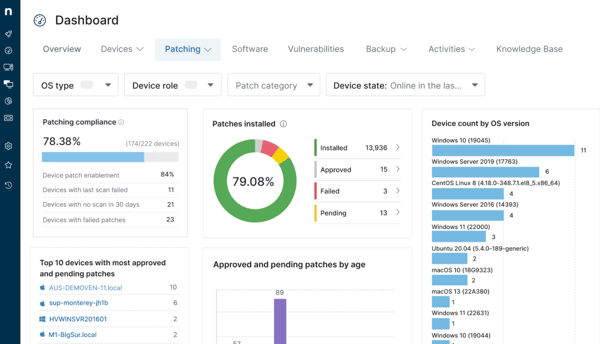
While NinjaOne covers everyday management well, I found in G2 reviews that its more advanced feature depth can feel limited next to enterprise-focused platforms. That said, reviewers note the platform keeps shipping updates, and its clean approach to patching and monitoring remains the reason teams rely on it daily.
I also read in G2 user feedback that reporting customization can feel a bit constrained for highly detailed needs. Even so, users describe the built-in dashboards as more than enough for a clear overview of patch compliance and system health, which is what most teams reach for first.
Overall, G2 review data positions NinjaOne as a strong fit for IT teams that want real-time visibility and unified endpoint control without tool sprawl. It delivers the most value for teams that want monitoring, patching, and remote support working together in a single, approachable console.
What I like about NinjaOne:
- NinjaOne brings patch management, remote monitoring, and automation into one console, so systems stay updated and secure without constant oversight.
- Its API connections and built-in integrations let teams link it with tools they already use, keeping everything connected in one place.
What G2 users like about NinjaOne:
“What I like best about NinjaOne is how simple and reliable it is for daily IT management. The platform is very easy to use, remote access works great, and the automation features save a lot of time by reducing repetitive tasks. I also like having monitoring, patch management, and device management all in one place, which makes supporting users much more efficient.”
– NinjaOne review, Edson Rui S.
What I dislike about NinjaOne:
- Some G2 users note that advanced feature depth can feel limited compared with enterprise-focused platforms, though many add that NinjaOne keeps adding capabilities and covers daily patching and monitoring reliably.
- Many reviewers point out that reporting customization could go deeper for detailed analysis, but note that the built-in dashboards give a clear, useful overview of patch compliance and system health.
What G2 users dislike about NinjaOne:
“One thing that could be improved in NinjaOne is the reporting customization. While the platform is very user-friendly and reliable overall, creating highly detailed or fully customized reports can sometimes feel a bit limited compared to some enterprise-focused tools. However, the platform continues to improve with updates, and the ease of use and automation features still make it a strong solution overall.”
– NinjaOne review, Osama S.
2. Action1: Best for cloud-native automated patching for lean IT teams
G2 rating: 4.9/5
Keeping endpoints patched shouldn’t require standing up servers, VPNs, or a dedicated patch admin. Action1 takes that weight off lean IT teams by running patching from the cloud, and its ease of setup score of 97% on G2 reflects how quickly teams get up and running.
The first thing that stood out to me is Action1’s automated patching. Instead of chasing missing updates manually, IT teams schedule deployments once and let the platform identify and push patches across endpoints on its own. Across many G2 reviews, users describe this shift from manual chasing to hands-off remediation as the main reason they stayed.
Another area where Action1 impressed me is how easy it is to use, rated at 96%. I noticed that reviewers describe the console as clean and easy to navigate, finding missing patches or deploying software without digging through layers of menus. That simplicity matters most for smaller teams that don’t have time to learn a heavy platform.
I also found the ease of admin, scored at 96%, to be a recurring highlight. From what I’ve seen, teams running a full endpoint fleet mention they can manage it without a dedicated administrator, which keeps overhead low when everyone is wearing multiple hats.
Something else that came through clearly is the value of the free tier. Action1 is fully featured and free for organizations under a certain endpoint count, and reviewers running smaller environments repeatedly call this out. It means enterprise-grade patch automation without an upfront budget conversation.
Vulnerability remediation is another strength users lean on. I’ve read that teams monitor endpoint vulnerabilities, surface missing patches, and close security gaps quickly, all from one console. Reviewers also point to responsive help when they need it, in line with a quality of support score of 94%.
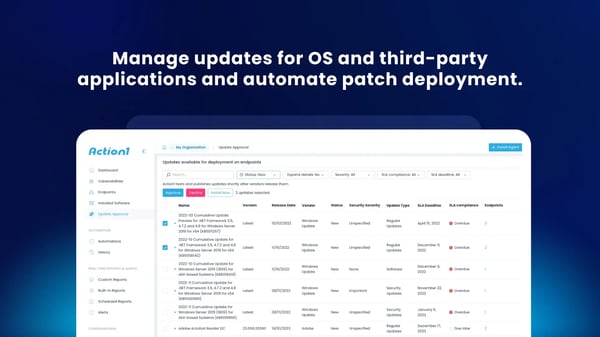
While Action1 covers everyday patching well, I found in G2 reviews that its reporting and customization can feel a little lean next to larger legacy suites. That said, reviewers note the core dashboards handle day-to-day patch-status and compliance needs, and the platform keeps adding depth with each update.
In my evaluation, I also saw that native macOS and Linux coverage is still maturing relative to Windows. For the predominantly Windows environments Action1 is built around, this rarely comes up as a blocker, and teams managing mostly Windows fleets find the coverage more than sufficient.
At its core, G2 review data positions Action1 as a strong fit for lean and mid-market IT teams that want automated, cloud-native patching without infrastructure overhead. It delivers the most value for Windows-focused organizations looking to close vulnerabilities fast and keep endpoints current automatically as they scale.
What I like about Action1:
- Action1 automates patch deployment across Windows and third-party applications from a cloud-native console, removing the need for on-prem servers or VPNs.
- The free, fully featured tier for smaller environments makes enterprise-grade patch automation accessible to lean and growing IT teams.
What G2 users like about Action1:
“I like using Action1’s software repository to deploy packages, and I enjoy the ability to monitor my endpoint’s vulnerabilities, which helps me feel secure in my network. I’m able to automate updates for certain systems by deploying them via the repository. The initial setup of Action1 was super easy!”
– Action1 review, Derek T.
What I dislike about Action1:
- Some G2 users note that reporting and customization can feel lean compared with larger enterprise suites, though many add that the core dashboards handle everyday patch-status and compliance needs well.
- A few reviewers mention that native macOS and Linux support is still maturing, but teams managing predominantly Windows fleets, Action1’s core audience, generally find the coverage more than sufficient.
What G2 users dislike about Action1:
“Reporting and customization can feel immature when compared to other enterprise tools.”
– Action1 review, Rochana R.
3. ManageEngine Endpoint Central: Best for integrated desktop and mobile management
G2 rating: 4.5/5
Managing endpoints across an organization gets complicated fast, especially when patching, remote troubleshooting, and security enforcement all live in different places. ManageEngine Endpoint Central centralizes those processes into one platform, and its ease of admin score of 90% on G2 reflects how manageable teams find running it day to day.
One thing I really like is that it’s an all-in-one console. Rather than jumping between tools, teams handle patching, software deployment, remote support, asset tracking, and policy enforcement from a single dashboard. Across many G2 reviews, users describe this consolidation as the main reason they can manage large, mixed environments without switching systems all day.
Another standout is its automated patch management. IT teams schedule updates and push them quietly across machines instead of chasing them manually, which keeps endpoints current without disrupting daily operations. Reviewers repeatedly mention this automation as a major time-saver across Windows, macOS, Linux, and third-party apps.
Its remote troubleshooting tools are another highlight. I noticed that users remotely access devices, deploy fixes, and enforce policies from one console, which is especially useful for distributed teams supporting staff across offices and regions.
Software and OS deployment round out the strengths. Users describe pushing applications and even full OS images across large fleets efficiently, with a deep catalog of predefined packages that cuts down manual work. That breadth is a big part of why teams treat it as a single hub for endpoint operations.
Support also earns steady praise. From what I have seen, reviewers point to responsive live-chat help that explains root causes rather than deflecting, and the value it delivers relative to cost comes up often, in line with an ease of doing business score of 91%.
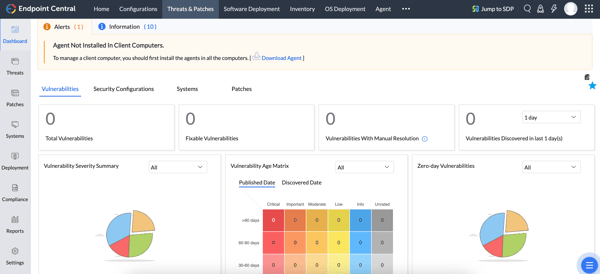
Because the platform packs in so many modules, I found in G2 reviews that the interface can feel dense and carry a learning curve for new admins. That said, reviewers consistently frame it as a short, upfront adjustment and note that once the layout clicks, the same breadth becomes the reason they rely on it.
In my evaluation, I also saw that patch deployment can occasionally take longer to complete or reflect status on larger fleets. Even so, users describe this as an intermittent timing issue rather than a reliability one, and the automated scheduling still keeps endpoints consistently up to date.
All in all, G2 review data positions ManageEngine Endpoint Central as a strong fit for teams that want desktop and mobile management unified in one console. It delivers the most value for organizations juggling mixed environments that want patching, deployment, and remote support working together with room to scale.
What I like about ManageEngine Endpoint Central:
- The all-in-one console brings patching, software deployment, remote support, and asset tracking together, so teams manage everything without switching tools.
- Automated patch management rolls out updates across Windows, macOS, Linux, and third-party apps on a schedule, keeping endpoints current without constant oversight.
What G2 users like about ManageEngine Endpoint Central:
“The automated patch management feature is phenomenal. It takes the heavy lifting out of keeping Windows, Mac, Linux, and third-party applications up to date. The automation policies ensure our endpoints are secure without requiring constant manual intervention from our IT staff.”
– ManageEngine Endpoint Central review, Chaitanya D.
What I dislike about ManageEngine Endpoint Central:
- Some G2 users note that the feature-rich interface carries a learning curve at first, though many add that it is a short adjustment and the depth becomes an advantage once the layout is familiar.
- Many reviewers point out that patch deployment can occasionally take longer to complete on larger fleets, but note that automated scheduling still keeps endpoints consistently up to date.
What G2 users dislike about ManageEngine Endpoint Central:
“The interface can feel complex for new users, and some advanced configurations come with a learning curve before you can fully utilize the platform.”
– ManageEngine Endpoint Central review, Devilal S.
4. TeamViewer: Best for cross-platform remote access and endpoint troubleshooting
G2 rating: 4.5/5
Reaching a device fast, wherever it happens to be, is half the battle in endpoint support. TeamViewer is built around that reach, and its ease of use score of 92% on G2 tracks with how often reviewers describe it as quick to pick up, even for less technical staff.
The theme that came up again and again is TeamViewer’s remote access. I’ve read that teams value being able to jump onto a workstation to apply a fix, walk a user through a problem, or reach an unattended machine in another location, all without being on site. That breadth makes it a dependable backbone for distributed support operations.
Another area where TeamViewer stands out is connection speed. Users consistently mention that sessions feel responsive and screen sharing holds up across distances, which is exactly what support teams want when they’re troubleshooting live rather than waiting on a laggy session.
Cross-platform coverage is another highlight. I noticed that reviewers manage Windows, macOS, mobile, and other systems from one tool without hunting for platform-specific workarounds, and its meets requirements score of 93% reflects how dependably it fits into mixed-device environments.
The setup reinforces the experience, too. From what I’ve seen, teams install and start connecting with minimal configuration, and the ease of setup score of 93% lines up with the low-friction onboarding users describe. Security also earns steady mention, with encrypted connections and two-factor authentication cited as reasons teams trust it for sensitive remote work.
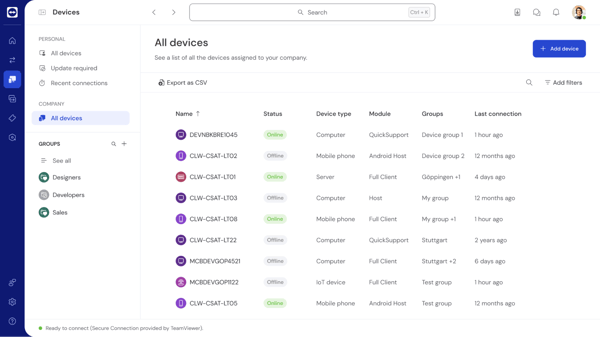
While TeamViewer delivers on reach and speed, I found in G2 reviews that premium pricing can feel steep for individual users or smaller teams. That said, many frame it as a reflection of the platform’s dependability and cross-platform coverage, and teams running frequent remote support tend to find the reliability justifies the cost.
Across many G2 reviews, I also noted that performance can vary on very low-bandwidth connections, with occasional lag during high-quality screen sharing. In practice, reviewers say the experience stays smooth on typical networks and that responsiveness is a large part of why they keep relying on it.
Taken together, G2 sentiment positions TeamViewer as a dependable choice for IT teams that need fast, secure, cross-platform access to troubleshoot and manage endpoints wherever they are. It delivers the most value for distributed support operations that want to reach any device without juggling multiple tools.
What I like about TeamViewer:
- TeamViewer makes it easy to connect to remote devices in seconds, giving IT and support teams fast access to troubleshoot endpoints from anywhere.
- Its cross-platform coverage and secure, encrypted connections let teams manage Windows, macOS, and mobile systems smoothly from a single tool.
What G2 users like about TeamViewer:
“I like TeamViewer best because it’s easy to use and provides reliable remote access. It lets me connect to devices with minimal setup, which makes the whole process more efficient. The interface is user-friendly, and the connections feel secure.”
– TeamViewer review, Komal C.
What I dislike about TeamViewer:
- Some G2 users note that premium pricing can feel high for individual users or small teams, though many add that the platform’s reliability and cross-platform reach justify the cost for frequent remote support.
- Many reviewers point out that performance can vary on very low-bandwidth connections, but note that the experience stays smooth and responsive on typical networks.
What G2 users dislike about TeamViewer:
“One area that could be improved is pricing, especially for individual users or small teams, as the cost can feel high compared to some alternatives. Licensing rules can also be a bit restrictive and sessions may occasionally be flagged incorrectly which can interrupt workflows.”
– TeamViewer review, Kunal T.
5. Datto RMM: Best for proactive monitoring and management automation
G2 rating: 4.5/5
Keeping track of endpoints across multiple client environments is a grind, and Datto RMM takes some of that load off by automating workflows and centralizing remote management. Its meets requirements score of 91% on G2 reflects how dependably it covers what MSP teams need day to day.
Where Datto RMM really stands out is its integrations. It connects smoothly with Autotask for automated ticketing and IT Glue for documentation, so techs move between tickets, remote access, and asset info without losing context. For MSPs juggling many client environments, reviewers describe this connected stack as the backbone of their day.
Its automation and scripting are another highlight. I noticed that users run PowerShell and other scripts across many devices, schedule routine maintenance, and push fixes remotely, which cuts out manual work on individual machines. The component store gets frequent mention for turning common tasks into reusable jobs.
Patch management is a core strength, too. Users describe automated OS and third-party patching tied to policies, with clear status reporting that helps keep client fleets compliant. That reliability is a big part of why teams keep it at the center of their operations.
Remote access rounds out the picture. From what I have seen, reviewers value quick web-based remote sessions for troubleshooting endpoints without being on site, and the ability to manage devices across separate client sites from one console. Reviewers also point to strong onboarding and support, in line with an ease of admin score of 90%.
The platform holds up on the fundamentals as well, with an ease of use score of 90%. Users describe it as intuitive enough for newer technicians to pick up while still offering the depth experienced admins want.
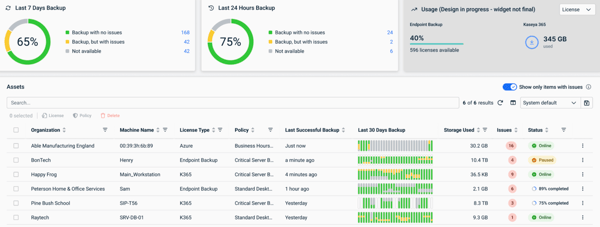
While the core tooling is strong, I found in G2 reviews that Web Remote can occasionally be slow or drop a session. That said, reviewers note it is intermittent rather than constant, Kaseya has flagged improvements, and the breadth of remote options means techs usually have another reliable path in.
Across many G2 reviews, I also noted that the interface can take some getting used to, with certain tasks needing a few extra clicks to reach. Even so, users say that once the layout is familiar the navigation fades into the background and the automation depth more than makes up for it.
Taken together, G2 review data positions Datto RMM as a strong fit for MSPs and IT teams that want proactive monitoring and automation across many client environments. It delivers the most value for teams that live in the Autotask and IT Glue ecosystem and want patching, scripting, and remote support connected in one place.
What I like about Datto RMM:
- The Autotask and IT Glue integrations keep tickets, documentation, and remote access connected, so techs work without losing context across client environments.
- Strong automation and scripting let teams run PowerShell across many devices and turn routine maintenance into reusable jobs, cutting down manual work.
What G2 users like about Datto RMM:
“I like how simple and intuitive Datto RMM is to use. It also has a robust feature set that allows for more advanced scripting and application deployment. The ability to quickly and easily manage all of our endpoints is invaluable.”
– Datto RMM review, Justin C.
What I dislike about Datto RMM:
- Some G2 users note that Web Remote can occasionally be slow or drop a session, though many add that it is intermittent and the range of remote options usually offers another reliable path in.
- Many reviewers point out that the interface can take some getting used to with a few extra clicks for certain tasks, but note that navigation fades into the background once the layout is familiar.
What G2 users dislike about Datto RMM:
“The only criticism I have is that Web Remote can be quite flaky and not always work.”
– Datto RMM review, Benjamin S.
Patch management secures your systems, but browsing protection requires a VPN, see the best free VPNs tested for safe online access.
6. PDQ Connect: Best for fast cloud-based deployment and third-party patching
G2 rating: 4.6/5
Bridging the gap between on-prem control and cloud convenience is where a lot of patching tools stumble. PDQ Connect closes it by delivering PDQ’s battle-tested deployment engine through the cloud, and its ease of setup score of 94% on G2 reflects how quickly teams get running.
The theme that comes through most is sheer deployment speed. I’ve read that software and updates push out almost immediately, and reviewers repeatedly say even large updates land faster than on the heavier tools they came from. For teams used to slow rollouts, that pace is the headline.
Another area where PDQ Connect stands out is how easy it is to use, rated at 93%. From what I’ve seen, users describe a clean, self-explanatory interface that doesn’t take long to learn, figuring out what each section does without much hand-holding.
I also found ease of admin, scored at 95%, to be a recurring highlight. Because PDQ Connect deploys easily from tools like Intune and skips on-prem push infrastructure, reviewers describe ongoing management as light, which keeps the operational load manageable for smaller teams.
Off-network reach is another standout. Users value being able to maintain and patch machines no matter where they are, deploying software and running scripts without VPN connectivity or interrupting staff. For teams supporting remote and hybrid fleets, that flexibility came up again and again as a deciding factor.
Automation and customization round things out. I noticed reviewers point to automated deployments that run on their own, plus PowerShell scanners that let them inventory almost anything across their machines. Reviewers also describe responsive help when they need it, in line with a quality of support score of 93%.
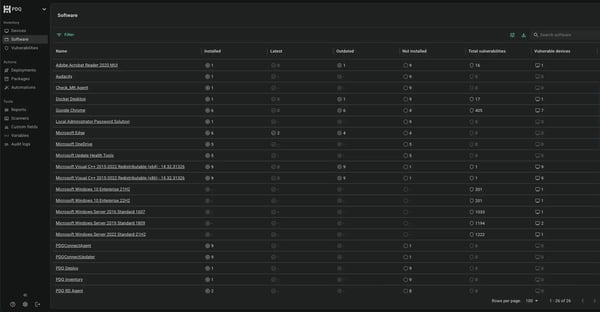
While PDQ Connect is built around Windows, I found in G2 reviews that macOS support is still maturing and Linux coverage is more limited. That said, macOS support is actively in beta and expanding, and for the predominantly Windows fleets PDQ Connect is designed for, reviewers find the coverage solid.
Across many G2 reviews, I also noted that deployment reporting can occasionally lag, with console status not always reflecting the latest state immediately. In practice, reviewers describe these as exceptions against a high deployment success rate, and the platform’s speed makes them easy to catch and re-run.
All in all, G2 sentiment positions PDQ Connect as a standout for teams that want PDQ’s on-prem reliability delivered through a fast, cloud-based console. It delivers the most value for Windows-focused IT teams that prioritize rapid deployment and managing endpoints wherever they happen to be.
What I like about PDQ Connect:
- PDQ Connect pushes software and patches out almost immediately from the cloud, giving teams noticeably faster deployment than heavier endpoint tools.
- It lets teams manage and patch machines anywhere without VPN connectivity, with strong automation and PowerShell-based customization out of the box.
What G2 users like about PDQ Connect:
“I love how quick PDQ Connect is to get set up and running. The interface is intuitive, and the PDQ team provided us training up front as well. The day-to-day operations are much faster than competing products we evaluated. You click to deploy, and they deployment happens almost immediately. Even something fairly big, like Microsoft updates run quickly, so the speed overall is great. Automations are easy to set up and they work well.”
– PDQ Connect review, Jeff M.
What I dislike about PDQ Connect:
- Some G2 users note that macOS support is still maturing and Linux coverage is limited, though macOS is actively in beta and the platform is built around predominantly Windows fleets.
- Many reviewers point out that console status can occasionally lag behind the latest deployment state, but add that these cases are the exception against an otherwise high deployment success rate.
What G2 users dislike about PDQ Connect:
“I experience occasional delays in device scan updates or the admin console data not being up to date. I’m also looking forward to software package parity for macOS.”
– PDQ Connect review, Johan B.
7. Patch My PC: Best for automating third-party application updates
G2 rating: 4.8/5
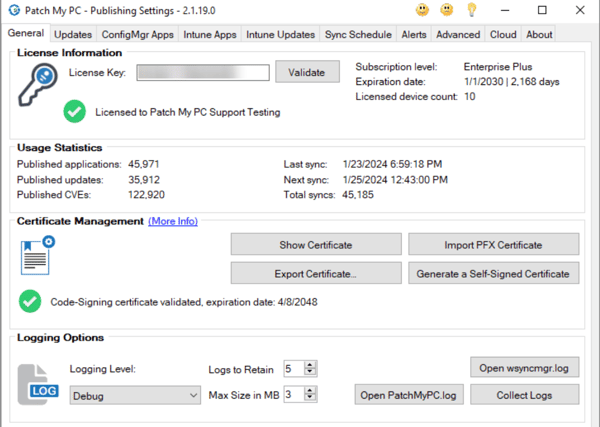
Third-party app patching is the part of endpoint management that quietly eats the most time, and Patch My PC is built to take it off your plate. It integrates directly with the tools teams already run, and its quality of support score of 98% on G2 is among the highest in the category.
The strongest theme I saw is its Intune and SCCM integration. Users describe deploying and updating third-party apps straight from the tools they already use, without manually packaging and uploading each one. Across many G2 reviews, this connection is the main reason teams bring it in.
Its third-party app catalog is another highlight. I noticed reviewers value the large library of pre-packaged apps that update automatically when a new release drops, so browsers and common tools stay current without anyone chasing versions. That automation is where the time savings really show.
Users also lean on its set-and-forget automation. From what I have seen, teams describe configuring updates once and letting the platform handle continuous patching in the background, which keeps software standardized across devices with minimal ongoing effort.
Custom packaging rounds out the strengths. Reviewers point to how easily they package their own apps when something isn’t in the catalog, with automatic extraction of silent install parameters that makes deployment quicker. It gives teams control without the usual packaging grind.
The day-to-day experience holds up too. With an ease of use score of 94% and an ease of setup score of 95%, reviewers describe a clean interface and a quick, guided onboarding that gets teams deploying apps in a short time.
While the catalog is broad, I found in G2 reviews that teams in specialized industries occasionally want niche apps that aren’t yet included. That said, reviewers note the catalog keeps expanding and custom packaging fills the gap, so those apps still fit into the same automated workflow.
In my evaluation, I also saw that the analytics and reporting could go deeper for teams that want richer, dashboard-style insight. Even so, users describe the built-in reporting as clear and dependable for tracking deployments, and note it covers everyday patch visibility well.
Overall, G2 review data positions Patch My PC as a strong fit for teams standardizing third-party app updates across Windows environments. It delivers the most value for organizations already running Intune or SCCM that want continuous, automated patching without the manual packaging overhead.
What I like about Patch My PC:
- Patch My PC integrates directly with Intune and SCCM, letting teams deploy and update third-party apps without manually packaging and uploading each one.
- Its large catalog of pre-packaged apps updates automatically on each new release, keeping software standardized across devices with minimal effort.
What G2 users like about Patch My PC:
“I like how Patch My PC makes management of applications much easier, especially with packaging custom apps. The pre-packed apps perform really well, particularly for continuous updates. The UI is easy to use… The automatic extraction of silent parameters and application info saves me time and makes deploying apps quicker and easier.”
– Patch My PC review, James C.
What I dislike about Patch My PC:
- Some G2 users note that very niche or industry-specific apps aren’t always in the catalog yet, though many add that it keeps expanding and custom packaging lets those apps join the same automated workflow.
- Many reviewers point out that analytics and reporting could go deeper, but note that the built-in reporting is clear and dependable for tracking everyday deployments.
What G2 users dislike about Patch My PC:
“Patch My PC could add API keys to export data to Power BI or other dashboards to make reports. Also, they could add an end-of-life software page that shows what software is going out of support and what will be removed from the platform.”
– Patch My PC review, Chilembwe A.
Best patch management software: Frequently Asked Questions (FAQs)
Still have questions about patch management tools? G2 has the answers!
Q1. Which patch management software is most trusted by infrastructure engineers and security teams based on user reviews?
Based on G2 review data, NinjaOne and ManageEngine Endpoint Central are consistently trusted by infrastructure and security teams for unifying patching, monitoring, and remote management in one place. Action1 also earns strong trust from lean security-focused teams for its cloud-native, automated approach, while Datto RMM is a frequent choice among MSPs and infrastructure teams managing many environments at once. The right fit usually comes down to whether you want an all-in-one endpoint platform or a focused, automation-first patching tool.
Q2. Which patch management software is highest rated for reliable, automated, and secure deployment workflows?
Action1 stands out in reviews for automated, cloud-native deployment that runs with minimal manual effort, making it a strong pick for teams that want hands-off patching. PDQ Connect is frequently praised for fast, dependable deployments pushed straight from the cloud, and Patch My PC is highly rated for automating third-party application updates through Intune and SCCM. Each supports scheduled, policy-driven workflows, so the best choice depends on whether your priority is OS patching, deployment speed, or third-party app coverage.
Q3. Which patch management software is most trusted by security operations and infrastructure teams based on verified reviews?
According to verified G2 reviews, ManageEngine Endpoint Central is widely trusted by security operations teams for combining patching, compliance, and remote troubleshooting in a single console. NinjaOne is another dependable option for infrastructure teams that want real-time visibility across their fleet, while Action1 appeals to security-conscious teams focused on closing vulnerabilities quickly. For distributed or multi-client environments, Datto RMM is a common choice among infrastructure teams.
Q4. Which patch management software reliably prevents update failures that break production systems and services?
No tool can eliminate update failures entirely, but several are designed to reduce the risk. Reviewers highlight ManageEngine Endpoint Central and NinjaOne for policy-based, staged deployments that let teams test patches on device groups before a wider rollout. Action1 and PDQ Connect give teams control over scheduling and targeting so updates land in a controlled way, and clear status reporting helps catch issues early. Testing patches on a small group first remains the most reliable safeguard, and these platforms are built to support that approach.
Q5. Which patch management software supports controlled rollout and recovery when deployments cause instability?
Reviewers point to staged deployment as the main way these tools help teams manage risky updates. ManageEngine Endpoint Central and NinjaOne let you roll patches out to test groups first and pause or adjust before a full rollout, which limits the blast radius if something goes wrong. Datto RMM’s scripting and automation give MSPs flexibility to respond quickly across client fleets, while Action1 and PDQ Connect make it easy to re-target and re-run deployments. For rollback specifics, it’s worth confirming current capabilities directly with each vendor.
Q6. Which patch management software offers the strongest automation for distributed server environments across multiple locations?
For distributed environments, Datto RMM is a standout in reviews thanks to its automation, scripting, and ability to manage many separate sites from one console. NinjaOne is also well suited to multi-location fleets, with automated patching and remote management working together across devices. Action1’s cloud-native model is a strong fit for geographically spread teams since it manages endpoints anywhere without VPNs, and PDQ Connect similarly reaches off-network machines without on-prem infrastructure.
Q7. Which patch management software provides comprehensive visibility into patch deployment and compliance status?
NinjaOne and ManageEngine Endpoint Central are frequently cited for centralized dashboards that show patch status, compliance, and system health across the fleet. Action1 gives lean teams clear visibility into missing patches and endpoint vulnerabilities from a single console, and Datto RMM offers status reporting that helps MSPs keep client environments compliant. For teams standardizing third-party apps, Patch My PC provides dependable reporting on deployment status within Intune and SCCM.
Q8. Which patch management software completes security deployments reliably at scale?
Reviewers consistently point to PDQ Connect for fast, dependable deployments, even for larger updates, and to Action1 for automated patching that runs reliably across endpoints. ManageEngine Endpoint Central and NinjaOne are trusted for policy-driven rollouts at scale, with scheduling and monitoring that keep large fleets consistently up to date. As with any deployment, staging updates to a test group first is the most dependable way to ensure reliability across a big environment.
Q9. Which patch management software is best for minimizing system downtime during critical security updates?
To keep downtime low during critical updates, reviewers value tools that support scheduling and quiet, background deployment. ManageEngine Endpoint Central and NinjaOne let teams schedule patches outside business hours and roll them out in stages to avoid disruption, while Action1 automates deployments so critical fixes land quickly without manual intervention. PDQ Connect’s deployment speed also helps teams close security gaps fast, reducing the window of exposure during urgent updates.
Q10. What is the best patch management software for infrastructure and security teams managing continuous critical updates?
The best fit depends on your environment. For all-in-one endpoint and security management, ManageEngine Endpoint Central and NinjaOne handle continuous patching alongside monitoring and remote support. Action1 is ideal for lean teams that want automated, cloud-native patching, and PDQ Connect suits Windows-focused teams that prioritize deployment speed. MSPs and distributed teams often lean on Datto RMM, while organizations standardizing third-party apps rely on Patch My PC for continuous, automated updates.
Time to patch up with security
Keeping systems secure and up to date isn’t just a technical necessity; it’s critical to running a smooth, resilient business. Neglecting patching vulnerabilities opens the door to security threats, compliance risks, and unexpected disruptions. A reliable patch management solution eliminates these gaps by automating updates, reinforcing system security, and ensuring your IT environment stays resilient.
With so many options available, the best solution depends on your needs. Some platforms are built for large enterprises with complex infrastructures, while others focus on cloud-based patching or MSP-friendly automation. Whether your priority is seamless third-party app updates, real-time compliance tracking, or built-in cybersecurity, choosing the right tool means balancing security with efficiency.
In an era where cyber threats evolve rapidly, keeping your systems patched is more than just a best practice. I’ve explored these seven tools so you can stay proactive, reduce risks before they escalate, and keep your IT infrastructure running. Now, it’s your turn to try them out and find the right fit for your business.
Safeguard your customers’ most valuable data with sensitive data discovery software. Learn how to use it to comply with state and federal standards.
[ad_2]
Source_link