[ad_1]
Summary
| WhatsApp marketing ROI depends on delivering relevant, behavior-driven messages to the right audiences while carefully managing platform, operational, and messaging costs. Maximizing returns requires accurate attribution, real-time personalization, and cross-channel orchestration to turn customer engagement into measurable revenue. |
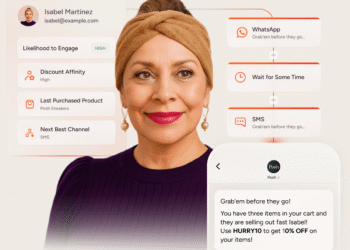
Next Best Channel selection prevents wasted WhatsApp spend by automatically routing users to email or push when WhatsApp engagement signals are weak
WhatsApp marketing ROI separates campaigns that look good on paper from those that actually generate profit. Most teams track opens and clicks. Finance wants to see revenue after conversation fees, platform costs, and labor. The gap between what marketing reports and what finance accepts comes down to attribution design, cost accounting, and whether the channel creates new revenue or just shifts it from email.
Why does WhatsApp marketing ROI matter for your channel mix?
A team reports strong open rates. Finance rejects the channel anyway. Why? The attributed revenue doesn’t cover conversation costs.
This happens when marketers conflate engagement metrics with business outcomes. WhatsApp ROI measures whether the channel generated profit after all costs, not just whether people opened your message.
A couple of revenue types matter here:
- Attributed revenue: Any conversion where WhatsApp was in the path
- Incremental revenue: Conversions that wouldn’t have happened without WhatsApp
Most vendors report attributed revenue, which inflates perceived returns. If WhatsApp simply shifts conversions away from email, which costs less, your net ROI turns negative even when the channel looks successful on paper.
| Use case | Typical ROI range | Key condition |
| Cart abandonment recovery | Higher range | Requires real-time trigger within session window; Dynamic Product Catalog integration increases in-chat conversion rate |
| Promotional broadcast | Lower range | Depends on segment quality and opt-in recency |
| Post-purchase upsell | Mid range | Requires product affinity data in customer data platform (CDP) |
| Text-to-Opt-in / keyword opt-in list growth | Foundation for all WhatsApp ROI | Requires keyword trigger setup and compliant double opt-in flow; feeds all downstream WhatsApp ROI campaigns |
Cannibalization is a major hidden risk. You need incrementality testing to understand whether you’re generating new revenue or just paying more for the same conversions.
Which key performance indicators (KPIs) predict WhatsApp marketing ROI?
Some metrics are inputs to ROI. Others are diagnostic signals. Still others are pure outcome metrics. Knowing which is which prevents your team from optimizing the wrong thing.
| KPI | Formula | Type | Why it matters |
| Delivery rate | Delivered ÷ Sent | Diagnostic | Low delivery signals list hygiene or application programming interface (API) issues |
| Open/read rate | Read receipts ÷ Delivered | Diagnostic | High open with low click suggests weak call-to-action (CTA) |
| Click-through rate | Clicks ÷ Delivered | Diagnostic | Indicates message relevance and CTA strength |
| Reply rate | Replies ÷ Delivered | Diagnostic | Signals engagement depth for conversational flows |
| Conversion rate | Conversions ÷ Delivered | Outcome | Direct measure of campaign effectiveness |
| Revenue per recipient | Total revenue ÷ Recipients | Outcome | Normalizes revenue across campaigns |
| Cost per conversation | Total costs ÷ Conversations | Input | Controls denominator of ROI equation |
| Opt-out rate | Opt-outs ÷ Delivered | Input | Rising opt-outs erode future reach |
- Delivery rate: If it drops below your threshold, check API rate limits or phone number quality before touching creative
- Open rate: WhatsApp’s read receipts give you visibility email lacks, but high opens with low clicks means the message isn’t compelling
- Click-through rate: Transactional messages outperform promotional ones, so benchmark these separately
- Reply rate: Critical for conversational commerce. Low reply rates on chatbot triggers suggest friction in the flow
- Conversion rate: The metric finance cares about. Make sure your attribution window matches your sales cycle
- Cost per conversation: Meta uses conversation-based pricing, with rates varying by category and country
If you want these KPIs to roll up into a finance-ready view of profit (not just engagement), book a demo and we’ll show you how to instrument WhatsApp reporting end to end.
How do you calculate WhatsApp marketing ROI step by step?
Your CFO asks for WhatsApp ROI. You realize you don’t have a defensible number.
How should you identify revenue sources and weighting?
You can approach revenue in different ways. Attributed revenue counts any conversion where WhatsApp was in the path. Incremental revenue counts only conversions that wouldn’t have occurred without the channel, measured via holdout tests.
Attributed revenue is easier to measure but overstates impact. Incremental revenue is more accurate but requires test design. For teams without holdout infrastructure, start with attributed revenue and apply a conservative discount factor based on channel overlap.
Typical revenue sources:
- Direct conversions from UTM-tracked WhatsApp links
- Assisted conversions where WhatsApp was in the path
- Recovered carts and abandoned browse sessions
- Upsell revenue from post-purchase flows
How do you calculate true total costs?
Most teams undercount costs. Meta charges per conversation by category. Each conversation category carries different rates, and those rates vary by country:
- Marketing conversations
- Utility conversations
- Service conversations
- Authentication conversations
Your cost checklist:
- Conversation fees by category and country
- BSP monthly fee and per-message overage charges
- Hours spent on template management multiplied by loaded labor rate
- Hours spent on reply handling multiplied by loaded labor rate
- Creative production costs for rich messages
How do you apply the formula with a worked example?
The formula: (Revenue attributed to WhatsApp − Total WhatsApp costs) ÷ Total WhatsApp costs, expressed as a percentage.
Say a campaign generates meaningful attributed revenue. Your costs include conversation fees, platform fees, and labor. The calculation yields a strong ROI.
If holdout tests show only a portion of that revenue is incremental, your adjusted return drops significantly.
Avoid counting revenue without deduplicating across channels. Don’t compare WhatsApp ROI directly to email without normalizing for different cost structures. And if your sales cycle is longer than your attribution window, this formula will understate value.
See how enterprise brands have scaled their WhatsApp ROI in our customer success stories, or explore step-by-step walkthroughs in the product demo hub.
Which WhatsApp attribution models and tracking setups does finance trust?
Marketing reports a number. Finance calculates another. The discrepancy erodes trust in the channel.
What is last-click attribution, and when should you use it?
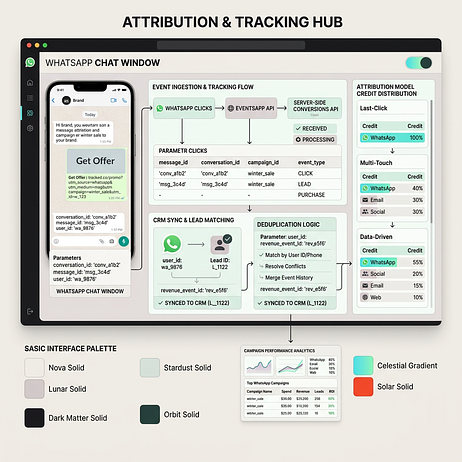
Last-click gives full credit to the final touchpoint before conversion. Use it when you need a simple baseline, when WhatsApp serves primarily as a bottom-funnel recovery channel, or when your analytics stack doesn’t support multi-touch.
It understates WhatsApp’s role in awareness and consideration.
What is multi-touch attribution, and when should you scale it?
Multi-touch attribution distributes credit across touchpoints using linear or time-decay models. Use it when WhatsApp is part of a multi-channel journey and you have unified identity resolution across channels.
Anonymous browsing breaks the chain. If you can’t connect sessions to known users, the model fails.
What is data-driven attribution, and what maturity does it require?
Data-driven models use machine learning to weight touchpoints based on actual conversion patterns. You need sufficient conversion volume for the model to learn. You also need to be able to explain the logic to finance.
What are Conversions API (CAPI) and CRM sync, and why do they matter?
Attribution is only as good as your tracking instrumentation.
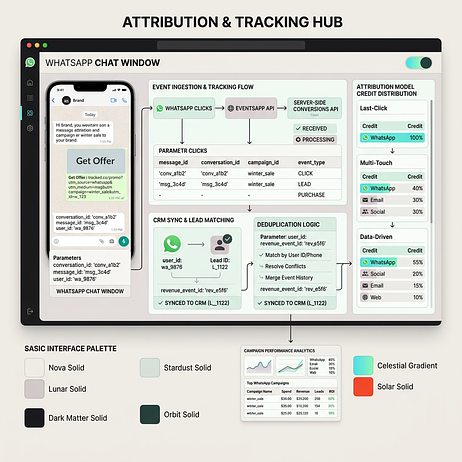
- UTM structure: Consistent naming convention for campaign, medium, source, and content parameters
- Deep links: Ensure WhatsApp links resolve correctly on mobile and pass parameters through
- Server-side tracking: Meta’s Conversions API improves match rates and reduces reliance on browser cookies
- CRM sync: Map conversation IDs to CRM contact records for closed-loop reporting
- Deduplication rules: Define how to handle users who convert after multiple messages or across channels
| Field | Source | Purpose |
| campaign_id | UTM parameter | Groups messages by campaign |
| message_id | WhatsApp API | Identifies specific message |
| conversation_id | WhatsApp API | Links to conversation thread |
| user_id | CDP/CRM | Unifies identity across channels |
| revenue_event_id | Ecommerce platform | Ties to specific transaction |
If your finance team keeps challenging your numbers, book a demo to see how we connect CAPI, CRM, and dedup rules into reporting that holds up under scrutiny.
How can you increase WhatsApp marketing ROI without getting blocked?
Meta’s quality rating system penalizes senders who generate blocks, reports, or low engagement. High-volume sends with low relevance don’t just waste money. They can get your number restricted.
How should you segment audiences by intent and value?
Broad sends destroy ROI. Use behavioral signals like browse history, cart activity, and purchase recency to identify high-intent segments. Layer in value signals like loyalty tier and purchase frequency. For retail and e-commerce teams, price-drop alerts and back-in-stock notifications sent to high-intent segments consistently outperform untargeted broadcasts.
Travel brands can trigger upgrade upsells within the 24-hour service window opened by a flight confirmation message, turning a low-cost utility conversation into a high-value marketing moment. Tighter segmentation reduces reach but increases conversion rate and protects your quality rating. For teams with limited data, start with recency-based segments before adding behavioral layers. behavioral signals like browse history, cart activity, and purchase recency to identify high-intent segments. Layer in value signals like loyalty tier and purchase frequency to prioritize your best customers. Suppress users who haven’t opened recent messages.
Tighter segmentation reduces reach but increases conversion rate and protects your quality rating. For teams with limited data, start with recency-based segments before adding behavioral layers.
How should you run A/B tests on content, timing, and offers?
Test systematically:
- Content: CTA placement, message length, rich media versus text-only
- Timing: Send time optimization based on user engagement patterns
- Offers: Discount depth, urgency framing, personalization level
Testing too many variables at once without sufficient sample size produces noise, not signal. Run tests sequentially with a clear hypothesis.
How do you grow your WhatsApp subscriber list before launch?
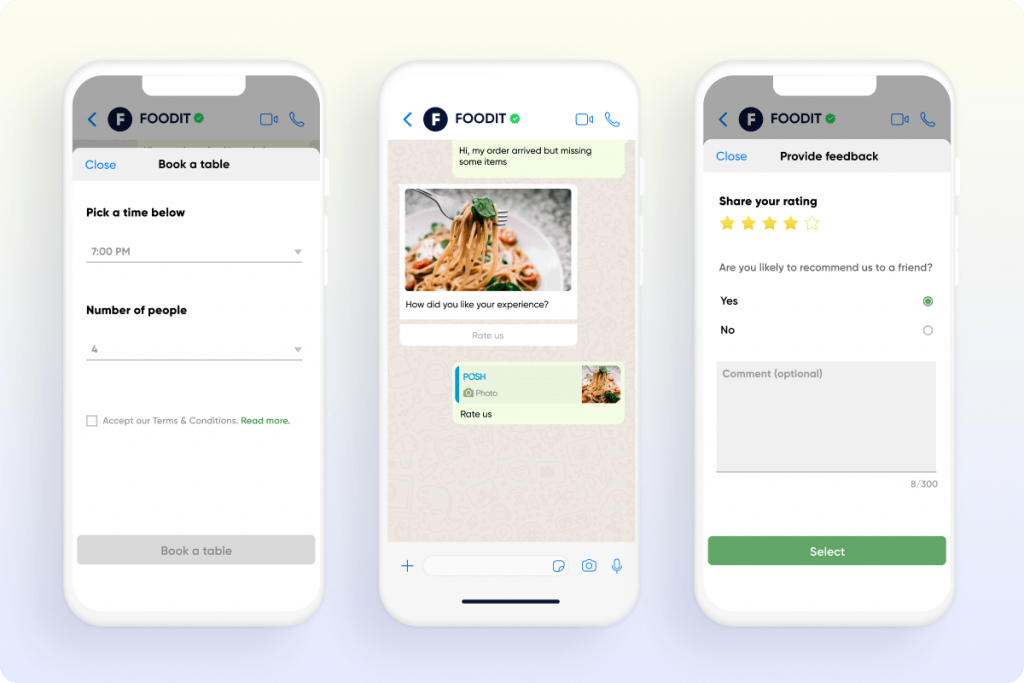
Growing the WhatsApp opt-in list is a prerequisite for ROI at scale. Text-to-Opt-in (keyword opt-in) lets users subscribe by sending a keyword such as “JOIN” to a dedicated number or via a web link. Pair this with a compliant double opt-in flow to confirm consent and reduce block rates.
Insider One supports keyword-triggered opt-in flows that automatically enrol subscribers into onboarding journeys, segment them by acquisition source, and feed them into downstream ROI campaigns, cart abandonment, promotional broadcasts, and post-purchase upsells. A larger, higher-quality opt-in list is the single most reliable lever for increasing the absolute revenue your WhatsApp program generates.
How do you automate engagement within the session window?
Meta charges differently for messages within versus outside the customer service window. Messages sent within an open service window, after a user has initiated contact, are classified as service conversations and cost significantly less than outbound marketing messages. Marketing messages sent outside the window require approved templates and incur marketing-category fees. The cost gap between categories is substantial at enterprise send volumes.
Insider One’s Architect orchestration engine is purpose-built to exploit this cost structure. Design flows that open the service window by prompting user replies through quick-reply buttons or interactive messages. Once the window opens, Architect delivers follow-up messages, including Dynamic Product Catalogs that let users browse and add to cart without leaving WhatsApp, at the lower service-conversation rate.
This transforms a high-cost outbound blast into a two-way commerce conversation that drives higher conversion at lower cost per interaction. Note: Insider One’s automated journey continuation relies on user button and quick-reply selections; free-text responses are not processed for automated flow branching.
How do you manage template approvals without delays?
Template rejection delays campaigns. Follow Meta’s guidelines strictly and use pre-approved template categories when possible. The lead time to plan for is campaign coordination: briefing, copy review, and quality sign-off. Build a library of pre-approved templates for common use cases so your team can launch without bottlenecks.
Within Insider One, Meta typically approves template messages in 3-4 minutes, and technical approval is near-instant.
How do you avoid batch-and-blast sends to protect quality rating?
Never send to purchased or scraped lists. Honor opt-out requests immediately. Monitor block and report rates by campaign. Implement frequency capping.
When ROI drops, diagnose systematically:
- Check delivery rate. If low, investigate API rate limits or number quality
- Check read rate. If low relative to delivery, timing or relevance issue
- Check click rate. If low relative to reads, CTA or offer issue
- Check conversion rate. If low relative to clicks, landing page friction
- Check opt-out rate. If rising, frequency or relevance issue
To see how high-intent segmentation, Dynamic Product Catalogs, and Next Best Channel routing run together in production, open the product demo hub and pick the WhatsApp use case closest to your roadmap.
How does Insider One improve WhatsApp marketing ROI end to end?
Insider One is an enterprise-scale, AI-powered growth platform that unifies customer data, cross-channel orchestration, and revenue analytics in a single solution. Unlike niche point solutions, standalone BSPs, separate CRMs, or disconnected analytics tools.
Insider One eliminates the Total Cost of Ownership (TCO) risk of fragmented stacks: no integration maintenance overhead, no data silos, no duplicated seat costs. As an official Meta Business Solution Provider (BSP), Insider One delivers the direct API access, conversation analytics, and template management that standalone BSPs lack when paired with a separate marketing layer.
How do a customer data platform (CDP) and unified profiles improve segment precision?
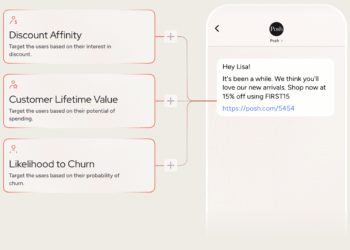
Insider One’s customer data platform (CDP) unifies customer behavior across web, app, and offline channels into a single profile. This enables behavioral segmentation based on real-time intent signals, predictive segments identifying users likely to convert or churn, and identity resolution that connects anonymous sessions to known users.
The result: higher conversion rates from better targeting and lower opt-out rates from relevance.
How does Architect support cross-channel journey orchestration?
Architect, Insider One’s customer journey orchestration solution enables teams to build WhatsApp flows that respond to behaviour in real time. Trigger cart abandonment messages within the session window and surface Dynamic Product Catalogs, so users can browse and add items to the cart without leaving WhatsApp. Coordinate WhatsApp with email, push, and SMS based on real-time channel preference;
Next Best Channel automatically deflects users to lower-cost channels when WhatsApp engagement signals are weak, protecting your send budget. Use A/B Auto-Winner Selection to optimize message variants automatically.
How does Insider One AI support optimization at scale?
Sirius AI™, Insider One’s extensive set of artificial intelligence (AI) capabilities, automates decisions that affect ROI at every level. Send Time Optimization delivers messages when each user is most likely to engage. Generative AI capabilities automatically produce on-brand message copy variations and power conversational reply flows, so WhatsApp interactions feel personal and responsive without requiring a live agent for every exchange.
Next Best Channel acts as a budget guardrail: when a user’s behavioral signals indicate low WhatsApp engagement probability, Sirius AI routes the message to email, push, or another lower-cost channel, preventing wasteful sends and preserving your WhatsApp quality rating.
How does Behavioral Analytics support finance-ready reporting?
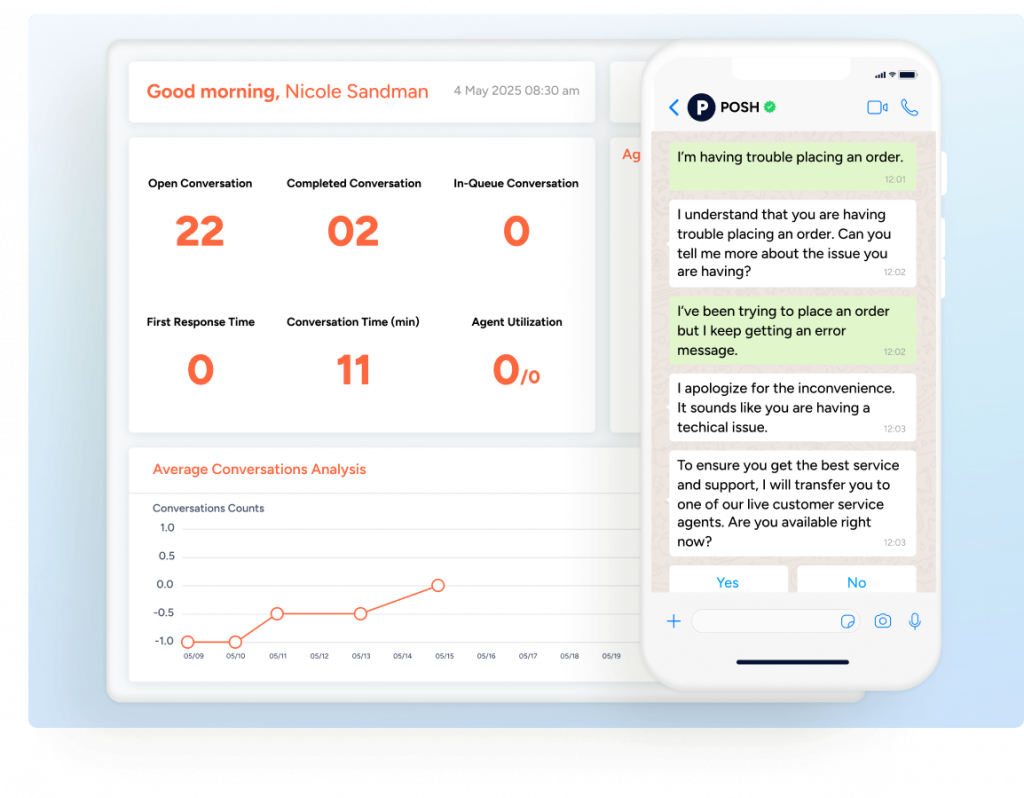
Insider One’s Behavioral Analytics closes the loop between campaign execution and ROI measurement. Funnel Analytics tracks the path from WhatsApp message to conversion. Custom Dashboards consolidate WhatsApp metrics alongside other channels. Channel Reachability Insights show which segments engage most on WhatsApp.
Defensible numbers that finance teams trust, built into the platform, not requiring hours of custom BI work or manual spreadsheet reconciliation.
If you’re ready to move from “promising channel” to provable profit, book a demo to see how Insider One ties WhatsApp segmentation, orchestration, and analytics into one ROI story.
How does Insider One’s service model accelerate time to value?
Beyond the technology, Insider One’s service model is a key reason enterprise teams choose it over niche point solutions. Dedicated Customer Success Managers guide onboarding, template strategy, and campaign optimisation from day one. Local support teams reduce the implementation friction that typically delays go-live with self-serve BSPs.
For teams migrating from a fragmented stack, Insider One’s migration assistance ensures continuity of historical data and audience segments. Brands typically go live on WhatsApp faster with Insider One than with a custom-integrated BSP-plus-CRM setup, and with a complete ROI measurement framework already in place.
Frequently asked questions
Yes. The official API provides delivery receipts, read status, and conversation IDs required for accurate revenue attribution. Third-party workarounds lack these signals and create compliance risk.
Choose platforms that export your customer data and campaign history, support standard integrations with your CRM and analytics stack, and don’t charge exit fees. Scaling multiple niche point solutions, a standalone BSP, a separate CRM, and a third analytics tool creates compounding TCO risk through integration maintenance, data silos, and duplicated contracts. Insider One’s open architecture and extensive integration ecosystem deliver a lower total cost of ownership than a fragmented stack, while keeping your data fully portable.
Meta charges per conversation window, not per message. Rates vary by conversation category and country. Multiple messages within an open window count as the same conversation.
Template messages require Meta approval and incur marketing-category conversation fees. Rejected templates delay campaigns. Poorly performing templates waste. Build a library of pre-approved templates and test variants systematically.
Meta imposes sending limits based on your quality rating and phone number tier. New numbers start with lower limits. Consistent quality performance unlocks higher tiers. Hitting rate limits delays message delivery and can hurt time-sensitive campaigns.
[ad_2]
Source_link