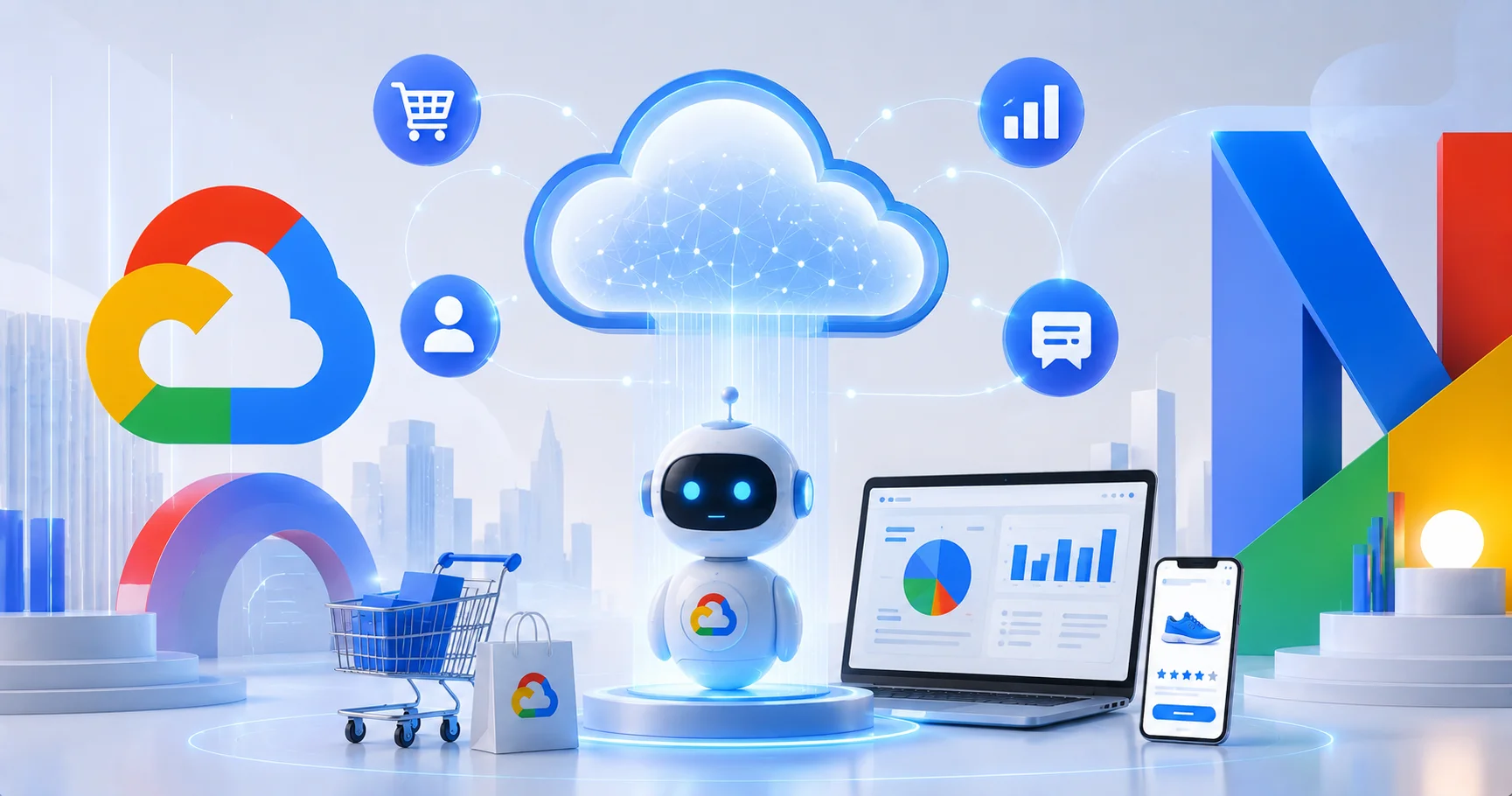
If you’ve been watching the AI space closely, you already know things are moving fast. But Google Cloud Next 2026 made one thing crystal clear: we’re no longer in the “let’s test AI” phase. We’re in the era of the agentic enterprise, and commerce is right at the center of it.
Held at the Mandalay Bay Convention Centre in Las Vegas, Google Cloud Next ’26 marked a shift from experimentation to execution, with AI agents now being actively used in production across retail, healthcare, finance, and more. Here’s a breakdown of the biggest agentic commerce moments from the event, explained simply.
What Is Agentic Commerce, Anyway?
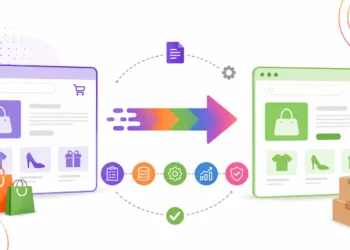
Before diving into the highlights, let’s get the basics right. “Agentic commerce” refers to AI that doesn’t just answer your questions; it actually does things on your behalf. Think of it as a smart shopping assistant that can find the right product, check if it’s in stock, answer your fit or specification questions, and complete your purchase, all in one conversation.
The vision is an AI agent that can find the perfect product, answer fit questions, verify inventory in real time, and securely complete a purchase, all within a single chat. Google Cloud Next 2026 showed us that vision is now reality for many major brands.
Gemini Enterprise Agent Platform
The centrepiece of the event was the launch of the Gemini Enterprise Agent Platform. Google collapsed Vertex AI’s agent tooling, Agentspace, ADK, and several other agent-adjacent functions into one unified surface for building, securing, running, governing, and observing agents in the enterprise.
In simple terms, instead of stitching together ten different tools, businesses now have one platform to build and manage all their AI agents. A low-code Agent Studio lets developers and business users build and test agents using natural language, while a no-code Agent Designer lets anyone create custom, trigger-based workflows without writing a single line of code.
Shopping Across Every Surface
One of the most talked-about announcements for retailers was the Universal Commerce Protocol (UCP). This protocol connects agents to store catalogs, payment processors, and any conversational UI, built on the foundations of Model Context Protocol (MCP) and the Agent2Agent (A2A) protocol, creating a seamless, secure, and open ecosystem for the next generation of online and in-store retail.
In plain English: your AI agent can now shop across platforms, talk to other agents, and complete a purchase without the user jumping between apps or tabs. It’s the infrastructure backbone that makes agentic shopping actually work at scale.
Real Brands, Real Results
The best part of Google Cloud Next 2026 wasn’t the announcements — it was the proof. Retailers and brands showed up with real numbers and live deployments.
Macy’s: Ask Macy’s
Macy’s launched Ask Macy’s, a conversational AI shopping assistant built in just four weeks with Google Cloud’s Gemini Enterprise for Customer Experience, which makes online shopping more seamless. The assistant can help shoppers pick an outfit for a specific occasion and even show a moving image of the customer wearing it, based on a photo they share. That’s not a concept, it’s live.
Ulta Beauty: Ulta AI
Ulta is using the Universal Commerce Protocol to enable agentic shopping on Google surfaces while also powering its new personalized shopping assistant, Ulta AI, through Gemini Enterprise for Customer Experience. Shoppers get personalized product recommendations that feel less like an algorithm and more like advice from someone who knows their taste.
The Home Depot: Magic Apron
The Home Depot is using Gemini Enterprise to power a suite of AI tools, from assistants like Magic Apron to new AI voice agents for customer service, delivering expert guidance to shoppers online, on the phone, and in store for a seamless home improvement journey.
Wayfair: Generative Shopping Experiences
Wayfair has been building toward this moment for years. The Gemini Enterprise Agent Platform is now powering everything from catalog enrichment to generative shopping experiences that help customers create a home that’s right for them, with AI that actively drives discovery, personalization, and commerce across every customer touchpoint.
Papa John’s Food Ordering Agent
Papa John’s became the first user of the Food Ordering agent in Gemini Enterprise for Customer Experience, featuring a unified voice-and-text AI ordering system, with integration that helps the agent remember customer preferences and past orders to get food to the door faster. This is agentic commerce applied to quick service retail, and it works.
Security in Agentic Commerce
Any time AI is making purchases on behalf of users, security becomes the number one concern. Google addressed this directly.
Google Cloud Fraud Defense is now generally available, evolving reCAPTCHA into a comprehensive platform designed to secure the agentic web by discerning the legitimacy and authorization of bots, humans, and agents, covering the full digital commerce journey, from account creation and login to payment and checkout.
The Agent Payments Protocol (AP2) was also introduced to establish irrefutable proof of user authorization whenever an agent makes a transaction. You stay in control even when the AI is doing the work.
Agentic AI Is Everywhere
While the commerce use cases stole the show, agentic AI was on display across every major industry.
CVS Health and Google Cloud partnered to launch Health100, an agentic AI Health Concierge platform that integrates data from wearables, electronic health records, and pharmacy claims to provide proactive, personalized care navigation for millions of consumers.
American Express is moving its core on-premise infrastructure and hundreds of production applications to BigQuery to enable trusted agentic commerce at scale.
Signal Iduna is using Gemini Enterprise to deliver insurance answers to customers 37% faster. The thread connecting all of these? AI that doesn’t just advise — it acts.
What “AI Agentic” Means for Businesses
If you run an e-commerce brand, a retail store, or any business with a customer-facing digital experience, here’s the takeaway: agentic commerce is no longer a future technology. It’s being deployed right now, by brands of all sizes, across every price point.
Google Cloud Next 2026 opened with Thomas Kurian declaring the end of the AI pilot era. The question is no longer “can we build an agent?”, it’s “how do we scale the agents we already have?”
The infrastructure is ready. The protocols are live. The early results are strong. The only question left is how quickly your business will move.
Conclusion
Google Cloud Next 2026 was more than a product launch event. It was a signal that the way people shop and the way businesses sell are fundamentally changing. AI agents are becoming the new storefront, the new sales associate, and the new checkout counter, all at once.
For brands willing to move now, the competitive advantage is real, and that includes getting the foundation right. Whether you’re looking for ecommerce website development in Bangalore or evaluating the best ecommerce web development company in Bangalore to help you build AI-ready infrastructure, the decisions you make today will define your position tomorrow. The right e-commerce website development company in Bangalore won’t just build you a store, they’ll build you a system that’s ready for what AI commerce is becoming. For those waiting to see how it plays out, the gap is already growing.