[ad_1]
Launching a loyalty program sounds simple on paper. Offer rewards, attract members, and increase repeat purchases. But successful programs rarely happen by accident. They require careful loyalty program planning: defining goals, selecting the right rewards, predicting participation, and avoiding common pitfalls that drain budgets without driving real behavior change.
The good news is that planning your loyalty program shouldn’t require months of analysis or complex forecasting models. With the right framework and tools, you can build a program that aligns with your business goals and delivers measurable results.
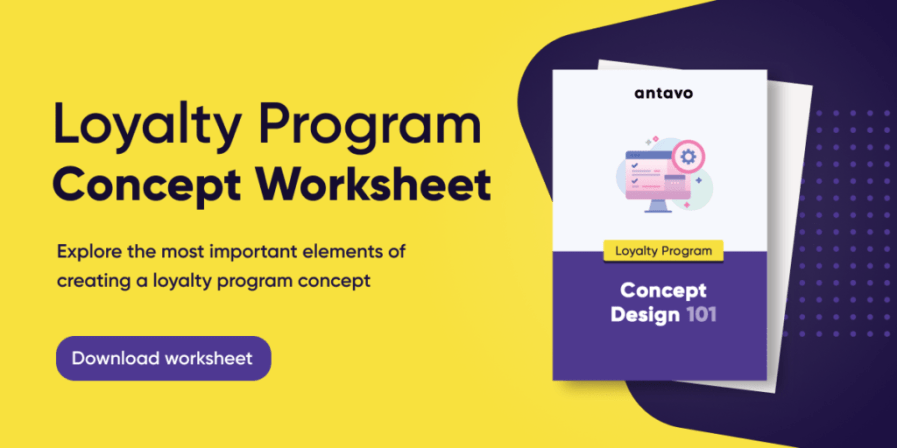
In this guide, we’ll walk you through the best practices for loyalty program planning so you can start taking action right away. And if you need a handy concept-building worksheet that guides you through some aspects of loyalty program planning.
Why loyalty program planning matters
Many brands jump straight to reward mechanics without asking a more fundamental question: What should the loyalty program achieve?
A well-planned loyalty program is more than a discount machine. Its purpose is to influence customer behavior in ways that support long-term business growth.
For example, a loyalty program might aim to:
- Maximize customer lifetime value
- Enhance customer engagement
- Increase purchase frequency and average order value
- Increase the share of high-value customers
- Grow retention
- Collect valuable customer data

Without clear objectives, it becomes difficult to measure whether the program is successful. That’s why loyalty program planning should always begin with a simple principle: define the behavior you want to change.
7 best practices for loyalty program planning
1. Estimate how many members you can expect
One of the most important elements of loyalty program planning is estimating enrollment.
While exact predictions are impossible, most programs follow similar participation patterns.
Typically:
- 30–60% of active customers join a free loyalty program
- 10–20% become highly engaged members
- A small group of top-tier members drives disproportionate revenue
If you want to boost membership numbers, a quick, frictionless enrollment at checkout is a good start, but nowadays it’s a hygiene factor. You should also think of ways to collect the valuable customer data you would otherwise miss with the few-click registration.
2. Design rewards that support your goals
Rewards are the most visible part of a loyalty program. But they should never be chosen randomly. The best reward portfolios combine financial value with emotional engagement. Some common reward categories include:
- Monetary rewards: These work well for driving immediate purchases but can become expensive if overused. Examples include: discount vouchers, cashback or store credit, free shipping
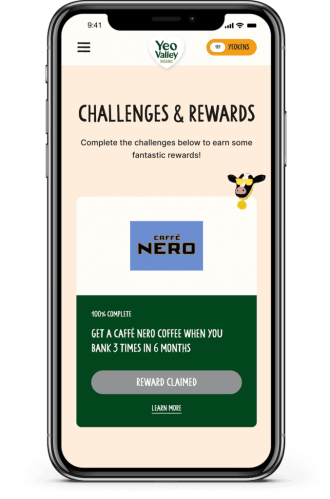
- Experiential rewards: These rewards often feel more valuable to customers while costing less to deliver. Examples include: VIP events, early access to products and sales, personalized gifts and surprises
3. Plan how you will measure success
Loyalty programs aren’t just tools to drive KPIs, like increased revenue. They change customer behavior, which in turn has a positive impact on repeat purchases, sales, engagement, etc.
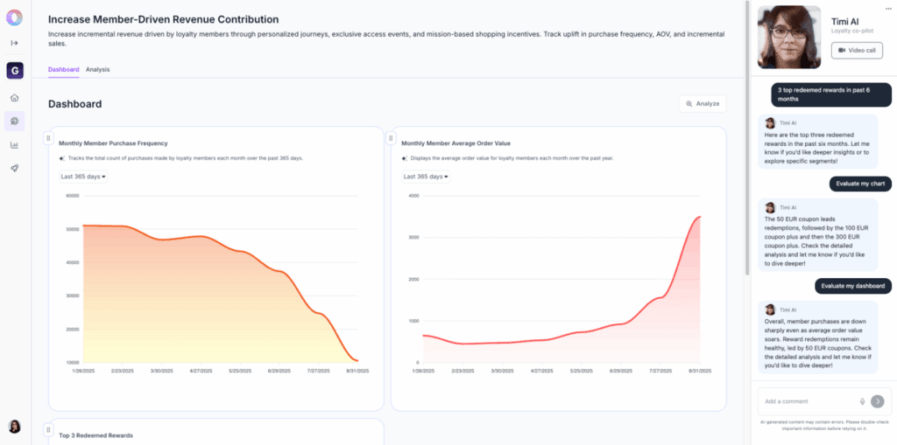
The health of a loyalty program can be determined by how well it can change behavior, and how much value you get that you wouldn’t receive otherwise. To do so, you can look at loyalty-specific metrics:
- Enrollment rate
- Active member rate
- Redemption rate
- Purchase frequency
- Average order value
Measuring these metrics helps determine whether the program is influencing customer behavior.
It’s also important to remember that loyalty programs are long-term investments. Reliable ROI insights often take time to appear, as customers need time to engage with the program and earn rewards.
This is why marketers should track behavioral indicators early on rather than waiting for financial results alone.
Need a helpful tool to lay down the foundation for your ROI plans? Make sure to check out our ROI worksheet!
4. Define the post-launch marketing strategy
A well-designed loyalty program does not automatically attract members. Companies need a clear plan for how customers will discover and join the program.
Think about the program launch from the customer’s perspective. Where will they first see the offer? What motivates them to sign up? What happens after they enroll?
Without a strong marketing plan, even the most innovative loyalty program can struggle to gain traction.
5. Don’t forget about the legal and data foundations
Before fully committing to your rewards or tiers, companies need to understand what they can and cannot do with customer data.
This step is especially important when launching a loyalty program for the first time or migrating from another system. Data protection rules, customer consent requirements, and regional regulations can all influence how a program operates.
Companies often assume they can import historical customer data into a loyalty program. In practice, this is not always possible without explicit consent from the customer. If consent is missing, historical transactions may not be usable for loyalty rewards or tier calculations.
That is why legal and compliance teams should be involved early in the loyalty program planning process. Establishing the right data policies from the beginning prevents technical complications and delays later on.
6. Plan ahead on what kind of behaviors you want to change in the next phase
In this day and age, loyalty programs are no longer static marketing strategies. Forget the “set-and-forget” approach: a successful program needs to evolve along the customer’s needs. Instead, think about it as a constant reiterating tool for “targeted behavioral change”.
In practice, we recommend choosing 2-3 customer behaviors you really want to change in the next 6-12 months. Design an ideal loyalty experience made of loyalty journeys to build that habit/behavior. track and learn, see if it works, if not test. Then, 6-9 months in, start targeting new beaviours you learnt about in the meantime, and keep reiterating and testing.
7. Design the right technology architecture
Loyalty programs rely heavily on data. Transaction history, customer profiles, campaign participation, and reward redemption all need to move between systems.
During loyalty program planning, companies should clearly map where their data comes from and where it needs to go.
Key questions include:
- Where is customer data stored?
- Which platform acts as the central customer database?
- How will data flow between ecommerce, CRM, and loyalty platforms?
- What information should be shared with email marketing tools?
Without a clear architecture, teams may discover late in the implementation process that required data is missing or difficult to access. Planning data flows early prevents these technical obstacles.
Avoid these common loyalty planning pitfalls in 2026
Even well-intentioned programs can fail if key planning mistakes are overlooked.
Here are several pitfalls to avoid:
- Over-relying on discounts: If every reward is a discount, customers quickly learn to wait for deals instead of purchasing at full price.
- Forgetting that loyalty programs are an equal part about rewards and experience: Rewards alone won’t carry the whole program, so you should include a frictionless, positive CX too.
- Ignoring non-transactional engagement: Loyalty is not built solely through purchases. Loyalty programs should also reward interactions like: review, referring people, social engagement and most importantly, profile completion.
- Making the program too complex: Customers should understand how the program works within seconds. Overly complicated rules can discourage participation.
- Forgetting your internal team: successful loyalty programs require collaboration across all your departments, including your marketing and CRM team, analysts and even on-site employees.
FAQ: Loyalty program planning
When is a company ready for a loyalty program?
The first thing you need to answer is whether you have clarity on what customer behavior you want to incentivize or change, and whether you know how to do it. If the answer is yes, then you are ready to start planning. After all, loyalty is for all, you just need to design it for the right audience.
How much should a loyalty program budget be?
Budgets vary widely, but costs generally fall into four main categories: technology, rewards, marketing, and staffing. Keep in mind, though, that rewards normally take up 60% of the overall budget. Also, the reward structure should always be designed to support long-term ROI rather than short-term discounts.
When should you update or relaunch a loyalty program?
There’s no schedule set in stone to follow. A good loyalty program should be iterated on constantly, not on an arbitrary calendar day. That’s how you can keep up with consumer trends and keep things fresh for your audience.
Final Thoughts: Loyalty programs start with an idea, but succeed through planning
The difference between a successful loyalty program and an ineffective one often comes down to planning. By clearly defining behavioral goals, forecasting membership growth, designing meaningful rewards, and tracking the right metrics, companies can build loyalty programs that deliver measurable impact.
But finalizing your strategy is only half the battle: then comes the technology shopping.
Antavo’s AI-powered loyalty platform is built on the principle of turning loyalty into an operating system for customer engagement.
- The Planner helps teams translate engagement ideas into loyalty program structures.
- The Engine runs loyalty mechanics in real time.
- The Optimizer uses AI to interpret performance data and reveal what actually drives behavior.
Together, they allow loyalty teams to run programs that evolve continuously instead of repeating the same campaigns.
And that’s when loyalty stops generating activity and starts generating growth.
If you are interested in what Antavo has to offer, be sure to book a call! And don’t forget to download our worksheet to jumpstart your planning.

[ad_2]
Source_link