Driverless cars have the potential to substantially reduce the death toll from likely the most dangerous everyday activity in American life: driving. So it might surprise you to know that the very people who are working to make transportation safer, more pleasant, and more humane are actually pretty divided on them.
That is because if driverless cars ever become pervasive enough on American roads to make a dent in the US’s sky-high car fatality rate, they are also likely to bring greater transformations to the form of our cities, towns, and arteries that connect them that are not all positive. Many experts believe that autonomous vehicles (AVs) will eventually make car travel so cheap and convenient that they’ll greatly increase overall car use in the US, which, as Vox contributor David Zipper pointed out last year, would likely cause more traffic jams and make the country feel even more car-dominated than it does now.
A new meta-analysis of research on that subject puts additional numbers to these projections. Incorporating evidence from 26 studies on AVs’ impacts on the flow of car traffic, University of Texas-Arlington researchers Farah Naz and Stephen Mattingly find that a future where driverless cars become widespread is likely to increase the total number of miles traveled by vehicles in the US by around 5.95 percent. The number could be a bit lower if AVs are shared (as with a rideshare model, for example, like Waymo) and would be higher if they were largely owned by individuals or households, like most cars are today.
This added mileage is a bigger deal than you might think, because even small percentage increases in miles driven can contribute to traffic congestion in a non-linear manner, with just several extra cars (even with impeccably rational AV “drivers”) having the capacity to turn a mild slowdown into stop-and-go gridlock. In some cases, just slightly more demand for a street “is completely sufficient to break the road,” Mattingly, a professor and director of the Center for Transportation Studies at UT Arlington, told me. “Literally five extra vehicles at a certain location at a certain point in time could cause a freeway or a road segment to fail,” trapping everyone on the road in bumper-to-bumper traffic.
Driverless cars’ societal impacts are enormously complex and hard to predict; research into the question is still drawn from models — rather than empirical evidence from AV adoption, because so little of it exists — that attempt to project how their deployment will shift the incentives around driving. Some studies even predict that AVs will decrease total miles driven, but the weight of the evidence, as the meta-analysis now shows, points to increased traffic volumes.
The bottom line of most of the research is that AVs almost by definition lower the friction and costs associated with driving. Who wouldn’t want a point-to-point ride in which they can scroll social media or even read a book(!) — and one they don’t have to pick up the tab for insurance or new tires for? And we already know, from the last century-plus of experience in the US, what happens when we make driving easier: We will get more of it. And more concrete and asphalt infrastructure to accommodate it.
What do we do with that scenario? It creates a real dilemma for those who care about the future of transportation and city planning in the US and for the safety of people. Right now, around 1 percent of all Americans who die each year are killed in a car crash. It would be hard to characterize the US approach to car safety, which has resulted in road fatality rates that are among the highest in the developed world, as anything but a profound failure and international embarrassment.
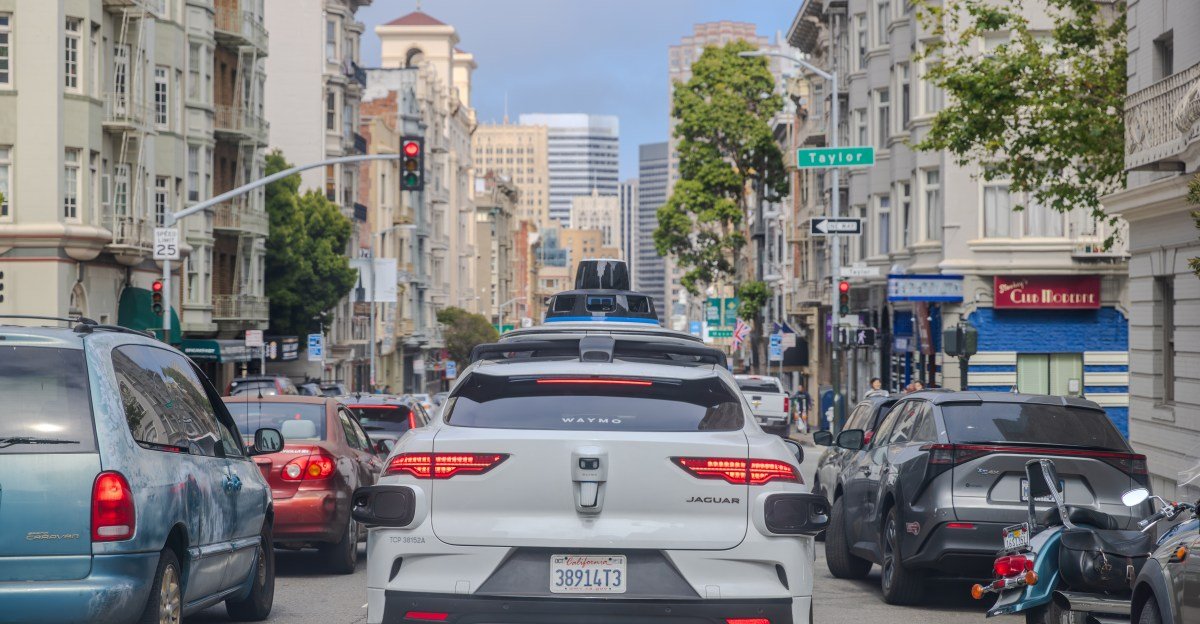
As a point of reference: The US has a population about four times the size of Germany’s. Our traffic fatality numbers are not four times higher than the home country of the autobahn — but 14 times higher. As someone who lives in fear of all of my loved ones being killed by cars, I think it would be foolish to dismiss AVs’ potential, if deployed correctly, to make the transportation technology that we most depend on so much safer. There is certainly a lot more research needed on how driverless cars perform in different contexts and road conditions, but the evidence now available is very promising, including a large study of Waymo’s track record in San Francisco, Los Angeles, and Phoenix finding that the self-driven vehicles were about 85 percent less likely to result in crashes with serious injuries than were their human-driven counterparts. The various recent legislative proposals to ban driverless cars might look, in that light, like malign schemes to ensure that we keep killing people unnecessarily.
But some of the AV haters have a point. Everything we know today about American urban planning mistakes of the last century points us to a need to drive less, not more. One of the best things we could do to reduce car fatalities, benefit the environment (even after we all switch to EVs), and make our communities more liveable is to become less car-dependent. But driverless cars, if left unmitigated, could easily lock us into a future that is even more dominated by cars.
In principle, these trade-offs ought not to be that hard to manage. We can design policy such that the life-saving capabilities of driverless cars complement rather than detract from the life-saving benefits of simply driving less overall. We know the mechanisms that can be used to prevent driverless cars from taking over cities, as Zipper wrote for Vox last year, including congestion pricing and putting a market price on parking. We could also design roads in a manner that slows down car speeds, which would discourage driving overall. Slower speeds could also help protect vulnerable road users — pedestrians and cyclists — who Mattingly worries AVs are not as well-equipped to protect from deadly crashes, compared to AV crashes with one another. “It’s on the pedestrian side and the bicyclist side that I have huge concerns about being able to adequately address those fatalities,” he said.
The challenge is to get Americans to accept these trade-offs. Maybe the unprecedented conveniences of AVs will entrench American car culture even further — or maybe, Mattingly hopes, the public will be persuaded that AVs are so different from business as usual that they must also be regulated and used differently.
Today, we have at least the benefit of hindsight. At the dawn of automobility, “we really didn’t have any idea about the potential negative impacts of automobiles, in terms of land use, fragmentation of society, the car-centric infrastructure development policies that leave us with oceans and oceans of concrete,” Mattingly said. He views the present moment as a transformative opportunity to get transportation policy right. But he is also, he said, “correspondingly terrified that we’re going to screw it up.”