
Key takeaways:
- Custom accounting practice management software development in Australia for mid-to-large firms generally falls between AUD 70,000 and AUD 700,000.
- Adherence to the Privacy Act 1988 and ATO operational frameworks is a primary cost driver, not an add-on.
- A modular architecture and structured development approach ensure that the platform evolves with changing laws and market demands without requiring a total rebuild.
The shift from legacy, fragmented tools to integrated, cloud-native environments is no longer a matter of competitive advantage for Australian accounting firms; it is a matter of regulatory survival. As the Australian Taxation Office (ATO) tightens digital reporting requirements and the Cyber Security Strategy 2023–2030 increases board-level accountability, firms are moving away from restrictive off-the-shelf SaaS products to custom solutions.
This shift toward bespoke architecture requires a pragmatic understanding of the capital commitment involved. For a compliant, future-ready platform, the software development cost typically ranges from AUD 70,000 to over AUD 700,000.
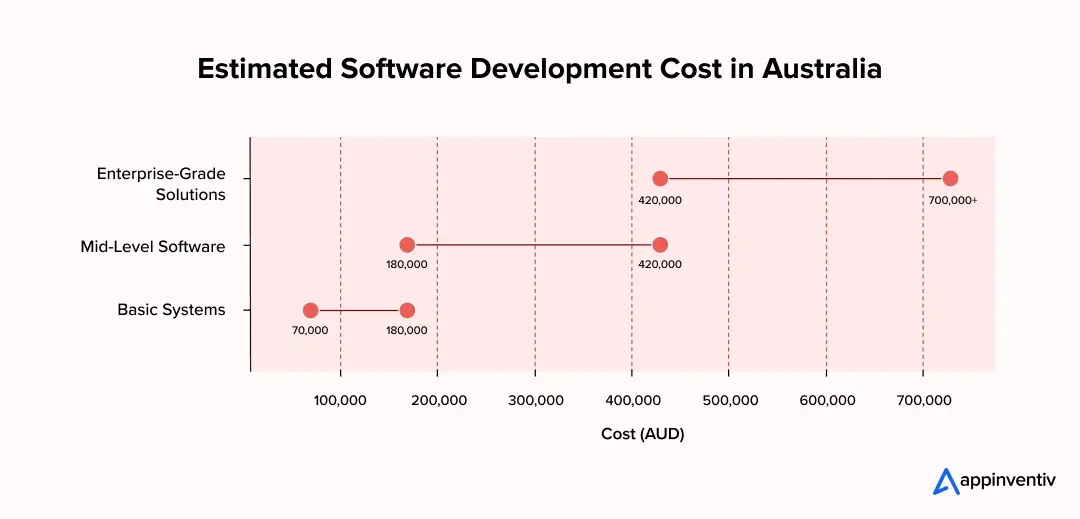
The final figure depends on automation depth, integration complexity across systems such as Xero and Australian Securities and Investments Commission (ASIC) databases, data residency requirements, and the level of security engineering required to meet Australian compliance standards.
Understanding that range requires more than quoting budget bands. It requires examining how architectural choices, compliance exposure, and long-term scalability intersect within accounting system software development in Australia. This blog examines what drives accounting practice management software development cost in Australia, where capital is typically consumed, and how firms can structure investment to balance compliance, automation, and sustainable growth.
Ready to Invest in a Custom Accounting Platform Development for Australian Governance Standards?
Before allocating capital, gain a precise understanding of what your accounting practice management platform will truly cost across architecture, compliance, and integration.

How Much Does It Cost to Develop Accounting Practice Management Software in Australia?
When businesses evaluate how much does it cost to build accounting practice management software Australia wide, they are usually trying to anchor risk. The number itself is less important than what drives it.
While there is no pre defined budget to quote the exact cost of accounting practice management software development cost, a simplified budgeting formula helps get a precise estimate:
| Total Cost = (Total Development Hours × Developers’ Hourly Rate) + Infrastructure + Compliance + Maintenance |
For a 25-person accounting firm migrating from legacy systems:
- Development: ~2,500–4,000 hours
- Average developers’ hourly rate: AUD 110–150/hour
- Infrastructure and DevSecOps setup: AUD 20,000–60,000
- Compliance engineering and security controls: AUD 25,000–80,000
- Ongoing support: 10–20% annually
That positions most mid-sized software development costs in Australia between AUD 180,000 and AUD 420,000.
Cost Breakdown by Complexity Tier
Typically, when delivering digital assets in the APAC region, there are three distinct tiers of development that align with firm maturity and headcount.
| Complexity Level | Estimated Cost (AUD) | Estimated Timeline | Best Fit |
|---|---|---|---|
| Basic | 70,000 – 180,000 | 4–6 months | 5–15 accountants, minimal integrations |
| Mid-Level | 180,000 – 420,000 | 6–9 months | Growing firms requiring Xero, payroll, CRM integration |
| Enterprise-Grade | 420,000 – 700,000+ | 9–15 months | Multi-location, high regulatory exposure, custom workflows |
- Basic tier platforms focus on job tracking, billing workflows, document management, and role-based dashboards.
- Mid-level systems introduce structured integrations, automated reporting pipelines, and compliance logging.
- Enterprise builds include advanced automation, AI-led workload optimisation, multi-entity data segmentation, and hardened DevSecOps environments.
Cost Breakdown by Development Stages
Aussie innovators often underestimate where capital is consumed. But most overruns occur before a single line of code is written. Therefore, having a practical view of the cost allocated at the different steps to develop practice management accounting software in Australia is essential.
| Development Stage | Cost Range (AUD) | What’s Included |
|---|---|---|
| Discovery & Planning | 5,000 – 20,000 | Requirement mapping, governance review |
| UI/UX Design | 10,000 – 35,000 | Workflow modelling, dashboards |
| Backend Development | 15,000 – 120,000 | Core logic, automation engine |
| Frontend Development | 15,000 – 80,000 | Portals, reporting interfaces |
| Integration & APIs | 10,000 – 70,000 | Xero, MYOB, ATO, payroll |
| Security & Compliance | 10,000 – 40,000 | Encryption, audit logs, RBAC |
| Testing & Deployment | 5,000 – 30,000 | QA, performance testing |
| Post-Launch Support | 10–20% annually | Enhancements, patching |
Key Factors Impacting Accounting Practice Management Software Development Cost in Australia
When evaluating the accounting practice management software development cost in Australia, the conversation often shifts from “how much” to “why.” Several factors unique to the local market influence the development budget of accounting practice management software in Australia. These include, but are not limited to:
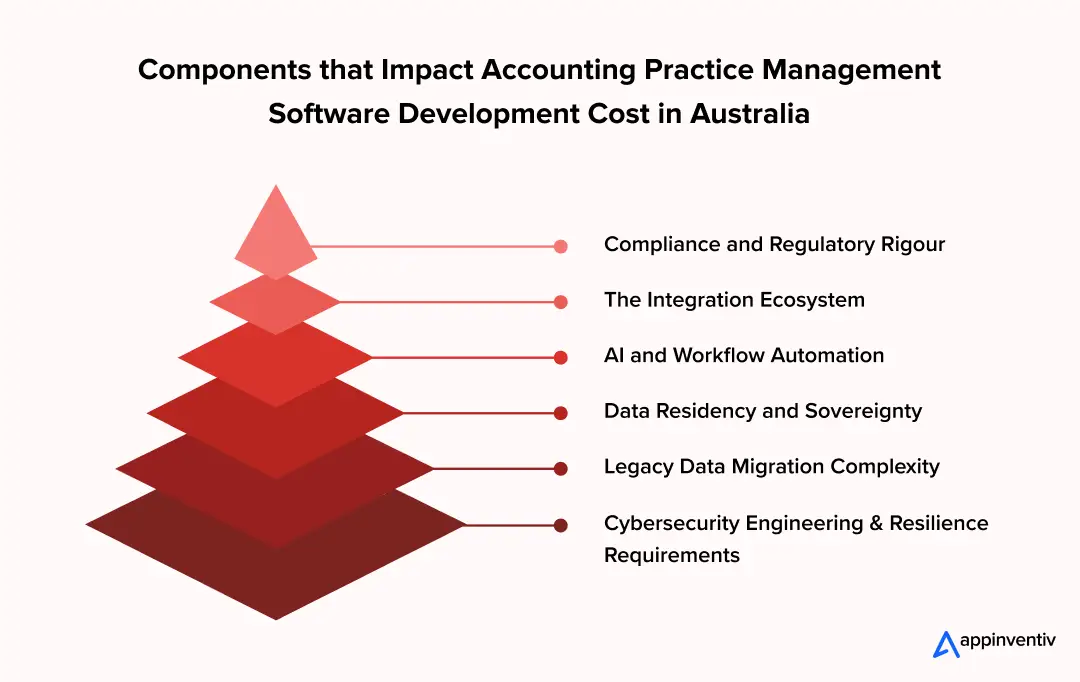
1. Compliance and Regulatory Rigour
Australia has some of the world’s strictest data sovereignty and financial reporting standards. Developing a system that manages Tax File Numbers (TFNs) or sensitive corporate data requires adherence to the Privacy Act 1988 and the Australian Privacy Principles (APPs). Ensuring the platform is “audit-ready” for ASIC or ATO inquiries adds a layer of complexity to the backend architecture that off-the-shelf tools often lack. These all add to the total cost of development.
2. The Integration Ecosystem
Australian accounting revolves around a specific set of platforms. To create practice management software that accounting professionals will actually use, it must talk to:
- Xero/MYOB/QuickBooks: For real-time ledger syncing.
- ASIC: For automated company secretarial updates.
- Banking and FinTech APIs: For automated bank feed reconciliation.
Each integration requires secure OAuth 2.0 implementations and robust error-handling logic, which adds to the development hours.
3. AI and Workflow Automation
Modern firms are increasingly requesting AI-driven features such as predictive workload balancing or automated document categorisation. While AI capabilities is Australia increase the initial cost of practice management software for accounting firms in Australia, they offer the highest ROI by reducing the ratio of administrative staff to billable accountants.
Also Read: Navigating the Cost to Develop AI Accounting Software
4. Data Residency and Sovereignty
For Aussie businesses, hosting data offshore is often a non-starter due to client service level agreements and risk mandates. Implementing a cloud architecture that guarantees data residency within Australian borders (typically using AWS or Azure Sydney/Melbourne regions) involves specific configuration costs. This ensures compliance with local “right to be forgotten” requirements and protects the firm against the legal complexities of cross-border data transfers.
5. Legacy Data Migration Complexity
The accounting system software development in Australia often involves decommissioning legacy on-premise systems like MYOB AE/AO or older versions of APS. Migrating decades of unstructured client data, historical tax records, and complex WIP (Work in Progress) balances into a new schema is a high-stakes technical task. The requirement for 100% data integrity during this transition typically accounts for 15% to 20% of the total project scope.
6. Cybersecurity Engineering and Resilience Requirements
Cybersecurity is no longer discretionary for entities processing financial and client data. Australian regulators, industry associations, and national cybersecurity agencies emphasise risk and resilience across all sectors.
The Australian Cyber Security Centre’s 2024–25 Annual Cyber Threat Report shows persistent threats to organisations of all sizes, making security controls a material architectural investment rather than an “optional bolt-on”.
For practice management software, secure design typically includes:
- End-to-end encryption
- Multi-factor authentication
- Secure API gateways
- DevSecOps pipelines and automated testing
- Incident response tooling
Embedding these controls increases early development effort and costs but dramatically reduces exposure and remediates risk, especially when third-party audits or certifications are required.
Features of the Accounting Practice Management System
Feature selection shapes not only user experience but also compliance depth, integration scope, and long-term scalability. The features of accounting practice management systems determine how effectively firms manage client engagements, reporting obligations, and internal workflows across different sizes of accounting practices in Australia.
Below is a consolidated view of core and advanced capabilities typically considered during custom software development in Australia.
| Functional Area | Basic Features | Advanced Features |
|---|---|---|
| Client Management | Centralised client database, contact records, engagement tracking | Multi-entity client structures, client segmentation, lifecycle analytics |
| Workflow & Tasks | Task assignment, deadline tracking, status updates | Intelligent task routing, SLA monitoring, predictive workload balancing |
| Billing & Invoicing | Time tracking, automated invoice generation, payment tracking | Dynamic pricing models, revenue forecasting, automated fee adjustments |
| Document Management | Secure file storage, version control | Encrypted document exchange portals, automated document classification |
| Reporting & Dashboards | Standard operational dashboards, job status reports | AI-driven analytics, performance analytics, real-time compliance dashboards |
| Integrations | Xero/MYOB sync, payroll connectivity | Banking API feeds, CRM software integration, multi-system orchestration |
| Access Control | Role-based permissions, user management | Granular access hierarchies, multi-location data segmentation |
| Compliance & Audit | Activity logs, basic audit trails | Immutable audit records, automated compliance reporting |
| Security | Password protection, basic encryption | Multi-factor authentication, advanced data encryption, intrusion monitoring |
| Scalability | Single-location setup | Multi-location support, configurable workflow engine, API gateway access |
The depth of features selected directly affects development scope, integration complexity, and long-term ownership costs. Firms should prioritise capabilities that align with operational realities rather than adopting advanced functionality without a defined ROI path.
Hidden Costs to Create Practice Management Software for Accounting
When budgeting for accounting practice management software development costs in Australia, businesses often focus on build expenditure. The more material risks usually sit in secondary costs that surface post-approval.
Ignoring these elements distorts total cost of ownership and creates governance gaps later.
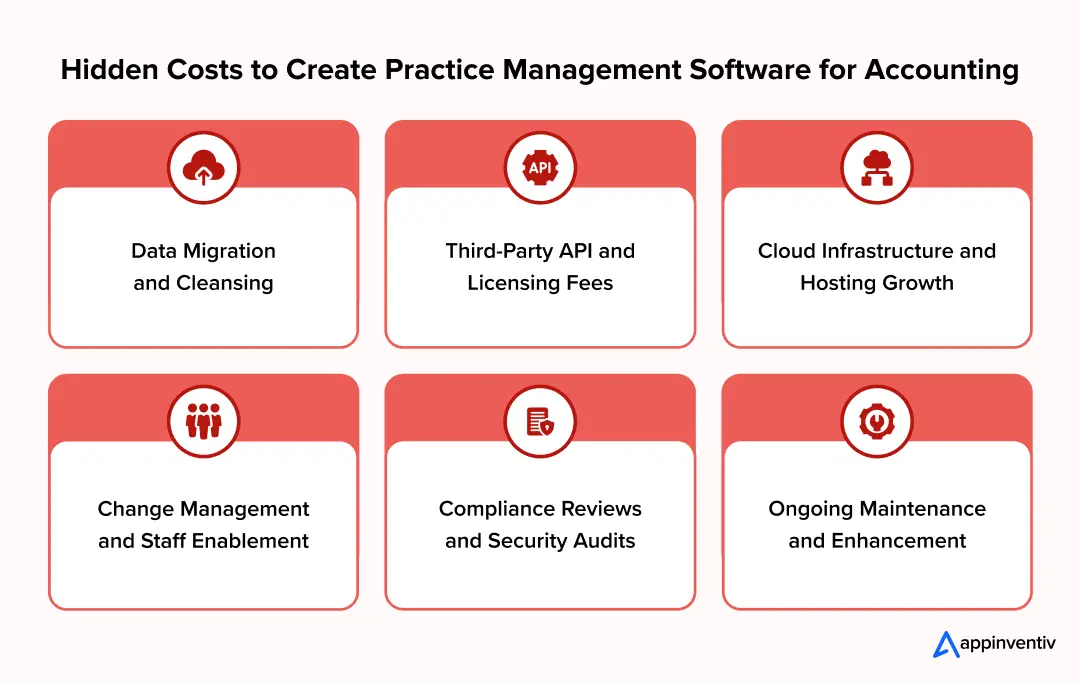
1. Data Migration and Cleansing
Legacy systems rarely contain structured, clean datasets. Migration from legacy systems typically involves:
- Data normalisation and validation
- Duplicate removal and reconciliation
- Schema restructuring
- Parallel system testing
Where firms operate across multiple historical platforms, migration can consume 10–20% of total project effort.
2. Third-Party API and Licensing Fees
Integrations with software like Xero, MYOB, payroll platforms, banking APIs, and document systems often involve:
- API usage costs
- Tiered access pricing
- Version upgrade maintenance
- Ongoing compliance adjustments
These recurring costs are rarely captured in initial budgeting discussions but directly affect the long-term cost of practice management software for accounting firms in Australia.
3. Cloud Infrastructure and Hosting Growth
Cloud hosting is not static. As user volume, data storage, and automation workloads increase, infrastructure scales accordingly. Ongoing costs include:
- Compute and storage expansion
- Backup and disaster recovery
- Monitoring and logging tools
- Security patching and vulnerability management
Firms planning multi-location expansion must account for scalable infrastructure rather than baseline hosting assumptions.
4. Change Management and Staff Enablement
Even well-designed systems fail without structured adoption. For instance, training a team of 50+ accountants to move from legacy workflows to a new custom system requires dedicated internal resources, which impacts costs.
Change management costs typically include:
- Training programs
- Workflow redesign workshops
- Documentation development
- Productivity dips during transition
Underestimating behavioural transition can extend payback periods.
5. Compliance Reviews and Security Audits
Where firms operate under heightened regulatory expectations, independent security assessments and audit certifications may be required. This can include:
- Penetration testing
- External compliance validation
- Ongoing audit reporting
These costs are operational, not one-off.
6. Ongoing Maintenance and Enhancement
Post-launch support typically ranges between 10–20% of the initial build cost annually, depending on enhancement velocity and regulatory changes. Platform maintenance includes:
- Feature updates
- Performance optimisation
- API version upgrades
- Security updates
The true cost to build accounting practice management software in Australia must be assessed across a 3–5 year horizon, not just the initial capital outlay.
How to Reduce Development Costs Without Compromising Quality?
While the cost to build accounting practice management software in Australia is influenced by high regulatory standards, business leaders can optimise their capital expenditure by leveraging local incentives and strategic architectural choices. Some of the key strategies to reduce software development cost in Australia include:
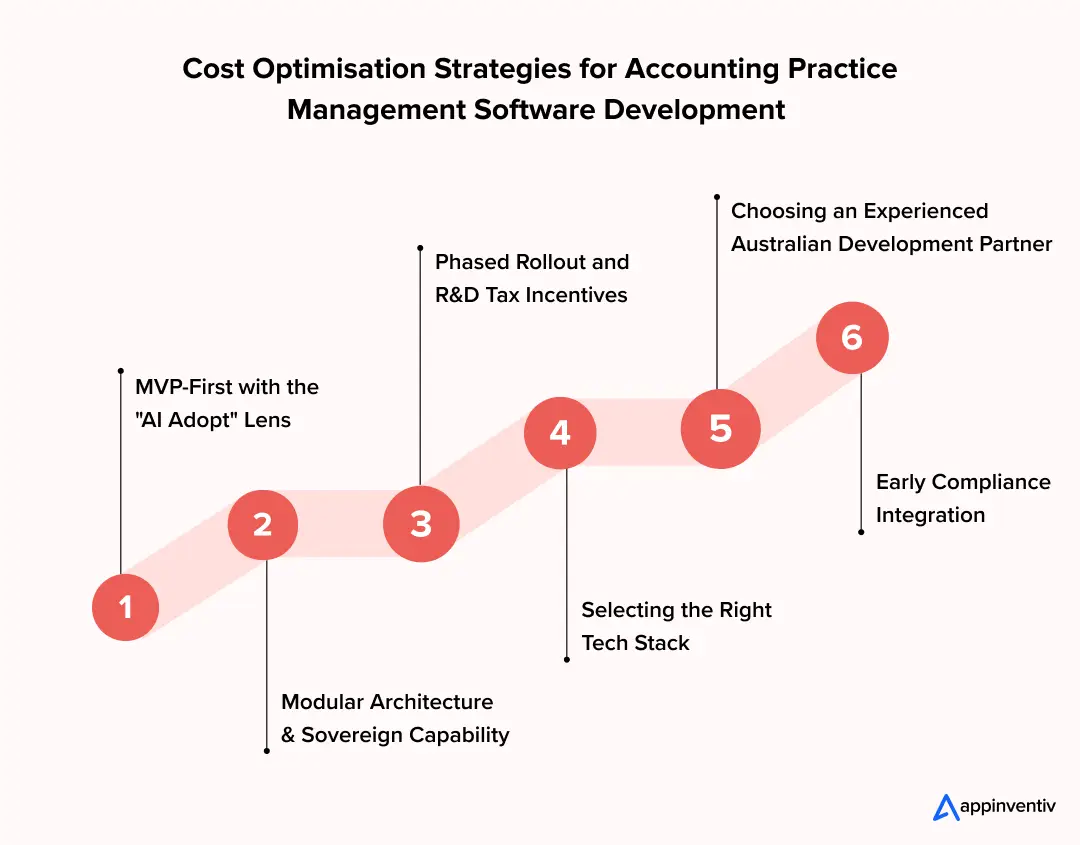
1. MVP-First with the “AI Adopt” Lens
Rather than building a sprawling monolith, firms are utilising the AI Adopt Program (an AUD 17 million government initiative) to support the practical integration of AI into core workflows. Starting with a Minimum Viable Product (MVP) in Australia that targets a single high-friction area such as automated tax lodgment tracking, allows for immediate ROI while keeping initial development costs contained.
2. Modular Architecture & Sovereign Capability
Building with a modular, cloud-native architecture allows firms to swap or upgrade specific components as Australian tax laws change. This “sovereign-ready” approach aligns with the National AI Plan’s goal of building local software industry resilience, ensuring the platform doesn’t become a legacy liability within three years.
3. Phased Rollout and R&D Tax Incentives
The Australian R&D Tax Incentive remains a critical tool for reducing the net accounting practice management software development cost in Australia. By documenting the “experimental” nature of new AI-driven reconciliation or predictive modules, firms can often offset a significant portion of their technical salary and development costs.
4. Selecting the Right Tech Stack
Choosing accounting platform development tech stack that is widely supported in the Australian market (such as React, Node.js, or .NET) ensures you are not locked into a niche technology with a limited talent pool. Using battle-tested, open-source frameworks for standard components like authentication or basic data grids can significantly reduce the initial cost of practice management software for accounting firms in Australia.
5. Choosing an Experienced Australian Development Partner
Partnering with experienced FinTech software developers in Australia who understand local mandates such as Single Touch Payroll (STP) Phase 2 or the Privacy Act removes the “translation risk” of using offshore-only teams. A local partner ensures that compliance is “baked in” from the start, avoiding the high cost of post-launch remediation to meet Australian audit standards.
6. Early Compliance Integration
Addressing data residency, TFN redaction, and audit trail requirements during the design phase is a primary cost-saving measure. Retrofitting these features into an existing application is one of the most common causes of budget overruns in enterprise software projects.
ROI and Monetisation Models for Practice Management Software Development
For enterprise leaders, the development cost is an investment against the firm’s balance sheet. We often use a simple formula to help CIOs present the case to the board:
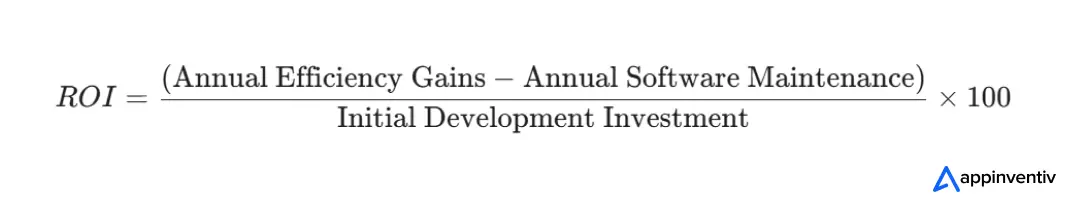
According to Deloitte’s research on digital transformation in professional services, firms that adopt intelligent automation and integrated digital workflows see an average productivity increase of 20% to 30%.
For a firm with 50 staff, saving just 2 hours of admin per person per week at a blended rate of $150/hr results in over $350,000 in recovered billable time annually.
Steps to Develop Practice Management Accounting Software in Australia
Success in the Australian market follows a specific sequence of steps that prioritises governance and user adoption. Considering the same, here are the key steps to develop practice management accounting software in Australia:
- Strategic Discovery: Define the specific bottlenecks in your current workflow. Are you losing time on ASIC lodgments or manual invoicing?
- Compliance Architecture: Map out data flows to ensure compliance with the Australian Privacy Principles from day one.
- Design and Prototyping: Craft an intuitive UI/UX and build a clickable wireframe to test with your senior partners and associates.
- Agile Development: Build in sprints, prioritising the features of accounting practice management systems that offer the quickest “win” for staff.
- Integration & UAT: Eventually, you need to perform rigorous testing of API connections and user acceptance testing within the Australian regulatory context.
Start building your firm’s most valuable digital asset today.
Don’t let rigid SaaS platforms limit your growth. Partner with a team that understands accounting practice management software development cost in Australia and local compliance realities.

Emerging Trends Increasing Budget Allocation for Accounting Practice Management Software Development in Australia
As Australian firms modernise operations, investment priorities are shifting from basic workflow digitisation to automation, governance visibility, and scalable infrastructure. These trends are significantly expanding the accounting practice management software development cost in Australia, particularly where long-term efficiency and compliance readiness are strategic priorities.
For accounting firms, this translates to specific budget allocations in the following areas:
AI-Powered Reconciliation & Data Processing
As the National AI Plan guides Australia’s move toward an AI-enabled economy, expectations for responsible AI adoption are shaping how software platforms are developed. These macro drivers increasingly push firms to invest in capabilities that improve productivity, compliance visibility, and client experience; all of which flow into the accounting practice management software development cost in Australia.
Embedded Financial Analytics
With investment in data-centric infrastructure growing (including over $10 billion in Australian data-centre investment in 2024), firms can build analytics directly into dashboards that reframe performance across cost centres; a shift away from static reports to predictive insight.
Real-Time Compliance Dashboards
Budgeting now accounts for the Australian Government’s “Policy for the Responsible Use of AI” (Version 2.0), effective December 2025. This policy mandates rigorous impact assessments for AI use cases in Melbourne, Sydney and wider Australian regions, particularly regarding fairness and privacy, which are now being integrated directly into practice management compliance modules.
Secure Client Collaboration Portals
To align with the Cyber Security Strategy 2023–2030, firms are investing in portals that move sensitive communication away from email. This is bolstered by the National AI Plan’s focus on “keeping Australians safe” through robust ethical and legal frameworks.
Cloud-Native DevSecOps & Sovereignty
With the government investing AUD 39.9 million to strengthen the local AI ecosystem, there is a clear trend toward hosting accounting platforms in local data centres (Sydney/Melbourne). This ensures that sensitive financial data never leaves Australian legal jurisdiction, satisfying both the Privacy Act and enterprise risk mandates.
Why Partnering with Appinventiv in Australia is the Right Choice
Navigating the accounting practice management software development cost in Australia requires a tech partner who understands that business software is a financial asset, not just a line-item expense.
At Appinventiv, we specialise in engineering high-performance, compliant digital systems that align with the specific rigour of the Australian professional services sector.
As an approved ICT supplier to the Australian Government and a leader in AI-first product engineering, we bring a practitioner-led approach to every engagement. We don’t just write code; we architect competitive advantages that scale alongside evolving ATO and ASIC mandates.
Our 10 years of experience in delivering software development services in Australia reflect our commitment to execution depth and commercial pragmatism:
Let’s have a quick snapshot of our Australia-specific delivery footprint
- 3000+ – Digital Assets Deployed in Australia
- 78% – Client Retention Rate from brands like
- 35+ Industries Digitally Transformed
- 5+ Agile Delivery Centres Across Australia
- 1000+ Clients like Lite N’ Easy, Multinail and Rapid Teachers
Measurable Business Impact
- 99.90% – Security Compliance SLA (ISO 27001, SOC2)
- 35% – Efficiency Gains in Australian Enterprises
We ensure that your investment in accounting practice management software in Australia is protected through a “Compliance-by-Design” philosophy. By integrating the Australian Signals Directorate (ASD) Essential Eight security framework and the latest Privacy Act requirements into the foundational architecture, we help firms avoid the hidden costs of regulatory remediation.
Start your investment in accounting practice management software development with confidence.
FAQ
Q. What is practice management software?
A. Practice management software is a centralised platform used by professional service firms to manage clients, engagements, workflows, billing, documentation, and compliance tracking in a single system.
In accounting environments, it connects operational workflows with financial systems, enabling task allocation, deadline monitoring, reporting visibility, and secure document handling. When custom-built, it also integrates with platforms such as Xero, MYOB, payroll systems, and banking APIs to create a unified operational environment.
Q. How long does it take to implement practice management software in Australia?
A. Implementation timelines depend on complexity, integration depth, and compliance scope.
- Basic configuration or light customisation: 4–6 months
- Mid-level custom platform with integrations: 6–9 months
- Enterprise-grade multi-location solution: 9–15+ months
Q. How much does accounting practice management software cost in Australia?
A. The accounting practice management software development cost in Australia generally ranges between:
- AUD 70,000 – 180,000 for basic workflow-focused systems
- AUD 180,000 – 420,000 for integrated and automation-enabled platforms
- AUD 420,000 – 700,000+ for multi-entity, AI-driven, and compliance-intensive solutions
Q. What ROI can Australian accounting firms expect from practice management software?
A. Return on investment is typically driven by efficiency gains, reduced manual processing, improved billing accuracy, and enhanced compliance control. In practical terms, firms implementing structured workflow automation and reconciliation tools often realise:
- 10–20% improvement in operational productivity
- Faster turnaround on engagements
- Reduced compliance risk exposure
- Improved client retention through secure digital collaboration
Many mid-sized firms recover their initial investment within 18–24 months when adoption is disciplined and workflows are optimised.
Q. How do Australian accounting firms ensure client data security in practice management systems?
A. Client data security is ensured through a combination of architectural controls and governance discipline. Key measures include:
- End-to-end encryption (data at rest and in transit)
- Multi-factor authentication for users
- Role-based access control aligned with organisational hierarchy
- Immutable audit logs for compliance defensibility
- Secure Australian-region cloud hosting
- Regular penetration testing and vulnerability assessments
Embedding these controls from the discovery phase, rather than retrofitting them post-development, reduces risk exposure and supports alignment with Australian privacy and cybersecurity expectations.