The online shopping trend is growing exponentially. This surge has convinced businesses to rework their designs, layouts, and optimization strategies to reduce clutter. However, the only thing that can truly make you stand out in this saturated market is delivering personalized experiences that adapt to individual customer behavior.
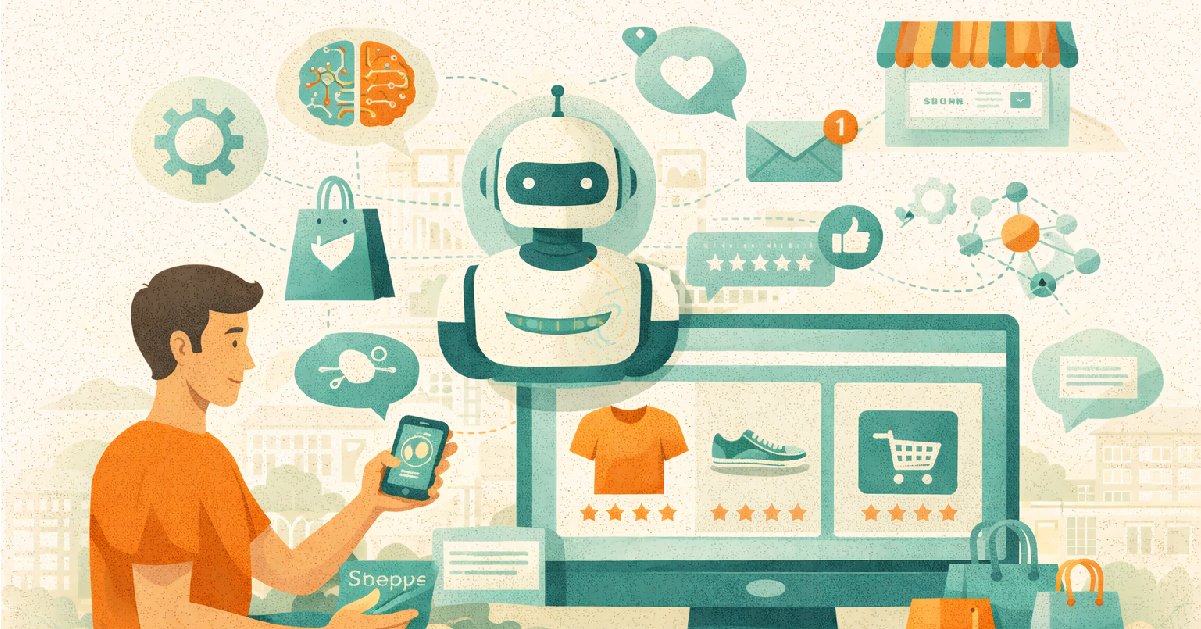
AI-powered personalization in e-commerce utilizes artificial intelligence to analyze user data and deliver customized shopping journeys in real-time. In this modern era, e-commerce website development is not just about functionality; AI is now deeply integrated to personalize product recommendations, pricing strategies, and content based on specific user intent. While static web design was once the standard, today’s market demands dynamic, personalized interfaces. In this blog, let’s discuss how AI-driven personalization is revolutionizing the industry.
What is AI-Powered E-commerce Personalization
In AI-enabled personalized e-commerce sites, AI technology is used to provide a personalized shopping experience based on individual behavior and preferences. Although nowadays it is so advanced and perfect that it can accomplish many other tasks, such as “suggest products” to all. AI-powered technology learns from customer behavior in real time.
The technique employs methodologies such as machine learning algorithms and analytics, with predictive models, to better understand how consumers browse, search, and make decisions when it comes to online purchases. Artificial intelligence can quickly identify and examine different points in a piece of information, such as browsing, purchases, location, devices used, and time spent on a page, among other aspects on a website. Therefore, based on these elements, online shopping sites can personalize different messages related to an online product.
How AI is Changing E-commerce Personalization

Although AI used to do personalization too, nowadays the way and outcome have shifted. In the old days, personalization used to work on fixed rules such as “show similar products” or “send emails to previous customers.” But AI has replaced this static way of personalization with real-time personalization, which happens in an instant depending on customer behavior. Nowadays, product recommendations, banners, and offers change in an instant when the customer is actually browsing the application based on customer behavior when searching or using the website.
Adaptive E-commerce Web Design
With AI, e-commerce web design is not just about static layouts and adaptive interfaces. Because AI adapts and changes the homepages, banners, and CTAs based on customer behavior and engagement history. If a user revisits the platform, then they will see different content as compared to someone who is visiting for the first time, and that improves relevance. And this personalized UI/UX increases time spent on site and lowers bounce rates.
Targeted Marketing and Email Campaigns
Targeted marketing directly impacts sales and profits. AI enables highly targeted marketing by analyzing user behavior, preferences, and purchase history in real time. Nowadays, campaigns are listing their credibility and becoming losing their impact due to generic messaging, and AI is promoting things by segmenting customers dynamically based on intent, engagement level, and buying patterns. Email marketing is becoming very personalized at scale, with AI customizing subject lines, content, and product recommendations for each user. It also determines the perfect time to send emails based on individual user behavior, increasing open and click-through rates.
AI-Powered Chatbots
AI-powered chatbots are especially designed for delivering instant customer support without human intervention. They can also analyze user behavior, browsing history, and past interactions with ease to deliver apt responses. AI-powered chatbots guide all the customers to make them understand the product, explain the pros and cons, and answer every possible question. They also assist users during key decision points, such as product comparison or checkout. And the best part is that chatbots are there 24/7, and they reduce the response time and customer frustration.
How Businesses Can Prepare for AI-Driven Personalization

Build a Strong Data Foundation
The more you organize your data, the better personalization AI will deliver to your customers. Your team had to collect data from multiple touchpoints, such as website activity, purchases, and marketing interactions, for better results. Poor and incomplete data could make the user experience bad, because a strong data setup is the backbone of scalable e-commerce website development.
Choose the Right Technology Stack
Choose the AI stack according to your existing e-commerce platform. AI is an additional layer, so don’t change your whole platform to fit it; instead, choose an AI that complements your current setup. Technology decisions made during e-commerce website development directly impact how effectively AI can be implemented. The end goal is flexibility and long-term scalability, not just quick fixes.
Design for Personalization from Day One
Personalization should be your priority from day one. E-commerce web design should support dynamic content, adaptive layouts, and personalized user journeys. The backend and frontend should be capable of displaying different content for different user types.
Ensure Data Privacy and Transparency
To deliver a personalized touch, monitoring user behavior is essential; however, there is a fine line between monitoring data and infringing on privacy. Just don’t cross that line. Customers care about how their data is used. Build trust and transparency with your customers, and they will reward you with loyalty.
Conclusion
AI-powered personalization is not just an advanced feature anymore; it is a core requirement in modern e-commerce. AI analyzes customer behavior and intention to deliver relevant, engaging, and conversion-focused shopping experiences. The earlier you invest in intelligent e-commerce website development, the better you can scale personalization without increasing complexity. A good e-commerce web design makes AI-driven personalization seamless and user-friendly. The future of e-commerce is AI-driven, and using it correctly is the key to building a seamless, profitable business.