Search has split in two.
On one side: the traditional search Google has been running for two decades.
On the other: ChatGPT, Perplexity, Google AI Mode, and Gemini, which now answer questions instead of sending users to ten blue links. For SEO agencies, this isn’t a future trend to plan for.
It’s already affecting client retainers, depending on whether or not you’ve started to deliver against AI search.
The good news is that the same SEO services agencies have been selling for years (link building, content marketing, technical SEO, on-page work) still matter for AI search.
The bad news is that you also need new tracking platforms, new measurement frameworks, and new outreach focused on the specific publication types AI engines cite most often.
The 25 AI SEO services on this list cover that gap. Some are AI visibility platforms that track citations across the major AI engines.
Others are done-for-you outreach services that actually earn those citations. And some are AI content optimization tools that help your team produce material both Google and the AI engines reward.
A few are full-service AI SEO agencies that handle delivery white-label for your roster.
Key Takeaways:
- AI SEO is no longer a niche tactic. Brand mentions inside ChatGPT, Perplexity, Google AI Overviews, and Gemini now drive a measurable share of high-intent traffic. Agencies that aren’t tracking AI search performance for clients are getting outmaneuvered by ones that are.
- The 25 AI SEO services below split into five categories. AI visibility tracking platforms, done-for-you outreach services, AI content optimization tools, technical SEO platforms with AI add-ons, and full-service AI SEO agencies. Most agencies need at least one tool from two or three categories to deliver a complete AI SEO offering.
- Listicle placements are the highest-leverage AI SEO tactic in 2026. AI engines cite well-ranked “best of” articles more than almost any other content format when they recommend products. Earning brand mentions inside the right listicles is what moves the needle on AI search visibility.
- Tracking isn’t doing. Most AI SEO tools tell you whether you’re cited inside AI search results or not. They don’t actually move those citations. Pair an AI visibility tracker with a done-for-you service or in-house content team that can act on what the tracker shows.
- Done-for-you AI SEO services scale agency delivery without hiring. White-label AI SEO services let you offer AI search optimization to existing clients without adding headcount. Pricing varies wildly, from $100 per editorial placement to $15,000+ monthly retainers.

Link building cheat sheet
Gain access to the 3-step strategy we use to earn over 86 high-quality backlinks each month.
Respona
Most services in this list help you measure, optimize, or analyze AI search visibility. Respona is the one that actually moves it.
We’re a managed link building partner for SEO agencies and digital marketing teams that want to scale AI search delivery without hiring a five-person outreach team to do it. Share your target pages, target keywords, and the kinds of articles you want clients cited in.
We prospect the publications, pitch the editors, run the follow-ups, and land the placement.
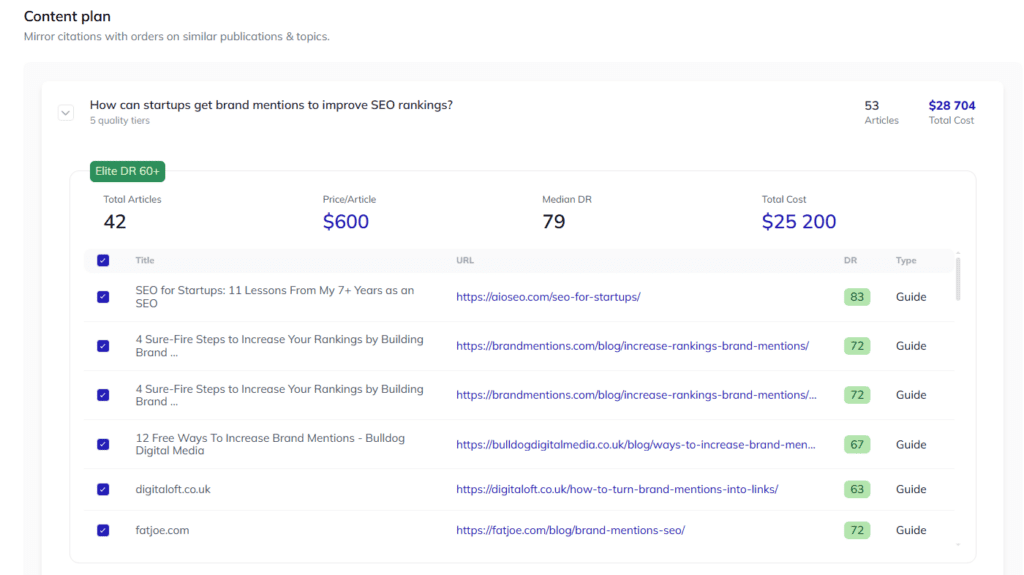
Every prospect comes to the agency for approval before any pitch goes out.
The reason this works for AI SEO specifically is the placement focus.
We target listicle inclusions and editorial features that already rank in Google AND already get cited inside ChatGPT, Perplexity, and Google AI Overviews.
Same link, two jobs done.
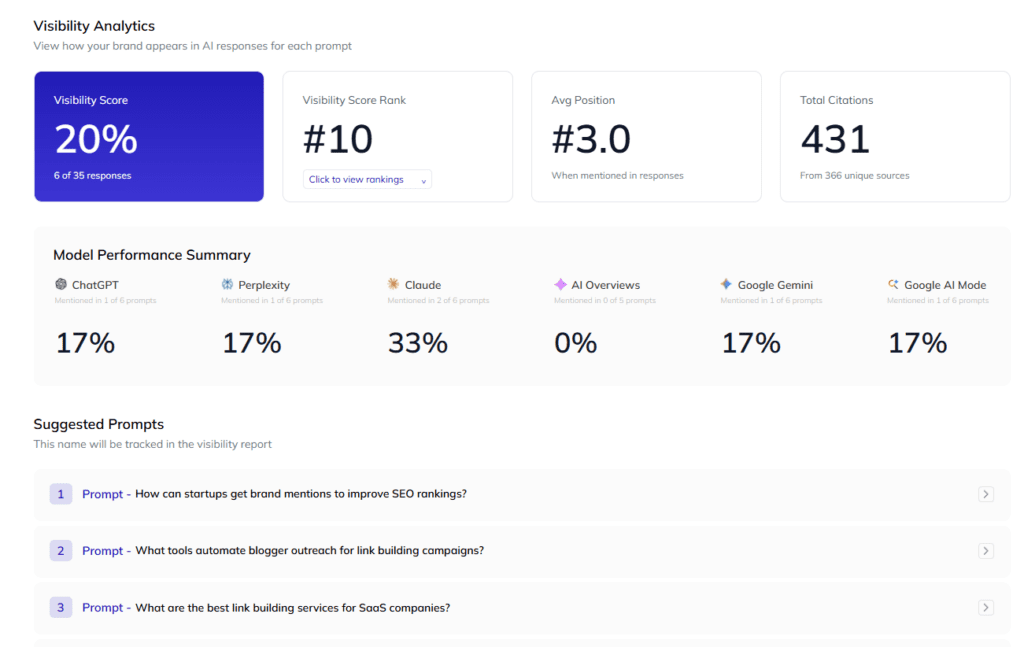
And it comes with a built-in AI visibility tracker for your chosen prompts.
Pricing is per-placement, tiered by Domain Rating. Starts at $100 for DR 20+ sites, $500 for DR 60+. No retainer, no minimum commitment.
For an SEO agency adding AI search capabilities to existing client retainers, this is the fastest path to executing the AI SEO strategy you’ve sold them on, without becoming an outreach shop in the process.
Best for: SEO agencies scaling AI search delivery without growing headcount.
Profound
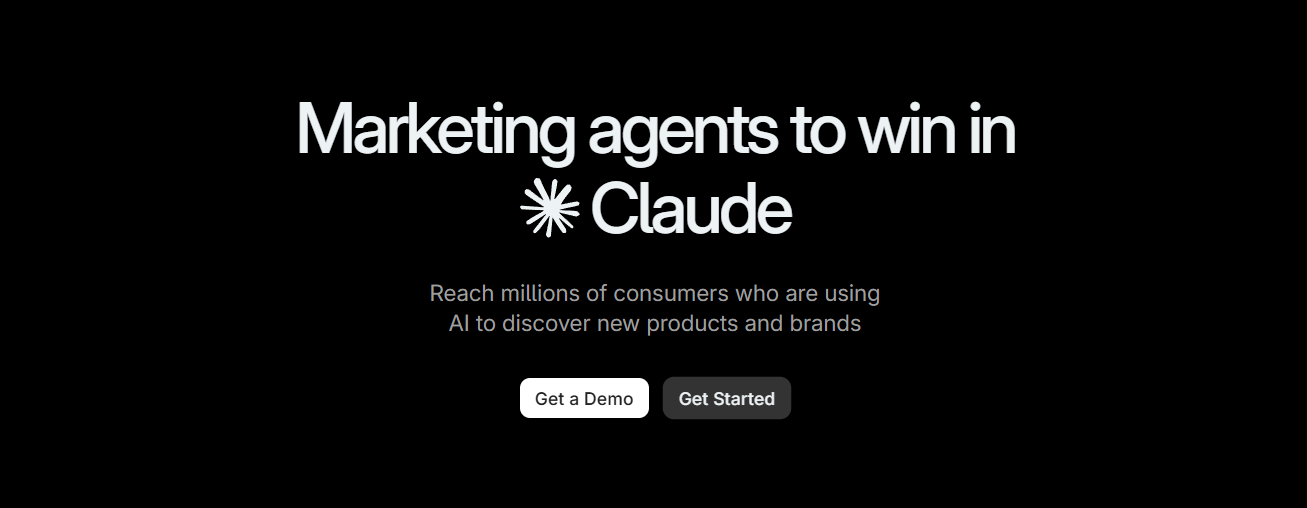
Profound is one of the most established AI visibility tracking tools on the market. It monitors how often your brand gets cited across ChatGPT, Perplexity, Google AI Overviews, Gemini, and Microsoft Copilot, then breaks down the prompts driving those citations.
For agencies, the value is in the reporting layer. You can show clients exactly which prompts are returning competitors instead of them, which AI engines are weakest for their brand, and where content gaps are keeping them out of recommendation lists. The system also tracks citation sentiment, so you can see when a mention is positive, neutral, or actively damaging.
Profound is one of the more polished AI platforms for this kind of work, with native integrations into most existing SEO reporting stacks.
Best for: Agencies wanting AI citation tracking they can add to existing client reporting without rebuilding their dashboards.
AthenaHQ
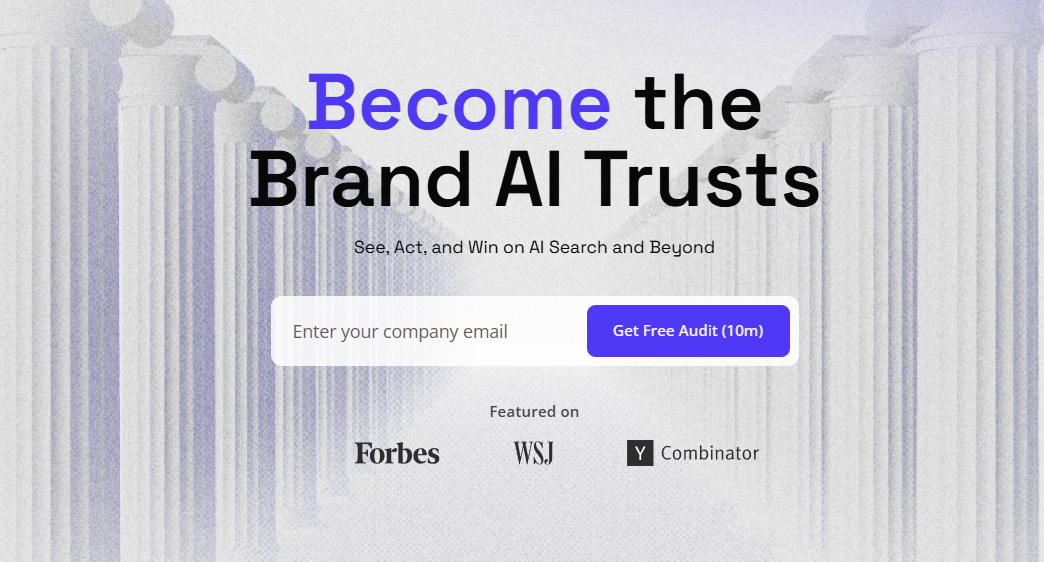
AthenaHQ is an answer-engine optimization service built for B2B brands that need to understand exactly how they show up in AI answers. The tool tracks citations across the major AI engines, but its real differentiator is the depth of prompt research it provides.
Rather than just telling you “you got cited 12 times this week,” AthenaHQ reverse-engineers the kinds of prompts buyers in your category actually run, then shows you which answers your brand appears in for each. That’s the kind of AI insights agencies can actually act on.
For agencies, the workflow integration is what matters. AthenaHQ exports prompt-level data into your existing content strategy, so you can prioritize content that closes the gap between the prompts buyers ask and the ones you currently rank for.
Best for: Agencies serving B2B clients that need detailed prompt research baked into their reporting.
Peec AI
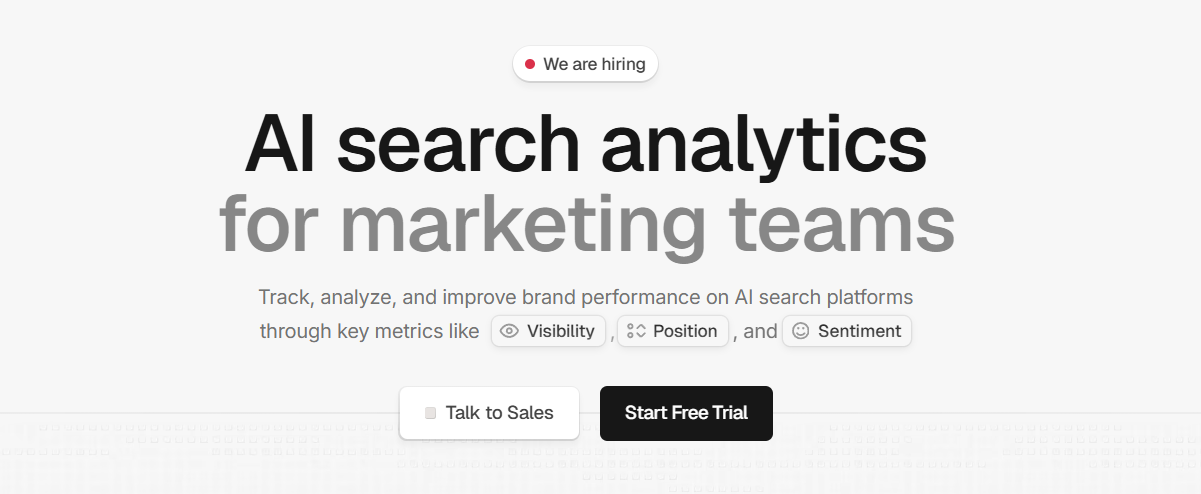
Peec AI is an AI visibility monitoring service that focuses heavily on European markets and multilingual citation tracking. While most tools in this category prioritize US-based AI usage data, Peec AI tracks how your brand appears across AI engines in markets where the language and search patterns are different.
For agencies serving international or Europe-based clients, that geographic depth matters. The tool tracks ChatGPT, Perplexity, and Gemini citations in multiple languages, with prompt translation built in so you’re not running everything through Google Translate.
The dashboard breaks down brand share-of-voice by region and AI engine, which makes it easy to show clients where they’re winning citations (and where competitors are winning them instead).
Best for: Agencies with international B2B clients or multilingual AI citation tracking needs.
Otterly.AI
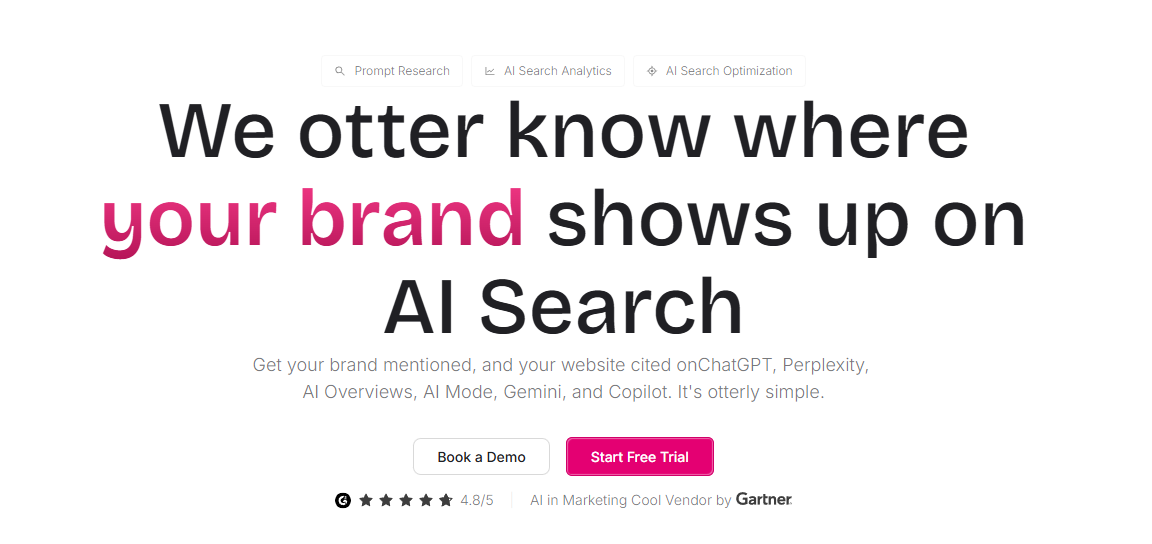
Otterly.AI is a more affordable entry into AI citation tracking, focused specifically on small and mid-size agencies that want citation monitoring without enterprise pricing. The tool tracks how often your client’s brand appears across ChatGPT, Perplexity, and Google AI Overviews for the prompts that matter to their category.
The interface is built around comparison: brand vs. competitor citations side by side, prompt-by-prompt. For agencies running monthly reporting, this is the kind of view that immediately shows a client whether they’re gaining or losing ground in AI answers.
Otterly also offers public-facing scorecards, which some agencies use as a sales tool with prospects: show them how often their brand is cited vs. competitors before pitching the contract.
Best for: Small to mid-size agencies wanting affordable AI citation tracking with a comparison-led interface.
Scrunch AI
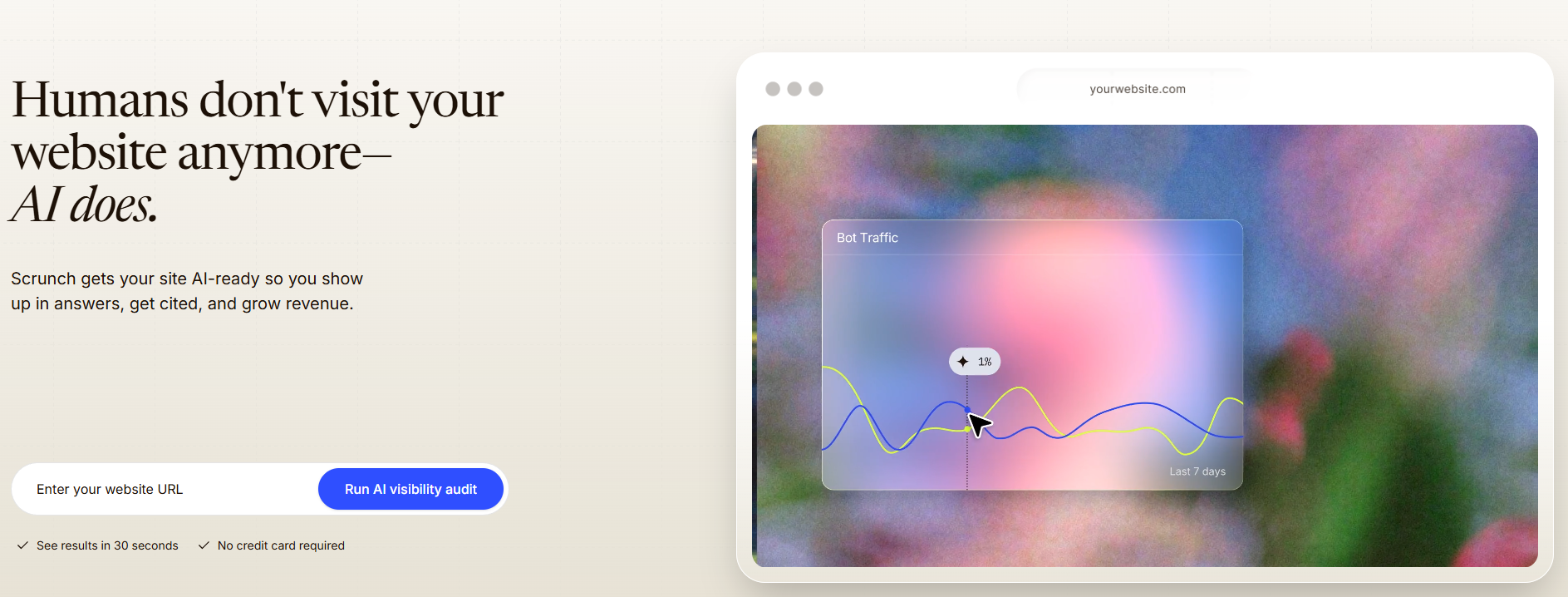
Scrunch AI sits in the AI discoverability category, which means it’s less about tracking and more about helping brands actively appear in AI answers. The service identifies the schema, content, and structural changes a site needs to make for AI engines to cite it more reliably.
For agencies, that means actionable recommendations rather than just measurement. The tool audits each client site against the patterns AI engines pull from most often, then generates a prioritized list of fixes.
The strategy is closer to traditional SEO than pure AI citation tracking. You get a list of things to actually do on the site, not just a dashboard showing whether the work is paying off.
Best for: Agencies that want AI optimization recommendations baked into their existing technical workflow.
Omnius
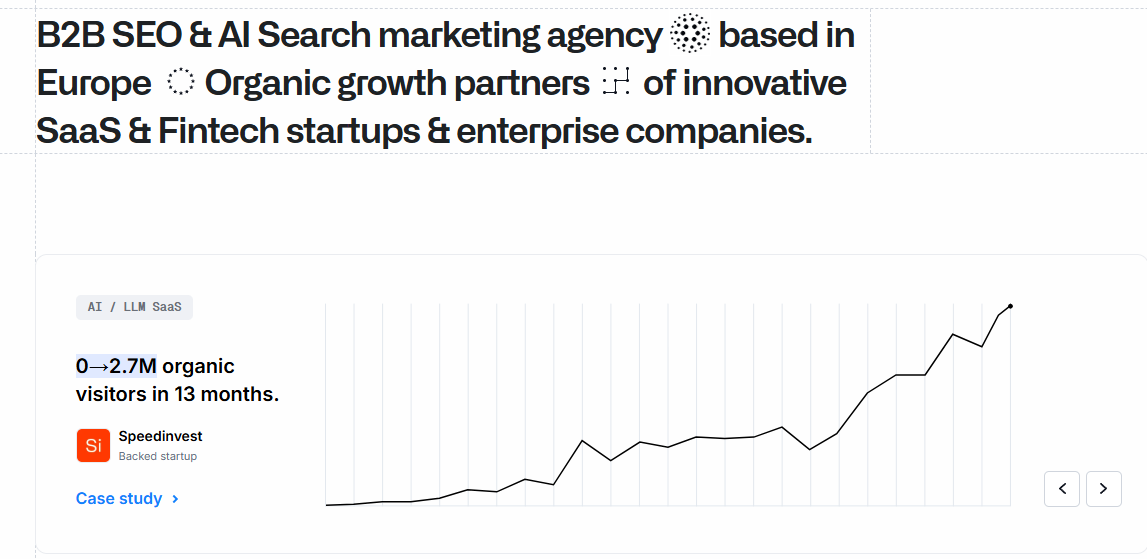
Omnius is a full-service AI SEO agency that combines content strategy, technical optimization, and AI visibility tracking under one roof. The team works primarily with B2B SaaS clients where AI search citations have direct revenue impact.
What separates Omnius from a typical SEO agency is the focus on prompt-level optimization. Their work starts with identifying which prompts in a client’s category drive purchase decisions, then builds the content and technical setup needed to actually appear in those answers.
Pricing is project-based, typically starting at $5,000 per month for ongoing AI SEO retainer work, with custom enterprise tiers for clients needing higher-velocity execution.
Best for: B2B SaaS brands wanting a full-service AI SEO agency with prompt-level optimization expertise.
Skale
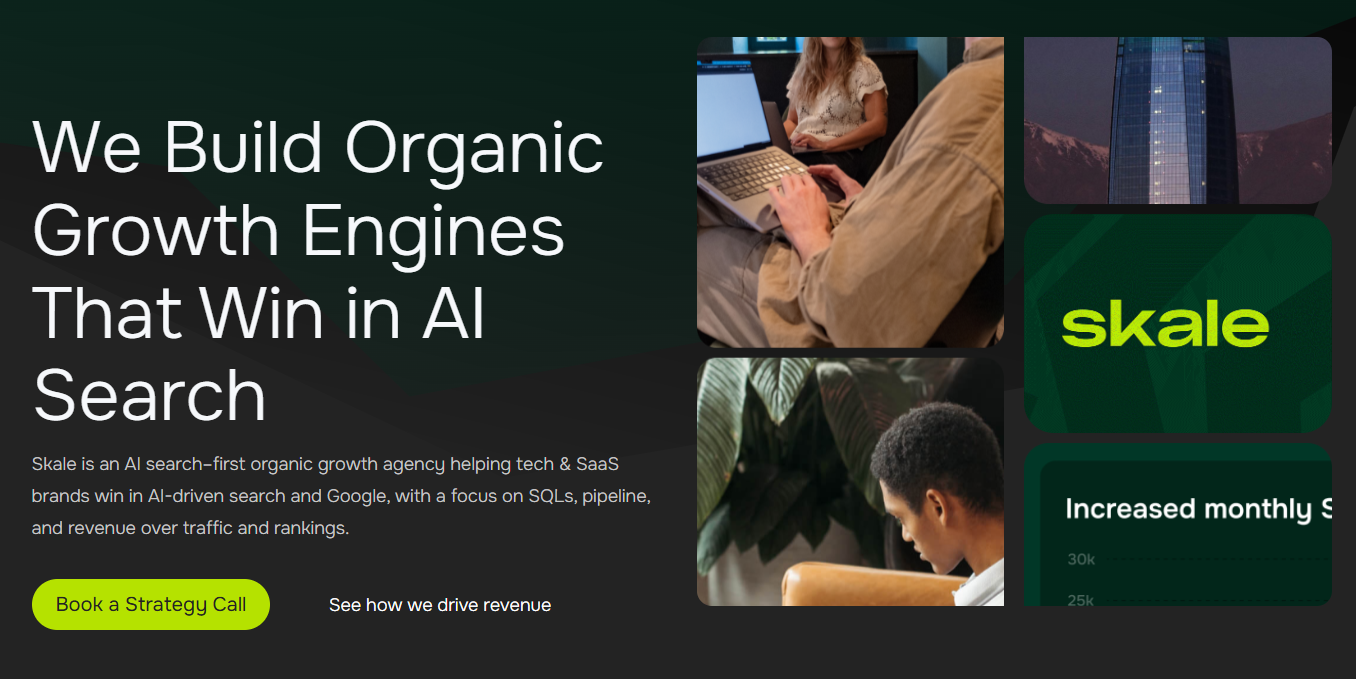
Skale is a B2B SaaS-focused SEO firm that’s been moving aggressively into AI SEO services over the last two years. The team handles content production, link building, and technical work for clients whose primary growth channel is organic search.
For agencies that need to scale white-label delivery, Skale operates as a partner that can absorb work without forcing you to hire. Their model is built around predictable monthly outputs (X articles, Y link placements, Z technical fixes), which fits cleanly into existing agency retainers.
Their AI SEO layer focuses on optimizing existing high-traffic pages for AI engine citation, which is often the highest-ROI starting point for SaaS clients with mature SEO programs already in place.
Best for: SaaS-focused agencies needing a white-label SEO and AI SEO partner with predictable monthly delivery.
BE VISIBLE
BE VISIBLE is an AI SEO agency built around brand presence inside AI answer engines. The team’s positioning is clear: traditional SEO gets you to page one, but BE VISIBLE gets you into the answer.
For agencies, BE VISIBLE works as a specialist partner for clients who’ve maxed out their traditional SEO results and need a way to appear in AI citations consistently. The work spans schema optimization, content production, and editorial outreach to publications AI engines reference most.
Their delivery model is more project-based than retainer, which makes it easier to bring in for one-off engagements, such as a single client who needs an AI citation audit and roadmap before deciding whether to invest further.
Best for: Agencies needing project-based AI visibility expertise for clients ready to move beyond traditional SEO.
OutreachBloom
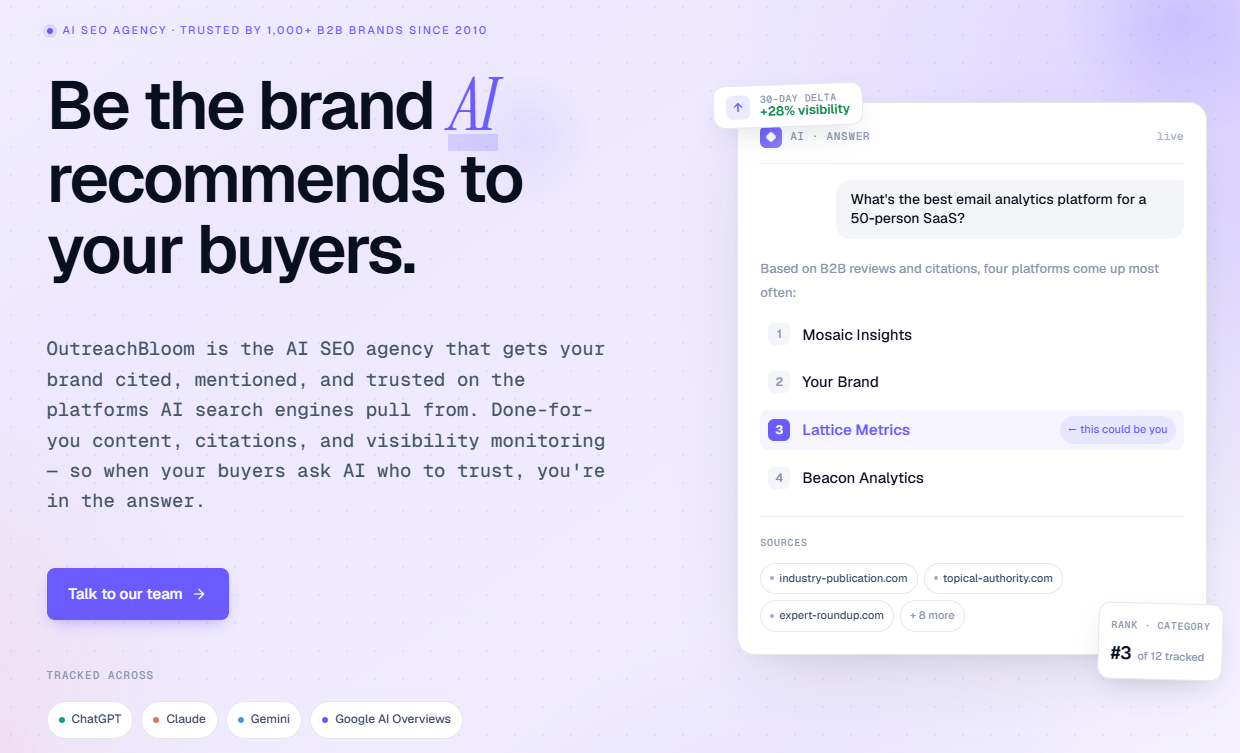
OutreachBloom is a link building and digital PR agency that’s built an AI SEO practice around editorial outreach. The focus is specifically on earning citations inside publications AI engines pull from when answering buyer queries.
The agency works heavily with mid-market B2B clients, and the typical engagement combines content syndication, journalist outreach, and contributor placements. Key services include digital PR campaigns, broken link building, and contributor placement at publications relevant to each client’s category.
For agencies that need to layer editorial outreach onto existing SEO retainers without building an outreach team in-house, OutreachBloom is one of the more established options in the AI SEO space.
Best for: B2B agencies needing a specialist link building partner for AI visibility work.
SearchPilot
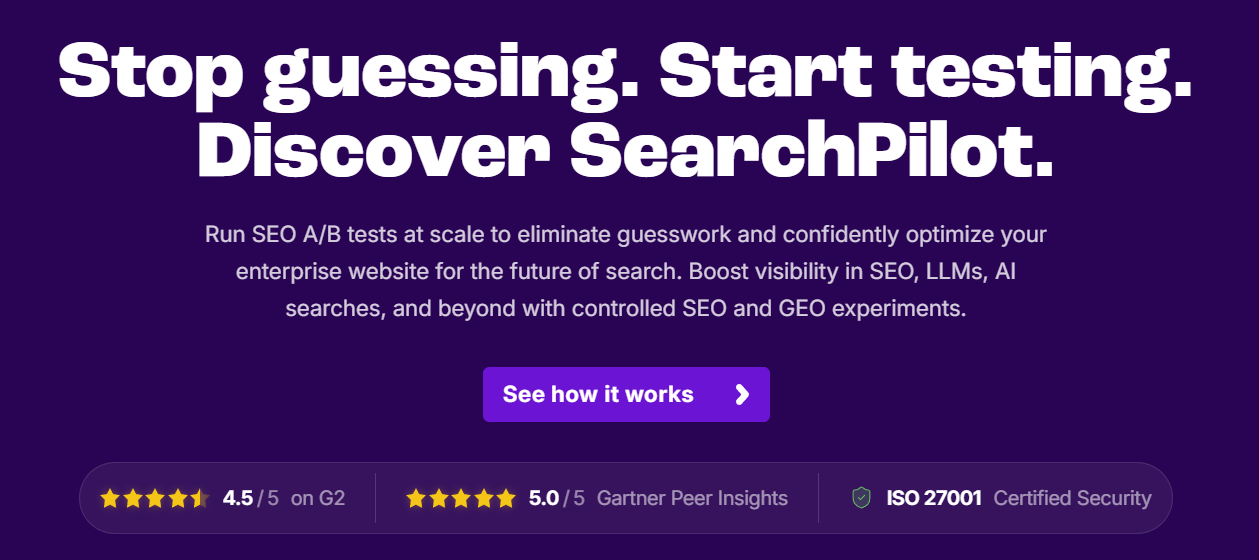
SearchPilot is best known as an enterprise SEO testing tool, where teams run controlled experiments on technical SEO changes before rolling them out site-wide. The AI SEO play is using that same testing infrastructure to validate which AI-targeted optimizations actually drive citations.
For agencies serving enterprise clients, this is one of the few tools that lets you A/B test AI search interventions: change the schema on category page A, leave it alone on category page B, then measure whether AI engine citation rates diverge.
This is more SEO automation than pure AI citation tracking. It’s also priced for enterprise budgets, which means it’s not the right fit for most small or mid-market agencies.
Best for: Enterprise teams running technical AI SEO experiments at scale.
Writesonic GEO
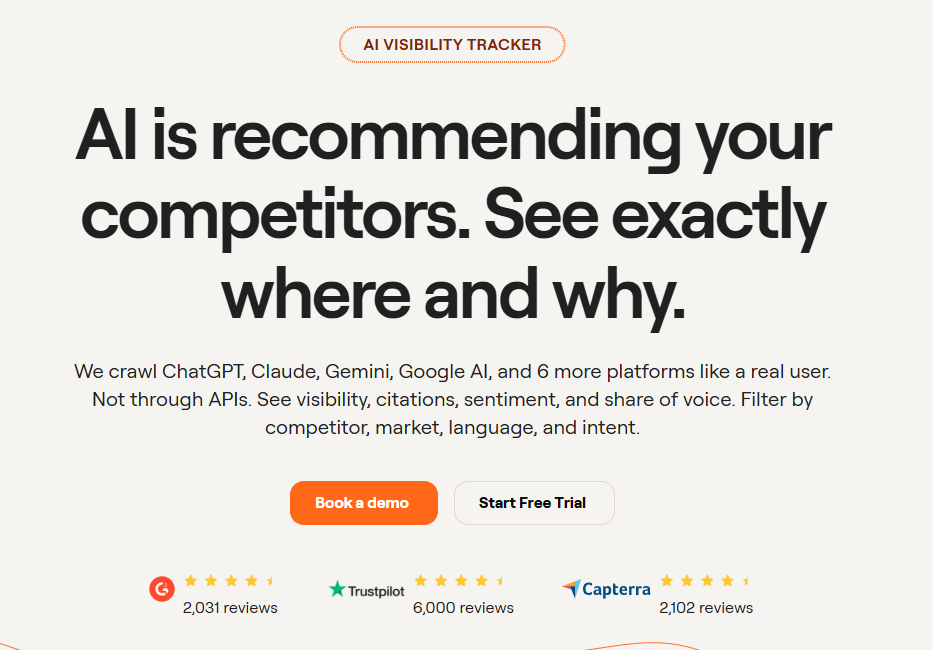
Writesonic GEO is an AI content creation tool built specifically for Generative Engine Optimization. Where most AI content tools focus on ranking in Google, Writesonic GEO optimizes for citation in AI engines: ChatGPT, Perplexity, Gemini, and others.
The tool generates content that’s structured for AI engine retrieval, with built-in entity markup and citation-friendly formatting. For agencies producing content marketing at scale, the workflow integrates with most existing CMS tools, so writers can publish AI-optimized content without learning a new system.
Pricing is subscription-based with tiered access. Higher tiers unlock more advanced AI models for higher-quality output, which matters once you’re producing content marketing at meaningful volume.
Best for: Agencies producing high-volume content for clients that need to be optimized for AI engine citation, not just Google ranking.
Surfer AI
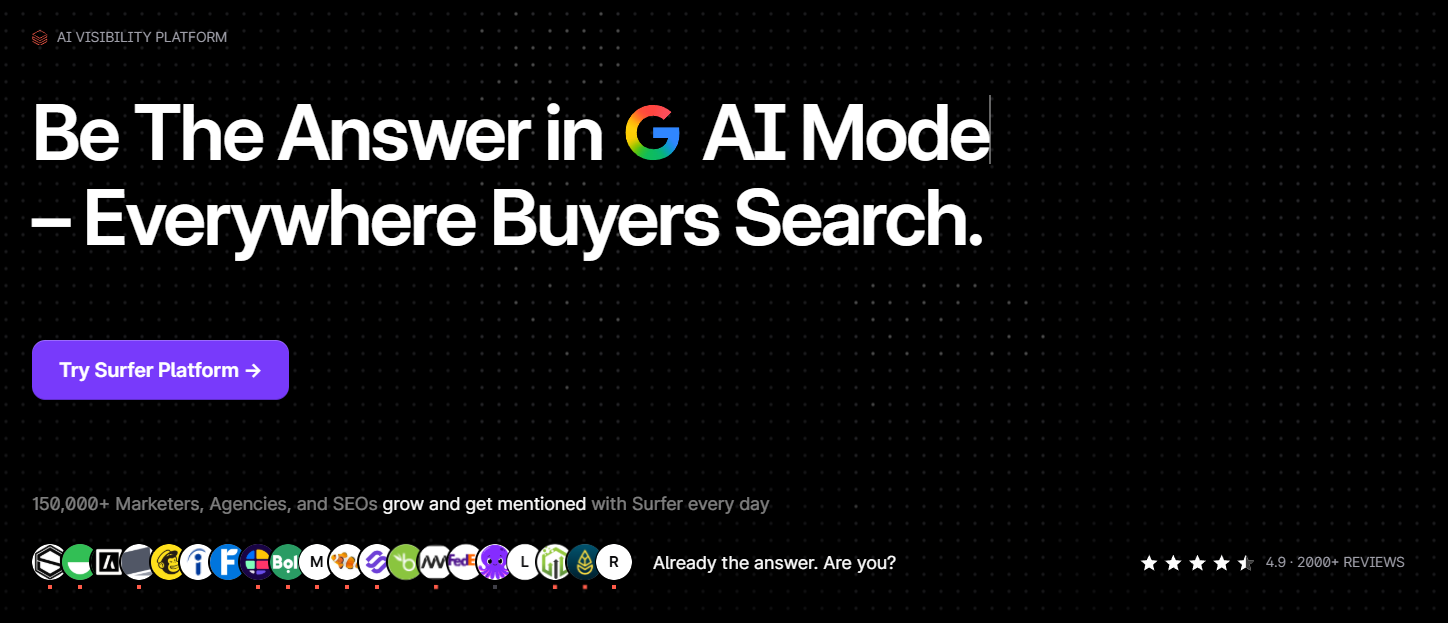
Surfer AI is the AI-powered evolution of the Surfer SEO writing assistant. Where the original Surfer focused on ranking in Google by matching top-ranking pages on key topics, Surfer AI extends the workflow to also optimize for AI engine citation.
The tool analyzes both Google’s top results and the kinds of content AI engines cite, then generates a brief and content structure designed to perform in both. For any content-focused SEO agency handling production for multiple clients, the speed-to-publish improvement is significant: writers get a single brief that targets both rankings and AI citations.
Surfer AI integrates with most agency-friendly tools (Google Docs, WordPress, Notion), so it slots into existing content workflows without major changes. The SEO optimization features built into the brief generation are particularly useful for clients with strict on-page guidelines.
Best for: Content-led SEO agencies wanting AI search optimization built into their existing writing workflow.
MarketMuse
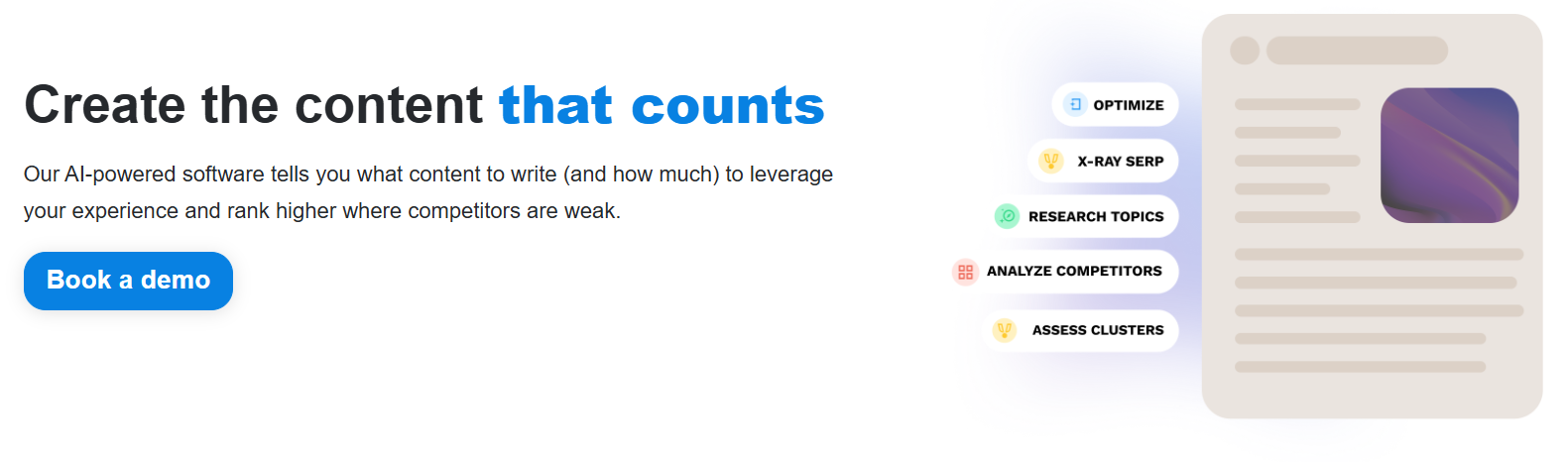
MarketMuse is one of the longest-standing AI-powered content tools in SEO, and the team has rebuilt the product significantly for AI search. The core workflow uses AI models to analyze topical authority gaps and recommend the content clusters needed to establish your client as an authoritative source on a topic.
For agencies, this matters because AI engines preferentially cite sources with deep topical coverage. A site with 3 articles on “lead routing” won’t get cited; a site with 30 articles forming a topical cluster will. MarketMuse identifies which clusters to build to systematically increase that AI citation probability.
The AI platform is priced for mid-market and enterprise agencies. Smaller agencies may find it more than they need, but the depth of analysis is genuinely useful for clients with serious budgets.
Best for: Mid-market and enterprise agencies building topical authority clusters for AI search.
Frase
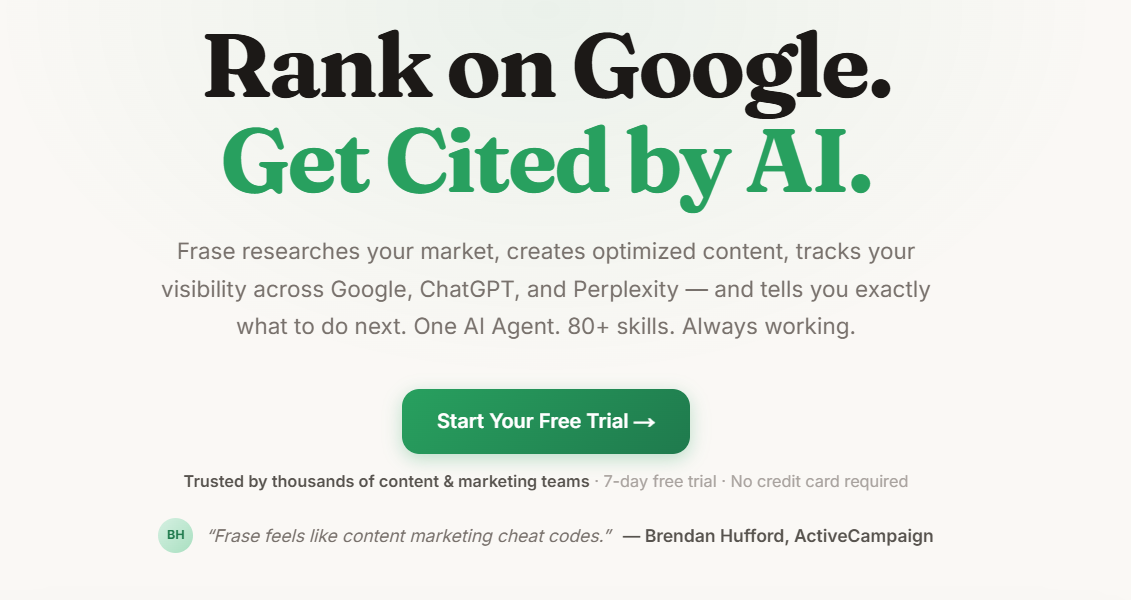
Frase is an AI content research and brief generation tool that’s positioned itself as an affordable competitor to Surfer. The workflow centers on quickly analyzing what’s currently ranking for a target query, then generating a brief writers can use to produce content that competes.
For AI SEO specifically, Frase has added features that analyze citation patterns in AI engines, so briefs incorporate not just SERP analysis but also what makes content cite-worthy to ChatGPT or Perplexity.
The price point makes Frase accessible to agencies running a content production strategy for multiple SMB clients. It’s not as deep as MarketMuse, but it’s not priced for the same buyer either.
Best for: Agencies producing high-volume content for SMB clients on tighter budgets.
Clearscope
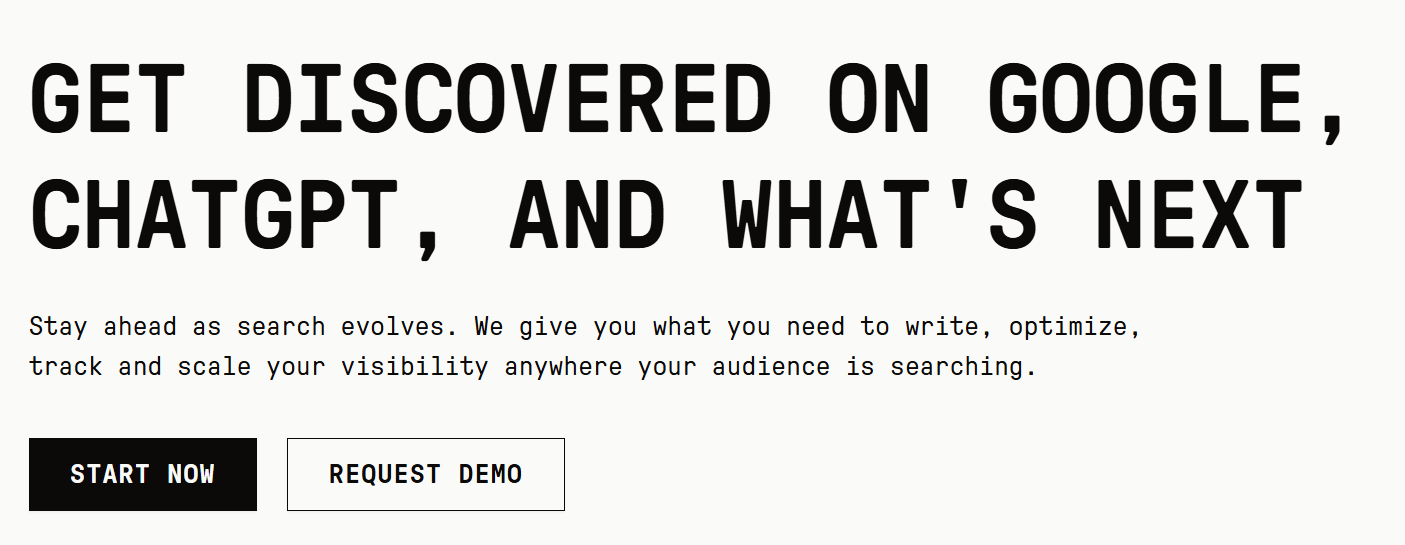
Clearscope has been a leading content grading tool for years, and the team has added AI search scoring features that grade how well content matches the patterns AI engines pull from. Writers see real-time scoring as they draft, with specific suggestions on entities, related terms, and structural elements that improve citation odds.
For agencies, the value is workflow speed. A writer who’s used Clearscope for traditional SEO already knows the interface; the AI scoring layer slides in without retraining. This is a meaningful advantage when you’re running content for dozens of clients and can’t afford a learning curve every time a new tool ships.
Pricing is per-document or subscription-based, with team plans built for agency workflows.
Best for: Established agencies adding AI search scoring to an existing Clearscope workflow.
Ahrefs Brand Radar
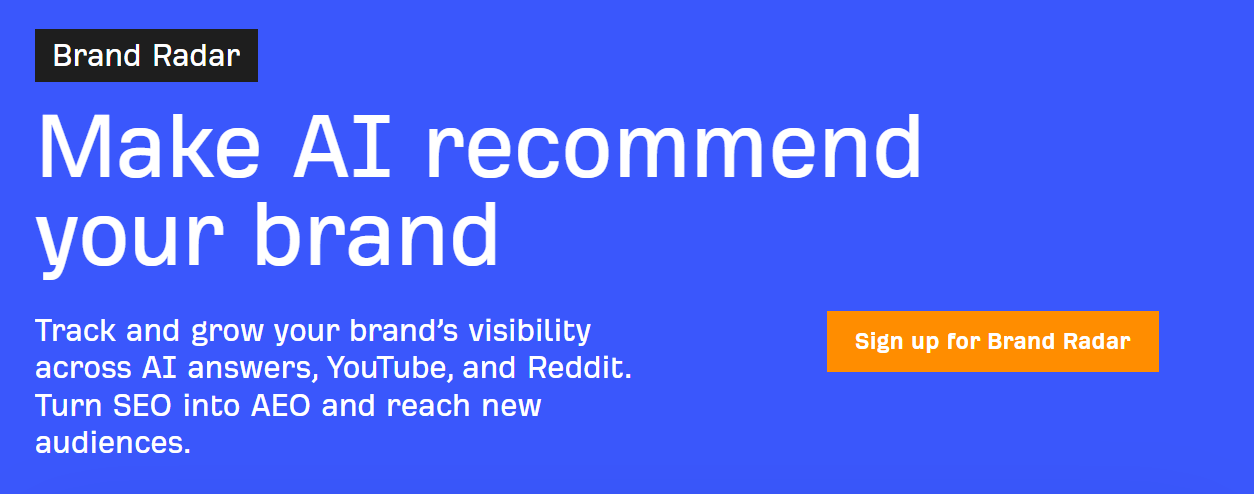
Ahrefs launched Brand Radar as the AI-era extension of the Ahrefs toolkit, tracking how often your brand appears across AI search results alongside traditional search engine rankings. For agencies already running Ahrefs for keyword research and backlink analysis, Brand Radar slots into the existing workflow as a natural next layer for monitoring Google AI Mode performance.
The most useful feature for agency reporting is the side-by-side view of traditional search rankings and AI engine citations. You can quickly show clients where they’re ranking on Google but missing from AI answers, which is the gap most agencies need to close first.
Brand Radar is bundled with most Ahrefs plans, so existing clients can layer it on without separate billing.
Best for: Agencies already using Ahrefs that want AI tracking integrated into existing keyword and backlink workflows.
Semrush AI Toolkit
Semrush rolled out an AI Toolkit that adds visibility tracking, prompt research, and AI engine citation monitoring on top of the existing Semrush stack. The feature set covers most of what standalone AI tools offer, but with the added benefit of integrating directly into the toolkit agencies are already paying for.
For agencies running Semrush at scale, this is essentially a free expansion of what’s already in your stack. The reporting integrates with existing Semrush projects, so clients see a unified view of traditional SEO performance and AI citations.
The depth isn’t quite as specialized as a dedicated tool like Profound, but for most agencies the convenience of consolidated reporting outweighs the depth tradeoff.
Best for: Agencies already paying for Semrush that want AI tracking without adding another tool to the stack.
Conductor AI Search Performance
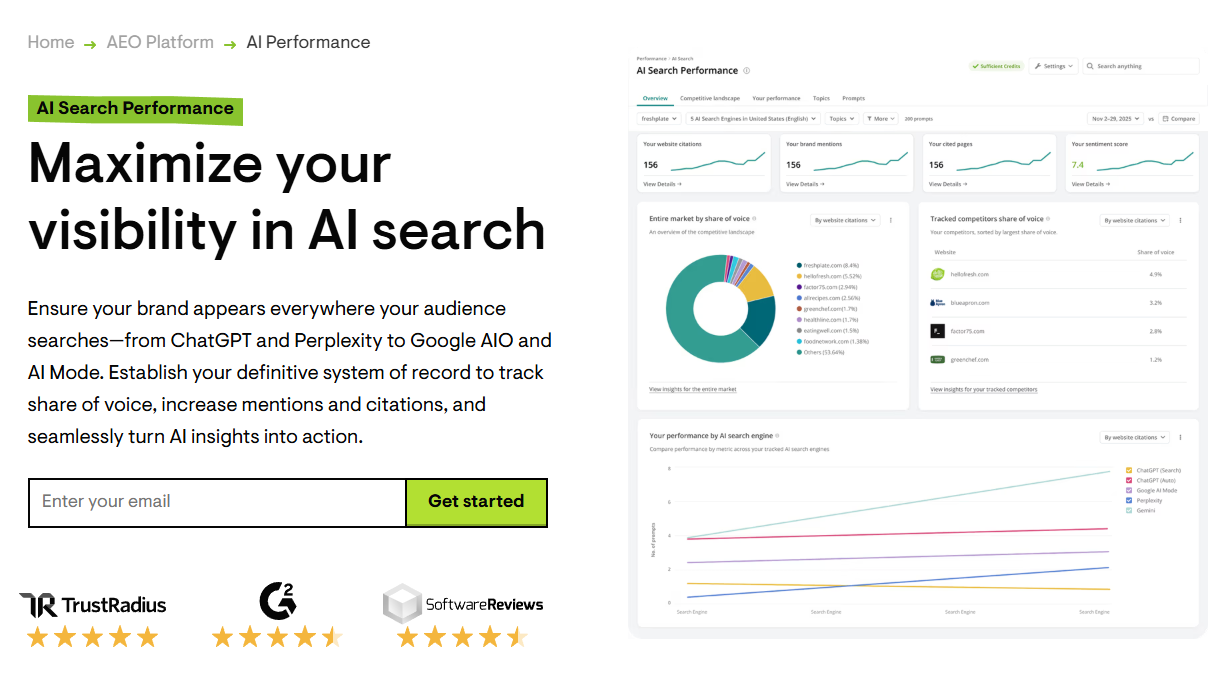
Conductor is enterprise SEO software that’s added an AI Search Performance module specifically for tracking content performance in AI engines, including coverage of Google’s expanding AI Mode results. The Conductor module pulls citation data from the major engines and ties it back to specific URLs and content topics on a client’s site.
For agencies serving enterprise clients, Conductor’s reporting depth and integration capabilities are difficult to match. The enterprise pricing reflects that, so this isn’t a tool most agencies will pick up without specific enterprise client demand.
Conductor’s strength is the way it bridges traditional SEO performance metrics and AI citation data in a single view. For executive-level reporting at enterprise clients, that single pane of glass matters.
Best for: Agencies serving enterprise clients that need traditional SEO and AI citation data integrated for executive reporting.
HubSpot AEO
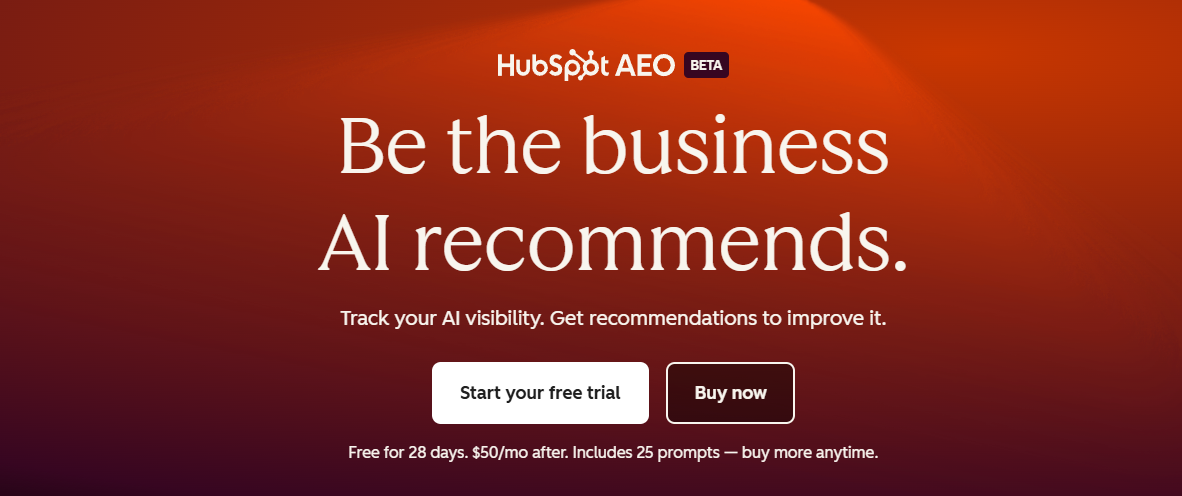
HubSpot rolled out Answer Engine Optimization (AEO) features as part of its broader digital marketing software. The AEO tools layer onto the existing HubSpot CMS and reporting, tracking AI engine citations for content published from the HubSpot system.
For agencies running HubSpot as a primary client CMS, this is meaningful. You don’t need a separate AI tracking tool because the data lives where the content gets produced. For agencies who don’t use HubSpot, the AEO features don’t provide enough standalone value to justify migration.
This is more of an “if you’re already in” play than a destination tool.
Best for: Agencies running HubSpot as a primary client CMS that want AEO tracking native to that environment.
SE Ranking AI Visibility
SE Ranking added a dedicated AI tracking module to its broader SEO toolkit. The feature monitors brand citations across AI engines and ties them back to specific keyword clusters on a client’s site.
For agencies already using SE Ranking for traditional SEO work, the module slots in cleanly without forcing migration to a new tool. The depth isn’t as specialized as a dedicated AI tracking service, but the integration with existing SE Ranking projects makes it easy to roll out across client portfolios.
Pricing is bundled with existing SE Ranking plans, similar to how Ahrefs and Semrush handle their AI add-ons.
Best for: Agencies running SE Ranking that want AI tracking without paying for a separate dedicated tool.
Schema App
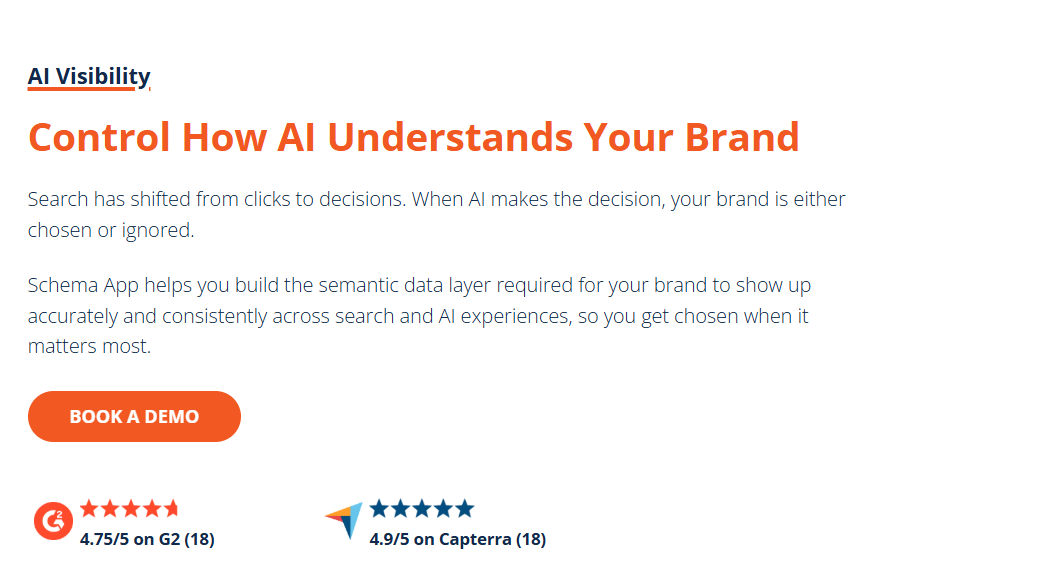
Schema App is a structured data and schema markup tool specifically built to improve how AI engines understand a site. The premise: AI engines rely heavily on structured data to understand what a page is about and which entities it covers, so a clean schema implementation makes citation more likely.
For agencies handling schema at scale across multiple clients, Schema App removes the manual overhead of building and maintaining schema across thousands of pages. The tool automates schema generation from existing content, which is genuinely useful for clients with large product catalogs or content libraries.
This is one of the more direct ways to influence AI citation rates through schema work alone, without depending on content production or outreach.
Best for: Technical SEO agencies needing scalable schema implementation as part of AI SEO work.
Botify
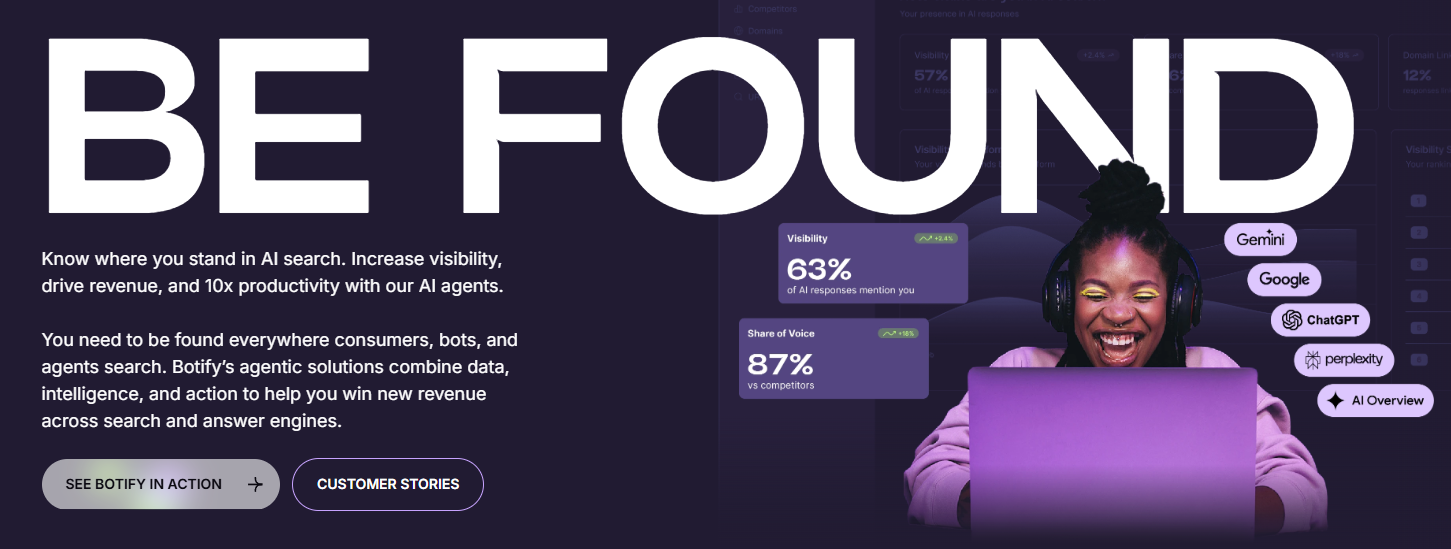
Botify is enterprise-grade SEO software focused on technical SEO at scale, with deep AI engine crawl and citation tracking capabilities. The tool monitors how AI engines crawl, parse, and reference content on enterprise sites, which is a different challenge from typical Googlebot crawl management.
For agencies serving enterprise clients with large sites (10,000+ URLs), Botify is one of the few tools that can actually keep up with the technical complexity. The Botify reporting helps technical SEO teams identify and fix the structural issues keeping a site out of AI citations at scale.
This isn’t a tool for small or mid-market agencies. The pricing is enterprise-level, and the feature set assumes a level of technical SEO maturity most agencies don’t yet have.
Best for: Enterprise SEO teams managing large-scale technical SEO with AI crawl complexity.
Lumar
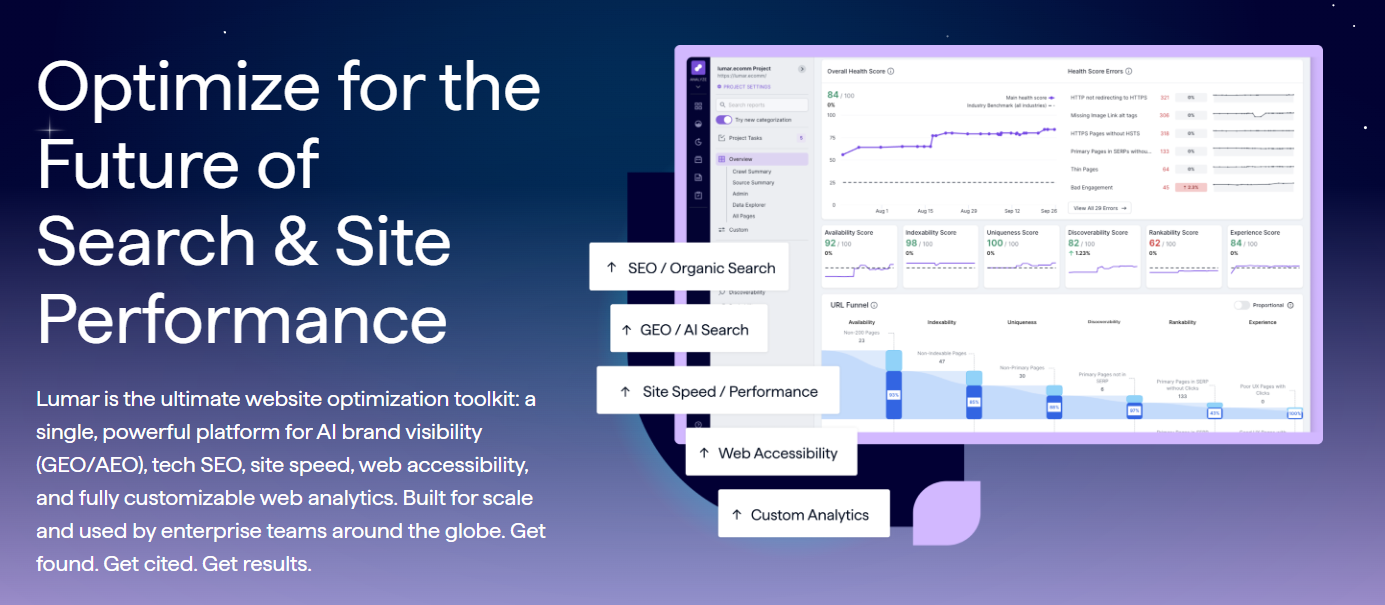
Lumar (formerly Deepcrawl) is another enterprise-tier SEO crawler that’s added AI engine readiness audits to its core offering. The tool crawls enterprise sites for issues that block AI engines specifically, including malformed schema, slow rendering, and JavaScript dependencies that AI crawlers handle differently from Googlebot.
For agencies serving enterprise clients, the AI readiness audit is a useful entry point: you can audit a client’s site against AI engine requirements before pitching a larger remediation engagement.
Pricing is enterprise-level, similar to Botify.
Best for: Enterprise technical SEO agencies needing AI readiness audits as part of broader SEO strategy work.
Goodie AI
Goodie AI is a newer AI SEO company built around end-to-end AI SEO optimization for SaaS and B2B brands. The team handles content production, technical work, and editorial outreach as a full-funnel package.
For agencies, Goodie AI is positioned more as a partner or referral source than a direct competitor. The team handles the full AI SEO scope for clients who need a single vendor, which can be useful when an agency’s client needs more than the agency itself offers.
Pricing is project-based with monthly retainer options. The team’s smaller size limits how many clients they take on, but for the right SaaS engagement, they’re one of the more specialized agencies in the AI SEO category.
Best for: SaaS brands and partner agencies wanting a specialist AI SEO agency for end-to-end engagement.
Link building cheat sheet
Gain access to the 3-step strategy we use to earn over 86 high-quality backlinks each month.
Now Over to You
The right combination of AI SEO services depends on what gap your agency is filling. If you’re missing visibility tracking, start with a dedicated tool like Profound or AthenaHQ.
If you need a content tool, look at MarketMuse or Surfer AI. If you’re trying to scale link building and editorial citations without hiring an in-house outreach team, that’s Respona.
Most agencies will end up running 2-3 of these AI SEO services in combination, not just one. The full stack usually looks like a tracking tool to measure performance, a content tool to act on what the data shows, and an outreach partner to actually earn the citations.
That’s the strategy that scales for most agencies.
If editorial outreach is the gap you need to close, Respona handles that work end-to-end with pay-per-placement pricing and no retainer.
Place your first order with your target pages and target keywords, and we’ll handle the prospecting, pitching, and securing live placements on publications that drive both organic rankings and AI citations.
Frequently Asked Questions (FAQ)
What’s the difference between AI SEO agencies and regular SEO agencies?
AI SEO agencies optimize for two things at once: standard Google rankings AND citations inside AI engines like ChatGPT, Perplexity, and Gemini.
Regular SEO agencies typically focus only on Google rankings. The work overlaps in places (good content matters for both, technical foundations matter for both), but AI SEO agencies layer on schema work specific to AI engine retrieval, prompt research, and outreach focused on the publications AI engines cite most often.
Most modern SEO agencies are layering AI SEO services on top of their existing offering rather than positioning purely as one or the other.
How is AI search different from traditional search?
Traditional search engines return a ranked list of links and let users do the work of clicking through. AI search engines return a synthesized answer pulled from multiple sources, with citations linking back. The user often gets the answer from those AI search engines without clicking anything.
That changes what “ranking” means: in traditional search you wanted to be link #1 in the search engine results, in AI search you want to be one of the cited sources inside the answer itself. The implications for how agencies produce content are significant.
Content that ranks well in traditional search doesn’t automatically get cited in AI search, and vice versa.
What is Google’s AI Mode, and how does it change SEO?
Google’s AI Mode is the AI-powered search experience inside Google that returns generated answers instead of just a list of links.
When a user runs a query in AI Mode, Google synthesizes an answer using multiple sources, then cites those sources at the bottom or alongside the answer.
This sits separately from Google’s AI Overview, which is the AI-generated summary at the top of regular Google search results. Both features pull from similar source pools, but the user experience is different. For SEO, the impact is that ranking #1 doesn’t automatically guarantee citation in either AI Mode or AI Overview.
Your content has to be structured for AI engine retrieval, which is what most of the tools on this list help with.
What’s the difference between AI SEO and LLM SEO?
The terms are often used interchangeably, but there’s a slight distinction. LLM SEO (sometimes called Generative Engine Optimization or GEO) refers specifically to optimizing for large language models. AI SEO is the broader term that also covers optimization for AI-powered search products like Google AI Overview and Perplexity.
In practice, the tactics overlap heavily. Most teams just use “AI SEO” as the catch-all term when talking with clients.
Are AI SEO tools actually worth the investment for agencies?
Yes, but only if you have the workflow capacity to act on what the data tells you. The cheapest tools start around $50-100 per month for entry-level visibility tracking; enterprise AI platform deployments run $5,000+ monthly with deep integrations.
The middle tier (Surfer, Frase, Clearscope, Profound) usually delivers the best ROI for most agencies.
The right approach is to start with one tool that addresses your biggest gap, prove ROI with one client, then expand. Buying every AI SEO tool on the market without a clear use case is the fastest way to waste budget. AI SEO work is only as effective as the team executing on the recommendations.
Tools can drive a lot of SEO automation, but they can’t replace the judgment of the person reading the dashboard.
How do I evaluate the best AI SEO agency for my needs?
Three things to look at. First, ask which AI engines they actually track and optimize for, not just claim to. Some “best AI SEO agency” pitches are mostly conventional SEO with an AI engine sticker added. Second, ask about their key services.
A real AI SEO company should be able to articulate specific deliverables: schema work, prompt research, citation tracking, editorial outreach. Vague AI strategy answers usually mean vague delivery.
Third, look at where they’ve been mentioned in AI engine answers for queries in their own category. An agency that doesn’t appear in AI citations for their own topic isn’t a credible partner for getting you cited either.
Are there other AI SEO agencies worth considering beyond this list?
A few worth mentioning. Coalition Technologies has been doing enterprise SEO for years and has been quietly building an AI SEO practice. Siege Media is well known for content-led SEO and has the original research assets to back it.
Fish Digital handles AI and traditional work for SaaS clients with deep technical setups. Omniscient Digital focuses on content-driven AI SEO for B2B clients. Intero Digital is one of the larger established agencies that’s now offering AI search as a service line.
None of these made the main list because they overlap heavily in positioning with services we covered, but they’re credible alternatives worth getting a proposal from if you’re evaluating partners.
Does AI SEO matter for local businesses, or is it mostly for B2B?
AI SEO matters for local businesses too, though the tactics differ. Local SEO has always been about appearing in map results and “near me” searches.
With AI engines now answering local queries directly (“what’s the best plumber in Austin”), local businesses need to show up in those AI answers, not just in Google Maps. The biggest practical step for local clients is making sure structured data, citations, and review signals all line up across platforms, so AI engines can confidently cite your client as the answer.
How does link building fit into an AI SEO program?
Critically. AI engines use editorial citations as one of their primary trust signals when deciding which sources to include in an answer.
A brand mentioned across 15 different authoritative publications appears in AI answers more reliably than a brand with no editorial footprint.
The placements that matter most are listicle inclusions and editorial features inside the publications AI engines pull from when answering buyer queries. Most AI SEO services that include link building specifically target these publication types rather than just any high-authority domain.
Are AI agents about to replace human SEO consultants?
Not yet, and probably not soon. Today’s AI agents are useful for narrow tasks: pulling keyword data, drafting first-pass content, monitoring competitor changes.
The strategic layer (positioning, content prioritization, brand voice, choosing which markets to compete in) still requires human judgment. The same logic applies to AI insights generated by tools like Profound or AthenaHQ.
The data is only as useful as the strategy interpreting it. As tools like Meta AI, ChatGPT operators, and similar products mature, more of the execution layer will get automated. But search engine optimization at the strategic level is increasingly about understanding the business context behind queries, which AI doesn’t do well yet.











![How We Built a Content Optimization Tool for AI Search [Study]](https://mgrowtech.com/wp-content/uploads/2026/01/how-we-built-a-content-optimization-tool-for-ai-search-study-sm-120x86.png)