Key Takeaways
- AI works best with human oversight. Winning teams use AI to move faster without sacrificing quality.
- Listening is just as important as posting. Social listening helps you spot trends and understand how people actually feel about your brand.
- Social algorithms are changing. Many platforms are now rewarding brands that post relevant content consistently, not those with the biggest follower counts.
- Testing is how strategy gets better. Regular testing helps you understand what actually drives results, so you can double down on what works.
- Treat social media as a customer service channel. Responding quickly to comments and messages builds trust.
Social media keeps changing, and so do the rules for what actually works.
This list of 19 social media best practices will help you build a stronger strategy, create better content, and drive results you can actually measure in 2026.
Bonus: Get a primer on social strategy and measurement from our free ebook on social media marketing basics. Grab it below. No email required!

19 social media best practices for 2025
Social media marketing best practices
1. Do audience research
Your target audience is the foundation of everything you do on social media.
Knowing who they are, what they want, and how they spend their time on social platforms has never been more important.
In fact, algorithms no longer reward brands for accumulating followers— they reward them for consistently signaling relevance with the right people.
Every social marketing team should be able to answer the following questions:
- Who are your customers?
- Where do they hang out online (and in real life)?
- What do they care about?
- Do they already know you?
- What do they think of you? Is it what you want them to think?
- What are their interests?
- What types of content are they most likely to enjoy and engage with?
- What stage(s) of life do they generally fall into?
- What language(s) do they speak?
- What are their buying habits, especially online?
So, where can you find these answers? Start with the data you already have.
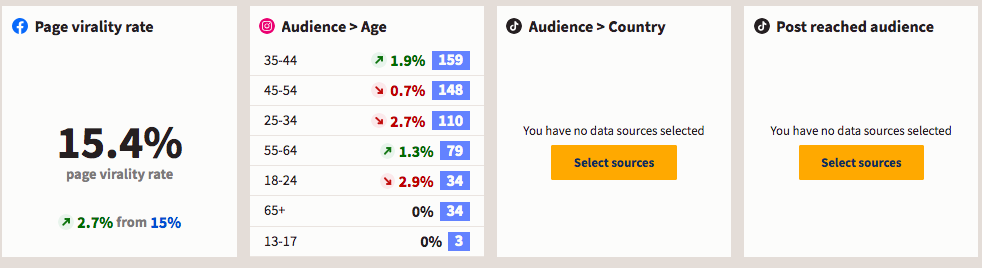
Your CRM, Google Analytics, and social media insights are great places to begin. If you want to go deeper, we’ve got a whole blog post dedicated to audience and target market research.
To-do list:
- Analyze your CRM to build a profile of your existing customers.
- Add UTM parameters to all social links to bring more useful data into Google Analytics.
- Use social analytics to identify demographics of your existing social audience.
- Build audience personas.
2. Build a presence on the right networks
The right social media platforms are the ones your audience actually uses. If a platform isn’t a good match for your audience or your brand, it’s okay to skip it.
Being everywhere can actually lead to brand fatigue, since people use different platforms for different reasons. They don’t want to connect with brands (or at least the same brands) in every single place.
Before committing to a platform, consider:
- Does my team have the bandwidth to create relevant content for this platform?
- Does the purpose of this platform fit our brand?
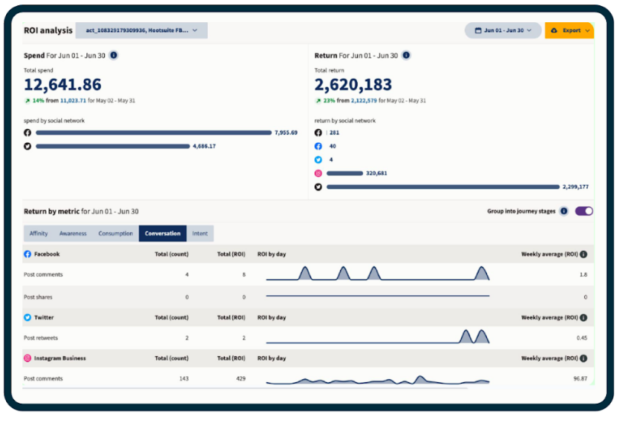
- What is the current social media ROI on this platform?
TL;DR: You’ll get better results by focusing on fewer platforms (and doing them well) than scrambling to try to be everywhere at once.
To-do list:
- Perform a social media audit to get the full picture of your current social media commitments and results.
- Secure usernames for any platforms where you don’t have one. You don’t ever have to use them, but having them means no one else can take them.
- Perform an ROI calculation for each platform. Use our free social media ROI calculator tool or the detailed ROI reports available in Hootsuite Advanced Analytics.
3. Use testing to refine your strategy
Testing helps social media teams spot which content formats, messages, and tactics drive results.
Some social posts drive strong engagement. Others don’t. A consistent testing strategy makes the difference by letting you change one variable at a time and see what actually moves the needle.
Of course, you can never sit on your laurels. Social media changes quickly, so testing can’t be a one-time exercise.
If you don’t have a testing strategy set up at all, start by working through our post on how to get started with A/B testing on social media.
To-do list:
- Survey your audience to ask them what they want.
- Set up analytics tools to measure your testing results.
- Experiment with posting times to maximize reach. Hint: Check Hootsuite Analytics to see when your audience is online and get recommendations for the best times to post.

4. Develop clear brand guidelines
Clear brand guidelines lay the groundwork for a consistent, recognizable, and safe social media presence, even if you play with your style and brand voice across platforms.
There are two types of guidelines to consider here: your brand style guide and your social media policy.
A brand style guide keeps your look and voice consistent across visuals, captions, punctuation choices, and overall tone.
Having social media design templates makes it easier to move quickly without reinventing the wheel, while still maintaining a cohesive look.
Brand guidelines answer questions like:
- Is it “favorite” or “favourite”?
- Which hashtags do we actually use?
- What colors are on-brand?
Your social media policy, on the other hand, gives employees clear guidance on what is and isn’t appropriate to share when representing your company — even on their personal accounts.
This eliminates confusion, encourages employees to share positive content, and establishes clear consequences for violating terms, which can save you from legal and PR troubles down the road.
To-do list:
Your social content only creates value if people actually see it.
Algorithms determine what shows up in feeds, and they change constantly. We’ve rounded up the latest algorithm updates for each platform to help you keep pace.
At the same time, social platforms are becoming search destinations in their own right. People now use Instagram, TikTok, YouTube, and LinkedIn to find answers curated by real people, not traditional search engines.
That means social SEO matters. Start by understanding what your audience is likely to search for, then create content that clearly answers those questions.
Educational and edutainment content works especially well for social SEO. Unlike trending content, evergreen posts can continue driving views and engagement long after they’re published.
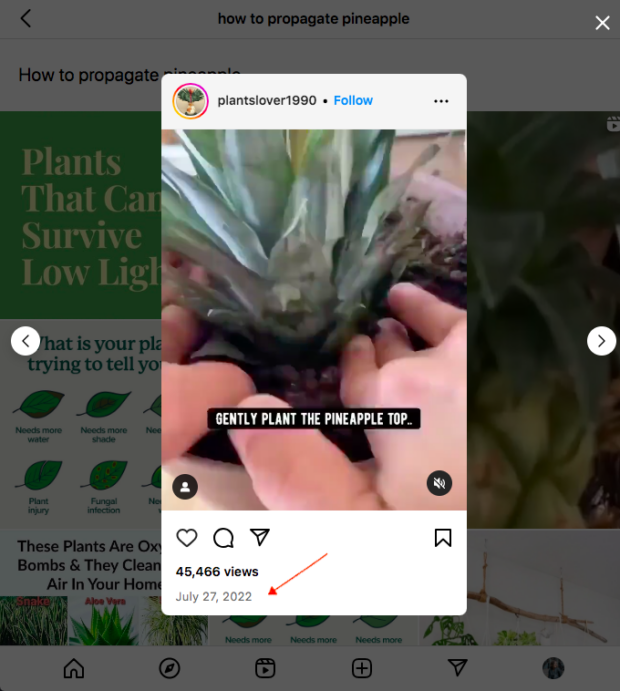
For instance, search “how to propagate pineapple” on Instagram, and one of the very top results is from July 2022. That’s 4 years ago! No wonder it’s managed to get more than 45,000 views.
We’ve got a post to walk you through how to optimize your post to appear in social search results. We also tested our top social SEO theories for Instagram and TikTok — check out the video below:

To-do list:
- Read up on platform-specific algorithm changes (here’s a good place to start) and review them against your current content strategy.
- Create and share content that educates your audience to boost results in social search.
6. Schedule your content in advance
Planning your social media content in advance allows time to create high-quality content and logically put together campaigns (organic and paid) developed with collaboration and feedback from your team.
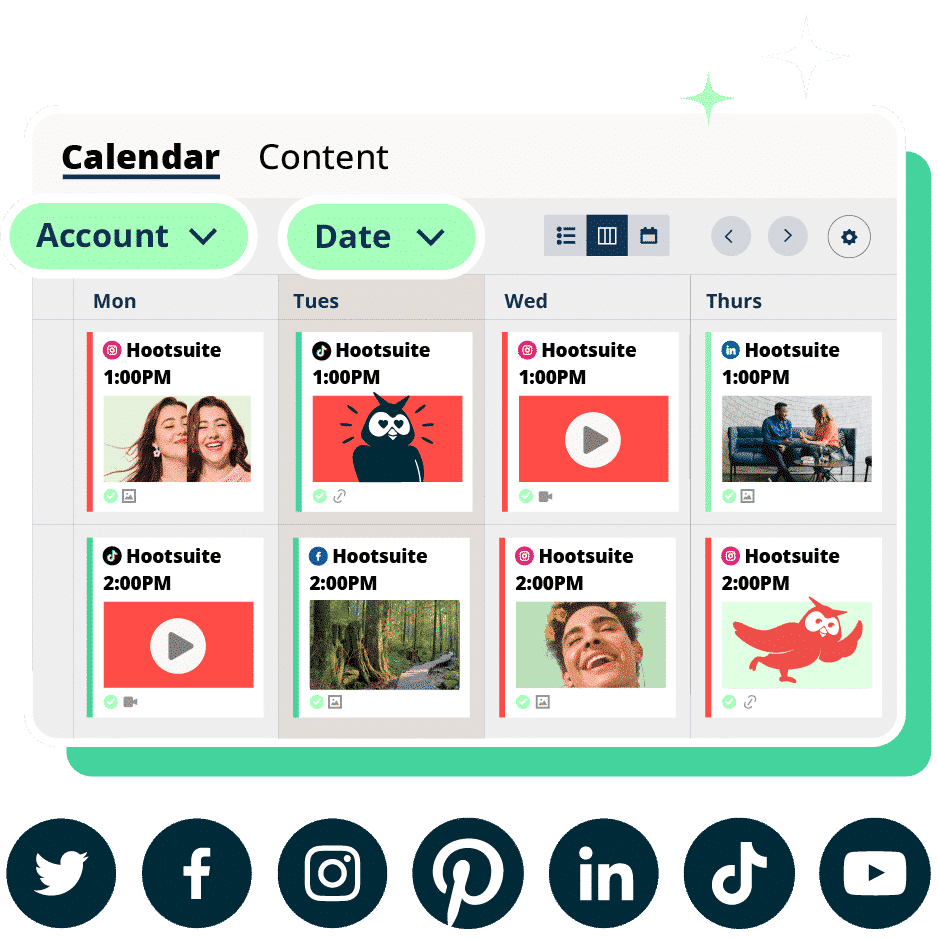
While several social media platforms offer native scheduling features, Hootsuite Planner is a unified tool for cross-platform collaboration, campaign mapping, and scheduling.
Check the content calendar view to see your upcoming organic, paid, and scheduled content at a glance.

7. Implement a clear content-approval process
A clear content-approval process helps social media teams reduce risk before posts go live.
This is especially important in regulated industries, but it’s just as valuable for everyday publishing. Clear approval workflows help prevent mistakes before they turn into a PR crisis.
Collaborative tools like Hootsuite make this easier by building approvals and permissions directly into the publishing process.
To-do list:
8. Make the most of your content and digital assets
Repurposing content is an effective social media strategy that helps teams get more mileage from existing content.
That said, sharing the same post everywhere isn’t a strategy. You can (and should) repurpose content, but it should feel native to each platform. In other words, don’t auto-publish a Facebook post into an Instagram story.
For example, instead of posting the same blog link across all your channels, you can:
- Turn key points into a thread on X or Threads
- Create a short YouTube video based on the article
- Record an Instagram Reel that highlights takeaways and links back to the full post
You don’t need to go into all-out production mode and all of these content types for every article. Sometimes it’s fine just to share a link. But make an effort to repurpose as much of your content as possible. It will allow you to create more, faster.
Social listening provides free, real-time market research. It involves scanning social media channels for mentions of your name, products, specific keywords, or anything else you want to scout for.
Advanced social listening tools can even recognize logos in images, evaluate brand sentiment, and more. This gives you the real scoop on what people think of your company, or the product features they really want.
You can also use social listening to monitor your competition and spot trending topics and conversations happening in your industry.
According to Hootsuite Social Media Trends Report 2026, social teams that use social listening effectively build more credibility and earn larger budgets by delivering insights that drive real business impact and prove ROI.

To-do list:
- Set up a social listening strategy to check for people asking about your industry or for recommendations. If appropriate, pop into the conversation with a comment or retweet.
- Dig deeper into trends you spot for ideas that impact brand positioning and new product development, too.
- Track brand sentiment. If there’s a sudden negative swing, dig into why and address it to nip any PR problems in the bud.
10. Use AI thoughtfully
AI is officially part of the social media workflow. According to Hootsuite’s 2026 Social Media Trends report, 79% of social media managers now use AI daily to brainstorm, create, and refine content.
At the same time, audiences are quick to tune out content that feels generic, rushed, or low-quality (otherwise known as AI slop).
The takeaway isn’t to avoid AI entirely, but to use it with intention. In other words, AI should accelerate your teams, not water down your standards.
To-do list:
- Create an AI policy for your company that specifies how you will use AI and what human checks you will put in place.
- Research the best AI tools to support you in your work. May we recommend OwlyWriter AI? It’s a powerful AI tool specifically designed to create captions, content ideas, and more for social media.
Social media customer service best practices
Social media isn’t just about social networking — it’s also an important customer service channel.
You may have a 1-800 customer service number and email, but more than half of consumers say they’re more likely to buy from a company that offers customer service through chat.
Want to go above and beyond? Combine customer service with social listening. This lets you spot conversations around your brand, even if customers haven’t tagged you directly.

To-do list:
- Set up a dedicated customer service handle to improve the CS experience.
- Create a link in bio page that includes your customer service email address. Hootbio is a great resource to set this up so it’s effective and looks great
12. Respond promptly to DMs and comments
Responding quickly to direct messages and comments is a core part of good social customer service.
The problem? Social media users don’t always tag brands directly. Instead, they ask questions, share feedback, and request support in comments and DMs — and those conversations are easy to miss.
So how can you make sure to see them and respond?
Make sense of the chaos with Hootsuite’s unified Inbox 2.0. It pulls in all messages and comments across your connected social platforms. You can see full threads for direct messages, comments, and @mentions, and assign conversations to specific reps to organize and speed up your responses.

You can also set up filters to automatically route queries to the right person on your team, and use reply templates to simplify and streamline your social customer service responses.
Brands get more love with timely outbound comments, according to our Hootsuite Social Media Trends Report 2025.

To-do list:
- Determine who on your team is responsible for each kind of customer service query (billing, support, etc.).
- Set up a process to assign messages as they come in. Even better if you can use tools like Hootsuite Inbox to automate this process.
13. Use AI to improve response times
Most of your customers seeking support want to know the same things:
- “Where’s my order?”
- “I need to make a warranty claim.”
- “Do you ship to ____?”
Thankfully, a chatbot can handle simple questions and reduce your customer service team’s workload by 94%. And these aren’t shabby responses – customers served this way have a 96% satisfaction score.
As AI evolves, chatbots can move beyond simple FAQ-style responses to provide fast, personalized service 24/7. We tend to think AI customer service won’t be as good as speaking to a human. But since it moves so quickly, the end result can sometimes actually be better.
Still, chatbots can’t do everything. Ensure customers still have a way to reach your human team for more complex inquiries, too.
To-do list:
- Set up an AI-powered chatbot to resolve many of your social customer service queries.
Find more best practices for social media customer service in our detailed post on the best tips and tools for social media customer service.
Social media design best practices
14. Check each platform’s specs and requirements before posting
One of the (many) reasons you shouldn’t cross-post the same content on every platform is that each platform has its own image/video size specifications.
Even if the overall message of the post stays the same, customizing the media specs and caption length will keep your profiles polished and professional.
You can do this before scheduling your social media posts, or conveniently right inside Hootsuite as you’re scheduling.

To-do list:
15. A/B test creative assets
A/B testing helps social media teams understand which headlines and copy perform best, but visuals matter just as much.
Images, videos, GIFs, and carousels can all impact engagement and click-through rates.
There are endless options to test, but the key thing is to test only one thing at a time. Otherwise, it’s hard to know exactly which new element “won” at the end.
To-do list:
- Try testing a GIF instead of a static image.
- Try testing video content instead of images. Test the winner against a carousel.
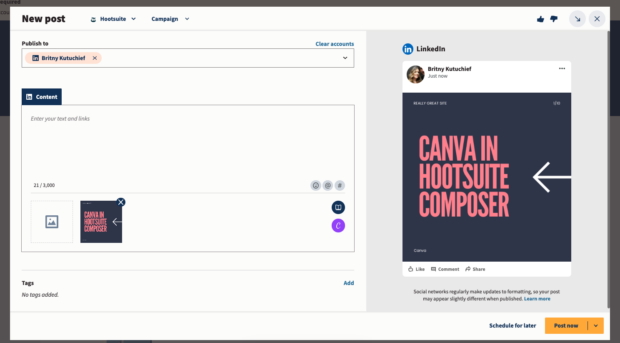
There are tons of social media apps to help out with design tasks. If you don’t have a design team, you can easily create graphics with Canva or Adobe Express.
Better yet: Hootsuite integrates with both of those to unlock max scheduling productivity. When you integrate your design tools and your social tools, you are better able to play with and preview content, then revise it for each platform.
To-do list:
- Try designing a social post without leaving Hootsuite by using the integrated Canva design tool.
B2B social media best practices
Social marketers tend to rely on engagement metrics to track social media ROI. But for B2B marketers, social media goals need to align with longer-term business objectives.
The top goals for B2B companies in 2026 are:
- Improving customer experiences
- Building trust and authenticity
- Strengthening brand awareness and long-term differentiation
While these goals may not translate into immediate leads, they directly support B2B lead generation over time. Social media plays a critical role in shaping first impressions, building credibility, and keeping your brand top of mind early in the buying journey.
To-do list:
- Take a look at your social media goals to make sure they are linked to the early stages of the buying cycle.
- Add internal objectives like using social media to increase product and/or competitor knowledge.
18. Develop business-friendly content resources
B2B social media is all about relationship building and lead generation. Gated content like research reports can help you capture leads and grow your email list.
That list also gives you more options for paid social. You can use it to build custom and lookalike audiences that extend your reach even further.
Just don’t put everything behind a form. Share interesting, informative data to keep your followers interested, even if they’re not yet ready to buy. You’ll be front-of-mind when the time comes.
To-do list:
- Brainstorm content ideas for business-friendly resources like reports, survey results, and other actionable data.
- Tease the highlights of these resources in a social post, with a link to download the whole thing with an email address.
19. Keep an eye on the LinkedIn algorithm
LinkedIn remains both the most popular social channel for B2B brands. You don’t need to ignore every other algorithm, but if you’re only going to deeply understand one, make it this one.
Recent LinkedIn algorithm updates prioritize niche expertise and meaningful interactions. That’s a great reason to bring your product experts and subject-matter specialists into your content mix.
Educational posts written from lived experience perform better than generic brand messaging. Don’t forget to stay involved in the conversation, too — that’s another key signal that gained importance in the latest round of algorithm updates.
To-do list:
- Review our post on the LinkedIn algorithm to get a summary of the latest algorithm changes and tips for working with them.
- Focus on strictly professional content, since the algorithm downvotes personal updates that don’t include expert knowledge
Find more B2B best practices in our post on B2B social media marketing tactics.
FAQ: Social media best practices
What are social media best practices for businesses today?
The best social media practices for businesses today involve posting content relevant to their specific audience, maintaining a clear brand voice, staying up to date on social media algorithms, engaging with comments, and choosing platforms that match where their audience actually spends time. Social media works best when it supports real business goals, not just vanity metrics.
What are social media best practices for enterprise brands?
The best social media practices for enterprise brands include strong brand guidelines, clear approval processes, and consistent messaging across teams and regions. Large organizations should also empower executives and subject-matter experts to share insights to build credibility and trust.
How often should brands post on social media for best results?
Hootsuite breaks this down by platform:
Instagram: 3–5 times per week
Facebook: 1–2 times per day
X (Twitter): 2–3 times per day
LinkedIn: 1–2 times per day
Threads: 2–3 times per day
TikTok: 3–5 times per week
What social media best practices improve engagement and reach?
The social media practices that improve engagement and reach include sharing relevant and original content, asking thoughtful questions, responding to comments, and sharing real expertise. Platforms are also starting to reward meaningful conversation over follower growth.
What are common social media mistakes brands should avoid?
Common social media mistakes include posting without a strategy, focusing only on engagement metrics, ignoring comments, and sounding overly promotional. Brands also run into trouble when they try to be everywhere instead of focusing on the platforms that matter most.
Save time managing your social media marketing strategy with Hootsuite. From a single dashboard you can publish and schedule posts, find relevant conversions, engage the audience, measure results, and more. Try it free today.