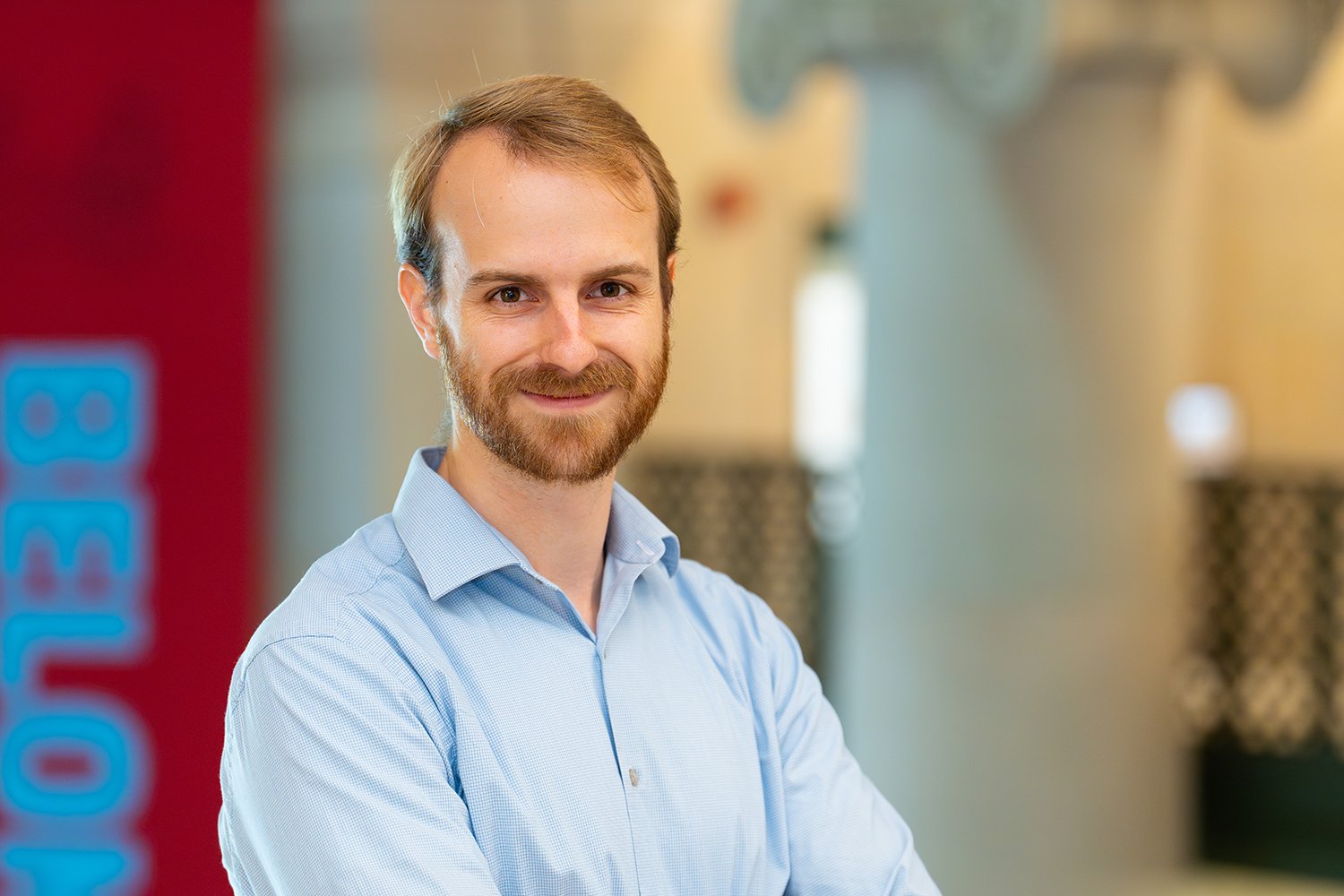
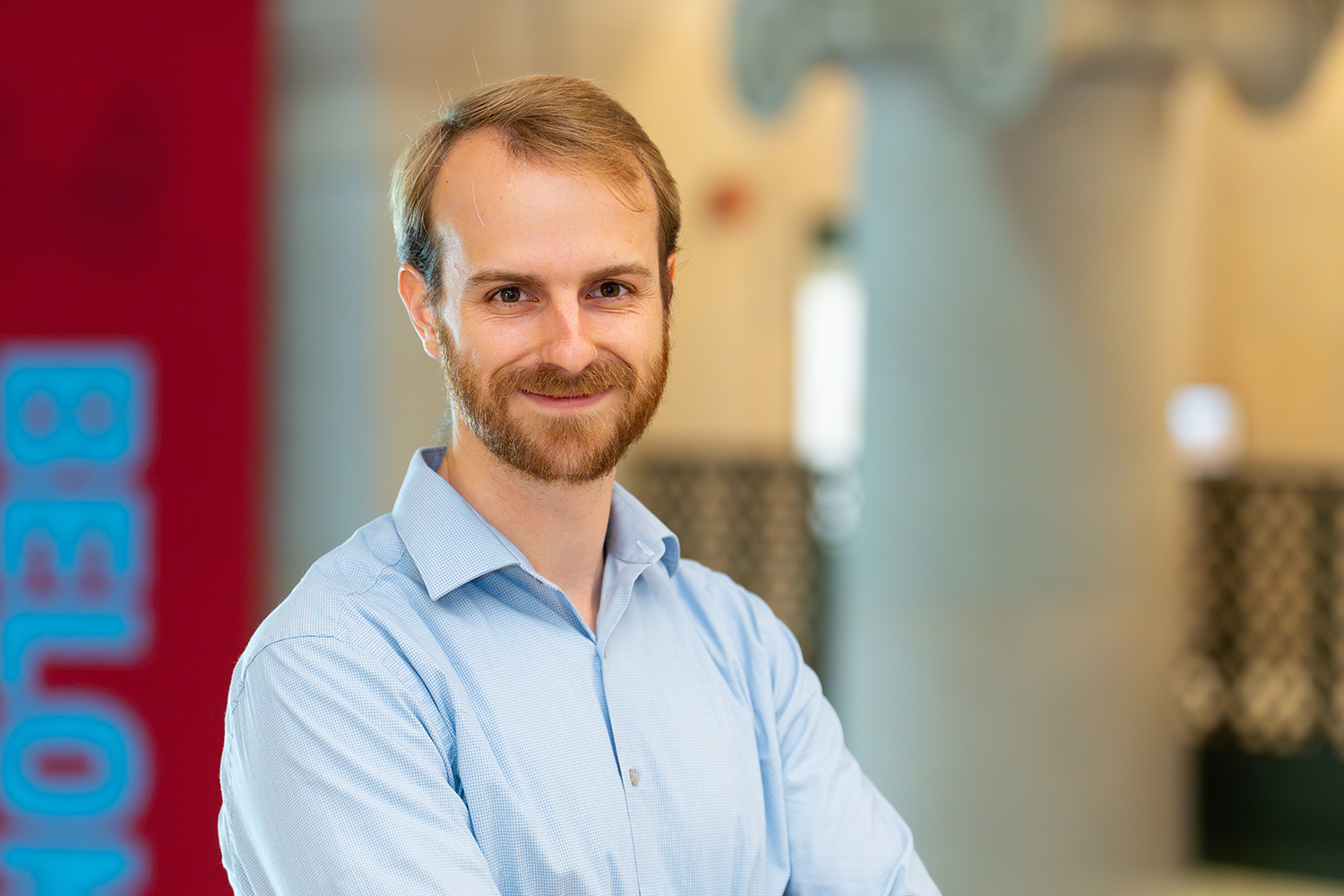
Today, there are 94 nuclear reactors operating in the United States, more than in any other country in the world, and these units collectively provide nearly 20 percent of the nation’s electricity. That is a major accomplishment, according to Dean Price, but he believes that our country needs much more out of nuclear energy, especially at a moment when alternatives to fossil fuel-based power plants are desperately being sought. He became a nuclear engineer for this very reason — to make sure that nuclear technology is up to the task of delivering in this time of considerable need.
“Nuclear energy has been a tremendous part of our nation’s energy infrastructure for the past 60 years, and the number of people who maintain that infrastructure is incredibly small,” says Price, an MIT assistant professor in the Department of Nuclear Science and Engineering (NSE), as well as the Atlantic Richfield Career Development Professor in Energy Studies. “By becoming a nuclear engineer, you become one of a select number of people responsible for carbon-free energy generation in the United States.”
That was a mission he was eager to take part in, and the goals he set for himself were far from modest: He wanted to help design and usher in a new class of nuclear reactors, building on the safety, economics, and reliability of the existing nuclear fleet.
Price has never wavered from this objective, and he’s only found encouragement along the way. The nuclear engineering community, he says, “is small, close-knit, and very welcoming. Once you get into it, most people are not inclined to do anything else.”
Illuminating the relationships between physical processes
In his first research project as an undergraduate at the University of Illinois Urbana at Champaign, Price studied the safety of the steel and concrete casks used to store spent reactor fuel rods after they’ve cooled off in tanks of water, typically for several years. His analysis indicated that this storage method was quite safe, although the question as to what should ultimately be done with these fuel casks, in terms of long-term disposal, remains open in this country.
After starting graduate studies at the University of Michigan in 2020, Price took up a different line of research that he’s still engaged in today. That area of study, called multiphysics modeling, involves looking at various physical processes going on in the core of a nuclear reactor to see how they interact — an alternative to studying these processes one at a time.
One key process, neutronics, concerns how neutrons buzz around in the reactor core causing nuclear fission, which is what generates the power. A second process, called thermal hydraulics, involves cooling the reactor to extract the heat generated by neutrons. A multiphysics simulation, analyzing how these two processes interact, could show how the heat carried away as the reactor produces power affects the behavior of neutrons, because the hotter the fuel is, the less likely it is to cause fission.
“If you ever want to change your power level, or do anything with the reactor, the temperature of the fuel is a critical input that you need to know,” says Price. “Multiphysics modeling allows us to correlate the fission neutronics processes with a thermal property, temperature. That, in turn, can help us predict how the reactor will behave under different conditions.”
Multiphysics modeling for light water reactors, which are the ones operating today with capacities on the order of 1,000 megawatts, are pretty well established, Prices says. But methods for modeling advanced reactors — small modular reactors (SMRs with capacities ranging from around 20 to 300 MW) and microreactors (rated at 1 to 20 MW) — are far less advanced. Only a very small number of these reactors are operating today, but Price is focusing his efforts on them because of their potential to produce power more cheaply and more safely, along with their greater flexibility in power and size.
Although multiphysics simulations have supplied the nuclear community with a wealth of information, they can require supercomputers to solve, or find approximate solutions to, coupled and extremely difficult nonlinear equations. In the hopes of greatly reducing the computational burden, Price is actively exploring artificial intelligence approaches that could provide similar answers while bypassing those burdensome equations altogether. That has been a central theme of his research agenda since he joined the MIT faculty in September 2025.
A crucial role for artificial intelligence
What artificial intelligence and machine-learning methods, in particular, are good at is finding patterns concealed within data, such as correlations between variables critical to the functioning of a nuclear plant. For example, Price says, “if you tell me the power level of your reactor, it [AI] could tell you what the fuel temperature is and even tell you the 3-dimensional temperature distribution in your core.” And if this can be done without solving any complicated differential equations, computational costs could be greatly reduced.
Price is investigating several applications where AI may be especially useful, such as helping with the design of novel kinds of reactors. “We could then rely on the safety frameworks developed over the past 50 years to carry out a safety analysis of the proposed design,” he says. “In this way, AI will not be directly interfacing with anything that is safety-critical.” As he sees it, AI’s role would be to augment established procedures, rather than replacing them, helping to fill in existing gaps in knowledge.
When a machine-learning model is given a sufficient amount of data to learn from, it can help us better understand the relationship between key physical processes — again without having to solve nonlinear differential equations.
“By really pinning down those relationships, we can make better design decisions in the early stages,” Price says. “And when that technology is developed and deployed, AI can help us make more intelligent control decisions that will enable us to operate our reactors in a safer and more economical way.”
Giving back to the community that nurtured him
Simply put, one of his chief goals is to bring the benefits of AI to the nuclear industry, and he views the possibilities as vast and largely untapped. Price also believes that he is well-positioned as a professor at MIT to bring us closer to the nuclear future that he envisions. As he sees it, he’s working not only to develop the next generation of reactors, but also to help prepare the next generation of leaders in the field.
Price became acquainted with some prospective members of that “next generation” in a design course he co-taught last fall with Curtis Smith, the KEPCO Professor of the Practice of Nuclear Science and Engineering. For Price, that introduction lasted just a few months, but it was long enough for him to discover that MIT students are exceptionally motivated, hard-working, and capable. Not surprisingly, those happen to be the same qualities he’s hoping to find in the students that join his research team.
Price vividly recalls the support he received when taking his first, tentative steps in this field. Now that he’s moved up the ranks from undergraduate to professor, and acquired a substantial body of knowledge along the way, he wants his students “to experience that same feeling that I had upon entering the field.” Beyond his specific goals for improving the design and operation of nuclear reactors, Price says, “I hope to perpetuate the same fun and healthy environment that made me love nuclear engineering in the first place.”