Portable toilets have been used at outdoor events for a long time. They show up at concerts, ball games, festivals, and job sites. In many cases, they do the job. People step in, do what they need to do, and move on.
But some events put a lot more pressure on sanitation than others. High-contact food events are one of them. Crawfish boils are a perfect example. They are hot, crowded, and messy by design. If the sanitation plan is built like a concert plan, it can break down fast.
Here is the simple reason. At crawfish boils, people do not just need a toilet. They need to wash their hands again and again. When the setup does not match that reality, it becomes the main thing guests complain about or quietly leave over.
The real issue is handwashing, not toilet use.
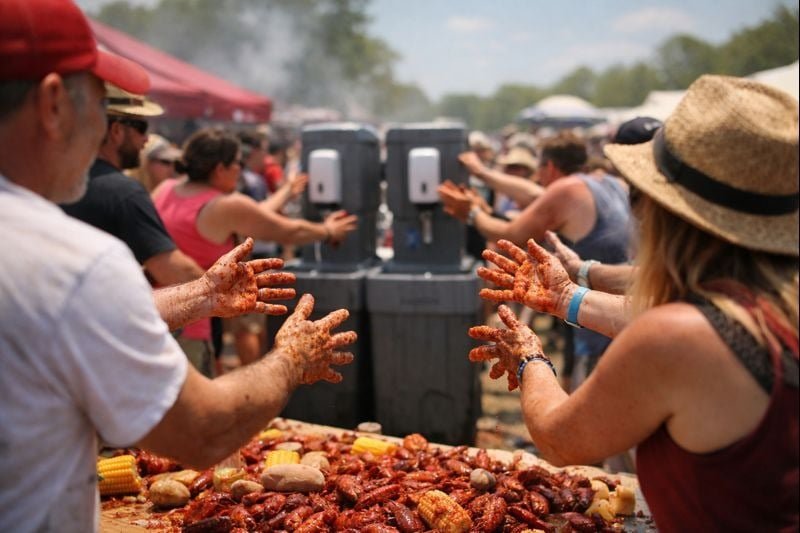
At many outdoor events, toilet use is the main need. At a crawfish boil, handwashing becomes the bigger need. People peel crawfish, touch seasoning, wipe their hands, grab drinks, use their phones, and help kids. Then they want to wash up and do it again.
If the only option is hand sanitizer, guests get frustrated. Sanitizer does not rinse off grease. It does not remove spicy residue. It can even burn if someone has spice on small cuts. That is why guests start looking for real water.

When there are not enough sinks or wash stations, lines form quickly. People stand in the heat just to try to clean up. That is when the event starts feeling rough, even if the food is great.
Why the usual unit counts can still fail
A lot of sanitation planning is based on simple math. How many toilets per person? How often should they be serviced? That kind of planning can work for events where use is spread out.
Crawfish boils do not work that way. People eat in waves. When a fresh batch hits the table, lots of guests eat at the same time. Then lots of guests want to wash at the same time. That creates a sudden rush.
So even if you have what looks like enough toilets, you can still end up with a mess of long lines and unhappy guests because the handwashing setup cannot keep up.
Soap and water matter, and the data backs it up.
Handwashing is not just about looking clean. It helps keep people from getting sick. The Centers for Disease Control and Prevention says handwashing can prevent about 30 percent of diarrhea-related sickness and about 20 percent of respiratory infections like colds. At a packed food event where hands touch tables, serving tools, coolers, and food, that matters.

The same message shows up worldwide. A World Health Organization evidence review found that handwashing promotion in community studies reduced diarrhoea by 28 percent. That does not mean a crawfish boil is dangerous by default. It means the basics work. If washing is easy, more people do it.
For events, this also affects how guests feel. When people see real sinks and soap, the space feels cleaner and more organized. When they do not, the event can feel thrown together, even if the organizers worked hard on everything else.
Standard portable toilets were not built for this kind of event
Standard portable toilets are not “bad.” They were built for a certain purpose. Short visits. Quick use. Low demand for washing. That is why they work fine in many settings.
Crawfish boils ask for something different. People need to wash off oily seasoning, sometimes up to their wrists or elbows. Parents need space to help kids. Guests want to rinse and reset without waiting forever.
That is why a basic lineup of toilets with sanitizer nearby can feel like the wrong tool for the job at a big boil.
What restroom trailers change in the real world
Restroom trailers work better at these events because they are built around real sinks and provide higher comfort. The main difference is running water. Guests can actually wash their hands with soap and rinse off spice and grease.
Another difference is climate control. Most crawfish boils happen in warm weather. When people are hot and sticky, they get tired faster. A short break in cool air can make a big difference in how long someone wants to stay.
Better lighting and more space also help. It feels cleaner. It moves people through faster. And it reduces that crowded, stressful feeling that happens when everyone is stuck in line at the same time.
Sanitation can decide whether guests stay or leave
Most event teams focus on food and entertainment. That makes sense. But at hands-on food events, sanitation can decide how long people stay.
If guests can wash up and cool down, they come back for more food. They buy another drink. They stay to talk and enjoy the music. If they cannot, the easiest fix is to leave, especially once the heat kicks in.
A recent NewsTrail analysis made this point clearly, arguing that the ultimate crawfish boil hack is not culinary at all. It is sanitation infrastructure, because the biggest friction point is the moment guests need to wash hands and get out of the heat.
How buyers and planners can think about it
The main lesson is not that every event needs the same setup. It is that the event type matters. A crawfish boil is a high-contact food event. That means lots of washing. Lots of shared surfaces. Lots of heat.
A good plan starts with behavior. How many people will eat at the same time? How many will need to wash at the same time? Where will those wash points be so people actually use them? If washing is too far away, guests put it off and stay uncomfortable.
When sanitation is planned around how people really act at the event, everything runs smoother. Lines stay shorter. Guests feel better. And the event holds energy longer instead of fading early.

![How to use TikTok [beginners, start here!]](https://mgrowtech.com/wp-content/uploads/2026/03/how-to-get-started-with-TikTok-350x250.png)